
Chef Takumi
Amerikan Doggu (アメリカンドッグ, corn dog)
A sausage on a stick, sweet batter, clean hot oil, and no cornmeal. Amerikan doggu is festival food made plain, with the batter thick enough to cling.
A cooking platform built around craft, culture, and the stories behind what we eat.
Created by
A tonkatsu sando is not a clever sandwich. It is one clean pork cutlet, soft shokupan, fine cabbage, and sauce used with restraint, cut small enough to eat without fuss.
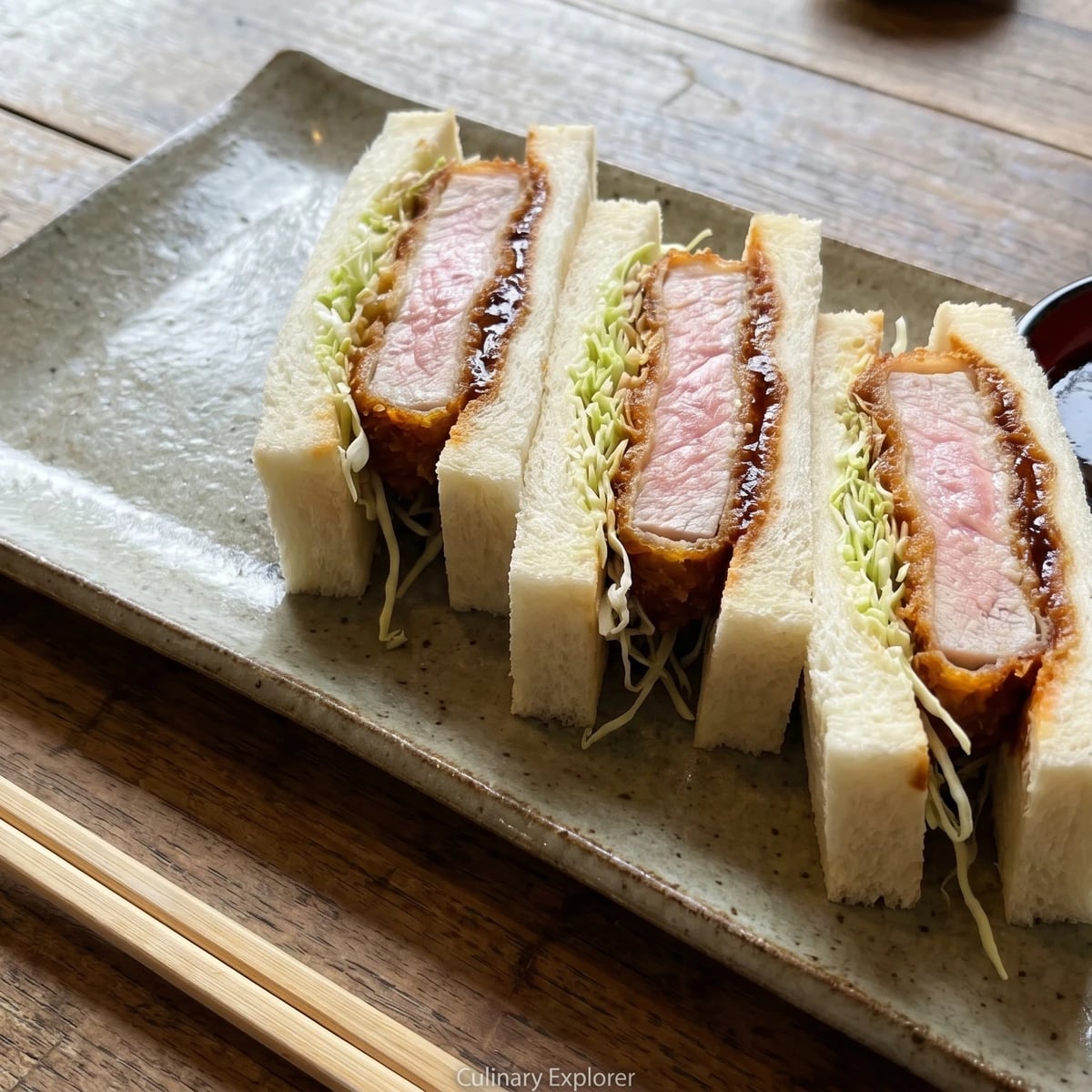
Atonkatsu sando is judged by its cut face. You see everything at once: soft white shokupan, fine cabbage, sauce-dark pork, and a crumb that should still look crisp where the knife passed through. A sandwich gives you no lacquer lid to hide under. It is very direct, which is one reason I like it.
The fear is the frying, of course. People see panko and hot oil and imagine a performance. It isn't. The first secret is even thickness: score the fat, tap the pork level, coat it lightly, and fry it at a steady heat so the crust turns golden in the same time the meat cooks through. The oil does the work if you give it room and don't crowd the pot.
The detail that decides the sandwich comes after the frying. Rest the cutlet on a rack so the underside stays dry, brush on enough tonkatsu sauce to season it, then stop. The cabbage must be thin and very dry, the bread lightly buttered or touched with karashi so it doesn't drink the sauce too quickly. We are making a tidy thing, not a wet one.
Cut the finished sandwich into three fingers and wipe the knife between cuts. This is not fussiness. A clean cut keeps the crumb, cabbage, and pork in their proper layers, and that order is the pleasure of the dish. Honmono, the real thing, is often only this: good pork, soft bread, and moisture kept in its place.
Tonkatsu sando is commonly traced to Isen, a tonkatsu restaurant in Ueno, Tokyo, which began serving the sandwich in 1935 for geisha of the nearby hanamachi who wanted tonkatsu they could eat neatly between appointments. Its parent dish, tonkatsu, grew from Meiji-era yōshoku, Western-style food adapted in Japan, but the sandwich's soft shokupan, trimmed crusts, and tidy finger cuts made it a distinctly Japanese convenience. Many older Tokyo shops still serve it cut into three small bars, the portioning doing as much work as the sauce.
Quantity
4 pieces (about 120g each)
1 to 1.5cm thick
Quantity
1 teaspoon
Quantity
1/4 teaspoon
Quantity
1/2 cup
Quantity
2
beaten
Quantity
2 cups
Quantity
as needed
for deep-frying
Quantity
8 thin slices
preferably from an 8-slice loaf
Quantity
2 cups
finely shredded, rinsed, and dried well
Quantity
1/2 cup
Quantity
2 tablespoons
softened
Quantity
1 teaspoon
| Ingredient | Quantity |
|---|---|
| boneless pork loin cutlets1 to 1.5cm thick | 4 pieces (about 120g each) |
| fine sea salt | 1 teaspoon |
| white pepper | 1/4 teaspoon |
| all-purpose flour | 1/2 cup |
| large eggsbeaten | 2 |
| fresh panko | 2 cups |
| neutral oilfor deep-frying | as needed |
| shokupanpreferably from an 8-slice loaf | 8 thin slices |
| green cabbagefinely shredded, rinsed, and dried well | 2 cups |
| Japanese tonkatsu sauce | 1/2 cup |
| unsalted buttersoftened | 2 tablespoons |
| karashi mustard (optional) | 1 teaspoon |
Shred the cabbage as finely as you can, rinse it briefly in cold water, then drain and dry it very well in a spinner or clean towel. The rinse freshens the cut edges, but any water left behind will go straight into the bread. For this sandwich, dry cabbage is not a small detail. It is the difference between crisp and tired.
Score the strip of fat along each pork cutlet in a few places, then tap the meat gently until it is an even thickness. Season both sides with the salt and white pepper. Scoring keeps the fat from pulling the cutlet into a curve as it fries, and even thickness lets the pork cook through before the panko grows too dark.
Set out flour, beaten eggs, and panko in three shallow trays. Coat each cutlet lightly in flour and shake off the excess, dip it in egg, then press it into the panko so the crumbs cling in an even layer. Let the breaded cutlets rest for 10 minutes while the oil heats. The flour gives the egg something to hold, the egg gives the panko something to hold, and the short rest keeps the coating from shedding in the pot.
Heat 5cm of neutral oil in a heavy pot to 170 C. Fry two cutlets at a time, about 3 minutes per side, until the panko is deep golden and the pork reaches 63 C in the center. Keep the oil steady, not furious. If the heat drops too far, the crust drinks oil; if it climbs too high, the crumb browns before the pork is done.
Move the fried cutlets to a rack and rest them for 5 minutes. Brush both sides with tonkatsu sauce, using enough to gloss the crust without soaking it. Resting lets the juices settle and gives the crust a moment to firm; saucing too heavily turns the panko soft before it reaches the bread.
Stir the softened butter with the karashi, if using, and spread a very thin layer on one side of each slice of shokupan. Lay a small bed of dry shredded cabbage on 4 slices, set one sauced cutlet on each, add a little more cabbage, and close with the remaining bread. The butter is not there to make the sandwich rich. It is a thin barrier, keeping sauce and cabbage from soaking the bread too quickly.
Set a light board or tray over the sandwiches for 3 to 5 minutes, just enough to settle the layers. Trim the crusts if you want the classic shop look, then cut each sandwich into three fingers with a sharp knife, wiping the blade between cuts. That clean face is part of the dish. Leave it ragged and you've worked hard only to hide the evidence.
1 sandwich (about 270g)
Culinary guides, cultural storytelling, and the editorial depth that makes cooking meaningful.
Discover Culinary Explorer
Chef Takumi
A sausage on a stick, sweet batter, clean hot oil, and no cornmeal. Amerikan doggu is festival food made plain, with the batter thick enough to cling.

Chef Takumi
Atsuyaki tamago sando looks like a trick of the kissaten counter, but it is only soft bread, clear dashi, patient eggs, and one brave warm cut.

Chef Takumi
A good chicken katsu sando is decided before assembly: pound the cutlet thin, fry it crisp, then sandwich it while the crumb still has its bite.

Chef Takumi
A Sapporo bakery roll with a plain secret: good chikuwa, tuna mayo that isn't wet, and soft bread wrapped loosely enough to rise around it.