
Chef Takumi
Amerikan Doggu (アメリカンドッグ, corn dog)
A sausage on a stick, sweet batter, clean hot oil, and no cornmeal. Amerikan doggu is festival food made plain, with the batter thick enough to cling.
A cooking platform built around craft, culture, and the stories behind what we eat.
Created by
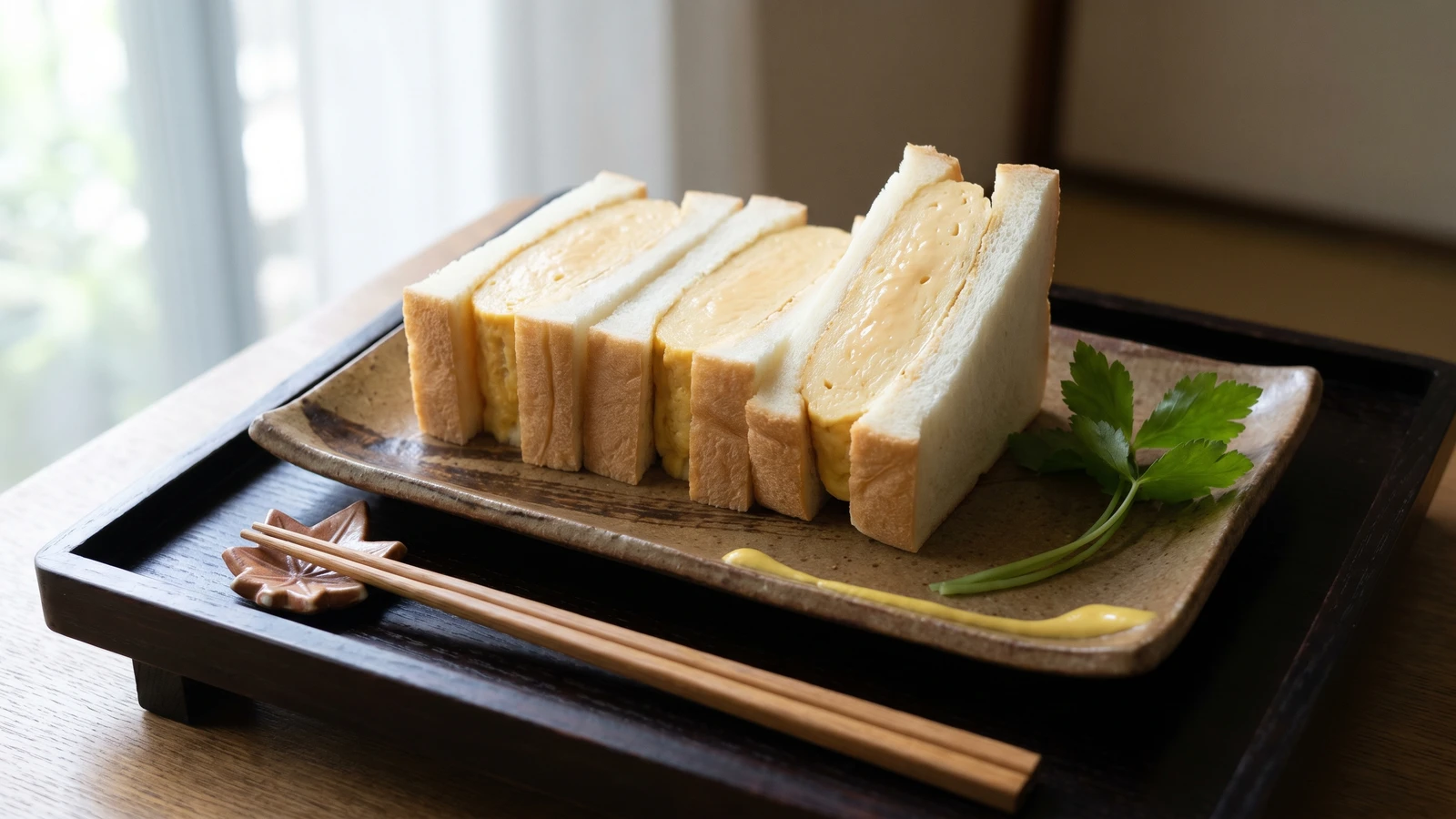
Atsuyaki tamago sando looks like a trick of the kissaten counter, but it is only soft bread, clear dashi, patient eggs, and one brave warm cut.
The first surprise is the thickness. A sandwich usually asks the filling to behave itself, but this one lets the egg stand tall: soft, yellow, and warm enough to make the shokupan give way around it. It looks like a cafe secret. It isn't. The secret is simply not to rush the eggs.
Atsuyaki means thick-cooked, and here the egg is closer to a gentle dashi omelette than to the sweet rolled tamago many people know from sushi. The dashi loosens the eggs and gives them depth, but it also makes them tender, which is why the heat must stay moderate. Cook too hot and the curd tightens before the center sets. Cook steadily, fold the edges in, and let the pan do its quiet work.
The bread matters. Use fresh shokupan, thin enough to bend but sturdy enough to hold the egg. A little karashi, Japanese mustard, wakes the richness without hiding it, and a thin coat of mayonnaise protects the crumb from going soggy. Then press gently and cut with a clean knife. That cut decides the dish as much as the cooking does: one confident stroke, nothing crushed, the face of the egg left smooth and glistening.
This is the Kansai answer to the egg sandwich, more kissaten than lunchbox, warm where the Tokyo egg-salad version is cool. It belongs with coffee, tea, or a small bowl of soup, and it asks for no decoration beyond good bread and eggs treated with care. Honmono, made reachable.
The thick omelette sandwich is strongly associated with Kansai kissaten, the independent coffee shops that flourished in Japanese cities during the Shōwa period. While Tokyo became known for chilled egg-salad sandwiches, shops in Kyoto and Osaka favored warm atsuyaki tamago or dashimaki-style omelettes tucked into shokupan. The contrast is still a small regional debate, and a useful one: it shows how a Western-format sandwich was absorbed into a Japanese meal grammar by method, seasoning, and texture.
Quantity
4
Quantity
1/3 cup
cooled
Quantity
1 teaspoon
Quantity
1 teaspoon
Quantity
1/2 teaspoon
Quantity
1/8 teaspoon
Quantity
2 teaspoons
for the pan
Quantity
4 thin slices
crusts trimmed if desired
Quantity
2 tablespoons
Quantity
1/2 teaspoon
| Ingredient | Quantity |
|---|---|
| large eggs | 4 |
| ichiban dashi or vegetarian dashicooled | 1/3 cup |
| usukuchi shōyu (light soy sauce) | 1 teaspoon |
| mirin | 1 teaspoon |
| sugar | 1/2 teaspoon |
| fine sea salt | 1/8 teaspoon |
| neutral oilfor the pan | 2 teaspoons |
| fresh shokupancrusts trimmed if desired | 4 thin slices |
| Japanese mayonnaise | 2 tablespoons |
| karashi (Japanese mustard) (optional) | 1/2 teaspoon |
Crack the eggs into a bowl and cut through them with chopsticks or a fork, lifting rather than whipping. Stir in the cooled dashi, usukuchi shōyu, mirin, sugar, and salt until the mixture is even. Don't beat in air. Air makes bubbles, and bubbles make holes where you want a smooth, tender face.
Pour the egg mixture through a fine strainer into a measuring cup. This catches stray whites and chalazae, those little cords that hold the yolk in place, so the omelette cooks evenly and slices cleanly. It feels fussy until you see the cut face. Then it feels obvious.
Mix the mayonnaise and karashi in a small bowl. Spread a thin layer on one side of each slice of shokupan. The mustard sharpens the egg without taking over, and the mayonnaise makes a light barrier so the warm omelette softens the bread instead of soaking it.
Set a small rectangular tamagoyaki pan, about 5 by 7 inches, over medium-low heat and oil it lightly. If you don't have one, use the smallest nonstick skillet you own and plan to fold the sides in. The pan is ready when a drop of egg hisses gently and sets in a few seconds, not when it spits.
Pour in the egg mixture. Stir slowly for the first minute, drawing the set edges toward the center so loose egg fills the gaps. When the bottom is set but the top is still glossy, fold the edges in to make a neat block the size of the bread. Cover the pan and cook over low heat for 3 to 5 minutes, until the center is just set and still tender. Hard heat gives you a rubber slab. Gentle heat gives you atsuyaki tamago.
Slide the omelette onto a board. If the shape needs tidying, wrap it in parchment or a bamboo sushi mat and press the sides lightly for one minute. Don't crush it. You're persuading the egg into a square, not punishing it for being round.
Set the warm omelette between two prepared slices of shokupan, mustard side facing the egg. Repeat for the second sandwich if you cooked the egg in two portions, or halve the omelette to fill both. Rest a light plate on top for 1 minute. This gentle pressure lets the bread cling to the egg and lets the warmth soften the crumb.
Trim the crusts if you want the kissaten look, then cut each sandwich in half with a sharp knife, wiping the blade between cuts. Use one clean stroke. Sawing compresses the bread and tears the egg, and this dish has nothing to hide. Serve warm, while the bread is soft and the cut face still glistens.
1 serving (about 215g)
Culinary guides, cultural storytelling, and the editorial depth that makes cooking meaningful.
Discover Culinary ExplorerChef Takumi
A sausage on a stick, sweet batter, clean hot oil, and no cornmeal. Amerikan doggu is festival food made plain, with the batter thick enough to cling.
Chef Takumi
A good chicken katsu sando is decided before assembly: pound the cutlet thin, fry it crisp, then sandwich it while the crumb still has its bite.

Chef Takumi
A Sapporo bakery roll with a plain secret: good chikuwa, tuna mayo that isn't wet, and soft bread wrapped loosely enough to rise around it.

Chef Takumi
A shrimp cutlet sandwich lives or dies on texture: sweet pieces of shrimp bound just enough, panko kept crisp, soft shokupan, cold cabbage, and tartar used as a seasoning, not a blanket.