
Chef Takumi
Amerikan Doggu (アメリカンドッグ, corn dog)
A sausage on a stick, sweet batter, clean hot oil, and no cornmeal. Amerikan doggu is festival food made plain, with the batter thick enough to cling.
A cooking platform built around craft, culture, and the stories behind what we eat.
Created by
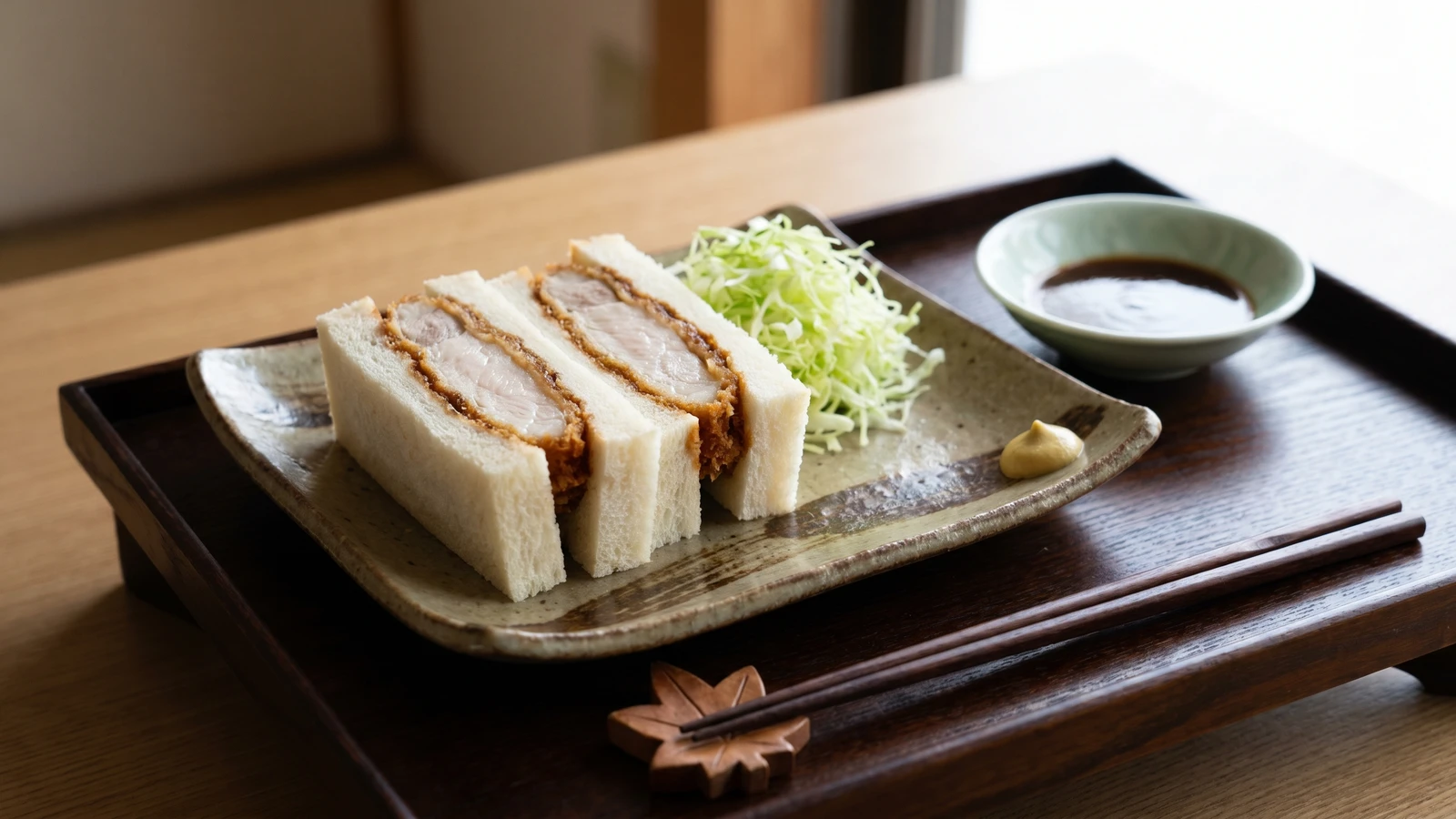
A good chicken katsu sando is decided before assembly: pound the cutlet thin, fry it crisp, then sandwich it while the crumb still has its bite.
Acutlet sandwich looks like a small engineering project until you make one. Then it shows its honest nature: bread, cabbage, sauce, one crisp piece of chicken. The sandwich asks for attention, not ceremony.
The one detail that decides it is thickness. Pound the chicken evenly and the meat cooks before the panko darkens, staying juicy under a pale-gold crust. Leave one end thick and you'll overcook the thin side while waiting for the thick side to catch up. This is not difficult. It's only unfamiliar, and the mallet is doing the teaching.
Use shokupan, Japanese milk bread, if you can. Its soft square crumb holds the cutlet without fighting it, while shredded cabbage gives the sauce somewhere to settle. Tonkatsu sauce is sweet, sharp, and dark enough to flatter the fried crust, but don't drown the sandwich. Nothing hidden. The chicken should still taste like chicken, the crumb should still speak under your teeth, and the plate should have room around it.
Katsu belongs to yōshoku, the Japanese table of Western-derived dishes that took shape in the Meiji era, when cutlets were adapted into katsuretsu and later tonkatsu. Rengatei in Tokyo's Ginza district, opened in 1895, is often linked to early Japanese-style cutlets served with shredded cabbage. Katsu sando developed from this world of cutlets, soft bread, and boxed meals, becoming especially suited to train travel, department-store food halls, and bento.
Quantity
2 pieces (about 150g each)
Quantity
1/2 teaspoon
Quantity
1/8 teaspoon
Quantity
3 tablespoons
Quantity
1
beaten
Quantity
1 cup
Quantity
about 2 cups
for frying
Quantity
4 slices
preferably 1/2-inch thick
Quantity
2 tablespoons
softened
Quantity
3 tablespoons
plus more for serving
Quantity
1 cup
finely shredded
Quantity
1 teaspoon
Quantity
1 pinch
for the cabbage
| Ingredient | Quantity |
|---|---|
| boneless skinless chicken thighs or small chicken breasts | 2 pieces (about 150g each) |
| fine sea salt | 1/2 teaspoon |
| white pepper | 1/8 teaspoon |
| all-purpose flour | 3 tablespoons |
| large eggbeaten | 1 |
| fresh panko | 1 cup |
| neutral oilfor frying | about 2 cups |
| shokupanpreferably 1/2-inch thick | 4 slices |
| unsalted buttersoftened | 2 tablespoons |
| tonkatsu sauceplus more for serving | 3 tablespoons |
| green cabbagefinely shredded | 1 cup |
| rice vinegar | 1 teaspoon |
| fine sea saltfor the cabbage | 1 pinch |
Toss the shredded cabbage with the rice vinegar and a pinch of salt, then let it sit while you fry. The salt relaxes the cabbage just enough to fold into the sandwich, and the vinegar keeps it clean against the sauce. Squeeze it lightly before assembly so it doesn't wet the bread.
Lay the chicken between sheets of parchment and pound it to an even 1/2-inch thickness. Season both sides with the salt and white pepper. Even thickness is the quiet trick here: the chicken cooks through at the same moment the panko turns crisp and golden.
Set out flour, beaten egg, and panko in three shallow dishes. Dust the chicken with flour and tap off the excess, dip it in egg, then press it into the panko. The flour gives the egg something to hold, the egg holds the crumbs, and pressing the panko on firmly gives you an even crust instead of bare patches.
Heat 1 inch of oil in a heavy pan to 340 F. Fry the cutlets until pale golden and cooked through, about 3 minutes per side for thighs or a little less for thin breast pieces. Keep the oil lively but not fierce; too cool and the crumb drinks oil, too hot and the outside browns before the center is done.
Lift the cutlets to a wire rack and rest them for 2 minutes. Brush both sides lightly with tonkatsu sauce. A rack keeps the underside crisp, and saucing while the crust is hot lets the sauce cling without soaking the crumb.
Butter one side of each shokupan slice. Spread a little tonkatsu sauce over the buttered sides, add the squeezed cabbage, set the cutlet on top, and close the sandwich. Butter is not decoration here. It makes a thin guard between bread and sauce so the sandwich stays soft, not soggy.
Press the sandwich gently for 1 minute with a board or plate, then trim the crusts if you like and cut each sandwich into three fingers or two neat halves. Use a sharp knife and wipe it between cuts. The clean face is part of the pleasure, and here the knife does a little seasoning of its own.
1 serving (about 340g)
Culinary guides, cultural storytelling, and the editorial depth that makes cooking meaningful.
Discover Culinary ExplorerChef Takumi
A sausage on a stick, sweet batter, clean hot oil, and no cornmeal. Amerikan doggu is festival food made plain, with the batter thick enough to cling.

Chef Takumi
Atsuyaki tamago sando looks like a trick of the kissaten counter, but it is only soft bread, clear dashi, patient eggs, and one brave warm cut.

Chef Takumi
A Sapporo bakery roll with a plain secret: good chikuwa, tuna mayo that isn't wet, and soft bread wrapped loosely enough to rise around it.

Chef Takumi
A shrimp cutlet sandwich lives or dies on texture: sweet pieces of shrimp bound just enough, panko kept crisp, soft shokupan, cold cabbage, and tartar used as a seasoning, not a blanket.