Culinary Explorer

A cooking platform built around craft, culture, and the stories behind what we eat.
Discover Culinary Explorer
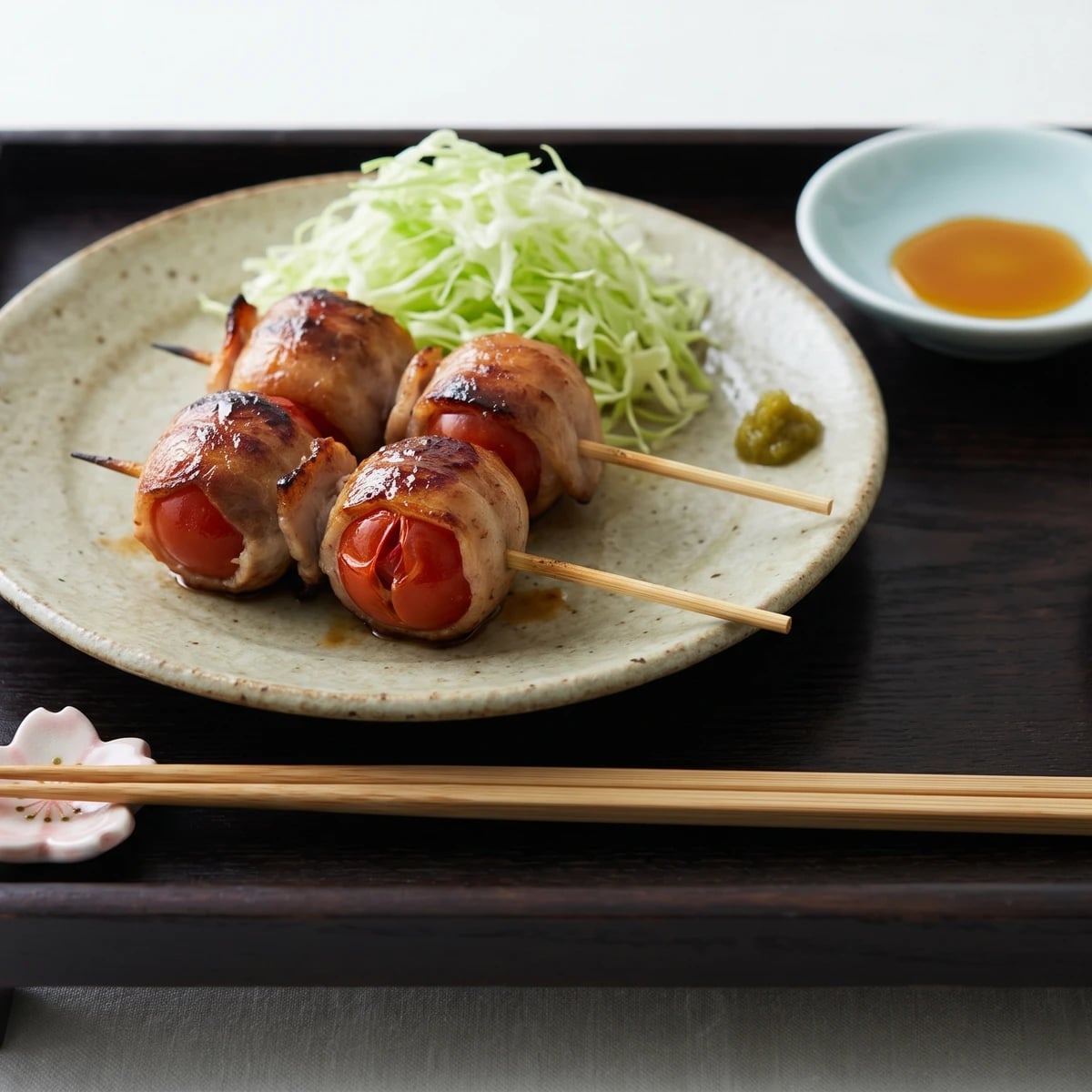
Tomato-maki (トマト巻き, pork-wrapped cherry tomato)

Tomato-maki (トマト巻き, pork-wrapped cherry tomato)

Created by

Cherry tomatoes, thin pork belly, and a hot grill: tomato-maki asks for almost no cleverness. The secret is snug wrapping, so the pork browns before the tomato loses its nerve.

Appetizers & Snacks
Japanese
Dinner Party
BBQ
Weeknight
20 min
Active Time
15 min cook35 min total
Yield4 servings (12 pieces)

Cherry tomatoes are a summer bargain if you buy them when they are truly in shun: small, firm, sweet, and bright under the skin. Tomato-maki doesn't ask you to improve them. It asks you to wrap each one in thin pork belly, set it over heat, and stop when the pork has browned and the tomato inside is just ready to burst. Very serious cooks have written longer instructions for less. This one is kinder.

Here the first secret is the thickness of the pork. It must be thin enough to cook before the tomato collapses, but not so thin that it tears when you pull it snug. Wrap it with one small overlap and skewer through that join. The pork shrinks as it cooks, tightening around the tomato like a belt, and that is why the seam goes down first.

In Hakata-style yakitori, the word yakitori stretches past chicken to pork, vegetables, and little rolled skewers like this. We serve them as a snack with drinks, a first plate at a dinner party, or the thing everyone reaches for at the grill while pretending they were only checking the fire. The tare is light, just soy, mirin, sake, and a little sugar, brushed on at the end. Put it on too early and the sugar scorches before the pork is cooked. Brush late, leave it glossy, and there's nothing hidden: sweet tomato, pork fat, salt, and heat doing exactly what they came to do.

Tomato-maki belongs to Hakata-style yakitori in Fukuoka, a postwar counter-food culture in which yakitori menus came to include pork belly, vegetables, and makimono, rolled skewers, as standard items. The city's yakitori shops are known for serving skewers over raw cabbage, which catches the drips of tare and pork fat and is eaten between pieces. Tomato-maki is a modern izakaya dish, not a temple or court preparation, and that is part of its plain appeal.

The technique, the tradition, and the story behind every dish.

Discover Culinary Explorer

Ingredients

cherry tomatoes

Quantity

12 small (about 180g)

washed, stemmed, and dried very well

thinly sliced pork belly (bara)

Quantity

12 strips (about 250g)

cut just long enough to wrap each tomato once

fine sea salt

Quantity

1/2 teaspoon

divided

neutral oil

Quantity

1 tablespoon

for brushing the grate or pan

Japanese soy sauce (koikuchi shōyu)

Quantity

2 tablespoons

mirin

Quantity

2 tablespoons

sake

Quantity

1 tablespoon

sugar

Quantity

1 teaspoon

finely shredded cabbage

Quantity

2 cups

for serving

yuzu koshō (optional)

Quantity

a small dab

for serving

Equipment Needed

  • 6 bamboo skewers (kushi), soaked 20 minutes, or short metal skewers
  • Charcoal grill with binchōtan, or a gas grill, broiler, or cast-iron grill pan
  • Small saucepan
  • Small bowl and clean brush for tare

Instructions

  1. 1

    Choose and dry

    Choose cherry tomatoes that are small, firm, and sweet, not soft. In summer, when tomatoes are in shun, they do most of the work. Wash them, pull off the stems, and dry them very well; water caught under the pork keeps the surface from browning and makes the wrap slip.

    Keep the tomatoes whole. A cut tomato leaks before the pork can brown, and for tomato-maki the little burst inside the wrap is the point.
  2. 2

    Make the tare

    Combine the soy sauce, mirin, sake, sugar, and a pinch of the salt in a small saucepan. Simmer for 3 to 4 minutes, just until the sugar dissolves and the surface turns glossy. This is tare, a light grilling sauce. It should season and shine, not cover up the tomato.

  3. 3

    Wrap the tomatoes

    Lay one pork strip flat, set a tomato at one end, and roll it snugly with just one small overlap. Trim any extra pork. More pork is not generosity here, it's an undercooked fold. Thread two wrapped tomatoes onto each skewer, passing through the overlap so the seam is pinned. Sprinkle lightly with the remaining salt just before grilling.

    Salt too early and the pork begins to weep. Salt just before the heat, and the surface browns more cleanly.
  4. 4

    Grill seam first

    Heat a charcoal grill, gas grill, broiler, or cast-iron grill pan to medium-high. Brush the grate or pan lightly with oil. Lay the skewers seam-side down first and cook for 1 1/2 to 2 minutes, until the pork grips the tomato and browns underneath. Turn every minute for 5 to 7 minutes, until the pork is browned all around and the tomatoes look swollen, with one or two beginning to split.

    If pork fat flares over charcoal, move the skewers to a calmer spot. Soot is not seasoning.
  5. 5

    Glaze late

    Spoon a little tare into a separate bowl for brushing. Brush the skewers only in the last 60 to 90 seconds, turning once or twice until the pork takes on a soy-dark gloss at the edges. Brush too early and the sugar scorches before the pork is cooked. Brush late and the tare stays clean.

  6. 6

    Rest and serve

    Set the skewers on a small bed of shredded cabbage or beside it on the plate, with a dab of yuzu koshō if you like Kyūshū's sharp green heat. Let them rest for 2 minutes before eating. The tomato inside is hotter than it looks, so bite with attention. Leave the plate some room; a crowded pile hides the shine you worked for.

Chef Tips

  • Ask for shabu-shabu-thin pork belly. If it looks like bacon thickness, it's too thick; the tomato will collapse while the pork catches up. Thin pork shoulder is a sensible stand-in, leaner and less glossy, but it will still make a good skewer.
  • Use tomatoes of the same size. Mixed sizes cook unevenly: the smallest burst, the largest stay cool at the core. At shun, the skin should be taut and the fruit heavy for its size.
  • Binchōtan charcoal gives clean, steady heat, but a broiler set close to the rack works. Keep turning. Pork belly wants quick browning, not a long rest on one side.
  • Salt-only tomato-maki is common too. Skip the tare and finish with a pinch of salt if your tomatoes are especially sweet; that version is honmono, just quieter.

Advance Preparation

  • The tare can be made up to one week ahead and refrigerated. Warm it gently before brushing so it flows thinly over the pork.
  • The tomatoes can be wrapped up to 4 hours ahead. Cover and refrigerate them, then salt just before grilling so the pork stays dry on the surface.
  • Soak bamboo skewers for 20 minutes while the tare cools. Soaking helps the exposed ends char slowly instead of burning away.

Frequently Asked Questions

Nutrition Information

1 serving (about 145g)

Calories
330 calories
Total Fat
28 g
Saturated Fat
10 g
Trans Fat
0 g
Unsaturated Fat
17 g
Cholesterol
45 mg
Sodium
800 mg
Total Carbohydrates
8 g
Dietary Fiber
1 g
Sugars
7 g
Protein
8 g

Note: Chef personas and recipes are created with AI assistance. Cook with care: follow safe food-handling practices, check doneness with a thermometer when needed, and adapt for allergies and your kitchen.

Where cooking meets culture.

Culinary guides, cultural storytelling, and the editorial depth that makes cooking meaningful.

Discover Culinary Explorer

More from Yakitori & Kushiyaki

Browse the full collection