Chef Elsa
Almjause (Alpine Hut Snack Board)
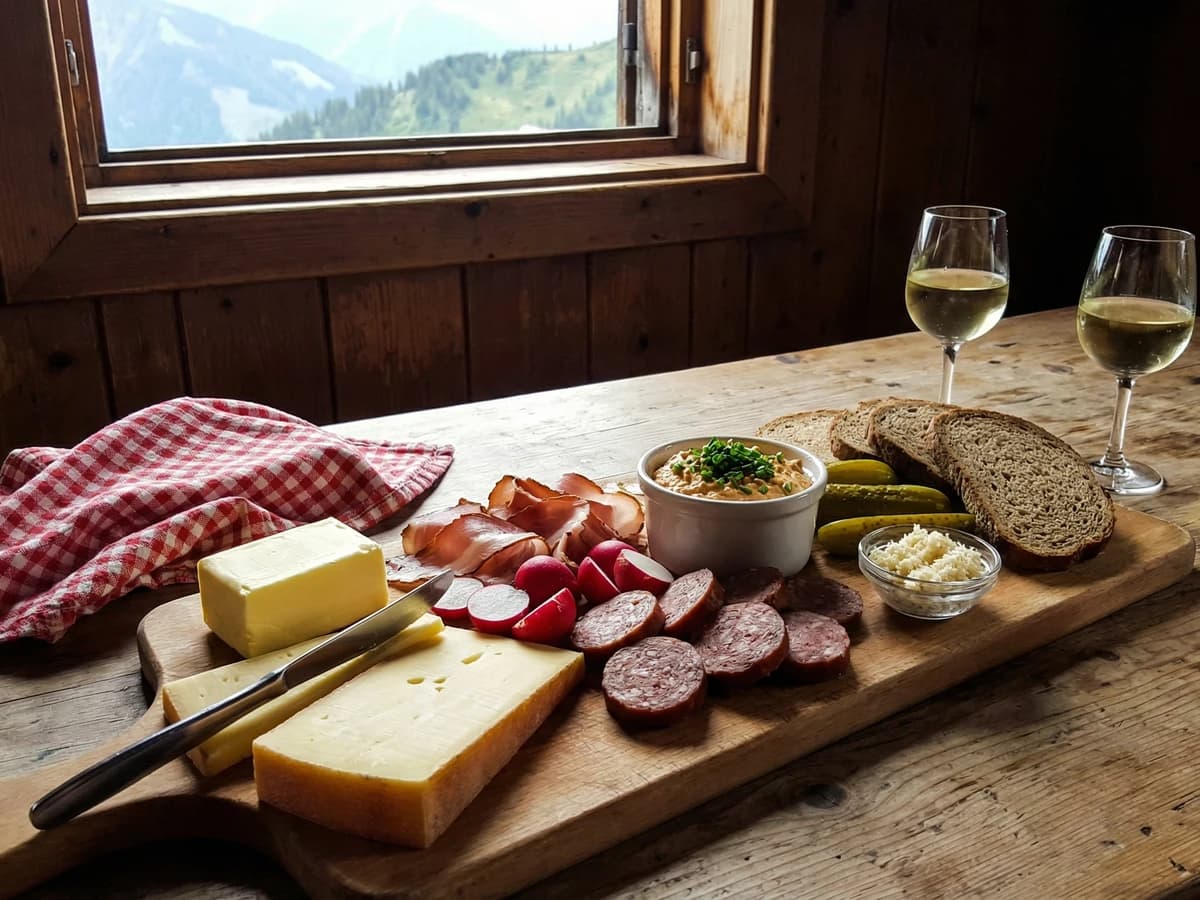
A wooden board loaded with mountain cheese, juniper-smoked Speck, air-dried Hauswürstel, handmade Liptauer, fresh Kren, and thick-cut Bauernbrot, the way Austrian Almhütten have fed hikers for generations.
A cooking platform built around craft, culture, and the stories behind what we eat.
Created by
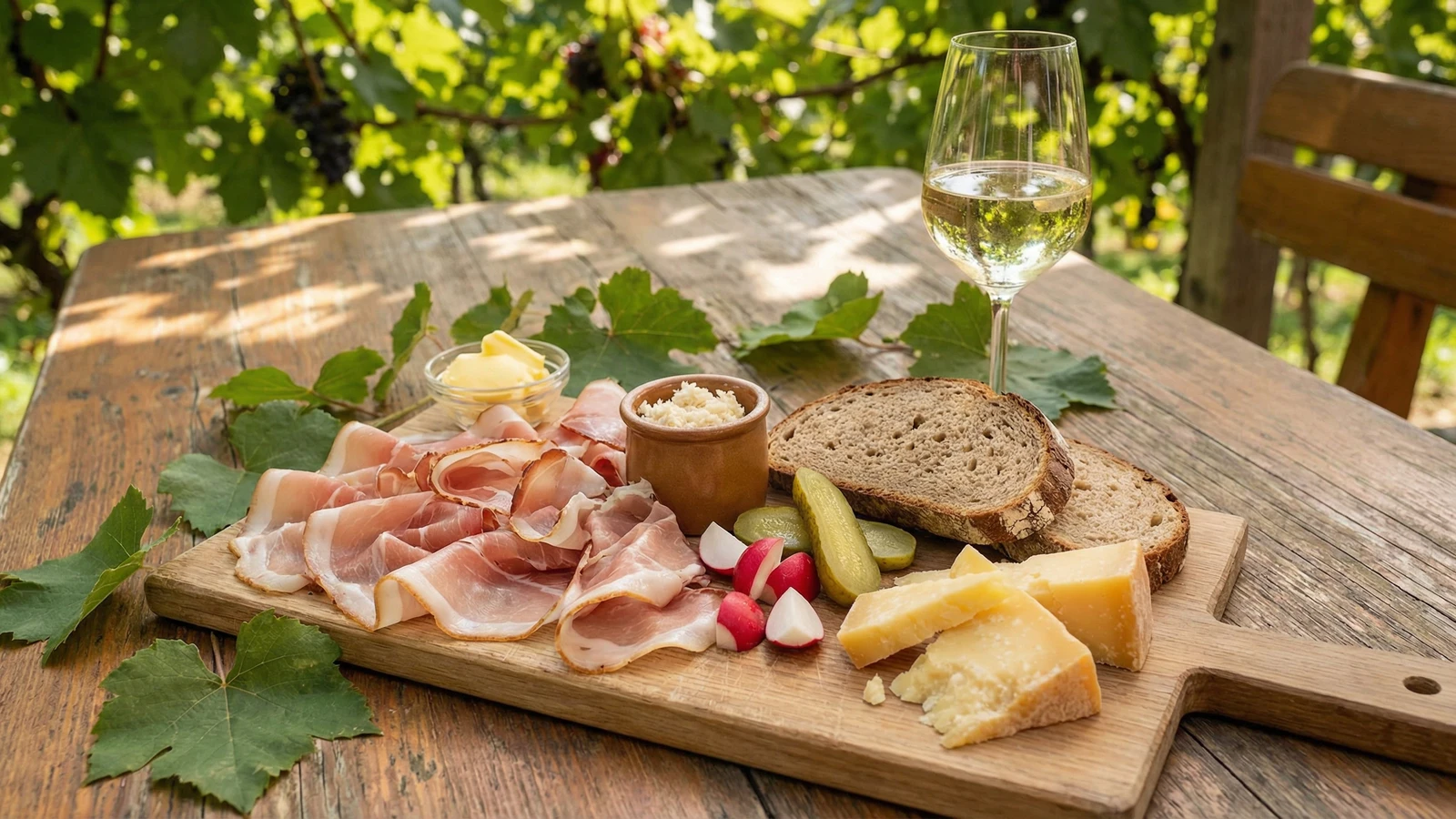
Thinly sliced Tyrolean Speck fanned across a wooden Brettl with fresh grated Kren, mountain Bergkäse, grainy mustard, and dark rye bread. Five hundred years of Alpine curing tradition on one board.
Every summer on our trips to Austria, Gretel and my grandmother Eva would find a Buschenschank somewhere in the hills, a farmhouse wine tavern with a few tables under an old chestnut tree, and they'd order a Brettljause. The board would arrive loaded with Speck, cheese, bread, pickles, and a little crock of horseradish. Nobody was trying to impress anyone. The Speck was made on the farm or the one up the road. The cheese came from the same valley. The bread was dark and sour and heavy enough to anchor a boat. I was ten years old and I thought it was the most beautiful thing I'd ever seen on a table.
Tiroler Speck is not bacon, though people translate it that way. It's dry-salted with juniper, garlic, and whatever spice blend the producer has guarded for generations, then cold-smoked over beechwood and hung in cool Alpine air to cure for months. The result is something between prosciutto and a lightly smoked ham: lean and silky with a rim of sweet, translucent fat and a smokiness that hits the back of your mouth without ever tasting like a campfire. The PGI designation, Protected Geographical Indication, means it can only be called Tiroler Speck if it was made in Tyrol by Tyrolean methods. This matters.
A Speck Platte is the simplest thing I know how to put on a table, and that's exactly why it has to be good. There's nowhere to hide. The Speck is the star, the Kren has to be fresh, the bread has to be real, and the board has to look like someone who loves this food put it together. This is not a dish you cook. It's a dish you curate with your hands and your taste and your respect for the people who made every ingredient on it.
Speck curing in Tyrol dates to at least the 1500s, developed by Alpine farmers who needed to preserve pork through long mountain winters. The specific combination of dry salt cure, cold smoking, and extended air-drying evolved in response to Tyrol's climate: cold, dry mountain air at altitude creates ideal conditions for slow curing that no lowland producer can replicate. Tiroler Speck received PGI status from the European Union in 1996, protecting both the name and the production method. Each producer's spice blend, typically juniper, black pepper, coriander, garlic, and bay, remains a closely guarded family recipe, which is why Speck from two neighboring farms in the Stubai Valley can taste noticeably different.
Quantity
300g
ideally a mix of Schinkenspeck and Bauchspeck
Quantity
150g
aged 6 months or longer
Quantity
about 80g
Quantity
1 tablespoon
Quantity
pinch
Quantity
pinch
Quantity
6 thick slices
Quantity
4 small
Quantity
1 tablespoon
Quantity
80g
at room temperature
Quantity
small handful
quartered
Quantity
for the board
| Ingredient | Quantity |
|---|---|
| Tiroler Speck g.g.A. (PGI)ideally a mix of Schinkenspeck and Bauchspeck | 300g |
| Tiroler Bergkäseaged 6 months or longer | 150g |
| fresh horseradish root (Kren) | about 80g |
| white wine vinegar | 1 tablespoon |
| sugar | pinch |
| salt | pinch |
| dark rye bread (Schwarzbrot or Bauernbrot) | 6 thick slices |
| pickled gherkins (Essiggurken) | 4 small |
| grainy Austrian mustard (Kremser Senf) | 1 tablespoon |
| unsalted butterat room temperature | 80g |
| radishes (optional)quartered | small handful |
| fresh horseradish leaves or chive stalks (optional) | for the board |
Peel the horseradish root and grate it finely on a box grater or Microplane. Work near an open window if you can, because fresh Kren will hit your sinuses harder than you expect. The moment it's grated, toss it with a tablespoon of white wine vinegar and a pinch each of sugar and salt. The vinegar stops the horseradish from oxidizing and turning bitter. Without it, you'll have grey paste in twenty minutes instead of the sharp, clean, white Kren you want on the board. Set it aside in a small bowl covered with cling film pressed directly onto the surface.
Remove the rind from the Speck if it still has one. Use your sharpest knife and slice against the grain as thinly as you can manage. You're aiming for slices you can nearly see through, thin enough that the fat turns translucent and the lean is a deep, rosy red. If you have both Schinkenspeck (from the leg, leaner) and Bauchspeck (from the belly, fattier), slice them separately so you can arrange them in groups. The contrast between the two tells the story of the whole animal.
Cut the Bergkäse into rustic wedges or thick slabs, not fussy little cubes. This is mountain cheese from the same valleys as the Speck, and it should look like it. Halve the Essiggurken lengthwise. Quarter the radishes if they're in season. Spoon the Kremser Senf into a small crock or ramekin. Put the butter on its own small dish. Austrian butter is richer and more golden than most, and it earns its own place on the board.
Cut the Schwarzbrot or Bauernbrot into thick slices, about a centimeter and a half. Dark rye bread is the only bread for a Speck Platte. Its sour, dense crumb stands up to the smoky fat and doesn't dissolve the way a baguette would. If you can find a loaf with a heavy, crackled crust, even better. Toast it lightly if you like, but it's not necessary. Good Bauernbrot has enough character on its own.
Lay the Speck slices across your largest wooden board in loose, overlapping fans. Don't fold them into tight roses or stack them in neat towers. This is not a catering tray. Tyrolean farmers laid Speck on a board with a knife and let people help themselves, and that's the energy you want. Group the Schinkenspeck on one side, the Bauchspeck on the other. Arrange the Bergkäse wedges nearby. Set the bowl of fresh Kren, the mustard crock, and the butter dish among the meat and cheese. Tuck the Essiggurken and radishes into the gaps. Lay the bread slices along one edge or stack them in a basket alongside. If you have fresh horseradish leaves or long chive stalks, tuck one or two onto the board for color.
Set the board in the center of the table with a knife for the cheese and let people build their own bites. A piece of dark bread, a smear of butter, a slice of Speck draped on top, a dab of Kren or mustard. That's the whole thing. No one needs instructions. Pour an Achterl of Grüner Veltliner or a cold Tyrolean beer alongside. This is Gemütlichkeit at its most honest. Mahlzeit!
1 serving (about 195g)
Culinary guides, cultural storytelling, and the editorial depth that makes cooking meaningful.
Discover Culinary ExplorerChef Elsa
A wooden board loaded with mountain cheese, juniper-smoked Speck, air-dried Hauswürstel, handmade Liptauer, fresh Kren, and thick-cut Bauernbrot, the way Austrian Almhütten have fed hikers for generations.

Chef Elsa
Dark, spiced, and wickedly good: Blunzn mashed with onion, mustard, and marjoram into the kind of spread that disappears first from every Heuriger Brettl, scooped up on torn hunks of dark bread.

Chef Elsa
A silky potato and sour cream spread with raw onion and paprika, piled onto dark rye bread the way they serve it at every Heuriger in Lower Austria. No cheese, despite the name. Just good potatoes and honest cooking.
Chef Elsa
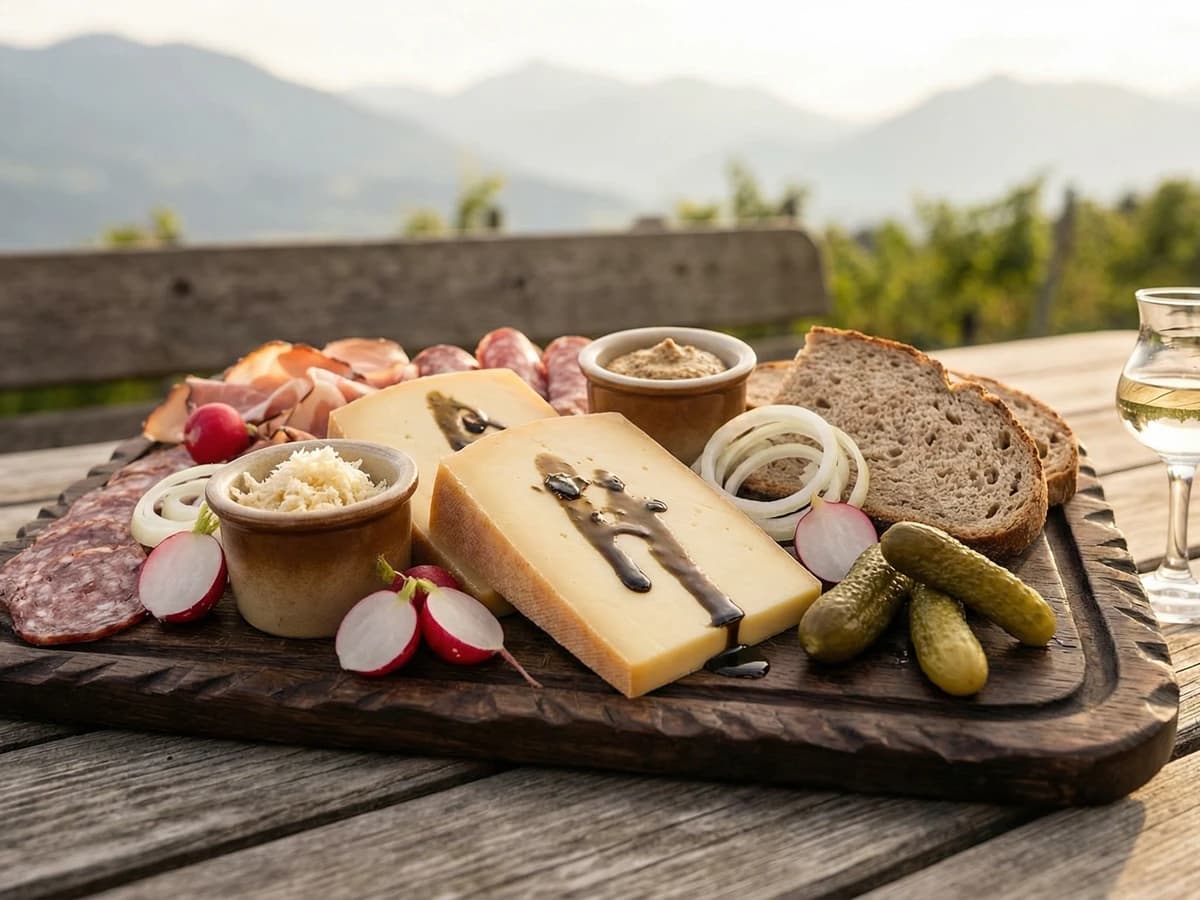
A proper Carinthian Brettljause built around PDO Gailtaler Almkäse, nutty raw-milk alpine cheese served with Speck, dark Bauernbrot, pickles, fresh horseradish, and everything you need for an afternoon on an Almhütte terrace.