Chef Elsa
Almjause (Alpine Hut Snack Board)
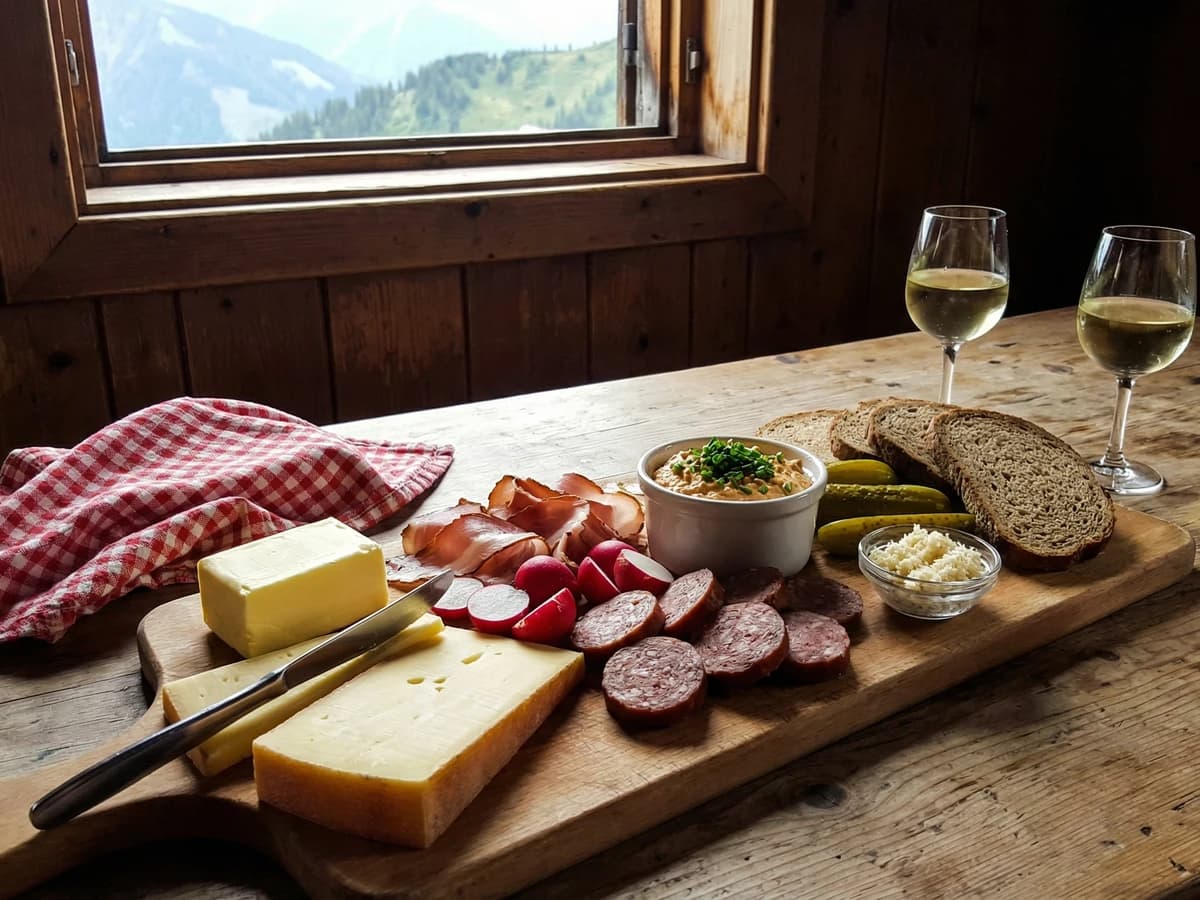
A wooden board loaded with mountain cheese, juniper-smoked Speck, air-dried Hauswürstel, handmade Liptauer, fresh Kren, and thick-cut Bauernbrot, the way Austrian Almhütten have fed hikers for generations.
A cooking platform built around craft, culture, and the stories behind what we eat.

Created by
A silky potato and sour cream spread with raw onion and paprika, piled onto dark rye bread the way they serve it at every Heuriger in Lower Austria. No cheese, despite the name. Just good potatoes and honest cooking.
Gretel always said that the best Austrian food comes from kitchens where there wasn't much money. Erdäpfelkas is proof. It's a spread made from potatoes, sour cream, and raw onion, and it has no business being as good as it is. You mash the potatoes while they're still hot, stir in the sour cream and a little vinegar, fold in sharp diced onion and a dusting of paprika, then pile the whole thing onto bread so dark it's nearly black. That's it. Six ingredients doing the work of sixty.
I first tasted it properly at a Heuriger outside Vienna, one of those old wine taverns where the food comes on wooden boards and nobody's trying to impress you. They brought out an earthenware crock of Erdäpfelkas with a basket of Schwarzbrot and a quarter-liter of Grüner Veltliner, and I remember thinking: this is the kind of food that makes you understand a place. Not the palace kitchens. Not the Konditorei. The farmhouse table where a cook fed a family on potatoes and whatever the cow gave that morning.
The name trips people up. Kas (or Kaas, depending on who's writing it down) sounds like it should mean cheese. It doesn't, not here. In the rural dialects of Upper and Lower Austria, Kas just means something spreadable, something worked and mixed. No cheese in sight. Just potato, cream, onion, and the knowledge that simple food done well doesn't need anything else to justify itself.
Erdäpfelkas belongs to the tradition of Aufstriche, the cold spreads served at Heurigen and Buschenschänke across Lower Austria, Upper Austria, and the Waldviertel. These wine taverns were licensed by Joseph II's 1784 decree allowing vintners to sell their own wine and simple food directly to the public, and the spread platters served on wooden Brettl boards became their signature offering. Erdäpfelkas, Liptauer, and Verhackertes (a crackling spread) remain the essential trio. The dish reflects a time when potatoes were the foundation of rural Austrian cooking and nothing was wasted or overcomplicated.
Quantity
600g
Quantity
150g
full fat
Quantity
80ml
warm
Quantity
1 medium
finely diced
Quantity
2 tablespoons
Quantity
1 tablespoon
Quantity
1 teaspoon
Quantity
to taste
Quantity
freshly ground, to taste
Quantity
2 tablespoons
finely cut
Quantity
for serving
| Ingredient | Quantity |
|---|---|
| waxy potatoes (Kipfler or similar) | 600g |
| saure Sahne (sour cream)full fat | 150g |
| whole milkwarm | 80ml |
| white onionfinely diced | 1 medium |
| sunflower oil or neutral vegetable oil | 2 tablespoons |
| white wine vinegar | 1 tablespoon |
| sweet Hungarian paprika | 1 teaspoon |
| salt | to taste |
| black pepper | freshly ground, to taste |
| fresh chivesfinely cut | 2 tablespoons |
| dark rye bread (Schwarzbrot) | for serving |
Put the potatoes in a large pot, whole and unpeeled. Cover with cold water and add a generous pinch of salt. Bring to a boil, then drop the heat until you see a lazy simmer. Cook until a knife slides in with no resistance, about twenty to twenty-five minutes depending on size. You want them cooked through but not waterlogged. The skin holds the starch in and keeps the flesh from turning gluey. That's why you never peel them first.
Drain the potatoes and peel them while they're still hot. Use a small knife and a clean kitchen towel to hold them. This is the uncomfortable part. The skins slip off easily when the potatoes are scorching, and the hot flesh absorbs the seasonings better than cold potato ever will. If you wait until they cool, the texture changes and the spread won't come together the same way. Work quickly and don't be a hero. Use the towel.
Press the hot peeled potatoes through a potato ricer into a large bowl. If you don't own a ricer, mash them with a fork. Not a food processor, not a blender, not a hand mixer. Any machine will overwork the starch and turn your potatoes into wallpaper paste. You want texture here: mostly smooth with a few small lumps that remind you this was a potato five minutes ago.
Add the warm milk, sour cream, oil, and white wine vinegar to the mashed potatoes while they're still warm. Stir everything together with a wooden spoon. The milk goes in warm because cold liquid hitting hot potato causes it to seize up and turn pasty. The vinegar is subtle. You won't taste it as acidity. What it does is lift everything, sharpen the background, and keep the spread from tasting flat. A tablespoon is all you need.
Fold in the finely diced onion, the paprika, salt, and a few grinds of black pepper. The onion stays raw. That's the point. It gives the spread a clean, sharp bite against all that soft creaminess. Taste it now and adjust the salt. Erdäpfelkas needs more salt than you'd expect. Be brave with it. Stir in the chives last, keeping a pinch back for the top. Transfer the spread to an earthenware crock or a nice bowl, scatter the reserved chives over the surface, and let it rest in the fridge for at least thirty minutes. The flavors need time to get acquainted.
Pull the Erdäpfelkas out of the fridge fifteen minutes before you want to eat it. Stone cold kills the flavor. You want it cool, not numb. Slice your Schwarzbrot thick. Spread the Erdäpfelkas on generously. This is not a delicate canapé situation. Load it on, pour yourself an Achterl of Grüner Veltliner, and eat it outside if you can. Mahlzeit!
1 serving (about 170g)
Culinary guides, cultural storytelling, and the editorial depth that makes cooking meaningful.
Discover Culinary ExplorerChef Elsa
A wooden board loaded with mountain cheese, juniper-smoked Speck, air-dried Hauswürstel, handmade Liptauer, fresh Kren, and thick-cut Bauernbrot, the way Austrian Almhütten have fed hikers for generations.

Chef Elsa
Dark, spiced, and wickedly good: Blunzn mashed with onion, mustard, and marjoram into the kind of spread that disappears first from every Heuriger Brettl, scooped up on torn hunks of dark bread.
Chef Elsa
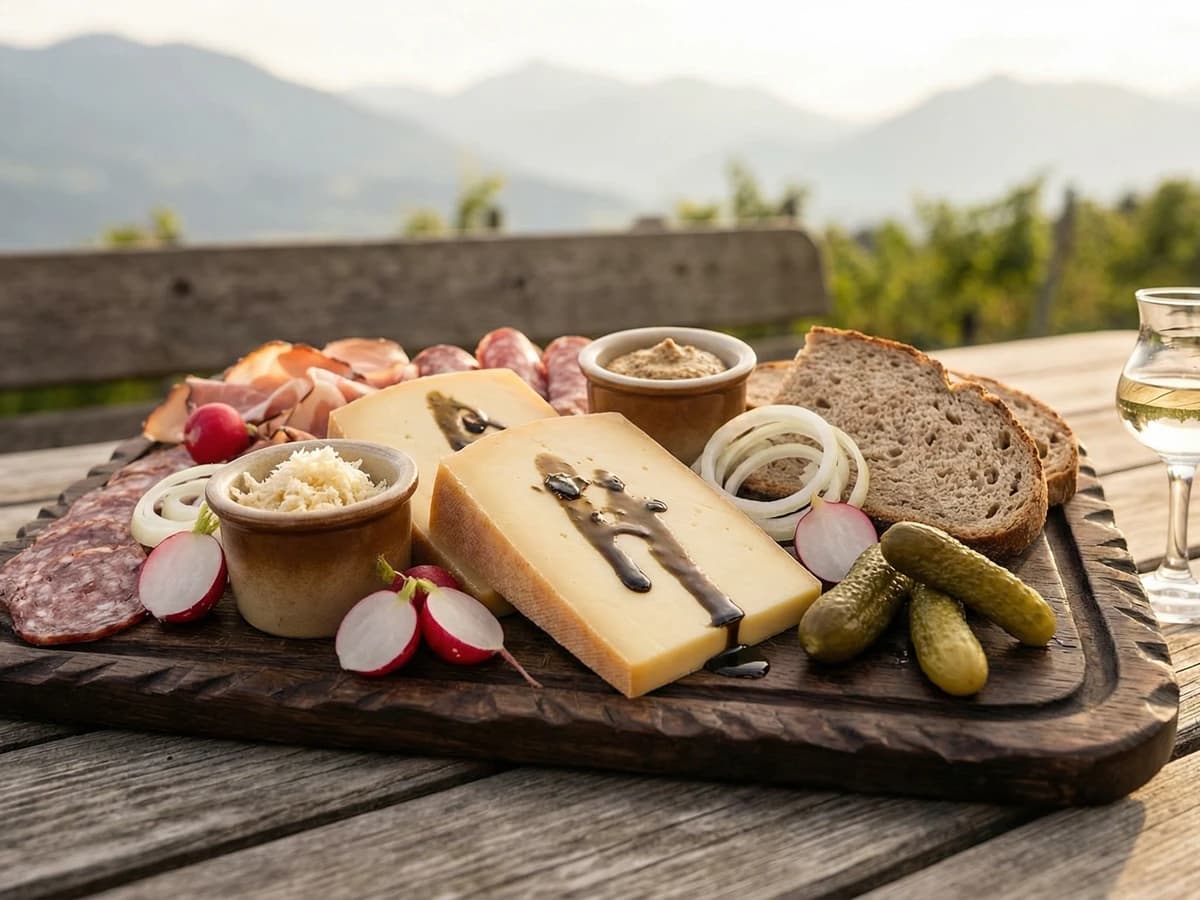
A proper Carinthian Brettljause built around PDO Gailtaler Almkäse, nutty raw-milk alpine cheese served with Speck, dark Bauernbrot, pickles, fresh horseradish, and everything you need for an afternoon on an Almhütte terrace.

Chef Elsa
Blood sausage rounds breaded and pan-fried until the crust shatters and the inside goes creamy and dark, served on a wooden Brettl with sharp mustard and fresh Kren the way every Heuriger in the Wachau has done it for generations.