Chef Elsa
Almjause (Alpine Hut Snack Board)
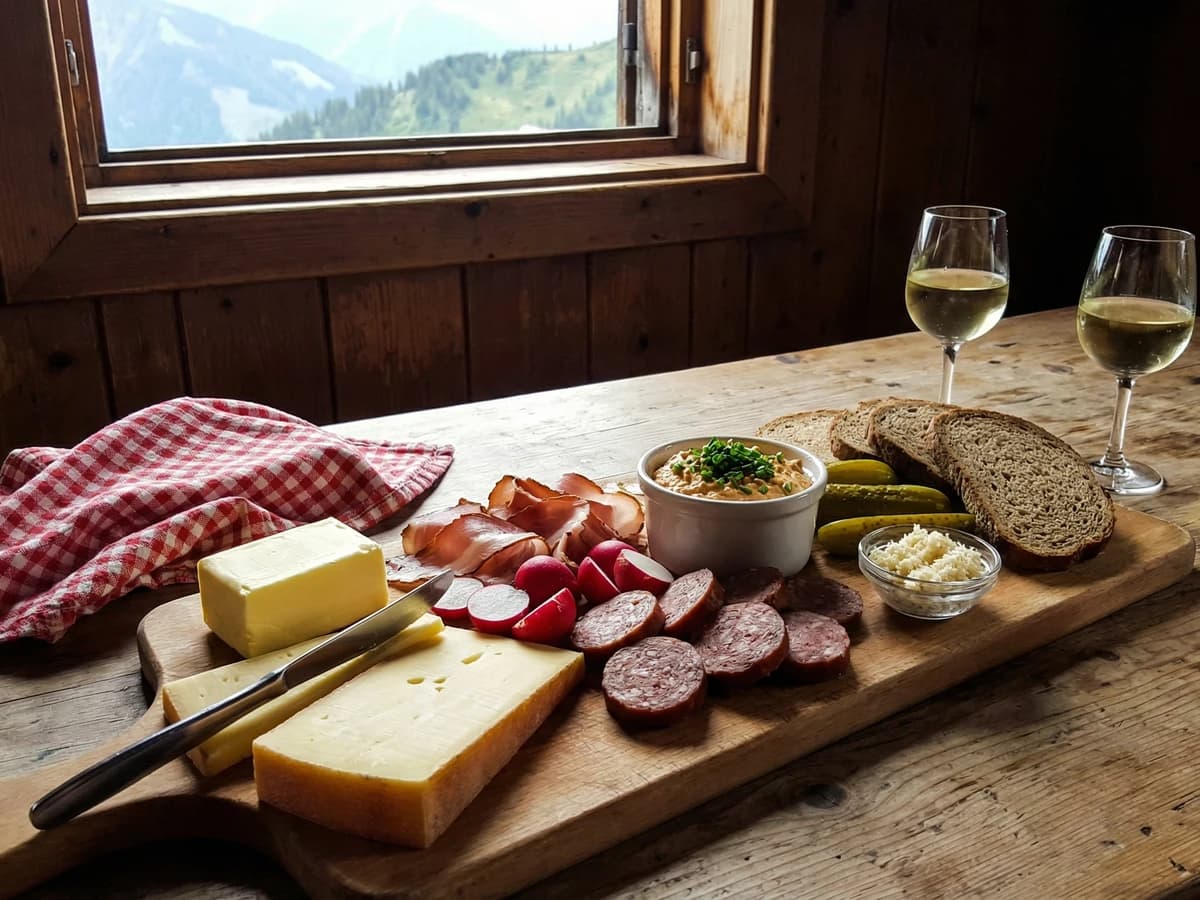
A wooden board loaded with mountain cheese, juniper-smoked Speck, air-dried Hauswürstel, handmade Liptauer, fresh Kren, and thick-cut Bauernbrot, the way Austrian Almhütten have fed hikers for generations.
A cooking platform built around craft, culture, and the stories behind what we eat.
Created by
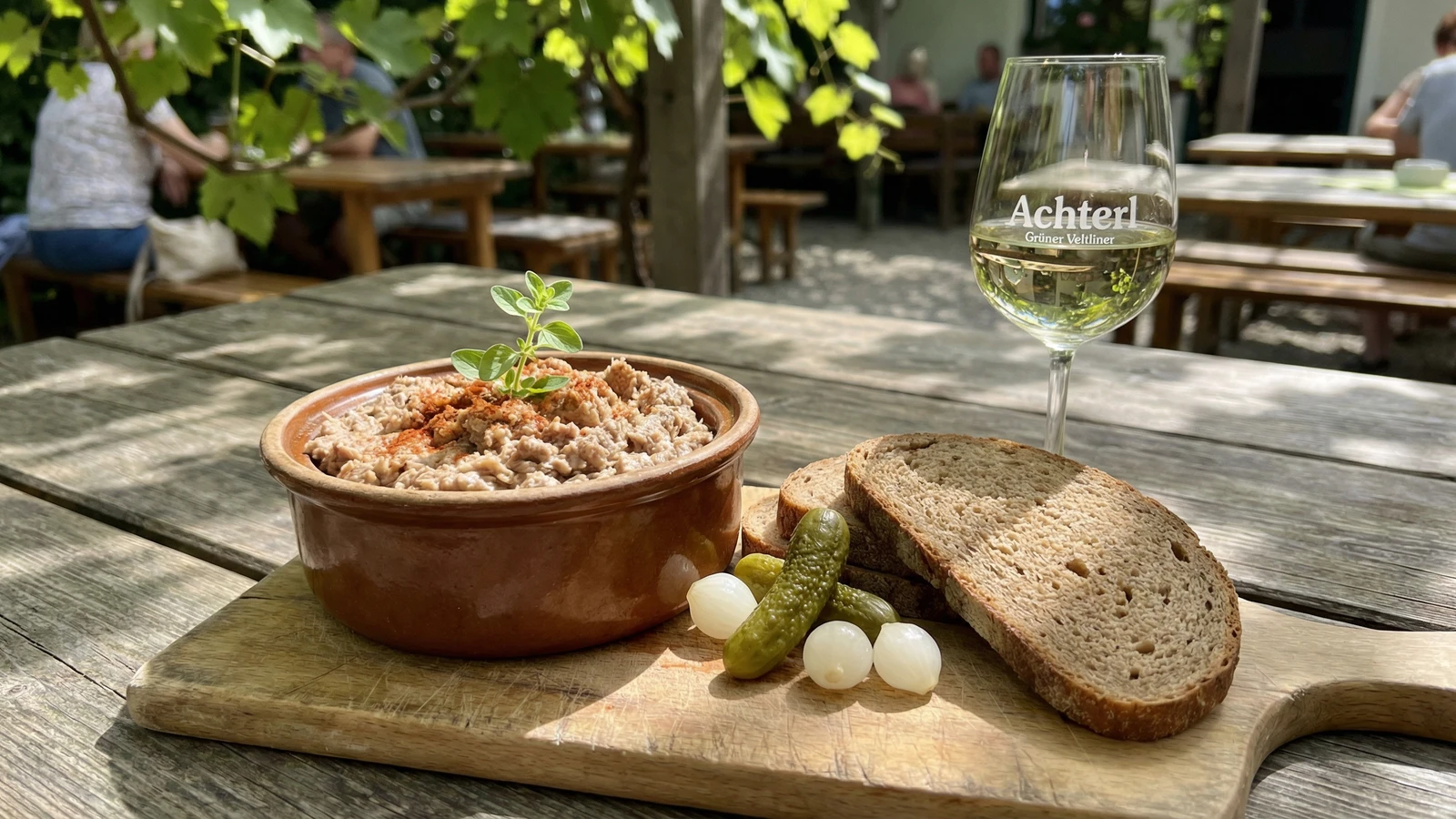
Dark, spiced, and wickedly good: Blunzn mashed with onion, mustard, and marjoram into the kind of spread that disappears first from every Heuriger Brettl, scooped up on torn hunks of dark bread.
There's a moment at every Heuriger when someone sets down a wooden board and everyone reaches for the same thing first. It isn't the Liptauer. It isn't the Grammelschmalz. It's the Blunzenaufstrich, dark and earthy and spread so thick on bread that you can see the knife marks. I watched this happen a hundred times before I understood why.
Blunzn is blood sausage, and I know that word stops some people cold. Gretel always said you could tell who'd actually eaten well in their life by whether they flinched at blood sausage or reached for the bread knife. She didn't mean it as a test, exactly, but she wasn't entirely joking either. Blood sausage is one of the oldest preserved foods in European cooking. It's thrifty, deeply flavorful, and when you mash it into an Aufstrich with good mustard and sweet onion, it becomes something so savory and rich that people who swore they'd never touch it end up asking for the recipe.
The technique is almost absurdly simple. You skin the Blunzn, mash it with a fork, fold in finely diced onion, a good hit of sharp mustard, marjoram, and a few cracks of pepper. That's it. No cooking, no blender, no fuss. The sausage is already cooked and seasoned. Your job is to loosen it, brighten it, and get it onto bread. What makes it good isn't complexity. It's the quality of the Blunzn and the confidence to let it taste like what it is.
I serve this at my restaurant in Salzburg on our Brettljause board, and it's the thing guests talk about afterward. Not because it's daring, but because it's honest. Good Austrian home cooking at its most direct.
Blunzn (blood sausage) has been a staple of Austrian peasant cooking for centuries, rooted in the tradition of whole-animal butchering that defined rural life across Lower Austria, Burgenland, and the Weinviertel. The Aufstrich (spread) form became a fixture of the Heuriger, the seasonal wine taverns licensed under a 1784 decree by Emperor Joseph II that allowed vintners to sell their own wine and serve simple cold food. Blunzenaufstrich, Liptauer, and Grammelschmalz became the holy trinity of the Brettljause board, each one designed to pair with young wine and coarse bread.
Quantity
300g
at room temperature
Quantity
1 small
very finely diced
Quantity
2 tablespoons
Quantity
1 teaspoon
Quantity
1/2 teaspoon
Quantity
to taste
freshly ground
Quantity
1 tablespoon
Quantity
a splash
Quantity
for serving
Quantity
for serving
| Ingredient | Quantity |
|---|---|
| Blunzn (Austrian blood sausage)at room temperature | 300g |
| onionvery finely diced | 1 small |
| sharp Austrian mustard (Kremser Senf or Estragonsenf) | 2 tablespoons |
| dried marjoram | 1 teaspoon |
| sweet paprika | 1/2 teaspoon |
| black pepperfreshly ground | to taste |
| lard or schmaltz (optional) | 1 tablespoon |
| white wine vinegar | a splash |
| dark rye bread (Schwarzbrot) | for serving |
| cornichons and pickled onions | for serving |
Slit the casing of the Blunzn lengthwise and peel it away. The sausage inside should be dark, dense, and slightly crumbly. If it's been in the fridge, let it sit at room temperature for twenty minutes first. Cold blood sausage resists mashing and you'll end up with lumps instead of a smooth spread. Scoop the filling into a wide bowl.
Using a sturdy fork, mash the Blunzn until it breaks down into a rough paste. You're not looking for baby food. You want it spreadable but with a little texture left, the kind of consistency where you can still see tiny flecks of fat and spice. If the sausage is very firm and dry, work in a tablespoon of good lard or schmaltz. This loosens the spread and gives it a silky richness on the bread.
Fold in the finely diced onion, mustard, marjoram, paprika, and several good cracks of black pepper. The onion must be diced small enough that you taste it in every bite without crunching through large raw pieces. Add a splash of white wine vinegar. Just a little, maybe half a teaspoon. The vinegar lifts the whole spread. Without it, the richness of the blood sausage sits heavy. With it, every bite stays bright.
Let the Aufstrich sit at room temperature for at least ten minutes before serving. The marjoram needs time to open up and the onion needs to soften slightly into the fat. Taste it. Does it need more mustard? More pepper? A pinch of salt? The sausage is already seasoned, so be careful, but trust your palate. You want the spread to hit you with savory richness first, then a sharp mustard bite, then the warm earthiness of the marjoram at the finish.
Spoon the Blunzenaufstrich into a small earthenware crock or pile it directly onto a wooden board. Set out thick slices of dark rye bread, a few cornichons, and pickled onions alongside. This is Heuriger food. You tear the bread, spread it thick, and eat it with a glass of young wine. Nobody is measuring portions. Nobody is using a plate. Mahlzeit!
1 serving (about 105g)
Culinary guides, cultural storytelling, and the editorial depth that makes cooking meaningful.
Discover Culinary ExplorerChef Elsa
A wooden board loaded with mountain cheese, juniper-smoked Speck, air-dried Hauswürstel, handmade Liptauer, fresh Kren, and thick-cut Bauernbrot, the way Austrian Almhütten have fed hikers for generations.

Chef Elsa
A silky potato and sour cream spread with raw onion and paprika, piled onto dark rye bread the way they serve it at every Heuriger in Lower Austria. No cheese, despite the name. Just good potatoes and honest cooking.
Chef Elsa
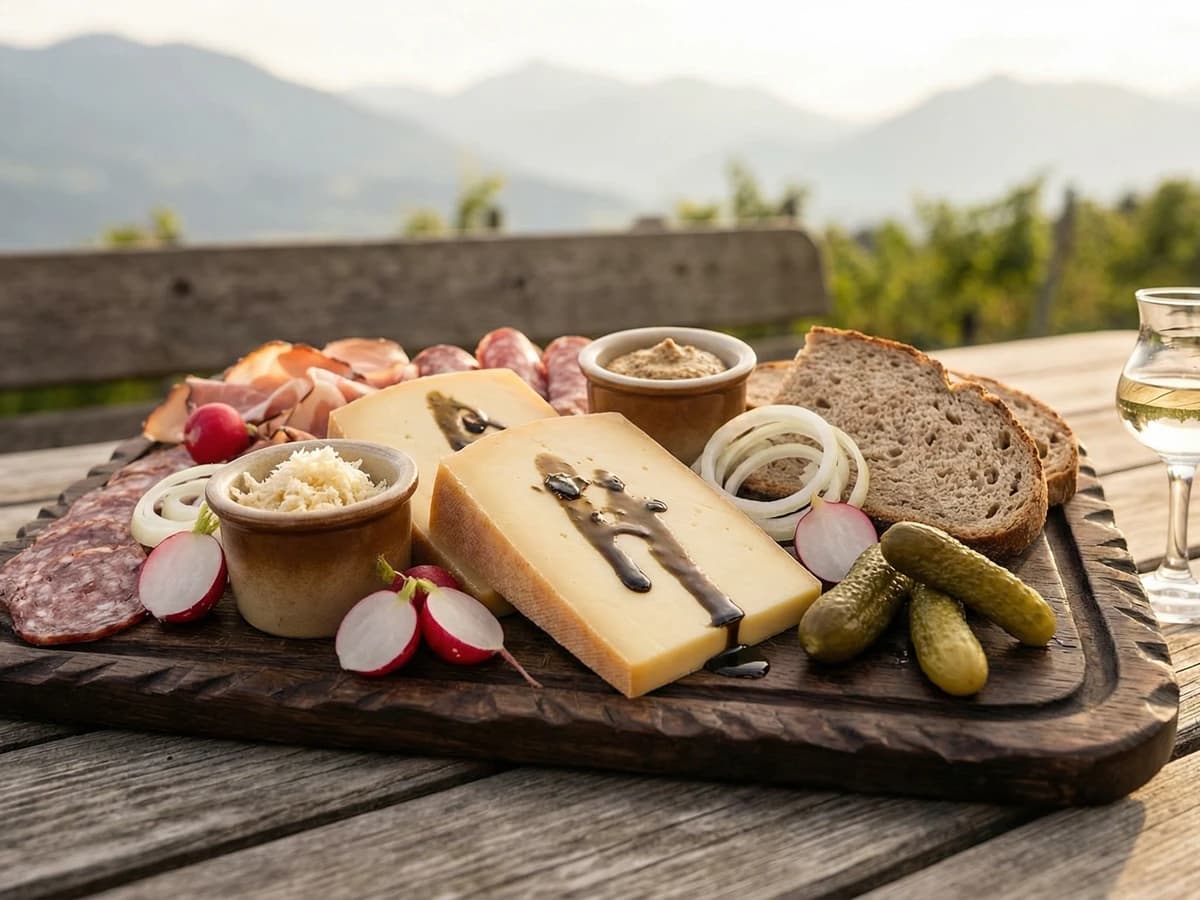
A proper Carinthian Brettljause built around PDO Gailtaler Almkäse, nutty raw-milk alpine cheese served with Speck, dark Bauernbrot, pickles, fresh horseradish, and everything you need for an afternoon on an Almhütte terrace.

Chef Elsa
Blood sausage rounds breaded and pan-fried until the crust shatters and the inside goes creamy and dark, served on a wooden Brettl with sharp mustard and fresh Kren the way every Heuriger in the Wachau has done it for generations.