Chef Elsa
Almjause (Alpine Hut Snack Board)
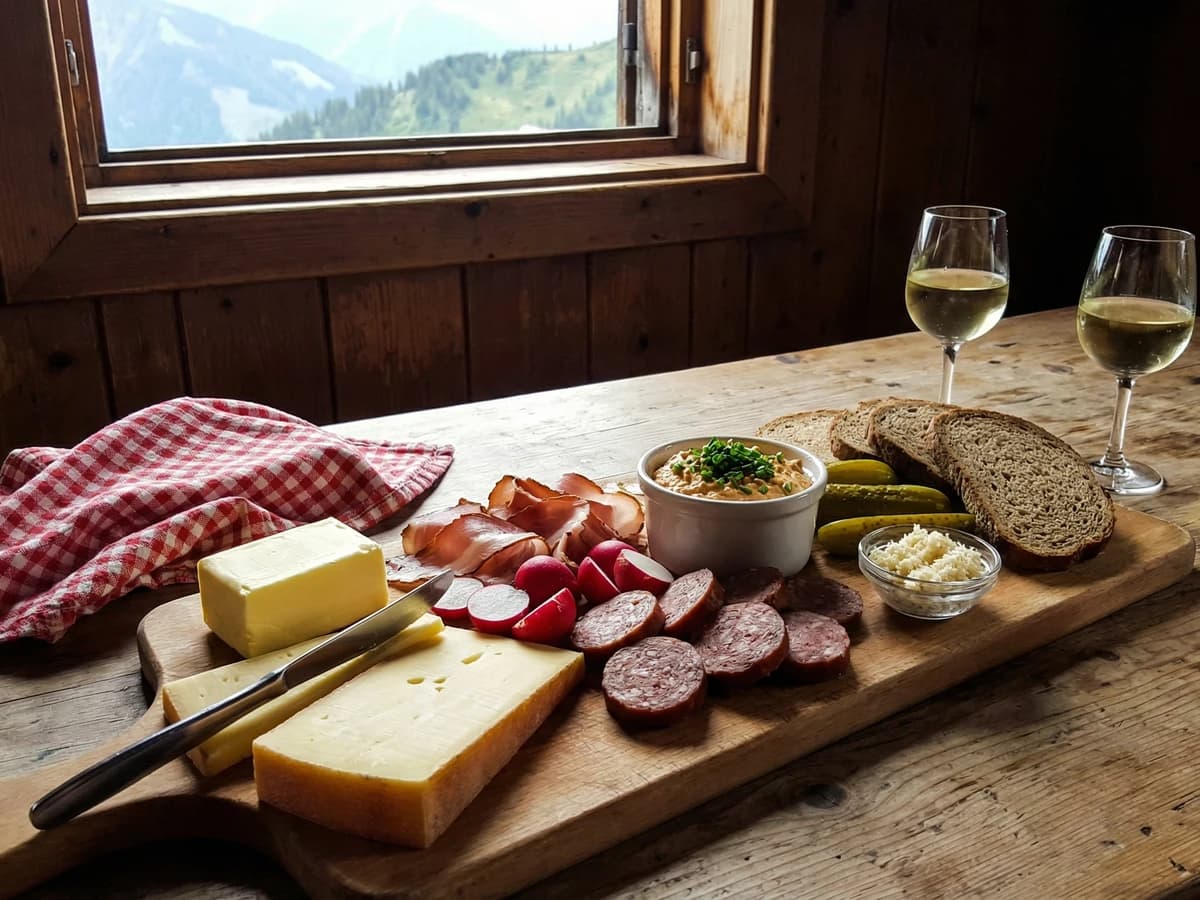
A wooden board loaded with mountain cheese, juniper-smoked Speck, air-dried Hauswürstel, handmade Liptauer, fresh Kren, and thick-cut Bauernbrot, the way Austrian Almhütten have fed hikers for generations.
A cooking platform built around craft, culture, and the stories behind what we eat.

Created by
Blood sausage rounds breaded and pan-fried until the crust shatters and the inside goes creamy and dark, served on a wooden Brettl with sharp mustard and fresh Kren the way every Heuriger in the Wachau has done it for generations.
The first time I ate Gebackene Blunznradln I was maybe ten years old, sitting at a wooden table in a Heuriger garden somewhere outside Vienna. Gretel had ordered a Brettljause for the table, one of those big wooden boards covered in cold cuts, spreads, pickles, dark bread, and in the middle, a pile of golden fried rounds that I didn't recognize. She told me to try one with mustard. I bit through the crisp breadcrumb crust into something soft, rich, and deeply savory. I had no idea what it was, and I didn't care. It was the best thing on the board.
Blunzn is what Austrians call blood sausage. I know, that stops some people in their tracks. But if you've ever enjoyed a good black pudding with breakfast or tasted morcilla at a Spanish table, you already understand the appeal. Austrian Blunzn is a cooked sausage made with blood, pork, spices, and usually some grain or onion. It's rich, mineral, earthy, and surprisingly delicate in flavor. Sliced into thick rounds, breaded the same way you'd bread a Schnitzel, and fried in hot fat until the outside is golden and cracking and the inside has gone soft and almost creamy, it becomes one of the most satisfying bites in the Austrian kitchen.
This is Heuriger food. Wine tavern food. The kind of thing you eat outside under grape leaves with a glass of Grüner Veltliner, wiping mustard off your chin and reaching for one more. It's not complicated. Good Blunzn, a proper three-stage breading, enough fat in the pan, and sharp condiments to cut the richness. That's all it takes. The technique is the same one that makes Wiener Schnitzel great: the coating puffs away from the filling, creating that wavy, golden shell that shatters when you cut into it.
Blunzn has been a staple of Austrian peasant cooking and butchering traditions for centuries, born from the practical necessity of using every part of the animal during the autumn Hausschlachtung (home slaughter). The tradition of breading and frying it likely developed alongside the Viennese passion for breaded foods that arrived via northern Italian cooking in the 18th and 19th centuries. Gebackene Blunznradln became a signature dish of the Heuriger and Buschenschank wine taverns in Lower Austria, the Wachau, and the Burgenland, where they're still served on wooden boards alongside the Brettljause as part of a culture that Austrian wine law has protected since a decree by Emperor Josef II in 1784, granting farmers the right to sell their own wine and food directly to the public.
Quantity
500g
well chilled
Quantity
80g
for dredging
Quantity
2 large
beaten
Quantity
120g
Quantity
to taste
Quantity
to taste
Quantity
about 150ml
for frying
Quantity
for serving
Quantity
for serving
finely grated
Quantity
for serving
Quantity
for serving
| Ingredient | Quantity |
|---|---|
| Blunzn (blood sausage)well chilled | 500g |
| plain flourfor dredging | 80g |
| eggsbeaten | 2 large |
| fine dry breadcrumbs (Semmelbrösel) | 120g |
| salt | to taste |
| freshly ground black pepper | to taste |
| clarified butter or lardfor frying | about 150ml |
| sharp Austrian mustard (Kremser Senf or Estragonsenf) | for serving |
| fresh Kren (horseradish)finely grated | for serving |
| lemon wedges (optional) | for serving |
| dark rye bread (Schwarzbrot) | for serving |
Take the Blunzn straight from the fridge. It needs to be cold and firm. Cut it into rounds about one and a half centimeters thick. If the sausage is soft and warm, it will smear under the knife and fall apart during breading. Cold Blunzn slices cleanly. If your sausage has a casing, leave it on for now. It helps hold the rounds together. You'll peel it off at the table or it crisps up and becomes part of the bite.
Line up three shallow dishes. Flour seasoned with a pinch of salt and pepper in the first. Beaten eggs in the second. Fine breadcrumbs in the third. This is the same Wiener Panierung, the three-stage breading, that you use for Schnitzel. It works the same way here: the flour gives the egg something to grip, the egg seals the surface and acts as glue, and the breadcrumbs create the shell that puffs and crisps in hot fat.
Take each Blunzn round and press it gently into the flour, coating both sides. Shake off the excess. Dip it through the beaten egg, letting any extra drip off. Then lay it in the breadcrumbs and press them on gently with your fingers. Turn it over and do the same on the other side. Don't pack the crumbs tight. You want a light, even coating, not armor. The breading needs room to puff away from the sausage in the pan.
Heat the clarified butter or lard in a wide, heavy pan over medium heat. You need enough fat that the rounds are sitting in about a centimeter of it. When the fat shimmers and a breadcrumb dropped in sizzles immediately and floats to the surface, it's ready. Slide the breaded rounds in carefully, leaving space between them. Don't crowd the pan or the temperature drops and you'll get soggy, greasy coating instead of crisp, golden crust. Fry for about two to three minutes per side until deep gold. Spoon hot fat over the tops as they cook, the same technique you'd use for Schnitzel. This is what makes the breading puff up and go wavy.
Lift the fried rounds out with a slotted spoon and let them drain briefly on kitchen paper. Arrange them on a wooden Brettl or a warm plate. Set out a ramekin of sharp mustard and a small mound of freshly grated Kren alongside. Add lemon wedges and thick slices of dark rye bread. Serve immediately while the crust is still crackling. Inside, the Blunzn will have gone soft and creamy from the heat, a beautiful contrast against that shattering golden shell. The mustard and Kren are not optional. They cut straight through the richness and make you reach for the next one. Mahlzeit!
1 serving (about 275g)
Culinary guides, cultural storytelling, and the editorial depth that makes cooking meaningful.
Discover Culinary ExplorerChef Elsa
A wooden board loaded with mountain cheese, juniper-smoked Speck, air-dried Hauswürstel, handmade Liptauer, fresh Kren, and thick-cut Bauernbrot, the way Austrian Almhütten have fed hikers for generations.

Chef Elsa
Dark, spiced, and wickedly good: Blunzn mashed with onion, mustard, and marjoram into the kind of spread that disappears first from every Heuriger Brettl, scooped up on torn hunks of dark bread.

Chef Elsa
A silky potato and sour cream spread with raw onion and paprika, piled onto dark rye bread the way they serve it at every Heuriger in Lower Austria. No cheese, despite the name. Just good potatoes and honest cooking.
Chef Elsa
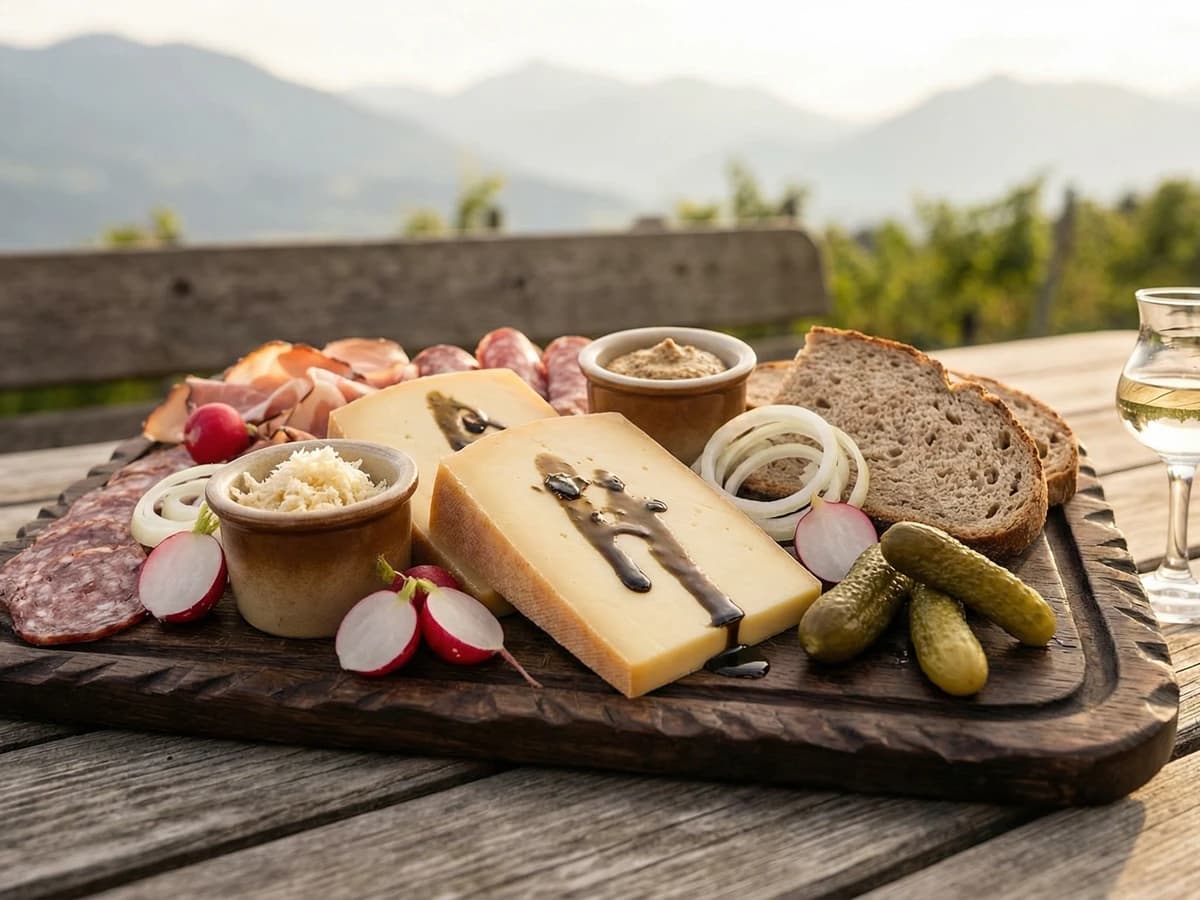
A proper Carinthian Brettljause built around PDO Gailtaler Almkäse, nutty raw-milk alpine cheese served with Speck, dark Bauernbrot, pickles, fresh horseradish, and everything you need for an afternoon on an Almhütte terrace.