Chef Juliette
Bouillabaisse à la Marseillaise
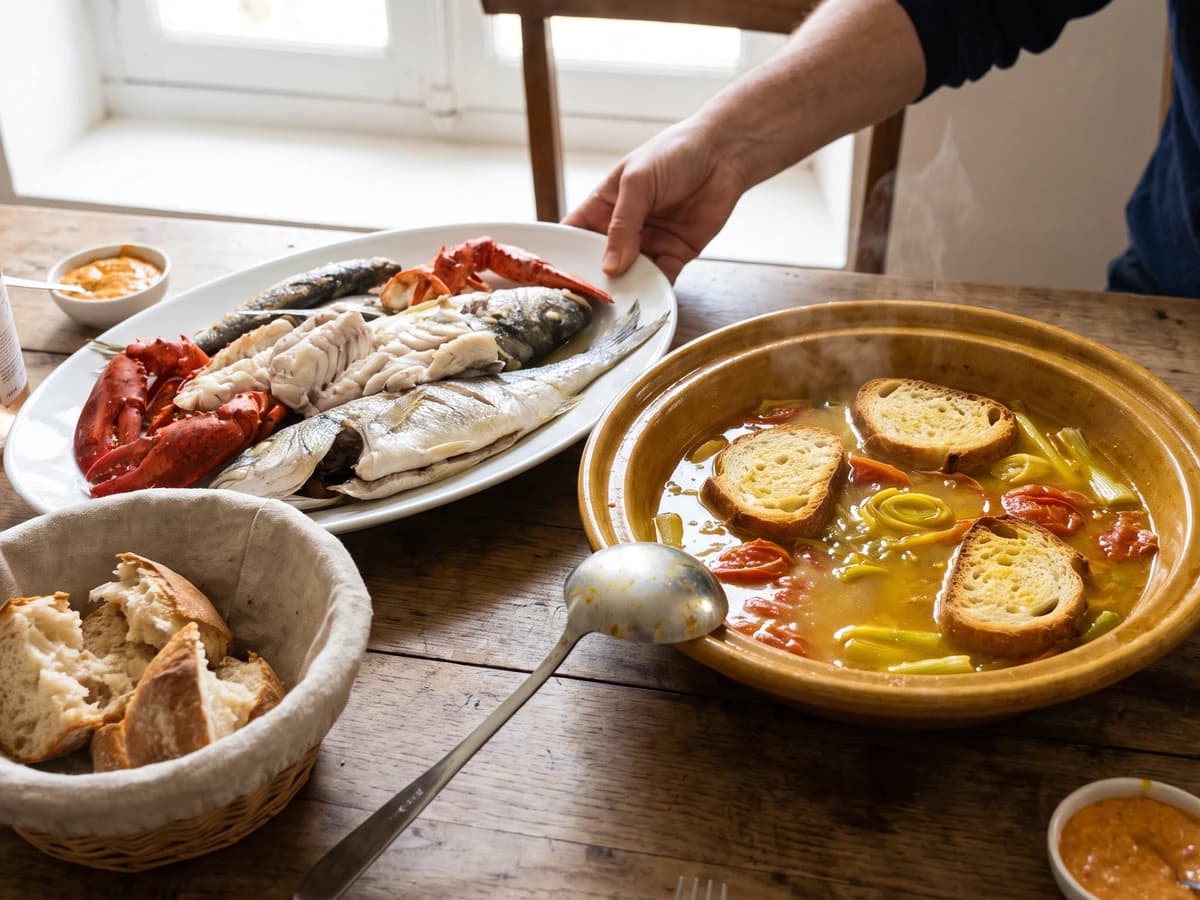
Marseille's great fish stew, saffron-gold and garlic-scented, proves that a hard boil can be the careful choice: it binds olive oil into broth before the whole pot meets bread.
A cooking platform built around craft, culture, and the stories behind what we eat.
Created by
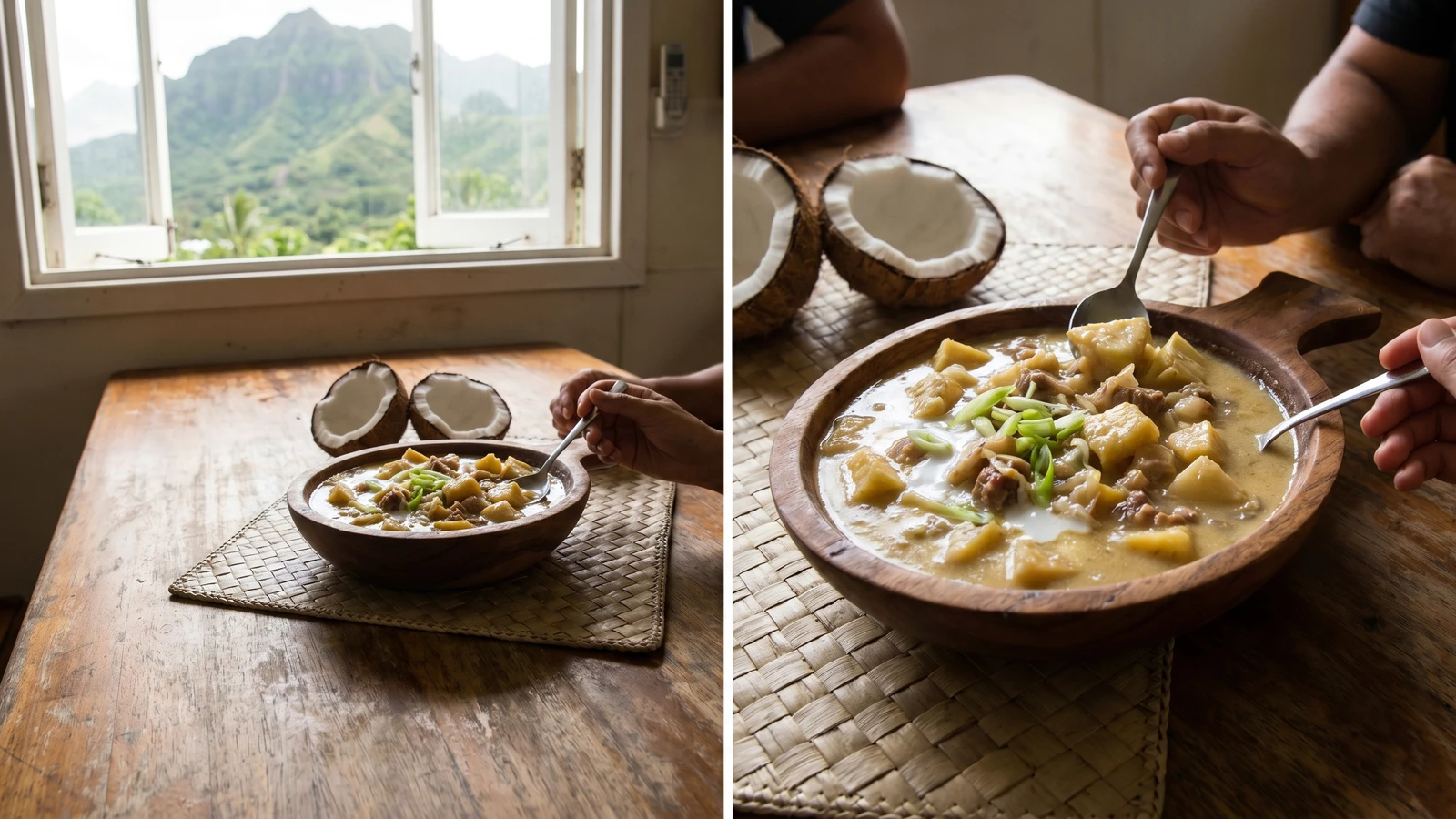
Kuru, the Cook Islands breadfruit, simmered with pork or chicken until it gives up its starch to coconut cream, soft and savory like a Rarotonga family pot on a wet afternoon.
The canoe does not carry food like freight. It carries relatives. In the Cook Islands, this one is kuru, breadfruit, the canoe-crop tree that feeds Rarotonga, Aitutaki, Mangaia, and the other islands with a belly full of starch and shade wide enough for a family to stand under. Hawaiʻi calls its cousin ʻulu, Tahiti says ʻuru, Sāmoa says ʻulu, Tonga and the Marquesas know mei. One ocean, one canoe, many hands.
I learned to respect this kind of pot at a Cook Islands table, where tiopu, stew, was not dressed up and not explained too hard. Pork or chicken, onion, chunks of kuru, coconut cream. That is enough. The breadfruit goes in firm and pale, then it softens slowly, thickening the sauce without anyone asking it to perform. The coconut wraps around the meat, the meat gives back to the coconut, and the whole pot starts tasting like somebody meant for you to stay awhile.
This is Cook Islands food, not a plain Polynesian stew. Polynesian is the family, not the flavor. For the old protocols of an umukai, the Cook Islands earth-oven feast, go sit with Cook Islands elders and aunties who carry that line. This tiopu is the everyday kitchen, the one-pot comfort, old canoe food brought forward into a stove pot without shame.
So squeeze the coconut cream fresh if you can. Use a thick can if it is Tuesday night and everybody is hungry. Keep the simmer gentle, because the why is right there in the method: the kuru needs time to give its starch, the coconut needs low heat to stay whole, and the cook needs to remember that deep food is still alive when it feeds a regular household.
Breadfruit, kuru in Cook Islands Māori, is a canoe crop brought into the Cook Islands by Polynesian voyagers, part of the same food kit as taro, coconut, banana, and pigs. Before London Missionary Society teachers reached Aitutaki in 1821 and Rarotonga in 1823, breadfruit was more often roasted or baked in the umukai, the Cook Islands earth oven, and eaten with coconut; the metal-pot tiopu shows the later home kitchen, old starch and coconut cream simmered with pork or chicken. That is deep food meeting the mission and trade-era pot without surrendering itself.
Quantity
1 large, about 2 1/2 to 3 pounds
peeled, cored, and cut into 1 1/2-inch chunks
Quantity
1 1/2 to 2 pounds
cut into serving pieces
Quantity
1 1/2 teaspoons, plus more to taste
Quantity
1 tablespoon
as needed
Quantity
1 large
sliced
Quantity
2
crushed
Quantity
3 cups, plus more as needed
Quantity
2 cups
fresh pressed if possible, or good canned coconut cream
Quantity
1/2 teaspoon
Quantity
2
thinly sliced
| Ingredient | Quantity |
|---|---|
| mature firm breadfruit (kuru)peeled, cored, and cut into 1 1/2-inch chunks | 1 large, about 2 1/2 to 3 pounds |
| pork shoulder, pork ribs, or bone-in chicken thighscut into serving pieces | 1 1/2 to 2 pounds |
| sea salt | 1 1/2 teaspoons, plus more to taste |
| neutral oil or rendered pork fatas needed | 1 tablespoon |
| onionsliced | 1 large |
| garlic cloves (optional)crushed | 2 |
| water or unsalted chicken stock | 3 cups, plus more as needed |
| thick coconut creamfresh pressed if possible, or good canned coconut cream | 2 cups |
| black pepper (optional) | 1/2 teaspoon |
| green onions (optional)thinly sliced | 2 |
Choose breadfruit that is mature and firm, green to yellow-green, heavy in the hand, not soft and dessert-ripe. Oil your knife lightly if the sap is sticky, then quarter the kuru, cut away the core, peel it, and cut the flesh into big 1 1/2-inch chunks. Keep the pieces sitting in cool water while you start the pot so they do not brown.
Salt the pork or chicken with about 1 teaspoon of the sea salt. Warm the oil or rendered pork fat in a heavy pot over medium heat, then brown the meat in batches until the edges take color and the bottom of the pot smells savory. It does not need to cook through yet. You are building the base the kuru will drink later.
Add the onion and garlic, if using, and stir until the onion softens and picks up the browned bits. Pour in the water or stock, scraping the pot clean, then bring it to a quiet simmer. Cook pork for 25 to 35 minutes, or chicken for 12 to 15 minutes, until the meat has started to give but is not falling apart yet.
Drain the breadfruit and add it to the pot with the remaining salt. The liquid should come about halfway up the kuru, not drown it. Cover and simmer gently for 20 to 25 minutes, turning the pieces once or twice, until a fork slides into the breadfruit without force and the corners begin to round off into the broth.
Lower the heat before the coconut cream goes in. Stir in the thick coconut cream and let the stew move slowly for 10 to 15 minutes, just enough for the sauce to turn ivory and glossy and for the breadfruit starch to thicken it. Do not boil it hard. Coconut cream breaks when you bully it, and the kuru gets heavy. No blame the kuru. You rushed it.
Taste the sauce and add more salt, and black pepper if you like it. Turn off the heat and let the pot rest 10 minutes so the coconut cream settles around the breadfruit and meat. The right texture is soft but not smashed, with some pieces holding their shape and some melting into the stew.
Spoon the tiopu into a wide bowl and scatter green onion over the top if it is on your table. Serve it warm, with rice if you want to stretch the pot, or beside rukau, the Cook Islands taro leaves cooked with coconut. This is comfort food, not a show plate. Put it down where people can reach.
1 serving (about 470g)
Culinary guides, cultural storytelling, and the editorial depth that makes cooking meaningful.
Discover Culinary ExplorerChef Juliette
Marseille's great fish stew, saffron-gold and garlic-scented, proves that a hard boil can be the careful choice: it binds olive oil into broth before the whole pot meets bread.
Chef Juliette
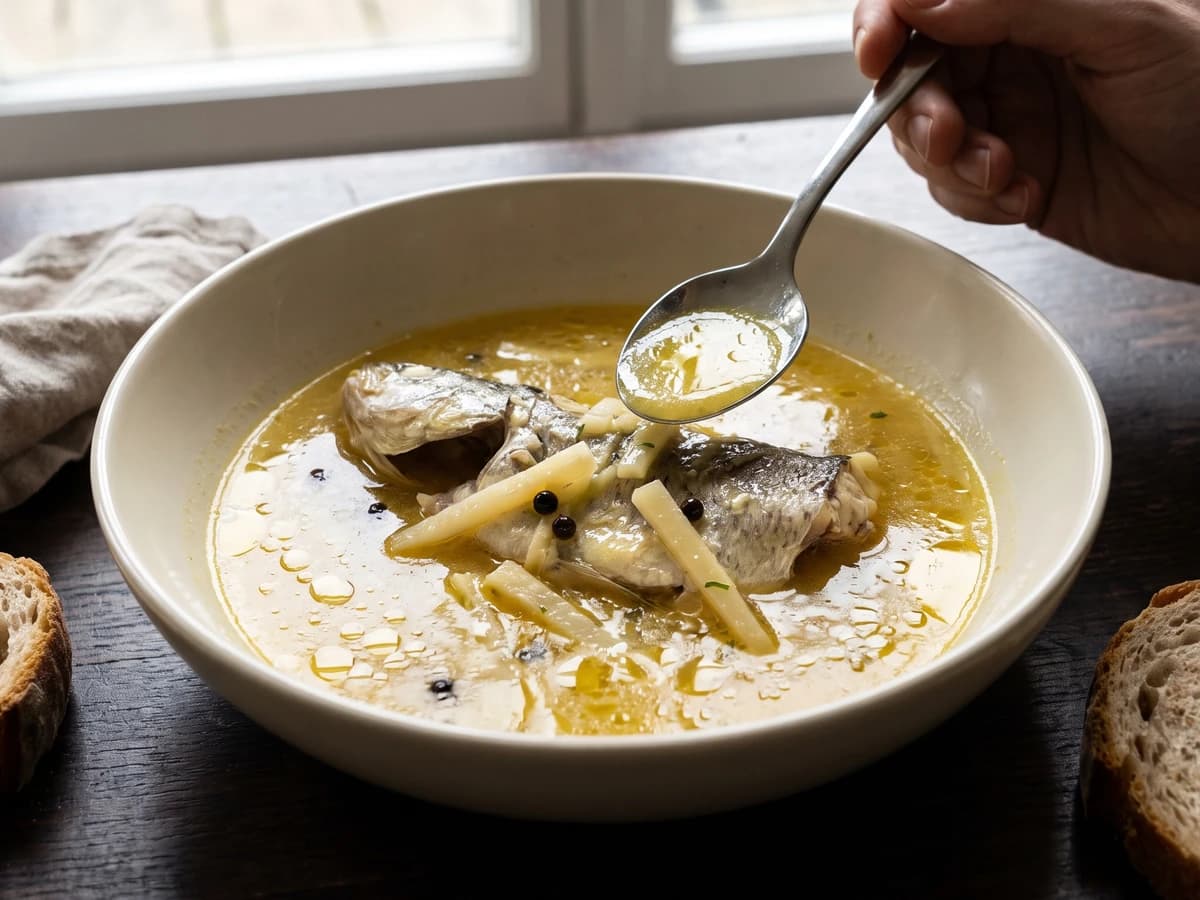
Waterzoi asks fresh, bone-in river fish to thicken its own buttery broth, with parsley root and pepper for company. No flour, no stockpot, just a brisk simmer watched closely.
Chef Juliette
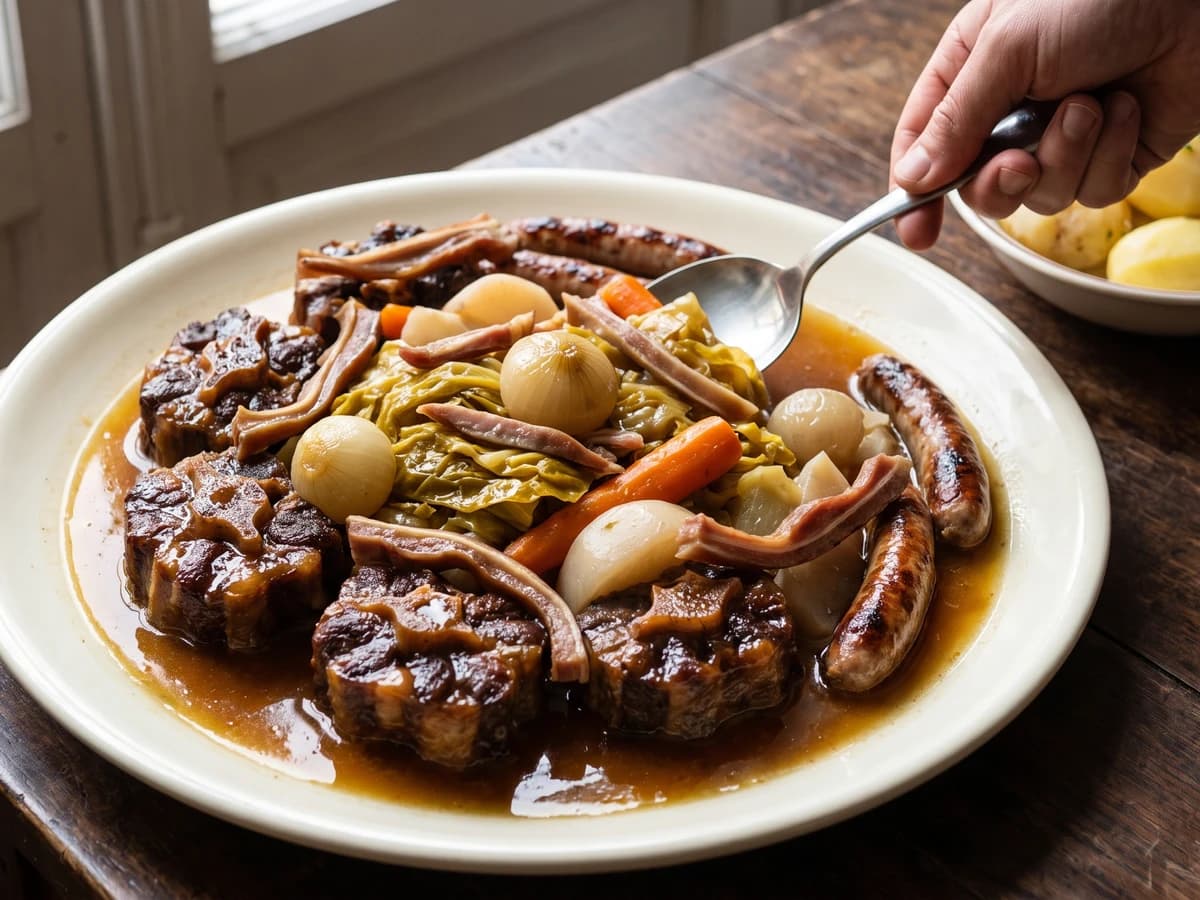
Queue de Bœuf en Hochepot gathers oxtail, pig's trotter and ear, cabbage, roots, and grilled chipolatas around a clear, gelatin-rich broth whose quiet simmer keeps every piece tender and distinct.
Chef Juliette
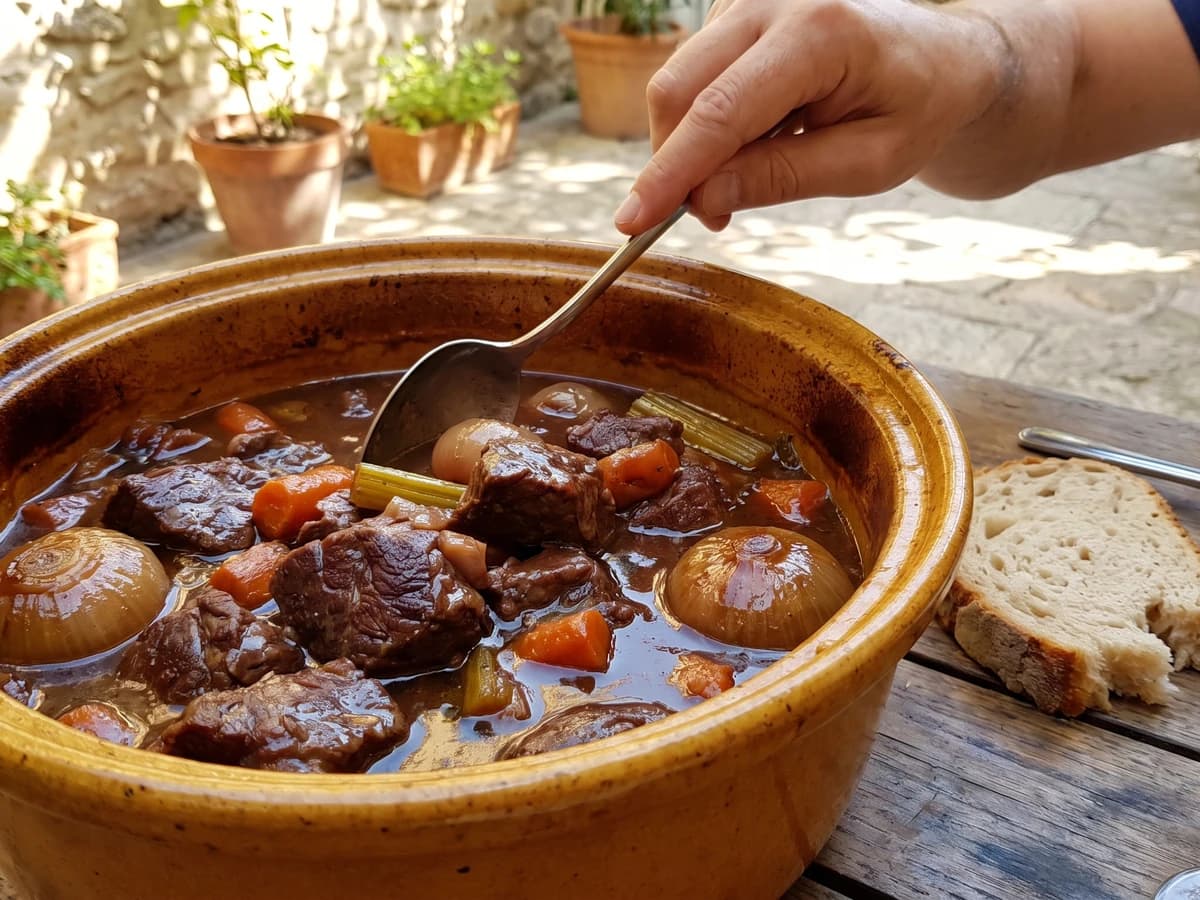
Beef shoulder larded with bacon, sharpened by red wine and vinegar, then sealed with garlic, vegetables, and dry lemon peel until the low oven turns it yielding and the gravy darkly glossy.