Culinary Explorer

A cooking platform built around craft, culture, and the stories behind what we eat.
Discover Culinary Explorer
Thessaloniki and Volos Gavros Tiganitos (Γαύρος Τηγανητός)

Thessaloniki and Volos Gavros Tiganitos (Γαύρος Τηγανητός)

Created by

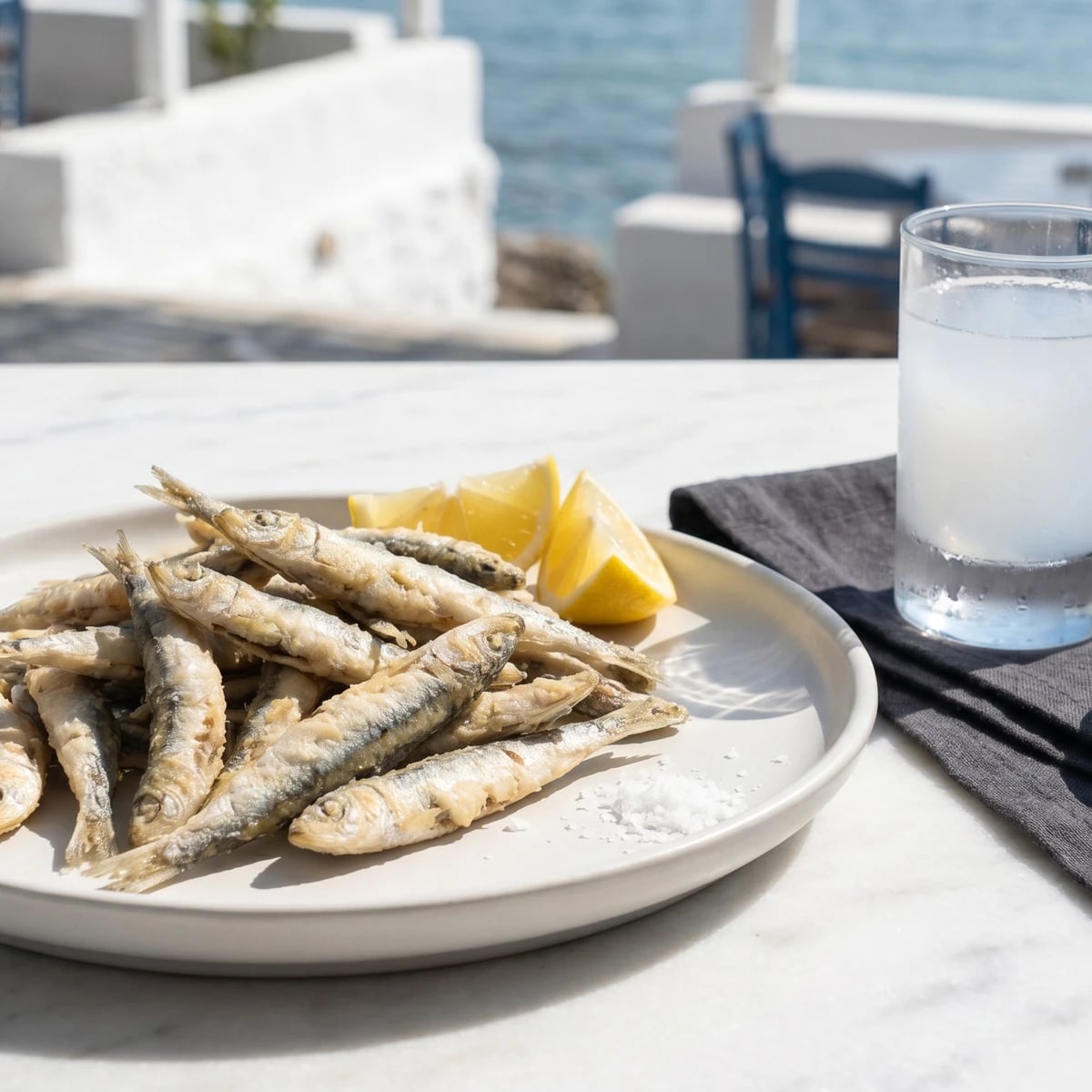
Small fresh anchovies, lightly floured and fried hot, are the northern ouzo meze of Thessaloniki and Volos: cheap, quick, salty, and eaten with lemon.

Appetizers & Snacks
Greek
Outdoor Dining
Budget Friendly
Comfort Food
20 min
Active Time
10 min cook30 min total
Yield4 servings as a meze

Gavros tiganitos belongs to the ouzo tables of Thessaloniki and Volos, where the fish are small, silver, and gone almost as quickly as they arrive. This is anchovy as meze, not a main course: floured, fried whole, salted, and eaten with lemon while the bones are still tender enough to disappear under your teeth.

The method that decides it is heat. The anchovies must be dry, lightly floured, and dropped into oil hot enough to set the coating at once. If the oil is timid, the flour becomes glue, the fish stick, and what should be crisp turns heavy. Good gavros, a thin veil of flour, hot oil. Λίγα και καλά.

I keep this one plain because that's how it survives the table. No herbs in the flour, no sauce, no decoration pretending to be tradition. The plate needs lemon, ouzo if you drink it, and people close enough to reach with their hands. A recipe written down is a recipe saved, even when the dish takes only minutes.

Gavros tiganitos is tied to the fish markets and ouzeria of northern port cities, especially Thessaloniki on the Thermaic Gulf and Volos on the Pagasetic Gulf. Anchovy has long been a budget fish in Greece, appearing fresh when the catch is good and preserved as gavros marinatos when the table needs it to last. In these cities, the fried version became a classic ouzo meze because it is fast, cheap, and best eaten immediately, before conversation makes it soften.

The technique, the tradition, and the story behind every dish.

Discover Culinary Explorer

Ingredients

very fresh small anchovies (gavros)

Quantity

500g

7-10cm long, rinsed and dried

fine sea salt

Quantity

8g

all-purpose flour

Quantity

120g

fine semolina or rice flour (optional)

Quantity

40g

for extra crispness

light olive oil or sunflower oil

Quantity

500ml

for frying

lemons

Quantity

2

cut into wedges

Equipment Needed

  • wide heavy frying pan, 28-30cm
  • instant-read thermometer for oil
  • wire rack set over a tray
  • fine-mesh sieve for shaking off flour

Instructions

  1. 1

    Choose the gavros

    Buy the smallest, brightest anchovies you can find, with clear eyes, silver skin, and the smell of clean sea. If they're tiny, leave them whole and eat them head and all, as they do with ouzo in Thessaloniki and Volos. If they are larger than 10cm, pinch off the heads and pull out the guts, then rinse quickly.

  2. 2

    Dry and salt

    Spread the anchovies on kitchen paper and pat them very dry, inside and out if you've cleaned them. Salt them with the 8g salt and leave them for 10 minutes while you heat the oil. Wet fish throws water into the flour, and then the coating turns pasty instead of crisp.

  3. 3

    Flour lightly

    Mix the flour with the semolina or rice flour if using. Toss the anchovies through it, a handful at a time, then shake off every loose bit. You want a thin veil, not a coat. Too much flour falls into the pan and darkens the oil before the fish are done.

    Flour them just before frying. If they sit floured, the salt draws out moisture and the coating goes gummy.
  4. 4

    Fry hot

    Heat 2cm oil in a wide heavy pan to 180C. Fry the anchovies in small batches for 2 to 3 minutes, turning once, until the bodies are firm, the flour is pale gold, and the edges feel crisp under the tongs. Hot oil sets the flour fast, so the fish don't stick and drink oil. That is the whole dish.

  5. 5

    Drain and serve

    Lift the gavros to a rack or paper-lined tray and salt with a small pinch while hot. Serve at once with lemon wedges. Squeeze the lemon at the table, not in the pan, so the crispness stays until the first bite.

Chef Tips

  • Sourcing wins here. If the anchovies smell strong or look dull, cook beans today and wait for better fish. The right method on tired gavros still gives you tired gavros.
  • Use a wide pan and fry in batches. Crowding drops the oil temperature, and then the fish glue themselves together instead of crisping separately.
  • Serve gavros tiganitos with lemon, olives, tomato when the tomato is worth eating, and cold ouzo. It is naturally nistisimo for fish-permitted fasting days, the kind of table Greek cooks already knew how to set.

Advance Preparation

  • Buy the anchovies the same day you fry them. This dish does not reward waiting.
  • The fish can be cleaned up to 4 hours ahead, then kept covered in the coldest part of the refrigerator between layers of kitchen paper.
  • Do not flour the anchovies ahead. Flour them only when the oil is nearly ready.

Frequently Asked Questions

Nutrition Information

1 serving (about 150g)

Calories
395 calories
Total Fat
24 g
Saturated Fat
4 g
Trans Fat
0 g
Unsaturated Fat
20 g
Cholesterol
75 mg
Sodium
920 mg
Total Carbohydrates
16 g
Dietary Fiber
1 g
Sugars
1 g
Protein
28 g

Note: Chef personas and recipes are created with AI assistance. Cook with care: follow safe food-handling practices, check doneness with a thermometer when needed, and adapt for allergies and your kitchen.

Where cooking meets culture.

Culinary guides, cultural storytelling, and the editorial depth that makes cooking meaningful.

Discover Culinary Explorer

More from Greek Hot & Fried Meze

Browse the full collection