Chef Dimitra
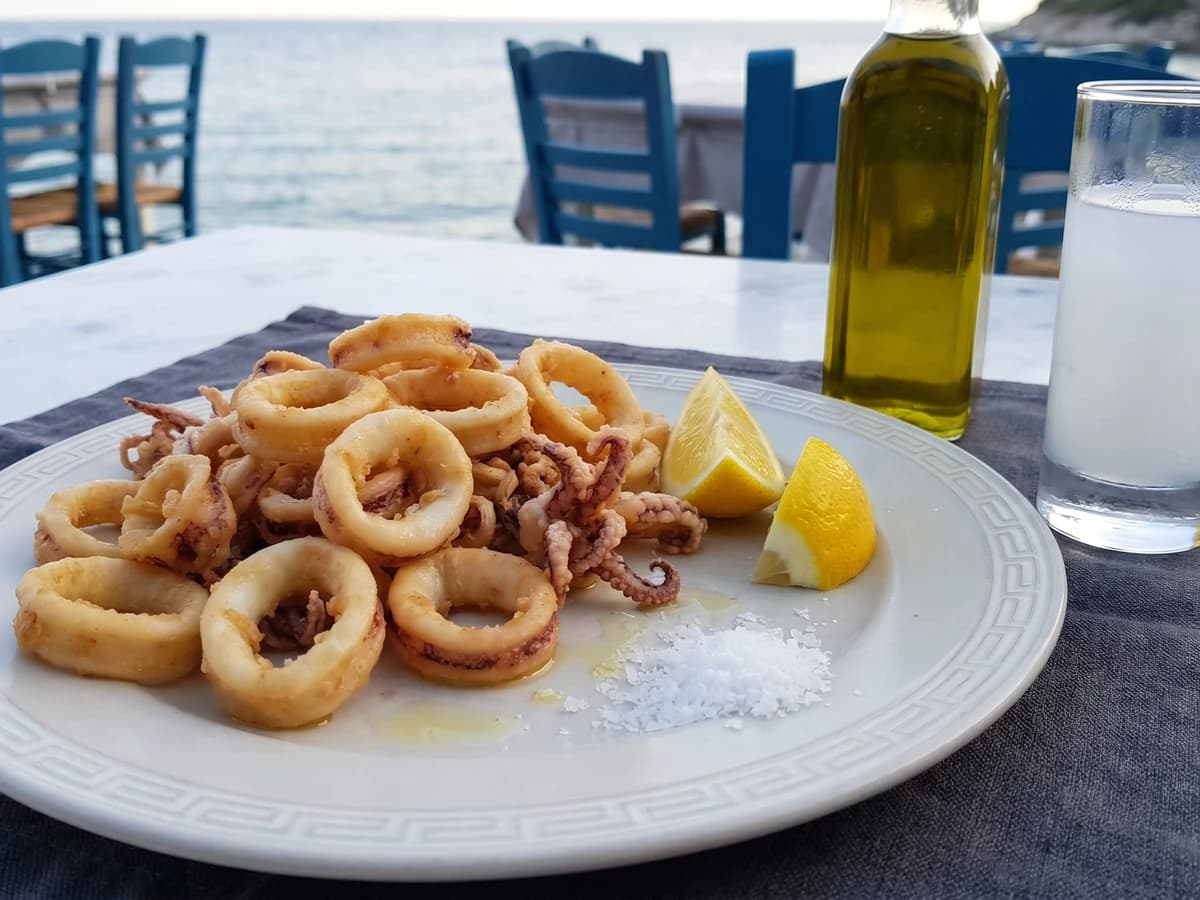
Aegean Island Kalamarakia Tiganita (Καλαμαράκια Τηγανητά)
Aegean island fried squid is flour, hot oil, lemon, and nerve. Fry it for a minute or two, no longer, and it stays tender under its crisp coat.
A cooking platform built around craft, culture, and the stories behind what we eat.

Created by
Cretan kolokithoanthoi are squash blossoms filled with herbed rice, folded gently, and fried until the petals crisp around a soft, green summer filling.
Cretan kolokithoanthoi are the kitchen garden at its most impatient: squash blossoms picked early, filled with rice, herbs, grated zucchini, and onion, then fried until the outside is crisp and the center stays tender. Crete has many versions, some simmered in the pot, some filled with fresh cheese, but this fried rice version belongs to summer tables where the blossoms are too delicate to wait.
The whole dish depends on a loose filling. Rice swells as it cooks, and a tight blossom tears or bursts in the oil. Fill each flower only halfway, fold the petals over like a small parcel, and let the batter be thin enough to coat, not bury. The blossom is the point.
Eat them warm, with lemon and a little strained yogurt if you like. I write this one down because it disappears quickly in every sense: from the plate, from the garden, and from memory if no one asks the cook exactly how much rice went into her hand.
Kolokithoanthoi are recorded across the Aegean and Crete as part of the summer vegetable economy, when every part of the courgette plant was used before the heat toughened it. In Crete, rice-stuffed blossoms sit beside other ladera and garden dishes shaped by olive oil, herbs, and thrift rather than meat. The fried version is a meze form, while the simmered version is closer to the island's stuffed-vegetable family.
Quantity
20
stamens removed
Quantity
120g
rinsed
Quantity
1
grated
Quantity
1
finely grated
Quantity
2
finely sliced
Quantity
20g
chopped
Quantity
15g
chopped
Quantity
2 tablespoons
chopped
Quantity
60ml
Quantity
1 teaspoon
Quantity
1/2 teaspoon
Quantity
120g
Quantity
180ml
Quantity
1 tablespoon
Quantity
1/4 teaspoon
Quantity
as needed
Quantity
to serve
| Ingredient | Quantity |
|---|---|
| fresh squash blossoms (kolokithoanthoi)stamens removed | 20 |
| short-grain ricerinsed | 120g |
| small zucchinigrated | 1 |
| small onionfinely grated | 1 |
| spring onionsfinely sliced | 2 |
| fresh dillchopped | 20g |
| fresh mintchopped | 15g |
| flat-leaf parsleychopped | 2 tablespoons |
| extra virgin olive oil | 60ml |
| fine sea salt | 1 teaspoon |
| freshly ground black pepper | 1/2 teaspoon |
| plain flour | 120g |
| cold water | 180ml |
| olive oil, for the batter | 1 tablespoon |
| fine sea salt, for the batter | 1/4 teaspoon |
| olive oil or neutral oil, for shallow frying | as needed |
| lemon wedges (optional) | to serve |
Work with the blossoms as soon as you can after picking or buying them. Open each one gently, pinch out the stamen, and check for grit or insects. If they need washing, dip them quickly in cool water and lay them open on a clean towel to dry. Wet petals tear and spit in the pan.
Mix the rice, grated zucchini, onion, spring onions, dill, mint, parsley, olive oil, salt, and pepper in a bowl. The filling should look loose and green, not packed like stuffing for meat. The rice will swell in the oil, so leave it room. This is the step that decides whether the blossoms stay neat or split open.
Spoon about 1 tablespoon filling into each blossom, only halfway up the flower. Fold the petals over the filling to close them, then set each parcel seam-side down. Don't twist the petals hard. They are flowers, not rope.
Whisk the flour, cold water, olive oil, and salt into a thin batter, just thick enough to cling to a spoon. Let it rest for 10 minutes while you heat the oil. A thin coat lets the petal crisp and keeps the kolokithoanthoi light.
Pour oil into a wide frying pan to a depth of about 1cm and heat over medium-high heat. Dip each blossom in batter, let the excess drip off, and lay it into the oil seam-side down. Fry in small batches for 2 to 3 minutes per side, until pale gold and crisp at the edges.
Lift the blossoms onto a rack or paper-lined plate and salt them lightly while hot. Let them stand for 5 minutes so the filling settles, then serve with lemon wedges. They are best warm, when the outside is crisp and the rice inside is soft.
1 serving (about 180g)
Culinary guides, cultural storytelling, and the editorial depth that makes cooking meaningful.
Discover Culinary ExplorerChef Dimitra
Aegean island fried squid is flour, hot oil, lemon, and nerve. Fry it for a minute or two, no longer, and it stays tender under its crisp coat.

Chef Dimitra
Pale Aegean taramosalata is cured roe, soaked bread, lemon, and olive oil worked slowly until it turns thick and clean, made for lagana on Clean Monday.

Chef Dimitra
Athenian March 25 salt cod, crisp in a puffed beer batter and served with garlic skordalia, the Lenten fish dish Greece keeps for Annunciation day.

Chef Dimitra
Crete names this dish by the pan motion: snails set mouth-down in salted flour, fried in good olive oil, then hit with rosemary and vinegar.