Chef Dimitra
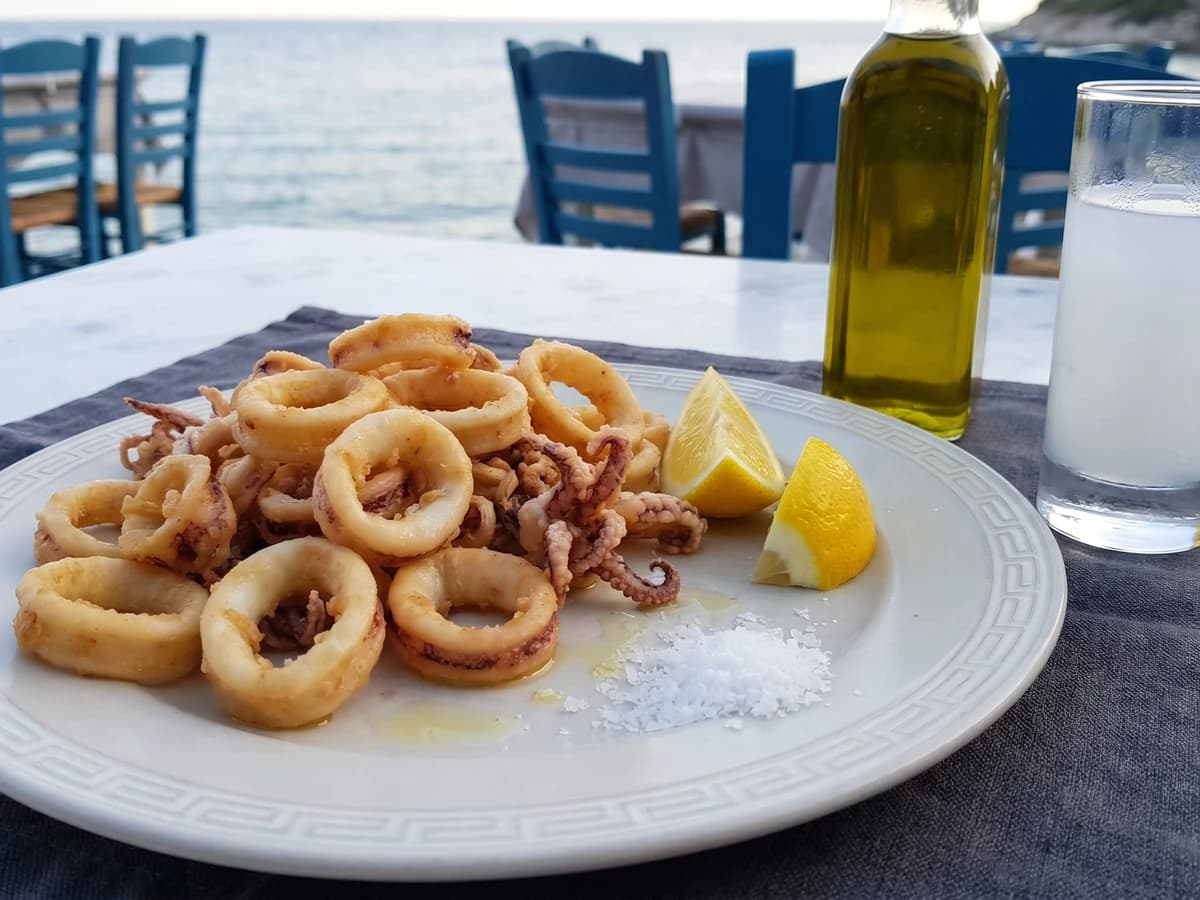
Aegean Island Kalamarakia Tiganita (Καλαμαράκια Τηγανητά)
Aegean island fried squid is flour, hot oil, lemon, and nerve. Fry it for a minute or two, no longer, and it stays tender under its crisp coat.
A cooking platform built around craft, culture, and the stories behind what we eat.

Created by
Crete names this dish by the pan motion: snails set mouth-down in salted flour, fried in good olive oil, then hit with rosemary and vinegar.
Chochlioi boubouristi are Crete's fried snails, set mouth-down in a shallow slick of olive oil until the opening sears, then finished with rosemary and a hard splash of vinegar. Boubouristi means face-down. That is not decoration in the name. It is the method.
Flour only the opening, not the whole shell, and set each snail down into hot oil with a little salt. The flour forms a small crisp cap against the pan, keeping the juices inside while the shell gives its flavor to the oil. Then the vinegar wakes everything up, and the rosemary turns the pan green and resinous.
Use clean, edible, purged snails from a supplier you trust. If you gather them yourself, you must know the ground they came from and purge them properly; no recipe can fix a bad source. I keep this one very plain, as a Rethymno cook wrote it in my notebook: snails, flour, salt, oil, rosemary, vinegar. Λίγα και καλά, a few things, and good ones.
Chochlioi boubouristi belong to Crete, where land snails have been eaten at least since the Bronze Age; Minoan domestic sites have yielded edible snail shells among kitchen refuse. The dialect word boubouristi refers to turning the snails face-down, with the shell opening pressed into the pan. The rosemary and vinegar finish ties the dish to the island's older sour-herb cooking, where oil, wild herbs, and sharpness often meet in the same skillet.
Quantity
1 kg
purged and cleaned, or professionally purged and labeled ready to cook
Quantity
2 tbsp
for washing shells
Quantity
2 tbsp
for washing shells
Quantity
2 liters
for blanching
Quantity
15 g
for the blanching water
Quantity
60 g
Quantity
10 g
mixed with the flour
Quantity
120 ml
Quantity
3 sprigs
Quantity
80 ml
for the pan finish
Quantity
as needed
for serving
| Ingredient | Quantity |
|---|---|
| live edible snails (chochlioi, χοχλιοί)purged and cleaned, or professionally purged and labeled ready to cook | 1 kg |
| coarse sea saltfor washing shells | 2 tbsp |
| red wine vinegarfor washing shells | 2 tbsp |
| waterfor blanching | 2 liters |
| sea saltfor the blanching water | 15 g |
| all-purpose flour | 60 g |
| fine sea saltmixed with the flour | 10 g |
| extra virgin Cretan olive oil | 120 ml |
| fresh rosemary | 3 sprigs |
| red wine vinegarfor the pan finish | 80 ml |
| country bread (optional)for serving | as needed |
Put the purged snails in a basin of cool water for 15 minutes. Unsealed live snails should begin to move; sealed dormant ones should smell clean and feel heavy. Discard broken shells, hollow shells, and any snail with a sour smell. Scrub the shells with the coarse salt and 2 tbsp vinegar, then rinse until the water runs clear.
Bring 2 liters water and 15 g sea salt to a boil. Add the snails and simmer for 8 minutes, skimming away any gray foam. Drain, rinse briefly, and leave them in a colander until the shells are dry enough to handle.
Mix the flour with the fine sea salt on a shallow plate. Dip only the opening of each snail into the salted flour and shake off the loose excess. You aren't breading the shell. You are giving the mouth a small cap for the pan.
Heat the olive oil in a wide heavy pan over medium-high heat until it looks glossy and loose. Set each snail mouth-down in one layer, flour side touching the oil, and leave them alone for 5 to 6 minutes. This is the method that decides the dish: the opening sears shut against the hot pan, so the snail stays juicy while the salted flour crisps. Boubouristi means face-down, and the name is doing real work.
Shake the pan to loosen the snails, then turn them here and there with a spoon. Add the rosemary sprigs and fry for another 2 to 3 minutes, until the oil smells piney and the shells look lacquered.
Pour the 80 ml vinegar around the edge of the pan, keeping your hand back because hot oil spits. Swirl the pan and cook for 2 to 3 minutes, until the vinegar's raw bite settles and the oil and pan juices look glossy. Spoon everything onto a warm plate and serve at once, with bread for the sharp oil.
1 serving (about 120g)
Culinary guides, cultural storytelling, and the editorial depth that makes cooking meaningful.
Discover Culinary ExplorerChef Dimitra
Aegean island fried squid is flour, hot oil, lemon, and nerve. Fry it for a minute or two, no longer, and it stays tender under its crisp coat.

Chef Dimitra
Pale Aegean taramosalata is cured roe, soaked bread, lemon, and olive oil worked slowly until it turns thick and clean, made for lagana on Clean Monday.

Chef Dimitra
Athenian March 25 salt cod, crisp in a puffed beer batter and served with garlic skordalia, the Lenten fish dish Greece keeps for Annunciation day.

Chef Dimitra
Cretan kolokithoanthoi are squash blossoms filled with herbed rice, folded gently, and fried until the petals crisp around a soft, green summer filling.