Chef Isabel
Abanico Ibérico a la Plancha
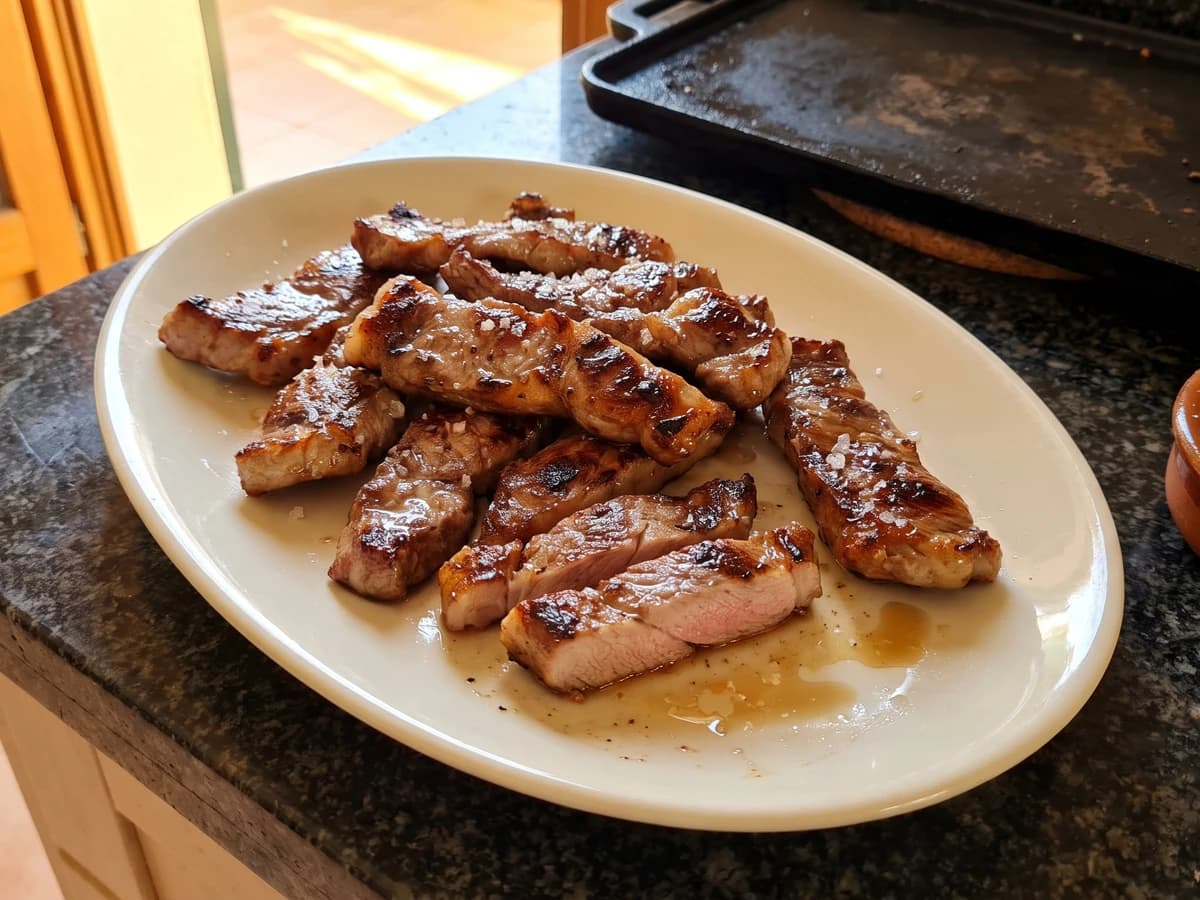
Extremadura's dehesa gives us this fan-shaped, marbled rib cut: salt it at the last moment, lay it on a fierce plancha, and count in seconds so the centre stays juicy.
A cooking platform built around craft, culture, and the stories behind what we eat.
Created by
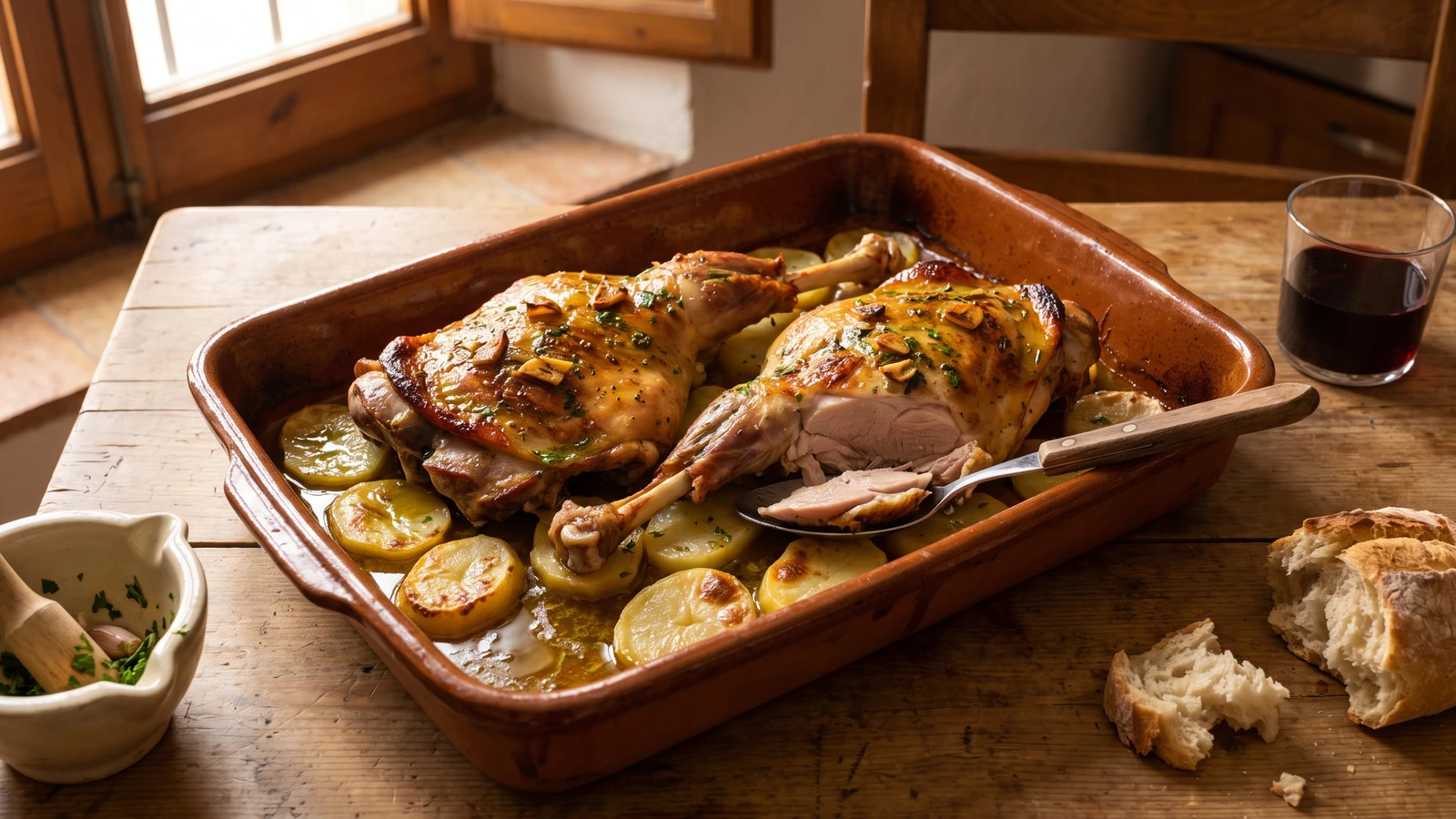
Ternasco de Aragón is recental lamb, older than lechal and made for a hot roast over potatoes, garlic, and white wine, with enough fat to stay juicy while the edges brown.
Ternasco de Aragón Asado is Aragón's roast lamb, made with recental lamb: older and meatier than lechal, still young enough to be tender, with the fine fat that keeps it juicy in a hot oven. It belongs to Aragón by the lamb itself, not by a sprinkle of herbs. Potatoes underneath, garlic, white wine, olive oil or a little manteca, and the lamb's own juices. That's the dish.
The method that decides it is the liquid in the pan. You give the potatoes enough wine and water to soften and catch the fat, but not enough to boil the lamb. The top must roast, the bottom must baste. If the pan is dry, the potatoes scorch before the meat is done; if it is flooded, you get boiled lamb with a guilty tan. Keep the liquid shallow and baste now and then. Siempre sale, si lo sigues.
If you can't find IGP ternasco, choose a young bone-in lamb shoulder, not old lamb with a strong smell and not milk-fed lamb so tiny it cooks like another dish. It will taste a little deeper and may need another quarter hour, but the method holds. No hace falta haber pisado España. In my Margin beside this one I wrote only: "poco líquido," little liquid. It saved more roasts than any clever trick.
Ternasco de Aragón belongs to the inland northeast, where sheep have long moved between the Ebro valley, the sierras, and the dry cereal country that feeds them. The protected name refers to recental lamb from Aragonese breeds, older and meatier than milk-fed lechal but still tender, which is why it can take a hot roast and stay juicy. At Christmas and village feasts it is often roasted simply with potatoes, garlic, white wine, and its own fat, a home version of the lamb once taken to the communal or baker's oven.
Quantity
2, 650 to 750g each, about 1.4kg total
or 1.4 to 1.6kg young bone-in lamb shoulder
Quantity
20g
divided
Quantity
900g
peeled and sliced 5mm thick
Quantity
250g
sliced 5mm thick
Quantity
8
4 crushed and 4 left whole
Quantity
15g
chopped
Quantity
60ml
Quantity
30g
softened, or use 30ml more olive oil
Quantity
150ml
Quantity
150ml
Quantity
2
| Ingredient | Quantity |
|---|---|
| bone-in paletillas de ternasco de Aragón IGPor 1.4 to 1.6kg young bone-in lamb shoulder | 2, 650 to 750g each, about 1.4kg total |
| fine sea saltdivided | 20g |
| waxy potatoespeeled and sliced 5mm thick | 900g |
| yellow onionssliced 5mm thick | 250g |
| garlic cloves4 crushed and 4 left whole | 8 |
| flat-leaf parsley leaveschopped | 15g |
| extra virgin olive oil | 60ml |
| manteca de cerdosoftened, or use 30ml more olive oil | 30g |
| dry white wine | 150ml |
| water | 150ml |
| bay leaves | 2 |
Pat the lamb dry. Rub 14g of the salt over it, working it into the thick meat near the bone, then let it stand at cool room temperature for 45 minutes while the oven heats to 220C. If you have time, salt it uncovered in the refrigerator 4 to 24 hours ahead and bring it out 45 minutes before roasting. Pésalo, no lo adivines; the salt is what seasons the meat all the way to the bone, not just the browned edge.
In a mortar, pound 4 garlic cloves with the parsley to a rough paste, a majado, the garlic-parsley mash that gives the roast its backbone. Stir in 20ml of the olive oil and the softened lard, or the extra oil if you are not using lard. Smear this over the lamb, especially the top and the cut sides.
Toss the potatoes, onions, remaining 4 garlic cloves, bay leaves, remaining 40ml olive oil, and remaining 6g salt in a large roasting tin, about 30 by 40cm. Spread them in one loose layer, two at most. Pour the wine and water in at the side of the tin, not over the lamb, then set the lamb on top, flesh side down.
Roast at 220C for 20 minutes, until the first browned patches show. Turn the lamb fat side up, spoon some of the pan juices over it, and lower the oven to 180C. Roast for 45 minutes more, basting every 20 minutes. The pan should have glossy liquid around the potatoes, not a lake; add 50ml water if it looks dry.
Carry on roasting for 15 to 25 minutes, until the lamb is deep golden at the edges and the meat near the bone reaches 72 to 75C, or a skewer slides in with only a little resistance. This is the step that decides it: the lamb must roast above the potatoes while they drink the wine and fat below. Too much liquid, and you have stew. That is another dish.
Lift the lamb to a warm board and rest it for 15 minutes. If the potatoes are still pale or wet, raise the oven to 220C and return the tin while the lamb rests, until the edges brown and the juices reduce to a glossy spoonful. Cut the shoulders into portions, serve over the potatoes, and spoon the pan juices over everything. Tal como se hace allí.
1 serving (about 450g)
Culinary guides, cultural storytelling, and the editorial depth that makes cooking meaningful.
Discover Culinary ExplorerChef Isabel
Extremadura's dehesa gives us this fan-shaped, marbled rib cut: salt it at the last moment, lay it on a fierce plancha, and count in seconds so the centre stays juicy.
Chef Isabel
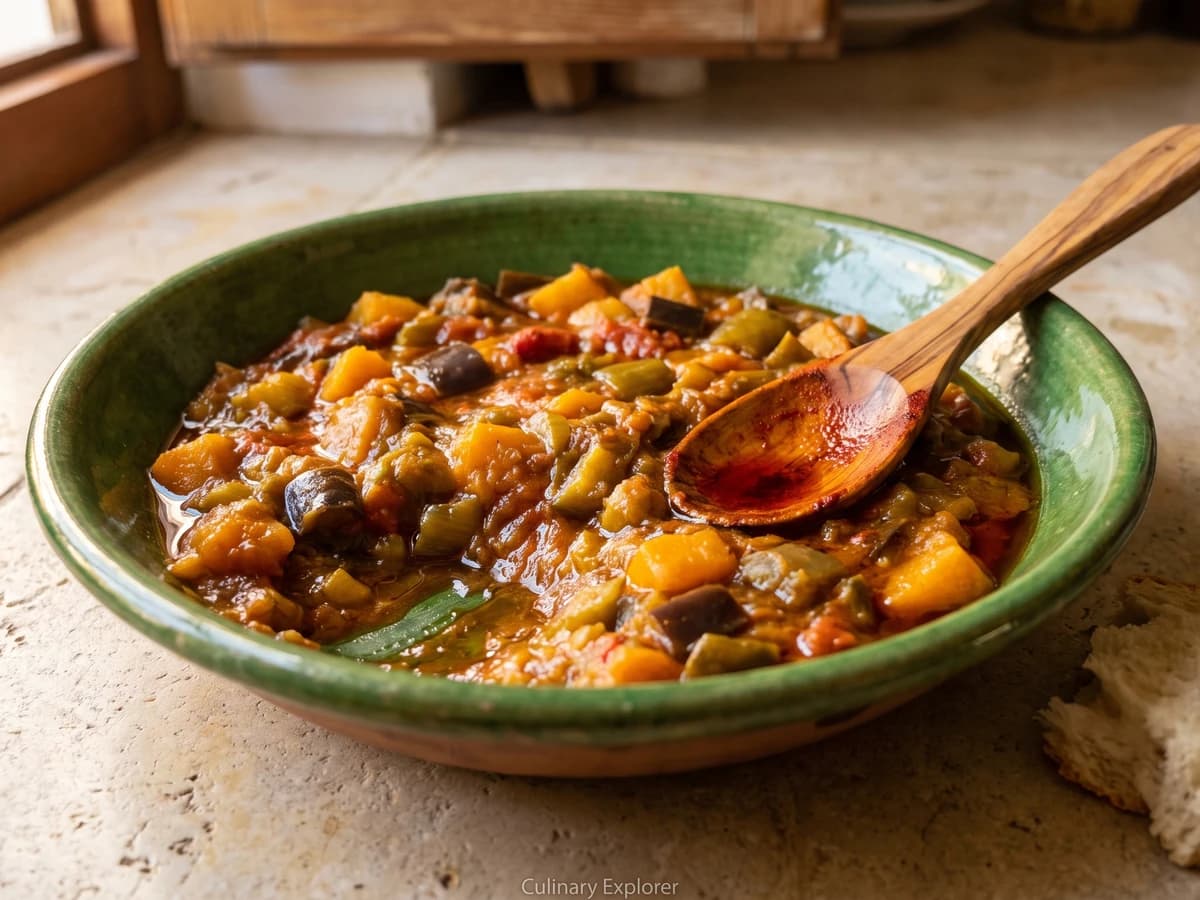
Alboronía is Andalucía's old pumpkin and aubergine stew, deepened with tomato, pimentón, and cumin, then cooked without hurry until the vegetables settle into a glossy, sweet, spoon-soft whole.

Chef Isabel
Aletría Murciana is Murcia's humble noodle guiso: fine fideos, pork ribs, potato, saffron, and a dark sweet sofrito. Get that base right and the pot knows where it's going.
Chef Isabel
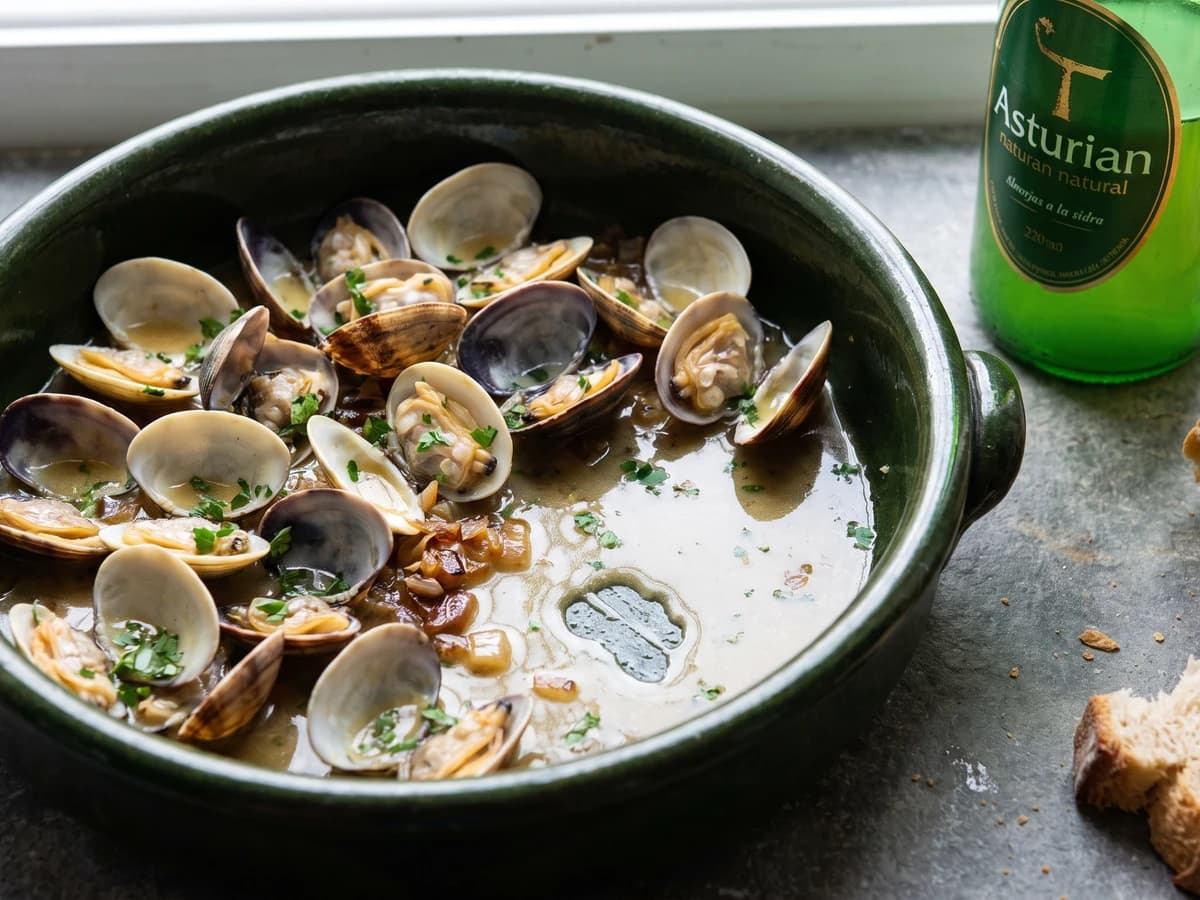
Asturias opens clams in tart natural cider over a slow onion and garlic sofrito, making a bright, briny sauce that asks for bread and rewards one rule: lift each clam as it opens.