Chef Isabel
Abanico Ibérico a la Plancha
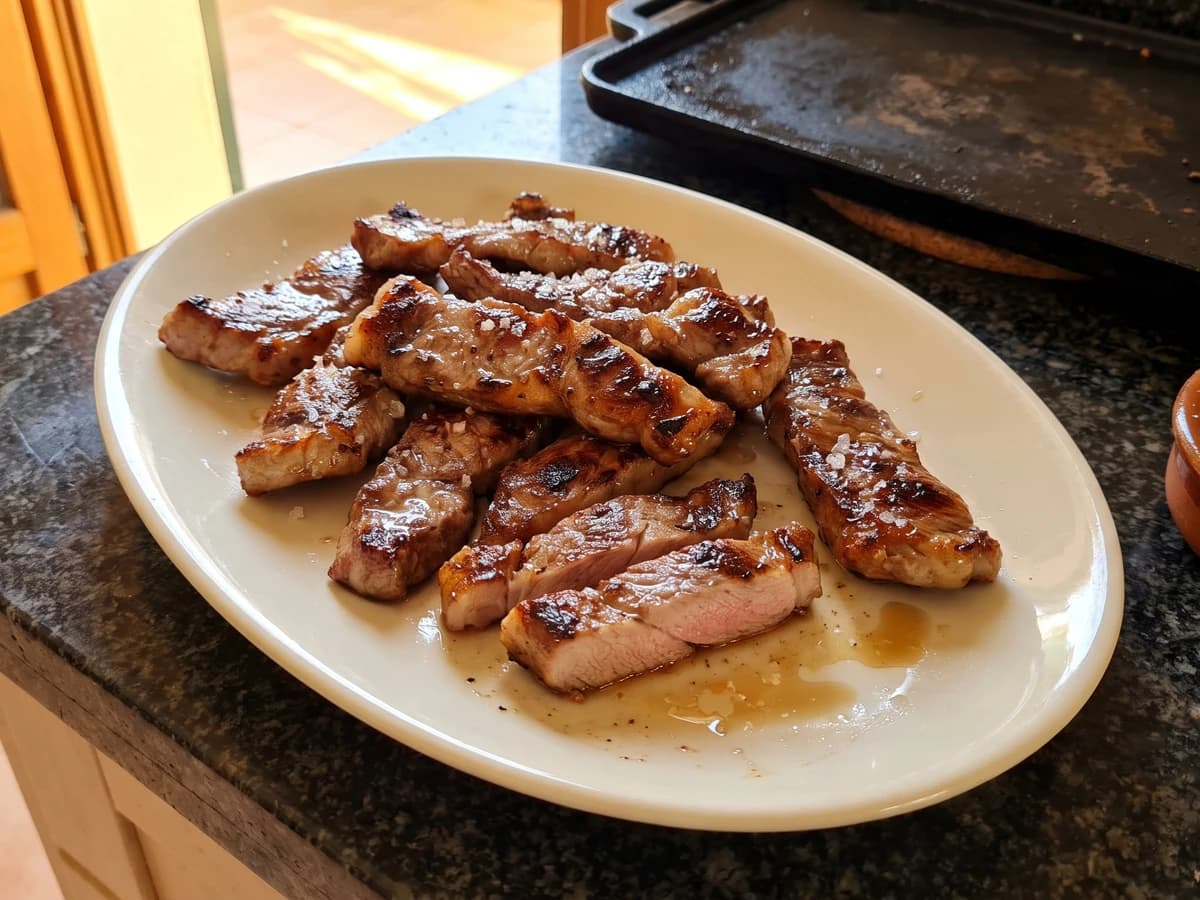
Extremadura's dehesa gives us this fan-shaped, marbled rib cut: salt it at the last moment, lay it on a fierce plancha, and count in seconds so the centre stays juicy.
A cooking platform built around craft, culture, and the stories behind what we eat.
Created by
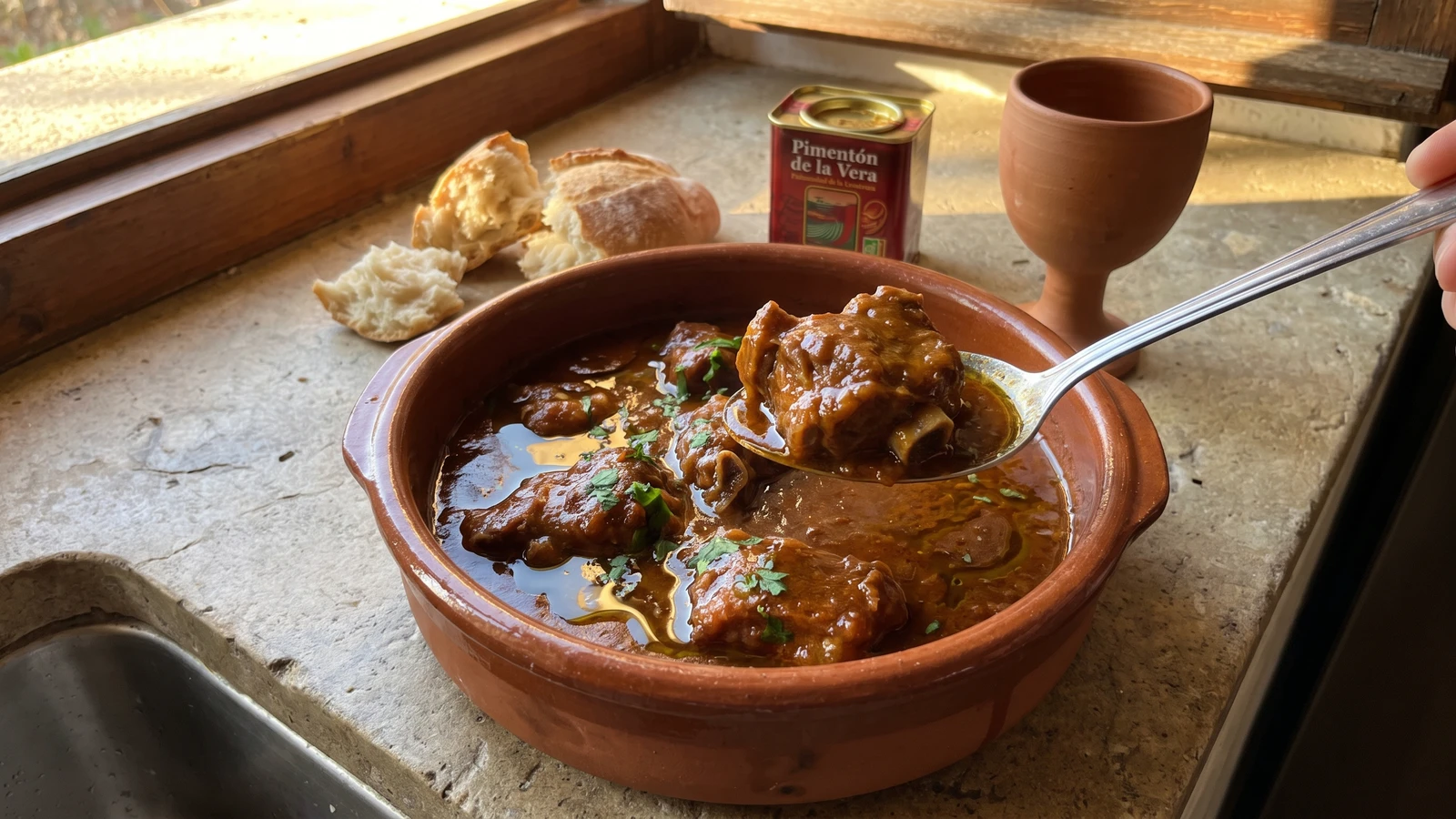
Caldereta de Cordero Extremeña is shepherds' lamb stew, built from browned lamb, slow sofrito, wine, and the lamb's own liver pounded into the sauce at the end.
Caldereta de Cordero Extremeña belongs to Extremadura, sheep country, and it tastes of that plain truth: lamb on the bone, garlic, onion, wine, bay, thyme, and pimentón de la Vera, the smoked red pepper that gives the sauce its colour and depth. What makes it caldereta and not just another lamb stew is the majado, the mortar paste, made with the lamb's own liver, garlic, fried bread, and pimentón, stirred in near the end until the broth turns thick enough for bread.
The method that decides it is patience in two places. First brown the lamb properly, so the sauce has a dark base before the onion ever goes in. Then cook the sofrito, the slow onion and pepper base, until it is soft, sweet, and almost jammy. Rush that and the stew tastes thin. Add the pimentón off the fierce heat, because burnt pimentón goes bitter and there is no fixing it after.
If you are far from Extremadura, ask for lamb shoulder, neck, or shank pieces on the bone. Boneless lean lamb will cook, yes, but it won't give the same sauce. If the butcher has no lamb liver, use one chicken liver and know the paste will be milder. No hace falta haber pisado España. You need good lamb, real pimentón de la Vera, and a mortar, or a small bowl and a heavy spoon if that's what you have.
My Margin beside this one says only: add the majado late. If it boils hard for too long, the liver turns coarse and bossy. Stir it in, let the stew settle into itself, and bring bread to the table. Siempre sale, si lo sigues.
Caldereta de cordero is tied to Extremadura's pastoral cooking, especially the shepherds and transhumant flocks that moved through the dehesa, the oak pastureland where sheep, pigs, and working people shared the same hard economy. The dish uses the animal plainly, with tougher lamb cuts simmered tender and the liver returned to the pot as a thickener instead of being wasted. Pimentón de la Vera, dried and smoked in the northern Cáceres valleys, gives the stew its Extremaduran signature rather than a generic red colour.
Quantity
1.5kg
cut into 5cm chunks
Quantity
120g
trimmed
Quantity
80ml
Quantity
1 slice, about 40g
Quantity
6
3 whole, 3 minced
Quantity
300g
finely chopped
Quantity
150g
finely chopped
Quantity
200g
grated, or 150g canned crushed tomato
Quantity
2 teaspoons
Quantity
1/2 teaspoon
Quantity
200ml
Quantity
500ml, plus more if needed
Quantity
2
Quantity
1 teaspoon
Quantity
1 tablespoon
Quantity
10g, plus more to taste
Quantity
1/2 teaspoon
| Ingredient | Quantity |
|---|---|
| bone-in lamb shoulder, neck, or shank piecescut into 5cm chunks | 1.5kg |
| lamb livertrimmed | 120g |
| extra virgin olive oil | 80ml |
| day-old rustic bread | 1 slice, about 40g |
| garlic cloves3 whole, 3 minced | 6 |
| onionsfinely chopped | 300g |
| red bell pepperfinely chopped | 150g |
| ripe tomatograted, or 150g canned crushed tomato | 200g |
| sweet pimentón de la Vera | 2 teaspoons |
| hot pimentón de la Vera (optional) | 1/2 teaspoon |
| dry white wine | 200ml |
| lamb stock or water | 500ml, plus more if needed |
| bay leaves | 2 |
| dried thyme | 1 teaspoon |
| chopped parsley | 1 tablespoon |
| fine salt | 10g, plus more to taste |
| freshly ground black pepper | 1/2 teaspoon |
Pat the lamb dry and season it with the 10g salt and the black pepper. Leave it at room temperature for 20 minutes while you chop the vegetables. Dry meat browns; wet meat stews in its own water before the pot has even begun.
Warm the olive oil in a wide heavy pot over medium heat. Fry the bread slice until golden on both sides, then lift it into a mortar. Add the 3 whole garlic cloves and the lamb liver to the same oil and cook the liver just until browned outside and still a little pink inside, 2 to 3 minutes. Put the garlic and liver in the mortar with the bread.
Raise the heat to medium-high and brown the lamb in batches in the same oil, 4 to 5 minutes per batch, turning until the edges are well coloured. Do not crowd the pot. Set each batch aside in a bowl, keeping every drop of juice. This browning is not decoration; it is the dark backbone of the sauce.
Lower the heat to medium-low. Add the onion and red pepper to the pot with a pinch of salt and cook for 18 to 22 minutes, scraping the browned lamb bits from the bottom. Add the 3 minced garlic cloves and cook 1 minute. Stir in the grated tomato and cook until the mixture is thick, dark, and sweet-smelling, 8 to 10 minutes more. This is the sofrito, the slow base; rush it and the caldereta tastes thinner.
Take the pot off the direct heat for a few seconds and stir in the sweet pimentón, and the hot pimentón if using. Return the lamb and its juices to the pot, add the wine, and bring it to a lively bubble for 2 minutes, scraping the base clean. Pimentón de la Vera gives the stew its Extremaduran smoke and red oil, but scorched pimentón turns bitter, so give it care.
Add the stock or water, bay leaves, and thyme. The liquid should come about two-thirds up the lamb, not drown it. Bring to a simmer, cover partly, and cook gently for 1 hour to 1 hour 20 minutes, turning the pieces once or twice, until the lamb is tender enough that a fork slides in easily but the meat still holds its shape.
While the lamb finishes, pound the fried bread, fried garlic, liver, parsley, and 3 or 4 spoonfuls of the stew liquid in the mortar until you have a thick, smooth paste. If you use a small food processor, pulse only until thick, not whipped. The majado should look like a dark red-brown cream, not crumbs floating in broth.
Stir the majado into the pot and simmer uncovered for 10 to 12 minutes, shaking the pot now and then so the sauce thickens evenly around the lamb. Taste for salt. The sauce should coat a spoon and leave a red pimentón oil shining at the edges. If it is too tight, add a little water; if too thin, simmer a few minutes more.
Turn off the heat, cover the pot, and let the caldereta rest for 10 minutes. Remove the bay leaves and serve in deep bowls or straight from the cazuela, with bread for the sauce. Tal como se hace allí, plainly and well.
1 serving (about 360g)
Culinary guides, cultural storytelling, and the editorial depth that makes cooking meaningful.
Discover Culinary ExplorerChef Isabel
Extremadura's dehesa gives us this fan-shaped, marbled rib cut: salt it at the last moment, lay it on a fierce plancha, and count in seconds so the centre stays juicy.
Chef Isabel
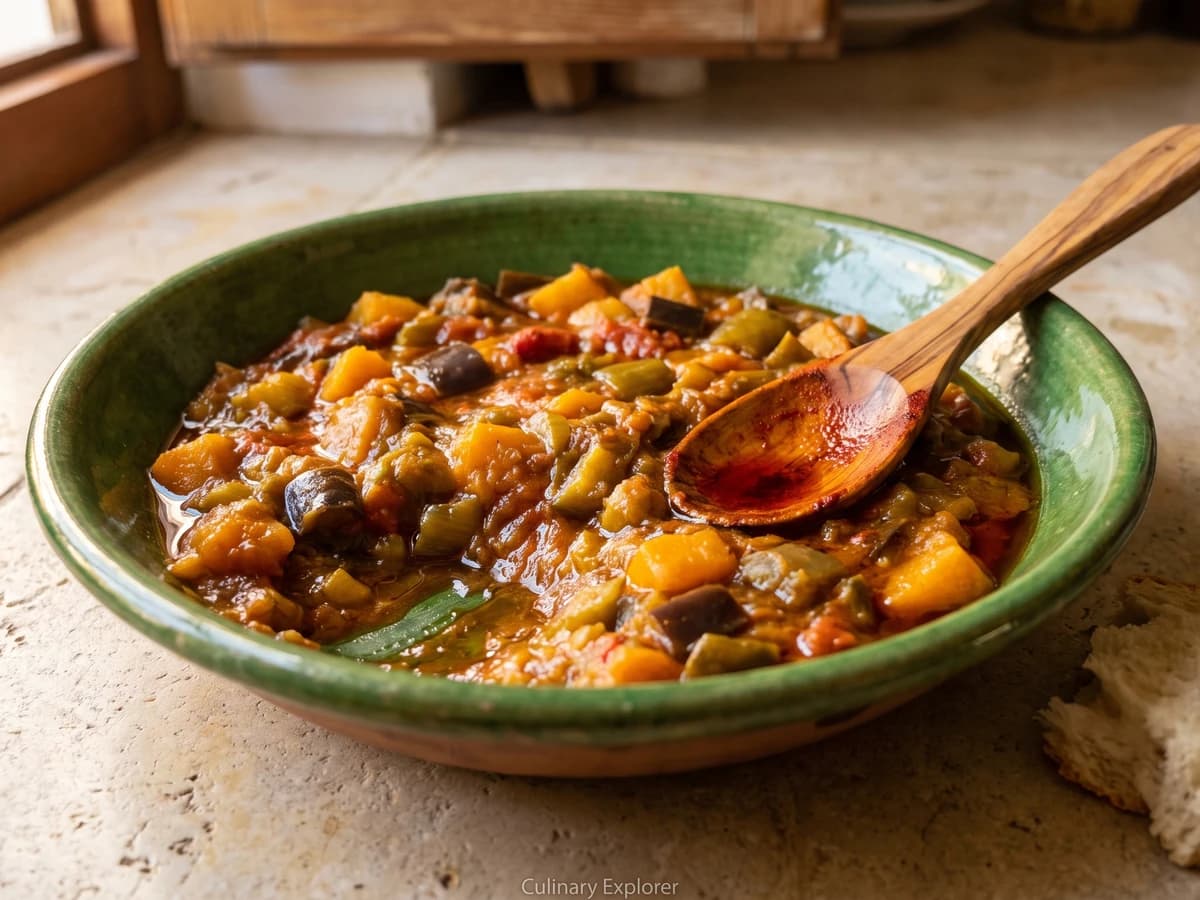
Alboronía is Andalucía's old pumpkin and aubergine stew, deepened with tomato, pimentón, and cumin, then cooked without hurry until the vegetables settle into a glossy, sweet, spoon-soft whole.

Chef Isabel
Aletría Murciana is Murcia's humble noodle guiso: fine fideos, pork ribs, potato, saffron, and a dark sweet sofrito. Get that base right and the pot knows where it's going.
Chef Isabel
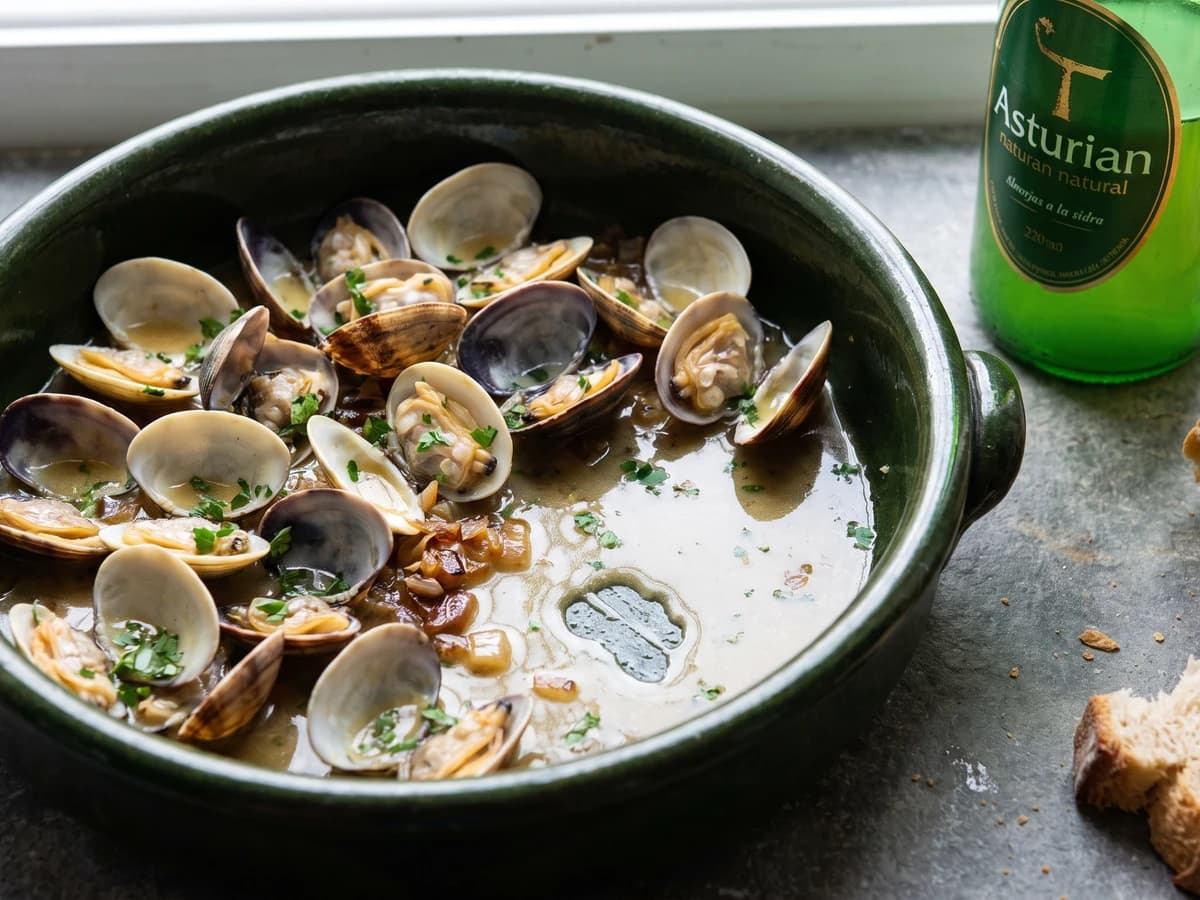
Asturias opens clams in tart natural cider over a slow onion and garlic sofrito, making a bright, briny sauce that asks for bread and rewards one rule: lift each clam as it opens.