Chef Isabel
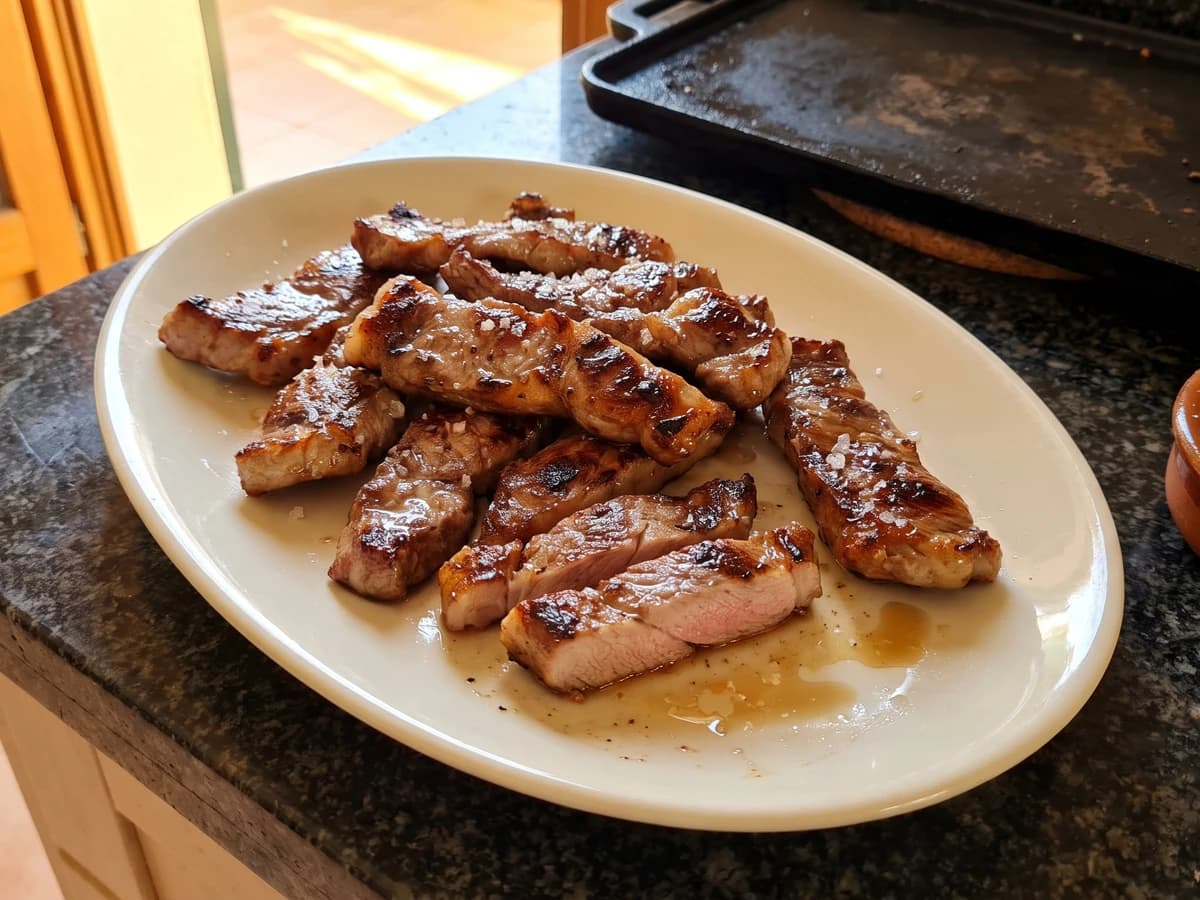
Abanico Ibérico a la Plancha
Extremadura's dehesa gives us this fan-shaped, marbled rib cut: salt it at the last moment, lay it on a fierce plancha, and count in seconds so the centre stays juicy.
A cooking platform built around craft, culture, and the stories behind what we eat.
Created by
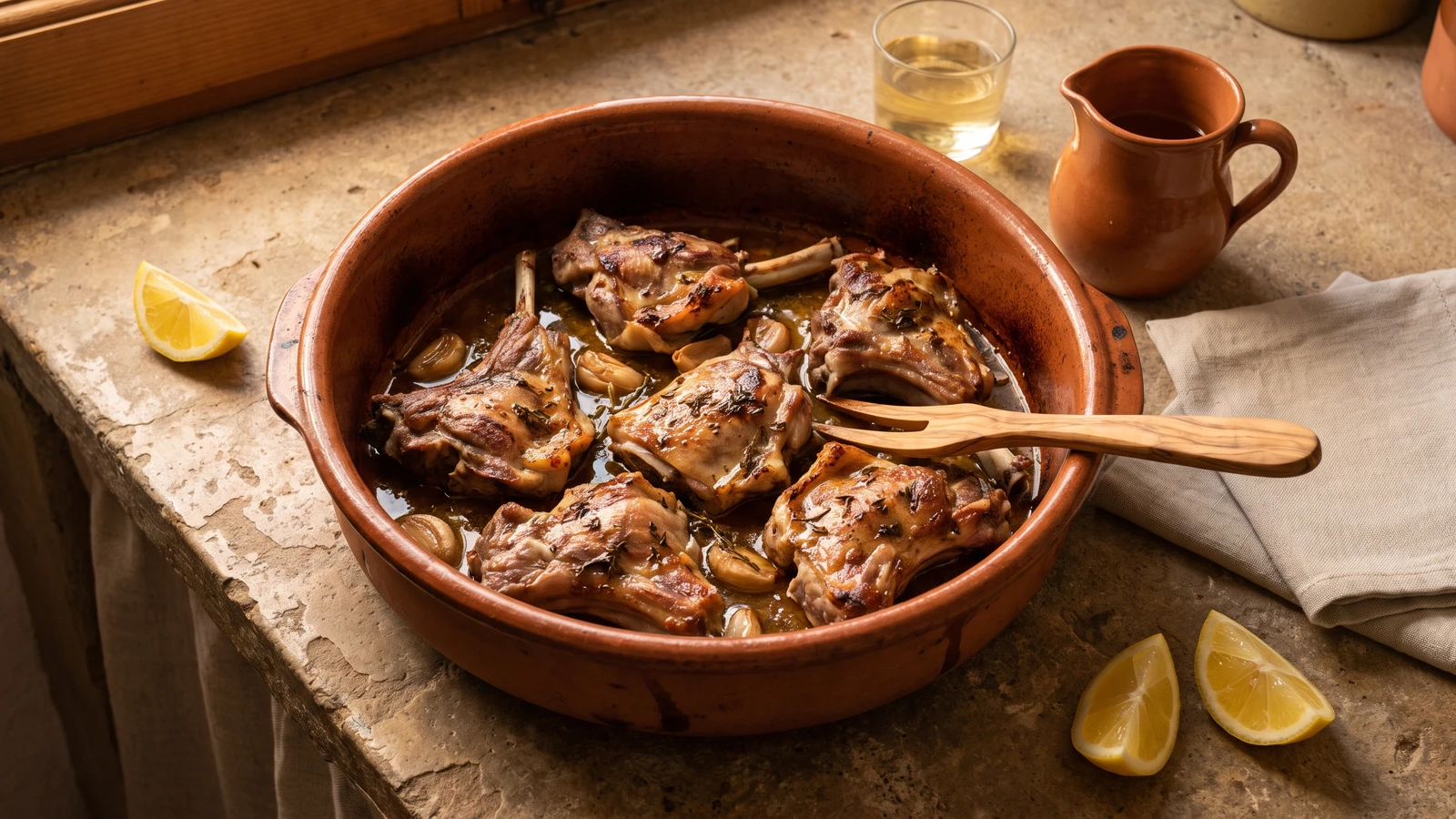
Cabrito asado belongs to the Castilian and Aragonese uplands: young goat rubbed with garlic, thyme, salt, and lard, roasted gently until tender, then finished hard so the skin catches.
Cabrito asado castellano-aragonés is the roast kid goat of the dry uplands, where sheep and goats are not decoration but supper. It is stronger than cordero lechal, suckling lamb, leaner too, with a clean pasture taste that needs no disguise. Garlic, thyme, lard, salt, white wine. That is enough.
The method that decides it is the heat. Roast it first at a steady, moderate temperature so the joints soften without drying, then raise the oven and baste until the skin turns browned and crisp at the edges. If you blast it from the start, the outside looks brave and the meat underneath is tight. Cabrito is small. It doesn't forgive showing off.
If you are far from Castilla or Aragón, ask a proper butcher for young kid goat, cut into shoulders and legs. No hace falta haber pisado España. If you can't get cabrito, use cordero lechal or the smallest young lamb shoulder you can find, and know what changes: the meat will be sweeter, fattier, and less sharp. Still good. Not the same animal, so don't pretend it is.
Use lard if you can. Olive oil works in a pinch, but lard gives the old roast its roundness and helps the skin brown. In the Margin beside this one I wrote only: don't drown it. Wine bastes the meat, it doesn't turn the roasting dish into a bath. Siempre sale, si lo sigues.
Cabrito asado belongs to the pastoral country of Castilla and Aragón, where young goats from small upland herds were saved for feast days, Christmas tables, patron saint meals, and family celebrations. The roasting method follows the same Castilian logic as lechazo asado: little seasoning, a clay dish, animal fat, wine or water, and a steady oven that lets the meat speak for itself. In Aragonese and Castilian homes, thyme and garlic are common because they belong to the hills around the animal, not because the cook wanted to hide it.
Quantity
2.5kg
bone-in shoulder and leg pieces
Quantity
18g
Quantity
6
peeled
Quantity
2 teaspoons
or 1 teaspoon dried thyme
Quantity
80g
softened
Quantity
2 tablespoons
Quantity
200ml
Quantity
150ml
Quantity
2
Quantity
1
cut into wedges for serving
| Ingredient | Quantity |
|---|---|
| young kid goatbone-in shoulder and leg pieces | 2.5kg |
| fine sea salt | 18g |
| garlic clovespeeled | 6 |
| fresh thyme leavesor 1 teaspoon dried thyme | 2 teaspoons |
| lardsoftened | 80g |
| extra virgin olive oil | 2 tablespoons |
| dry white wine | 200ml |
| water | 150ml |
| bay leaves | 2 |
| lemon (optional)cut into wedges for serving | 1 |
Pat the cabrito very dry and weigh the salt. Pésalo, no lo adivines. Use about 18g salt for 2.5kg meat, rubbing it over every piece, especially around the bone. Leave it at room temperature for 45 minutes while the oven heats to 170C. Cold meat goes into the oven sulking and cooks unevenly.
Pound the garlic and thyme in a mortar with a pinch of the measured salt until you have a rough paste, a majado. Work in the softened lard and the olive oil until it looks pale and smeared rather than smooth. Rub this over the meat, keeping most of it on the top and sides where it can brown.
Put the bay leaves in a large clay or heavy roasting dish and lay the cabrito in one layer, skin side up where there is skin. Pour the wine and water into the side of the dish, not over the rubbed meat. The liquid should cover only the bottom. This is roasting, not boiling, and that little difference is the dish.
Roast at 170C for 1 hour 20 minutes, basting every 25 minutes with the juices in the dish. Turn any pieces that are browning too fast, but keep the best skin facing up for the last stretch. Add a splash of water only if the dish goes dry and the juices threaten to burn.
Raise the oven to 220C and roast for another 20 to 30 minutes, basting twice, until the edges are dark gold, the garlic smells sweet, and the meat pulls easily when you tug near the bone. The juices should be glossy and shallow, not soupy. If the top needs more colour, give it five minutes more. Watch it now.
Rest the cabrito in the dish for 12 minutes before serving. Spoon the roasting juices over the pieces and put lemon wedges on the table only if you like a sharp edge with the meat. Serve with panaderas potatoes or a plain green salad. The roast has already done the talking.
1 serving (about 380g)
Culinary guides, cultural storytelling, and the editorial depth that makes cooking meaningful.
Discover Culinary ExplorerChef Isabel
Extremadura's dehesa gives us this fan-shaped, marbled rib cut: salt it at the last moment, lay it on a fierce plancha, and count in seconds so the centre stays juicy.
Chef Isabel
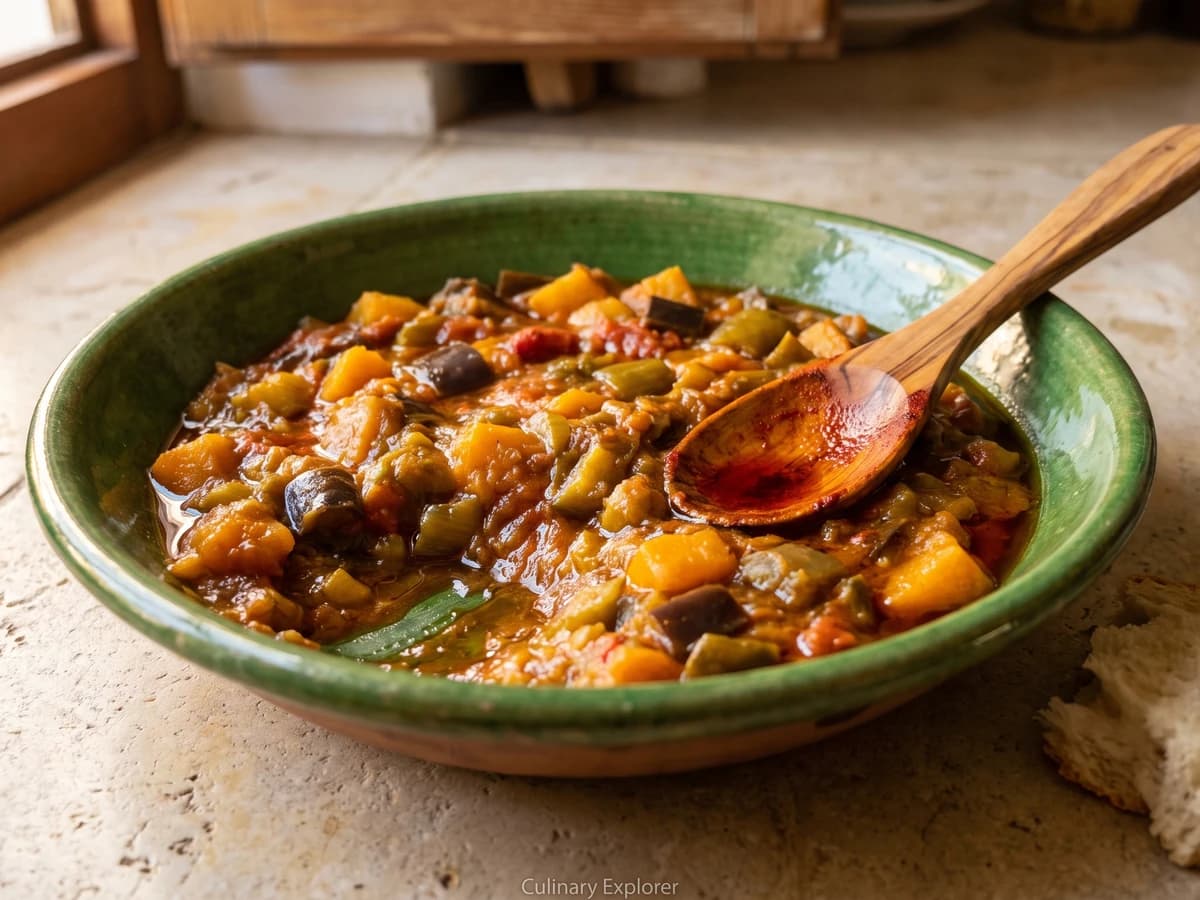
Alboronía is Andalucía's old pumpkin and aubergine stew, deepened with tomato, pimentón, and cumin, then cooked without hurry until the vegetables settle into a glossy, sweet, spoon-soft whole.

Chef Isabel
Aletría Murciana is Murcia's humble noodle guiso: fine fideos, pork ribs, potato, saffron, and a dark sweet sofrito. Get that base right and the pot knows where it's going.
Chef Isabel
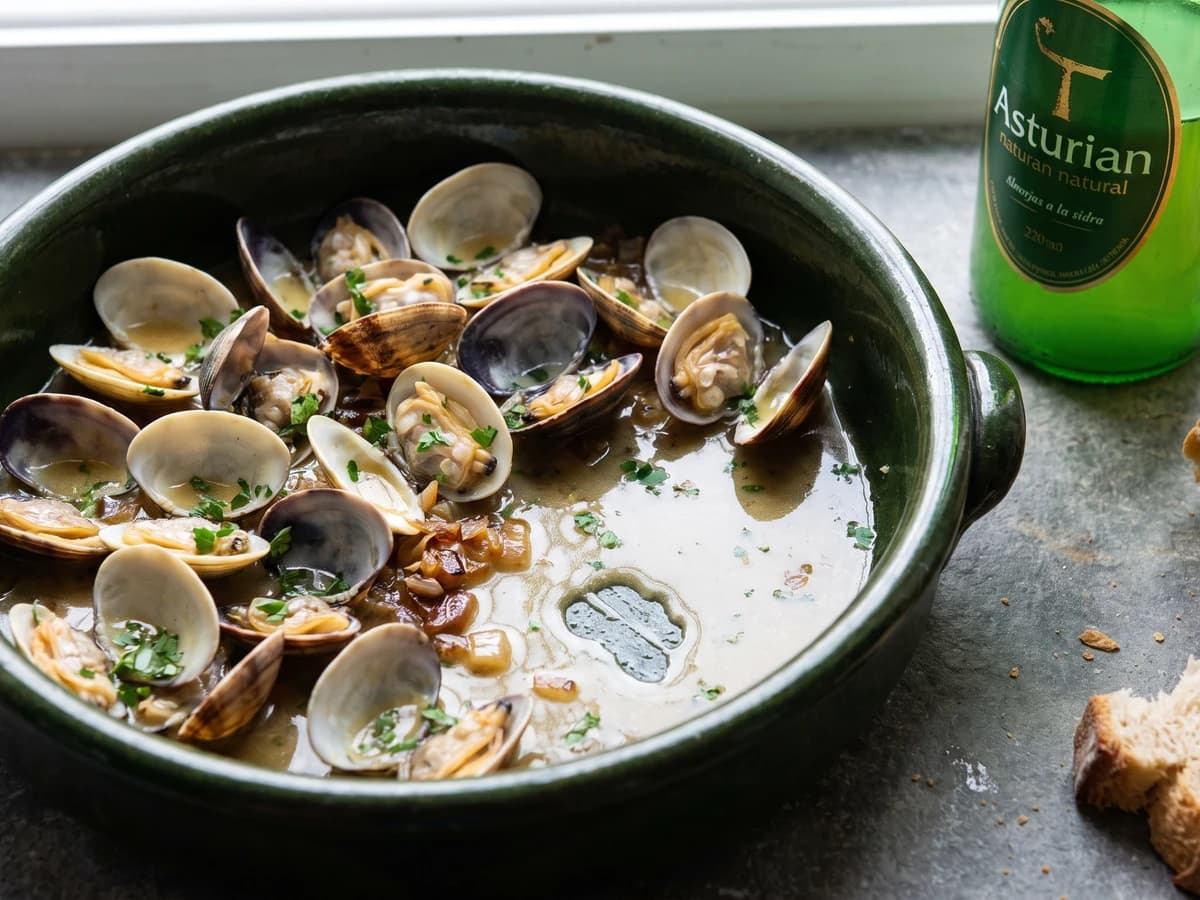
Asturias opens clams in tart natural cider over a slow onion and garlic sofrito, making a bright, briny sauce that asks for bread and rewards one rule: lift each clam as it opens.