
Chef Lupita
Agua de Alfalfa
Ciudad de México's highland market agua fresca, fresh alfalfa blended with pineapple and lime until bright green, strained clean, and poured cold from the vitrolero.
A cooking platform built around craft, culture, and the stories behind what we eat.
Created by
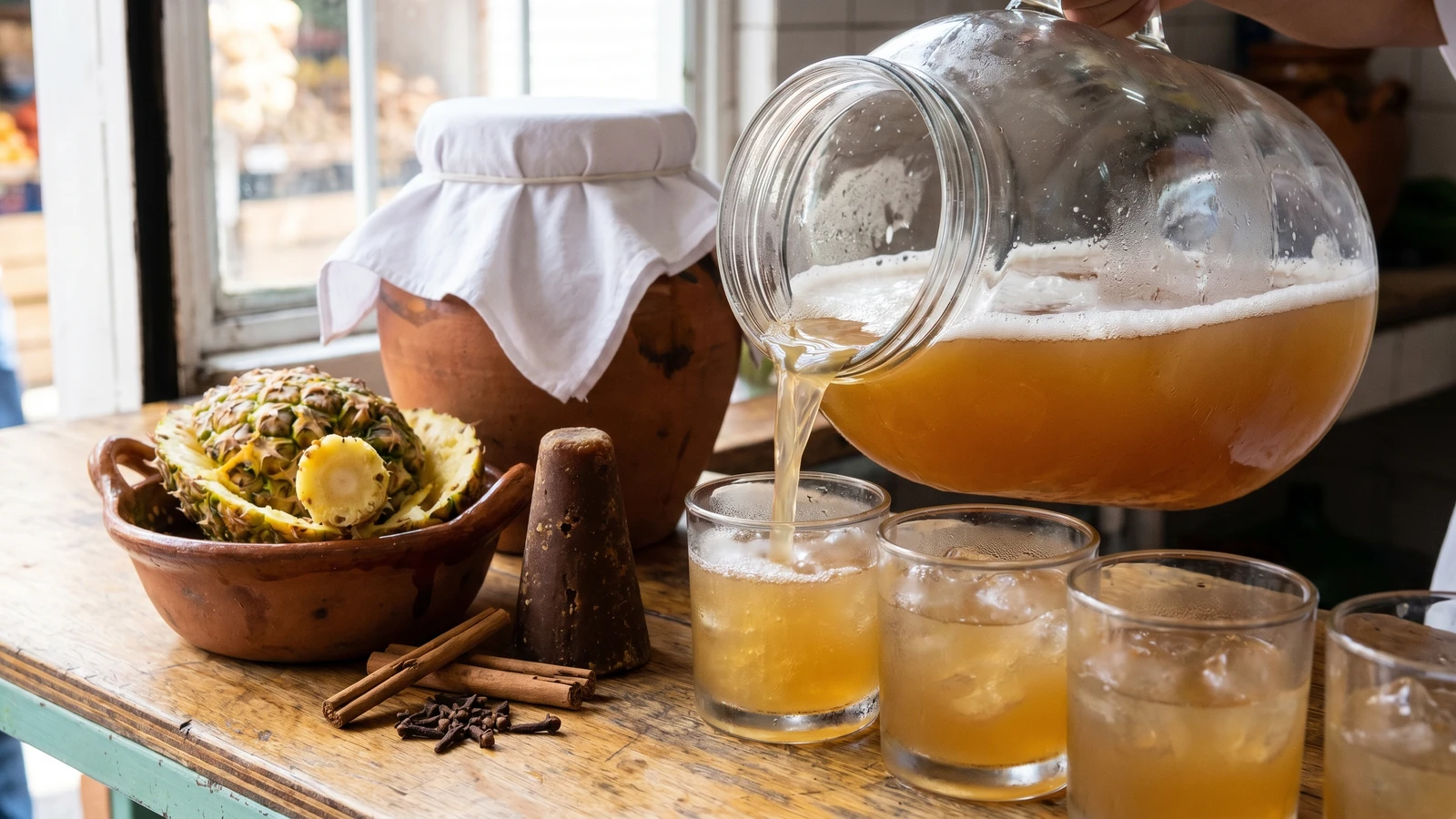
Ciudad de México's market tepache, made from pineapple rinds, piloncillo, canela, and clove, ferments for two days into a cold, lightly fizzy drink that teaches economy better than any lecture.
Ciudad de México, Valle de México: tepache de piña lives in the mercados, in the glass vitroleros at La Merced, Jamaica, and the tianguis where the air smells of cut fruit, tortillas, and wet cilantro. This is the city version: pineapple peel and core, piloncillo, canela de Ceylán, clavo de olor, water, and time. No chile. The bite comes from fermentation.
The women who perfected this were not chasing cocktail menus. They were managing a kitchen budget. Peel becomes drink. Core becomes flavor. Piloncillo feeds the wild yeast on the pineapple skin. In two days, the jar should smell like ripe pineapple and cane, with a little sour edge that tells you it is alive.
At home in Colonia Roma, my mother treated tepache as aprovechamiento, the discipline of using what another cook throws away. She would say the fruit is for the table and the peel is for tomorrow's drink. That is household economy, not poverty. Saber cocinar es saber vivir.
The word tepache comes from the Nahuatl tepiatl, a fermented drink originally associated with maize, which places the family of drinks in central Mexico before Spanish cane sugar arrived. The pineapple version became common later because pineapple peel carries wild yeasts and piloncillo gives them steady food, turning kitchen scraps into a low-alcohol market drink. In Ciudad de México during the 19th and 20th centuries, tepache belonged to markets, pulquerías, and street stands, usually served cold from barrels or glass vitroleros.
Quantity
1
well rinsed, peel and core reserved with a little flesh clinging
Quantity
8 cups
divided
Quantity
1 cone (8 ounces)
chopped
Quantity
1 stick
Quantity
4
Quantity
for serving
| Ingredient | Quantity |
|---|---|
| large ripe pineapplewell rinsed, peel and core reserved with a little flesh clinging | 1 |
| filtered water or boiled and cooled waterdivided | 8 cups |
| piloncillochopped | 1 cone (8 ounces) |
| Mexican canela de Ceylán | 1 stick |
| whole cloves (clavos de olor) | 4 |
| ice (optional) | for serving |
Rinse the pineapple well under running water and scrub the skin with clean hands or a vegetable brush. Do not use soap. Cut away the crown and base, then remove the peel in wide strips and cut out the core. Save the fruit for eating. The peel and core are what you need here, with a little flesh still clinging to feed the fermentation.
Put 2 cups of the water, the chopped piloncillo, canela, and cloves in a small pot. Warm over medium heat for about 5 minutes, stirring until the piloncillo dissolves. Pull it off the heat and let it cool completely. Hot syrup on pineapple peel can weaken the wild yeast. Patience is cheaper than ruining the jar.
Place the pineapple peel and core in a very clean 3-quart glass jar, barro cántaro, or food-safe fermentation crock. Pour in the cooled piloncillo syrup with the canela and cloves, then add the remaining 6 cups water. Stir with a clean spoon. Leave at least 2 inches of headspace. Cover with a clean cotton cloth and tie it tight. Cloth, not an airtight lid. The drink needs to breathe.
Set the jar in a warm corner, away from direct sun, ideally 70 to 80F. Stir once after 12 hours with a clean spoon. By 18 to 24 hours you should see small bubbles around the pineapple and smell cane sugar, ripe fruit, and light acidity. That is the peel doing its work. No me vengas con atajos. The two days are the recipe.
At 36 hours, taste a spoonful. It should be sweet-sour, lightly prickly, and still clearly pineapple. In a hot kitchen it may be ready now. In a cooler kitchen it may need the full 48 hours or even a little longer. Stop before it turns sharp like vinegar. White foam and bubbles are normal. Fuzzy green, black, or pink mold means you discard the whole batch. Así se hace y punto.
Strain the tepache through a fine-mesh strainer into a pitcher. Press the pineapple lightly, but do not mash it into pulp. Chill until very cold. If you want more fizz, bottle it loosely or in swing-top bottles for 2 to 4 hours at room temperature, then refrigerate immediately. Do not leave sealed bottles out overnight. Fermentation builds pressure and the kitchen does not need drama.
Pour over ice in clay jarritos or clear market glasses. If the tepache is too strong, cut it with a splash of cold water. If it is too tart, stir in a little cooled piloncillo syrup. Do not add chile because you think Mexican drinks need heat. Here the bite comes from fermentation, not from chile. Cada estado, su propia cocina.
1 serving (about 240g)
Culinary guides, cultural storytelling, and the editorial depth that makes cooking meaningful.
Discover Culinary ExplorerChef Lupita
Ciudad de México's highland market agua fresca, fresh alfalfa blended with pineapple and lime until bright green, strained clean, and poured cold from the vitrolero.

Chef Lupita
Aguascalientes' Lenten agua fresca, jewel-red from cooked beet and full of apple, banana, orange, lettuce, and ground peanuts, served cold when Holy Week meets the Feria de San Marcos.

Chef Lupita
Sonora and Sinaloa's creamy malted barley water, built on toasted cebada perla, Mexican canela, vanilla from Papantla, and evaporated milk. Pink-beige, rich, and served cold over heavy ice in a heavy glass tumbler. Liquid cookie comfort the northwest way.

Chef Lupita
Yucatán's everyday tonic of boiled chaya leaves blended with lima agria, sugar, and ice. The bright green jarra that sits on every Peninsula table from Mérida to Valladolid.