
Chef Lupita
Agua de Betabel Aguascalentense de Cuaresma
Aguascalientes' Lenten agua fresca, jewel-red from cooked beet and full of apple, banana, orange, lettuce, and ground peanuts, served cold when Holy Week meets the Feria de San Marcos.
A cooking platform built around craft, culture, and the stories behind what we eat.
Created by
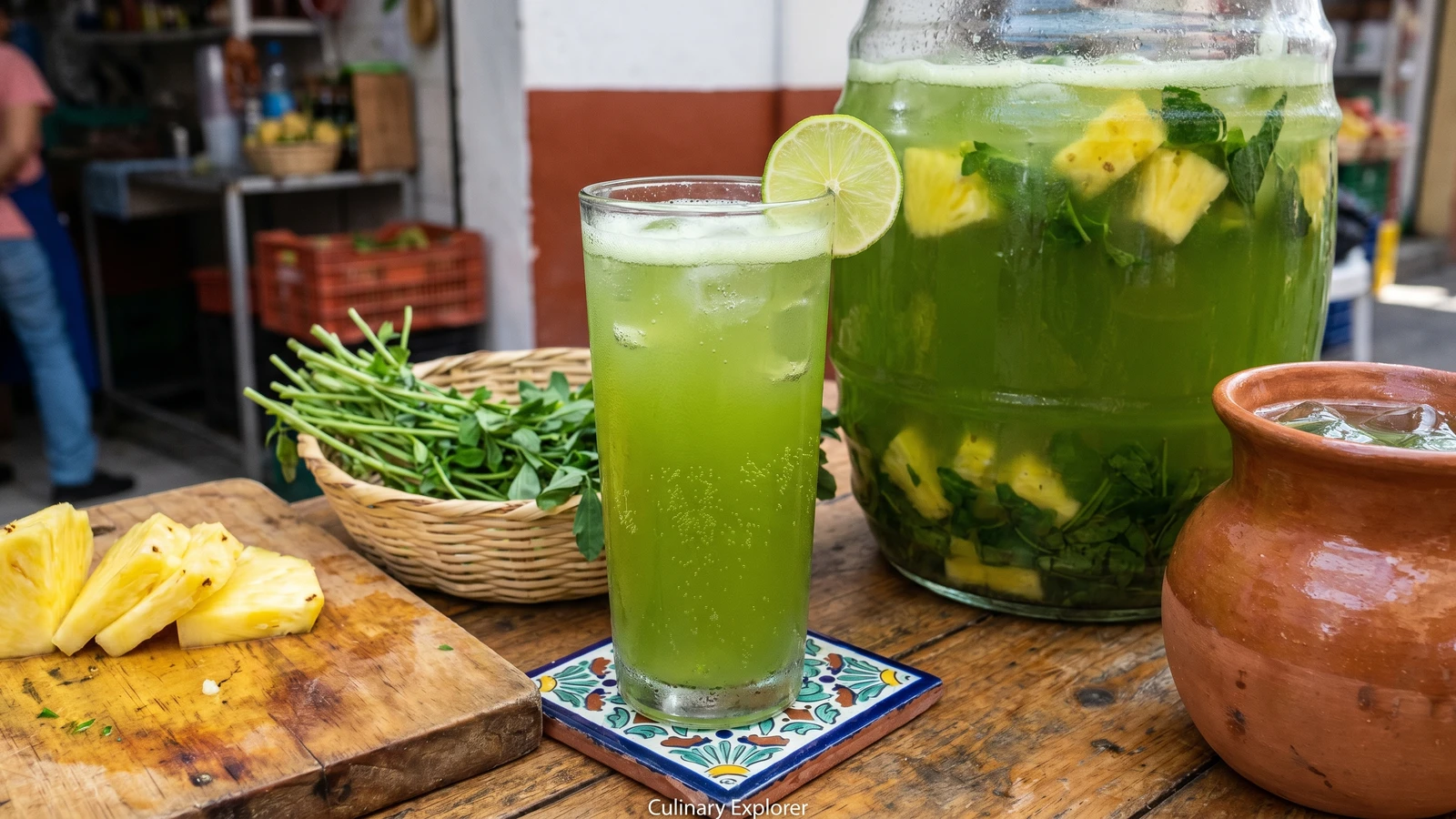
Ciudad de México's highland market agua fresca, fresh alfalfa blended with pineapple and lime until bright green, strained clean, and poured cold from the vitrolero.
Ciudad de México, the highland markets of the Valle de México, that is where this agua lives. You see it in vitroleros at La Merced, Jamaica, and the small neighborhood mercados where the señora behind the counter knows which drinks move when the afternoon gets hot.
Alfalfa is the point. Not spinach, not mint, not some bottled green powder. Fresh alfalfa gives the drink its grassy color and its clean market smell. Pineapple gives body and sweetness. Lime cuts through it. This is not a health-club green juice. It is an agua fresca, made to refresh people who are walking, working, carrying bags, feeding children, and stretching pesos until dinner.
My mother did not write this one in her Jalisco notebook, but she bought it for me in La Merced when I was small, always with extra lime because she said green drinks need discipline. She was right. Too much sugar and you lose the alfalfa. Too little lime and it tastes tired. Balance is the work. Saber cocinar es saber vivir.
Aguas frescas became part of Mexican market life in the 19th and 20th centuries as public markets, ice distribution, and large glass vitroleros made cold fruit drinks practical for daily sale. Alfalfa, introduced to Mexico after the Spanish conquest as a forage crop, moved into household and market drinks in central Mexico because its tender leaves blended easily with citrus and tropical fruit. Agua de alfalfa is especially associated with Ciudad de México and the central highlands, where market cooks turned a humble field plant into a bright green refresher sold by the ladle.
Quantity
2 packed cups
rinsed very well
Quantity
2 cups
peeled, cored, and chopped
Quantity
3/4 cup
from about 8 to 10 Mexican limes
Quantity
3/4 cup, plus more to taste
Quantity
8 cups
divided
Quantity
1/4 teaspoon
Quantity
for serving
Quantity
for serving
| Ingredient | Quantity |
|---|---|
| fresh alfalfa leaves and tender stemsrinsed very well | 2 packed cups |
| fresh pineapplepeeled, cored, and chopped | 2 cups |
| fresh lime juicefrom about 8 to 10 Mexican limes | 3/4 cup |
| cane sugar | 3/4 cup, plus more to taste |
| cold filtered waterdivided | 8 cups |
| fine sea salt | 1/4 teaspoon |
| ice (optional) | for serving |
| lime wheels (optional) | for serving |
Rinse the alfalfa in a large bowl of cold water, lifting it out with your hands so any grit stays behind. Do this twice if you bought it at a mercado, because good alfalfa comes with field dust. Drain it well. You want leaves and tender stems, not tough roots or yellow pieces.
In a large clay jarro, glass pitcher, or vitrolero, stir the cane sugar and salt into 2 cups of the cold water until mostly dissolved. The salt is not there to make it salty. It sharpens the pineapple and keeps the drink from tasting flat.
Put the alfalfa, pineapple, lime juice, and 2 more cups cold water into a blender. Blend on high until the color turns vivid green and the pineapple is completely broken down, about 45 seconds. Do not blend for three minutes like a nervous person. Heat from the blender dulls the color.
Pour the green mixture through a fine-mesh strainer into the sweetened water, pressing gently with a spoon. Do not squeeze it like laundry. Press too hard and you force bitterness from the stems into the agua. You want a clean, grassy sweetness, not medicine.
Stir in the remaining 4 cups cold water. Taste it now. It should be bright from lime, green from alfalfa, and sweet enough to carry over ice. Add a little more sugar if your pineapple was shy. Chill for at least 30 minutes if you have time, or serve immediately over plenty of ice.
Serve in tall glasses or clear plastic mercado cups with condensation on the outside and a lime wheel if you want it. Stir before pouring because natural juice settles. That is not a flaw. That is how real aguas frescas behave.
1 serving (about 315g)
Culinary guides, cultural storytelling, and the editorial depth that makes cooking meaningful.
Discover Culinary ExplorerChef Lupita
Aguascalientes' Lenten agua fresca, jewel-red from cooked beet and full of apple, banana, orange, lettuce, and ground peanuts, served cold when Holy Week meets the Feria de San Marcos.

Chef Lupita
Sonora and Sinaloa's creamy malted barley water, built on toasted cebada perla, Mexican canela, vanilla from Papantla, and evaporated milk. Pink-beige, rich, and served cold over heavy ice in a heavy glass tumbler. Liquid cookie comfort the northwest way.

Chef Lupita
Yucatán's everyday tonic of boiled chaya leaves blended with lima agria, sugar, and ice. The bright green jarra that sits on every Peninsula table from Mérida to Valladolid.

Chef Lupita
Yucatán's signature green agua fresca, chaya leaves blanched and blended with ripe pineapple and lima agria, served ice-cold from a sweating glass jarra against the Mérida heat.