
Chef Takumi
Agedashi Tofu (揚げ出し豆腐)
Agedashi tofu looks like a fryer test. It is only drained tofu, potato starch, clean oil, and a hot dashi broth waiting nearby.
A cooking platform built around craft, culture, and the stories behind what we eat.
Created by
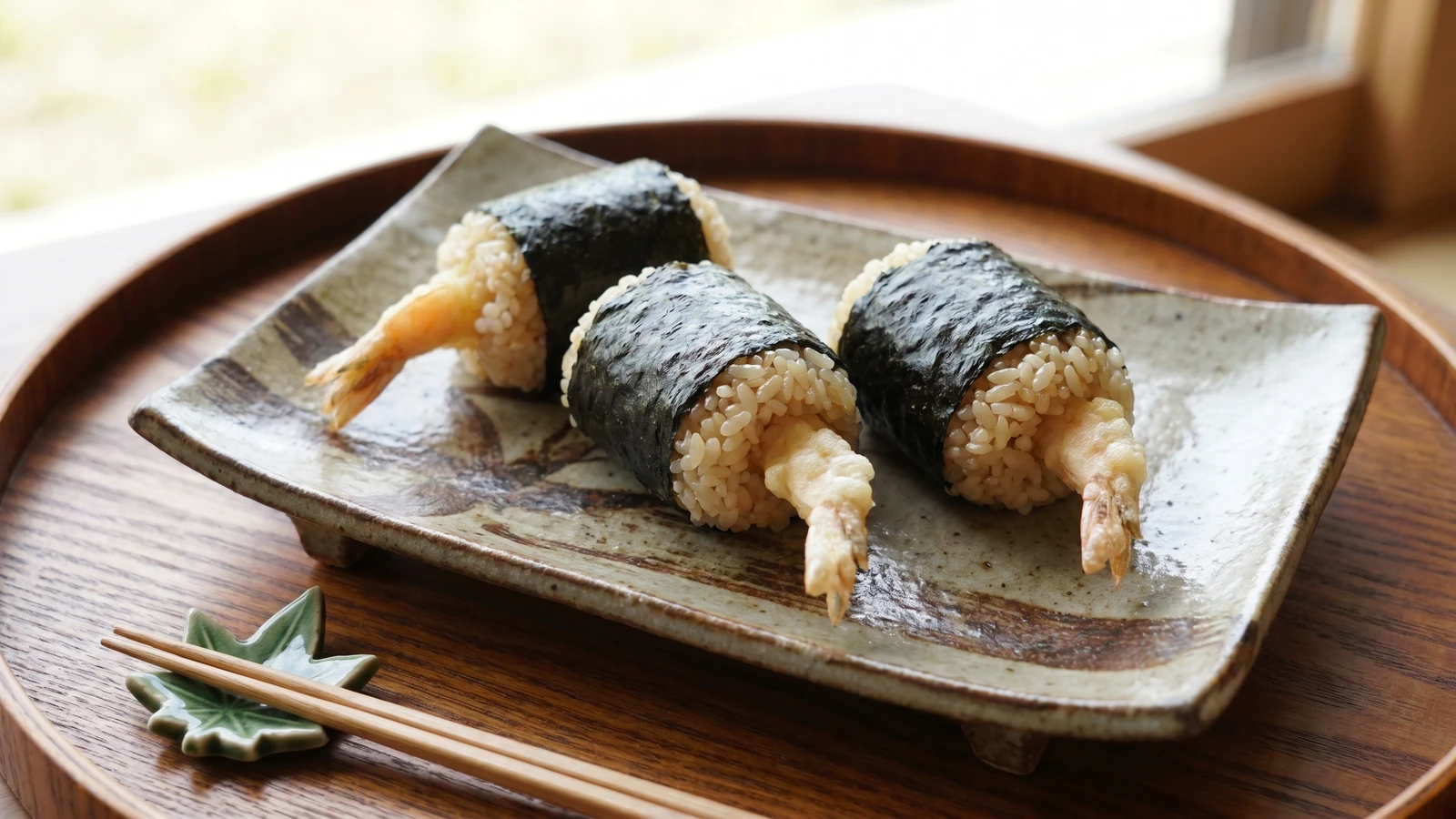
Tenmusu looks like a clever little trick, but it's only hot rice, one small shrimp tempura, and hands calm enough to wrap without crushing either one.
Atenmusu should fit in the hand and disappear in two or three bites. That smallness matters. Too large, and it becomes an overfed rice ball with a shrimp hidden somewhere inside, a little culinary paperwork. Made properly, the tail peeks out, the nori holds the bundle, and the rice carries the tempura without smothering it.
The one detail that decides it is timing. The rice must be warm enough to cling, the tempura freshly fried but no longer spitting oil, and your hands only lightly salted. Press too hard and you crush the grain and drive oil into the rice. Press too timidly and the thing falls apart before it reaches the picnic cloth. We shape, we don't squeeze.
This is travel food, festival food, the polite small bite that somehow feels more generous than a large one. The shrimp should be glistening fresh, with sweetness of its own, because there is nothing hidden here: a little soy in the dipping sauce, a strip of nori, clean rice. Honmono is often like that. It asks for attention, not drama.
Tenmusu is strongly associated with Nagoya, but it began in Tsu, Mie Prefecture, at the tempura shop Senju in the 1950s. The name joins tenpura and musubi, and the dish spread after a Nagoya shop carried the Senju style into the city, where it became part of Nagoya's well-known local food culture. Its compact shape made it suited to lunch boxes, travel, and gift boxes, which helped it move beyond the shop counter.
Quantity
2 1/2 cups cooked
hot
Quantity
10
peeled, tails left on
Quantity
1/4 teaspoon, plus more
for seasoning and shaping
Quantity
1 teaspoon
Quantity
1/2 cup, plus 2 tablespoons
for batter and dusting
Quantity
1/2 cup
Quantity
1 small
Quantity
for frying
Quantity
1 tablespoon
Quantity
1 tablespoon
Quantity
1 tablespoon
Quantity
5 sheets
cut in half
| Ingredient | Quantity |
|---|---|
| Japanese short-grain ricehot | 2 1/2 cups cooked |
| small shrimppeeled, tails left on | 10 |
| sea saltfor seasoning and shaping | 1/4 teaspoon, plus more |
| sake | 1 teaspoon |
| cake flourfor batter and dusting | 1/2 cup, plus 2 tablespoons |
| ice-cold water | 1/2 cup |
| egg yolk | 1 small |
| neutral oil | for frying |
| soy sauce | 1 tablespoon |
| mirin | 1 tablespoon |
| dashi or water | 1 tablespoon |
| toasted noricut in half | 5 sheets |
Pat the shrimp dry, then season them with the salt and sake. Make two or three shallow cuts across the belly of each shrimp and press it gently straight. This keeps the shrimp from curling too tightly in the oil, so the tail can sit neatly outside the rice ball.
Warm the soy sauce, mirin, and dashi in a small pan just until the mirin's raw edge is gone, then let it cool. This is not a heavy tare. It should season the shrimp lightly, not soak the rice or announce itself like a town crier.
Whisk the egg yolk into the ice-cold water, then stir in the 1/2 cup flour with chopsticks until the batter is only just mixed and still a little lumpy. Cold, loose batter fries light. Work it smooth and warm, and you invite gluten to make the coating heavy.
Heat the oil to 170 C, or until a drop of batter sinks halfway and rises at once. Dust the shrimp lightly with the extra flour, dip each in batter, and fry in small batches until pale gold and crisp, about 90 seconds. Drain well, then brush or dip the body of each shrimp lightly in the sauce, keeping the tail clean.
While the rice is still warm, divide it into 10 small portions. Wet your hands, rub them with a whisper of salt, and spread one portion across your palm. Warm rice clings without force, and lightly salted hands season the outside while keeping the grains from sticking to you.
Set one shrimp across the rice with the tail pointing out. Fold the rice around the body and shape it into a small triangle or rounded bundle, using just enough pressure to hold it together. Don't crush the grains. Tenmusu is held by touch, not grip.
Wrap each rice ball with a half sheet of nori so the seaweed supports the bottom and sides, leaving the shrimp tail visible. Let them rest a few minutes before serving. The rice settles, the nori softens just enough to cling, and the bite becomes one piece.
1 serving (about 65g)
Culinary guides, cultural storytelling, and the editorial depth that makes cooking meaningful.
Discover Culinary ExplorerChef Takumi
Agedashi tofu looks like a fryer test. It is only drained tofu, potato starch, clean oil, and a hot dashi broth waiting nearby.

Chef Takumi
Aspara-bacon is late-spring asparagus treated with common sense: thin bacon, hot grill, and a last brush of shōyu and mirin so the spear stays sweet while the wrap crisps.

Chef Takumi
This is Osaka street food at its plainest and best: good beef cut small, a thin batter, fine panko, hot beef tallow, and one clean dip in sauce.

Chef Takumi
Buta-bara is not a trick of the grill. Good pork belly, even cutting, steady heat, and the patience to let the fat turn glossy do most of the work.