
Chef Takumi
Furikake Onigiri (ふりかけおにぎり, seasoned rice balls)
Onigiri asks for warm rice, clean hands, and just enough pressure. Mix the furikake through while the grains are hot, and every bite carries the seasoning evenly.
A cooking platform built around craft, culture, and the stories behind what we eat.
Created by
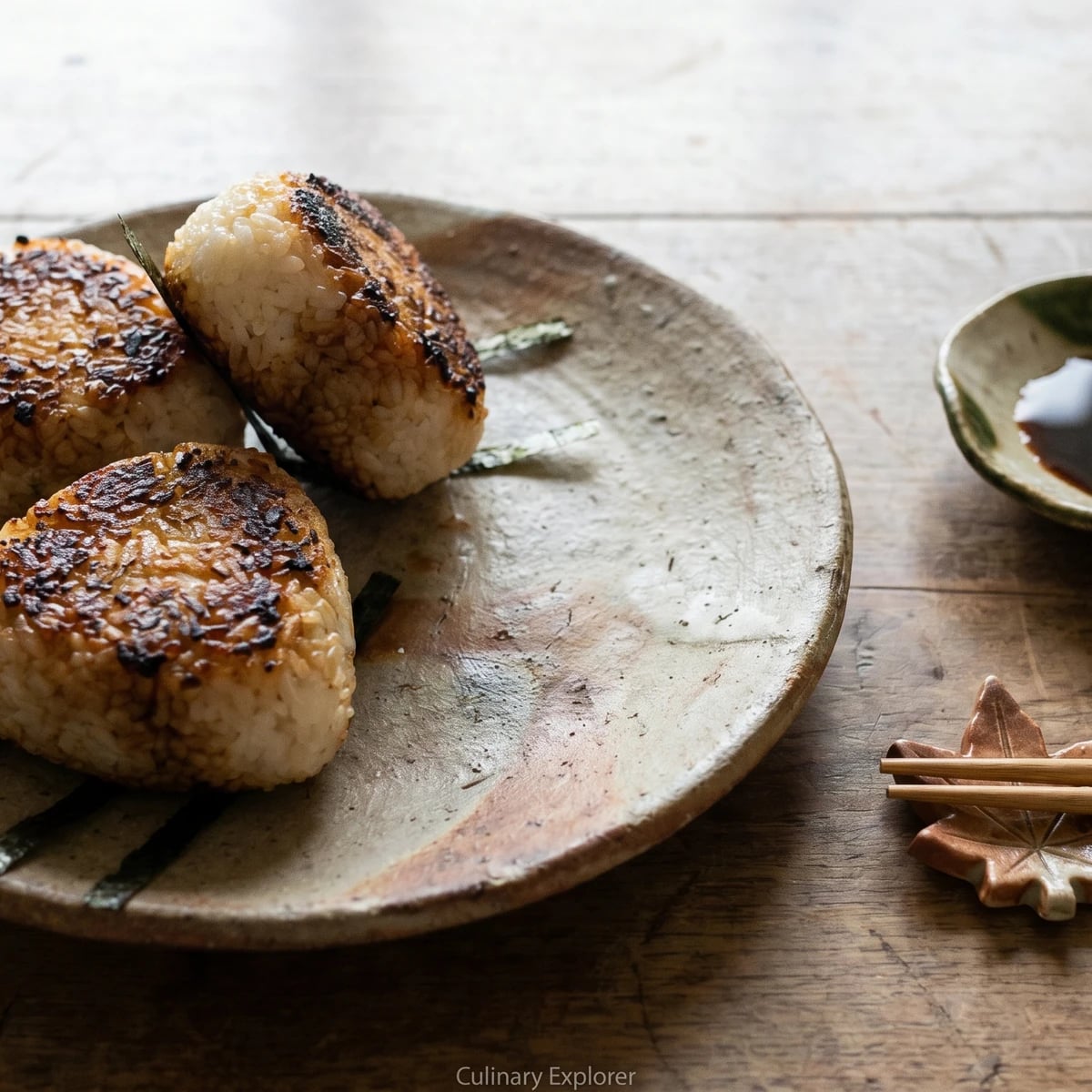
Yaki onigiri is rice made honest by the grill: firm warm triangles, a patient crust, and shōyu brushed only after the grains can hold it.
Ayaki onigiri is plain rice asked to show its manners. No filling hides inside, no sheet of nori covers the work unless you add it at the table. The rice must be freshly cooked short-grain, warm enough to cling, because cold loose rice will crack when it meets the grill. This is honmono at its most direct: rice, fire, shōyu.
People worry about the shape, as if the triangle were a small architectural exam. It isn't. Wet salted hands keep the rice from sticking, and a firm, gentle press makes a center that holds together without becoming paste. The one detail that decides the dish comes later: grill the onigiri plain until the surface has a dry crust before you brush on soy. Put shōyu on too early and it soaks into soft rice, burns at the edges, and gives you a salty bruise instead of fragrance.
At the Japanese table, yaki onigiri is often the modest finish, the rice course that follows richer things, or a snack eaten by hand with pickles and tea. It belongs to the method, not the menu: shape, dry, brown, glaze, turn. Leave the center quiet and let the outside carry the seasoning. The grains should separate under your teeth while the crust answers back.
Hand-formed rice balls in Japan predate the name onigiri: a carbonized lump of pressed rice from the Yayoi period was excavated at the Sugitani Chanobatake site in Ishikawa Prefecture in 1987. By the Heian period, court records refer to tonjiki, oval pressed rice eaten as portable food at outdoor meals. Yaki onigiri is the hearth-side branch of that old convenience, grilled over charcoal or an irori hearth and brushed with soy or miso after the surface dries enough to take seasoning.
Quantity
2 rice-cooker cups (about 300g)
Quantity
400ml, or to the rice cooker line
Quantity
1 teaspoon
Quantity
1/2 cup
Quantity
2 tablespoons
Quantity
1 teaspoon
for the grill or skillet
Quantity
1 sheet
cut into 6 strips
| Ingredient | Quantity |
|---|---|
| Japanese short-grain rice | 2 rice-cooker cups (about 300g) |
| water | 400ml, or to the rice cooker line |
| fine sea salt | 1 teaspoon |
| water for shaping | 1/2 cup |
| shōyu (Japanese soy sauce) | 2 tablespoons |
| neutral oilfor the grill or skillet | 1 teaspoon |
| yaki nori (optional)cut into 6 strips | 1 sheet |
Rinse the rice in several changes of water until the water runs almost clear, then drain for 10 minutes. Wash it twice, wash it thrice, but don't scrub the grain raw. You are removing loose surface starch so the outside doesn't cook up gummy, while keeping enough natural cling for the onigiri to hold.
Cook the rice with the measured water in a rice cooker, or in a heavy pot with a tight lid. When it finishes, let it rest 10 minutes before opening. That rest lets the moisture settle evenly, so the rice shapes cleanly instead of turning wet at the surface and dry in the middle.
Dissolve the salt in the 1/2 cup water. Wet your hands with this salted water, shake off the excess, and divide the warm rice into 6 portions. Shape each into a firm triangle about 1 inch thick, pressing just enough to remove gaps. Too loose and it falls apart on the grill. Too tight and the center eats like paste.
Heat a yakiami grill net, charcoal grill, broiler rack, or cast-iron skillet over medium heat and oil it lightly. Set the onigiri down plain, with no soy yet, and cook 3 to 4 minutes per side until the surface dries, browns in patches, and releases without tearing. This first dry crust is the whole secret.
Brush one face lightly with shōyu, turn it sauce-side down, and cook 20 to 30 seconds until the surface turns glossy brown and smells nutty. Brush the other face, turn, and cook the same way. Repeat once if you want a deeper color, but keep the coats thin. A flood of soy burns and loosens the rice.
Let the onigiri rest for 1 minute, then wrap each with a strip of yaki nori if using. Serve hot, by hand, with pickles or tea. The outside should be crisp and soy-dark in places, the inside still tender and plain.
1 serving (about 120g)
Culinary guides, cultural storytelling, and the editorial depth that makes cooking meaningful.
Discover Culinary Explorer
Chef Takumi
Onigiri asks for warm rice, clean hands, and just enough pressure. Mix the furikake through while the grains are hot, and every bite carries the seasoning evenly.

Chef Takumi
Karaage onigiri is bento common sense: one juicy piece of soy-ginger chicken tucked into salted rice, shaped warm, and wrapped in nori so the hands stay clean.

Chef Takumi
Kombu onigiri is a small lesson in restraint: glossy soy-simmered kelp, warm salted rice, and hands damp enough that the grains gather without being crushed.

Chef Takumi
Hot rice, salty roe, and clean hands: mentaiko onigiri is not a trick, only a small lesson in seasoning rice while it still wants to hold together.