Chef Lupita
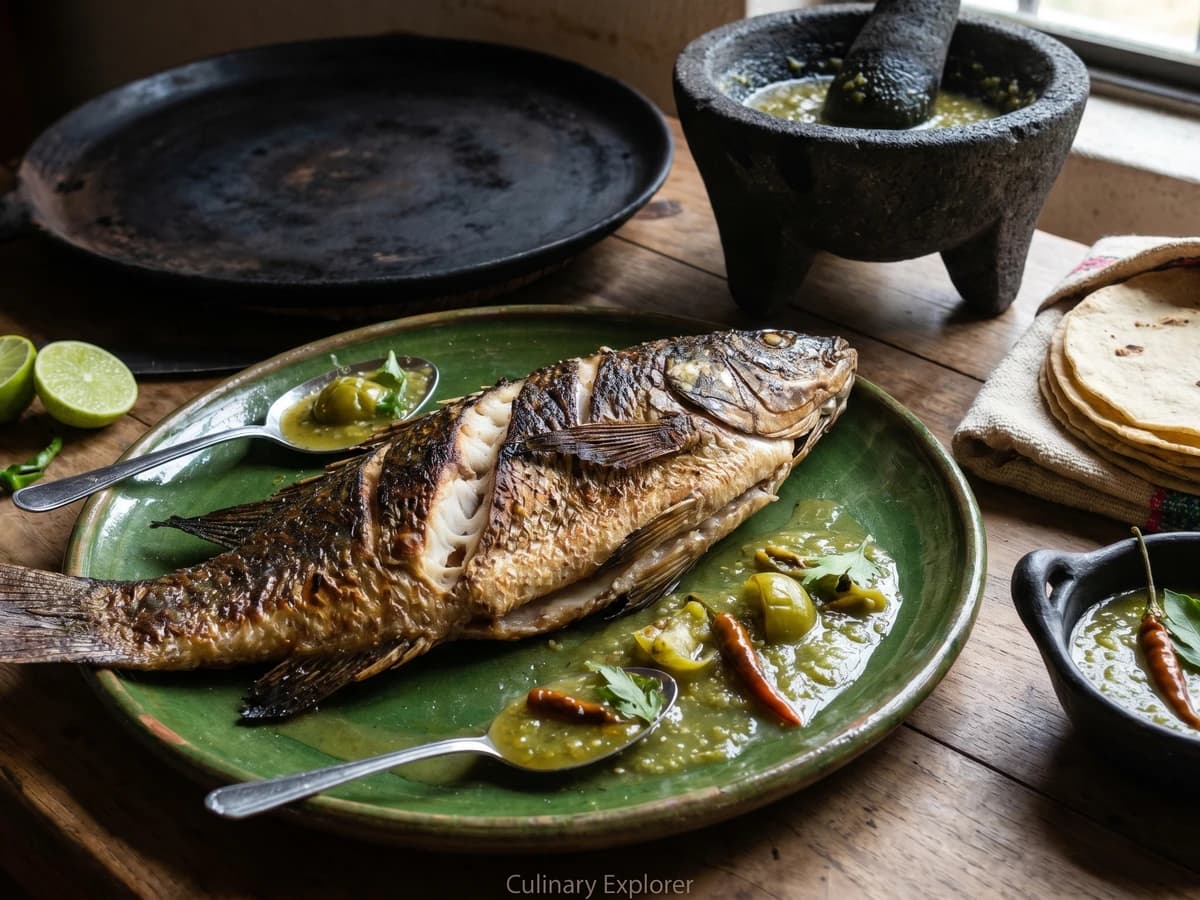
Acúmara Tatemada al Comal
Michoacán's Lake Pátzcuaro acúmara, a whole kurucha from the lago tatemada on a comal de leña and served with chile perón atápakua, corn tortillas, and P'urhépecha discipline.
A cooking platform built around craft, culture, and the stories behind what we eat.

Created by
The Costa Chica's Afro-Mexican tamal, where the masa is grated yuca instead of corn, the filling is a peanut-thickened salsa of chile costeño and pasilla oaxaqueño, and the banana leaf does half the cooking.
This is a Costa Chica dish. The stretch of Pacific coast where Guerrero and Oaxaca meet, the towns of Cuajinicuilapa, Pinotepa Nacional, Collantes, Chacahua. This is Mexico's third root, la tercera raíz, the Afro-Mexican coast the country spent five hundred years pretending it could not see.
The tamal has no corn. Read that again. The masa is grated yuca, cassava, a root that crossed the Atlantic with the African diaspora and put itself down on this coast like it had always been here. You bind it with manteca de cerdo and you wrap it in banana leaf, never corn husk. The leaf is not a container. It is an ingredient. The steam pulls a green, faintly anise breath out of the banana leaf and the hoja santa folded inside, and that breath is half the dish. Lose the leaf and you lose the recipe.
Inside goes a salsa costeña built on chile costeño, the small red chile of this coast, with guajillo for color and pasilla oaxaqueño for smoke, thickened with ground peanut and sesame the way the cooks here have always thickened their sauces. Encacahuatado. Ground peanut, not peanut butter. No me vengas con atajos. A slice of black-ripe plátano macho goes in against the chile, sweet against heat, the oldest argument in coastal cooking.
I will tell you the truth about this recipe. It was not in my mother's notebook. She was from Jalisco, and her Mexico, like most of Mexico's, stopped at the edge of what it chose to remember. I had to go to the coast and sit with the women of Cuajinicuilapa to learn this, women who grate yuca by the kilo and have fed their families this tamal for longer than the Constitution was willing to admit they existed. La tercera raíz no es nota al pie. Es plato principal. Saber cocinar es saber vivir, and on this coast, knowing how to cook is also knowing how to remember.
Yuca (Manihot esculenta) was domesticated in South America, not in Mesoamerica, carried across the Atlantic in both directions during the colonial period, and became a staple of the African diaspora, which is how it entered the foodways of the enslaved and free Africans brought to Mexico's Pacific Costa Chica and the Gulf coast of Veracruz beginning in the 16th century. Towns such as Cuajinicuilapa in Guerrero and Pinotepa Nacional in Oaxaca remain centers of Afro-Mexican population and cooking, where cassava, plantain, peanut, and coconut form an ingredient ecology distinct from the corn-centered cuisine of the Mexican interior. Afro-Mexican peoples were not recognized in the Mexican Constitution until a 2019 reform to Article 2, and the 2020 national census was the first to count them, more than two million people, as a distinct population.
Quantity
3 pounds (about 2 large roots)
peeled, cored, and finely grated
Quantity
3/4 cup, plus more for frying
softened
Quantity
2 teaspoons, plus more to taste
Quantity
8
stemmed and seeded
Quantity
4
stemmed and seeded
Quantity
2
stemmed and seeded
Quantity
1/2 cup
skins on
Quantity
3 tablespoons
Quantity
4
unpeeled
Quantity
1/4
Quantity
2 large
peeled and sliced on the diagonal
Quantity
18 to 20
Quantity
1 package (about 1 pound)
thawed if frozen
Quantity
for tying
| Ingredient | Quantity |
|---|---|
| yuca (cassava)peeled, cored, and finely grated | 3 pounds (about 2 large roots) |
| manteca de cerdo (pork lard)softened | 3/4 cup, plus more for frying |
| kosher salt | 2 teaspoons, plus more to taste |
| chile costeño rojostemmed and seeded | 8 |
| chile guajillostemmed and seeded | 4 |
| chile pasilla oaxaqueñostemmed and seeded | 2 |
| raw peanuts (cacahuate)skins on | 1/2 cup |
| sesame seeds (ajonjolí) | 3 tablespoons |
| garlic clovesunpeeled | 4 |
| white onion | 1/4 |
| plátano macho (very ripe, skins black)peeled and sliced on the diagonal | 2 large |
| fresh hoja santa leaves | 18 to 20 |
| banana leavesthawed if frozen | 1 package (about 1 pound) |
| kitchen string or strips of banana leaf (optional) | for tying |
Cut the banana leaves into rectangles about 10 by 12 inches, plus a handful of thinner strips for tying. Pass each piece over an open flame or a hot comal for a few seconds a side. The leaf turns from stiff and matte to glossy and deep green, and it smells green and faintly sweet. That heat makes the leaf pliable so it folds without cracking, and it wakes up the aroma that goes into the masa. Wipe each piece with a damp cloth and stack them. Save the torn scraps to line the steamer.
Yuca has a thick bark you cannot eat. Cut each root into 3-inch lengths, stand a piece on its end, and run your knife down between the woody bark and the white flesh, peeling away both the brown skin and the pink layer beneath. Cut out any tough fiber down the center. Grate the white flesh on the fine side of a box grater or pulse it in a food processor until it looks like wet, coarse snow. This is your masa. There is no corn in this tamal and there never was.
Let the grated yuca sit for ten minutes. A thin, cloudy liquid rises to the top. Pour off and discard that watery liquid, but stop when you reach the dense white starch settled at the bottom. That starch is what holds the tamal together, so keep it. Work the softened manteca de cerdo and the salt into the yuca with your hands until the fat disappears and the mass feels rich and holds its shape when you press it. La manteca es el sabor. Taste it. It should read seasoned, a little sweet from the root, and clean.
Heat a dry comal over medium. Toast the costeño, guajillo, and pasilla oaxaqueño separately, pressing them flat a few seconds a side until they soften, blister, and give up their smell. The pasilla oaxaqueño is already a smoked chile and it will perfume the whole kitchen. Do not let any of them blacken. Burned chile is bitter and there is no fixing it later. Move them to a bowl, cover with hot water, not boiling, and soak twenty minutes.
On the same comal, toast the peanuts with their skins on, shaking the pan, until they smell roasted and the skins darken, about five minutes. Tip them out. Toast the sesame next, stirring constantly, until it turns gold and starts to hop in the pan. Watch it. Sesame goes from gold to burnt in seconds. This peanut and sesame is what thickens the salsa. Encacahuatado is ground peanut, not peanut butter. No me vengas con atajos.
Char the unpeeled garlic and the onion on the comal until soft and spotted black in places, then peel the garlic. Drain the chiles, keeping the soaking water. Put the chiles, garlic, onion, toasted peanuts, and two tablespoons of the sesame in a blender with one cup of the chile soaking water. Blend to a thick, brick-red paste. If the blender labors, add soaking water a splash at a time. You want a paste, not a soup.
Melt two tablespoons of manteca de cerdo in a cazuela or heavy skillet over medium heat. When it shimmers, pour in the chile-peanut paste. It will sputter, so stand back. Fry it, stirring almost constantly, for eight to ten minutes, until it darkens, pulls away from the bottom of the pan in a mass, and the fat shines at the edges. That frying turns raw chile into salsa. Season with salt and let it cool. It should hold its shape on a spoon.
The plantain has to be black-ripe, soft, almost too far gone. Green plantain is wrong here. Fry the slices in a little manteca over medium heat until the edges caramelize to deep gold and the centers go soft and sweet. Set them on a plate. Sweet plantain against smoky chile is the whole argument of this coast, and you want both in the same bite.
Lay a banana leaf piece shiny side up, grain running left to right so it folds clean. Spread about a quarter cup of yuca masa in the center into a rectangle the size of your palm. Lay a hoja santa leaf on top. Spoon on a tablespoon of the chile-peanut salsa and press in a slice or two of plantain. Fold the two long sides of the leaf over so the masa closes around the filling, then fold the top and bottom under into a sealed packet. Tie each one with a strip of leaf or string. The masa is loose, so the leaf holds the shape. The banana leaf is not a wrapper. It is the recipe.
Line the bottom of a steamer or tall pot fitted with a rack with the leftover banana leaf scraps. Stand the tamales upright or lay them in snug layers, seam side down. Pour boiling water below the rack and cover the tamales with more leaves and a lid. Steam over medium heat for one hour to one hour and fifteen minutes, checking the water and adding more boiling water so it never runs dry. They are done when a tamal unwraps clean from the leaf and the masa has turned from chalky white to set, translucent, and firm. Yuca needs that full hour to cook through. Underdone, it is starchy and raw. Give it the time.
Pull the pot off the heat and let the tamales rest, still wrapped, for fifteen minutes. They firm up as they cool. This is not optional. A tamal opened straight from the steam falls apart and tastes unfinished. Serve them in the leaf, on enamelware or brown clay, and let each person open their own. La tercera raíz no es nota al pie. Es plato principal. Recetas probadas y garantizadas.
1 serving (about 340g)
Culinary guides, cultural storytelling, and the editorial depth that makes cooking meaningful.
Discover Culinary ExplorerChef Lupita
Michoacán's Lake Pátzcuaro acúmara, a whole kurucha from the lago tatemada on a comal de leña and served with chile perón atápakua, corn tortillas, and P'urhépecha discipline.

Chef Lupita
Puebla's weekday adobo of pork shoulder braised in a thick guajillo and ancho sauce sharpened with vinegar, cumin, and clove. The deep red of a market spice stall, the dish a poblana cooks without thinking.

Chef Lupita
Loreto's pit-roasted clams, planted hinge-up in beach sand and tatemadas under a fast fire of dried romerillo brush, the resinous Baja desert shrub that gives this dish its smoke.

Chef Lupita
Oaxaca's eighth mole, the silky, almond-and-cinnamon almendrado, served over poached chicken. Mild, sweet, restrained, and a quiet rebuttal to anyone who thinks Mexican food has to be hot to be Mexican.