Chef Lupita
Acúmara Tatemada al Comal
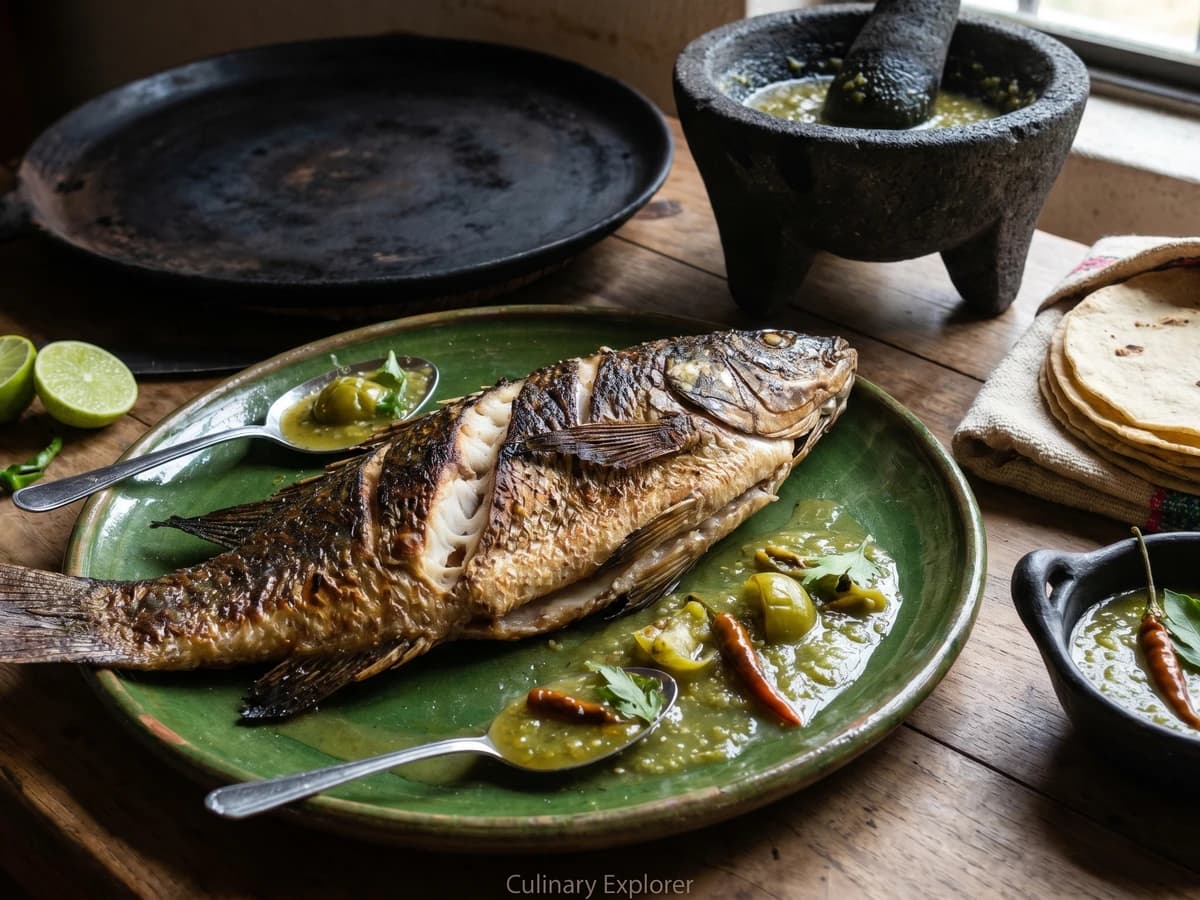
Michoacán's Lake Pátzcuaro acúmara, a whole kurucha from the lago tatemada on a comal de leña and served with chile perón atápakua, corn tortillas, and P'urhépecha discipline.
A cooking platform built around craft, culture, and the stories behind what we eat.
Created by
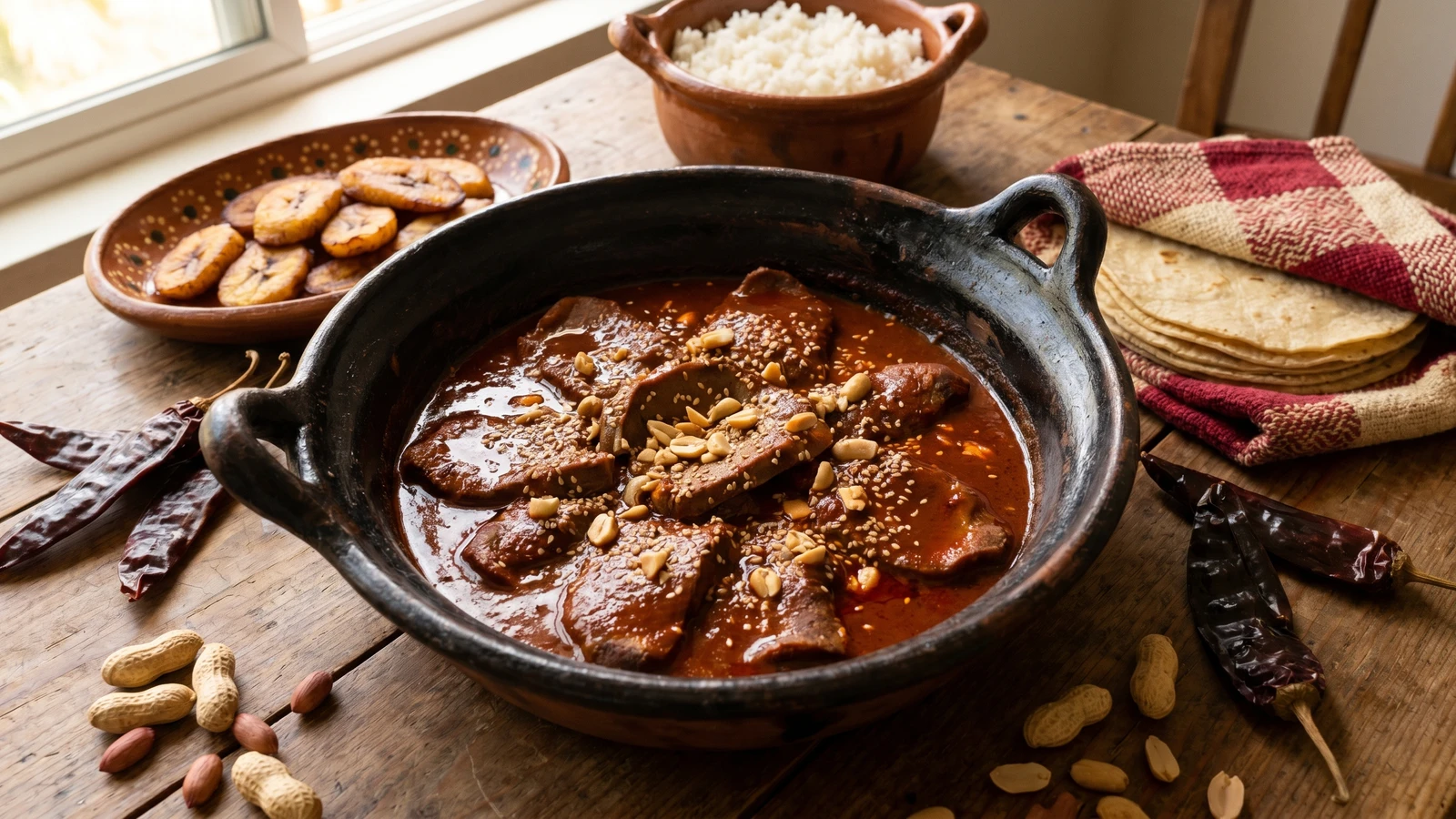
Veracruz beef tongue simmered tender and napped in a glossy sauce of ground peanut, guajillo, and tomato. This is encacahuatado the jarocho way: the cooking of the Sotavento, of la tercera raíz.
This is jarocho. It comes from Veracruz, from the Sotavento, the low country along the Gulf where the Papaloapan river runs out to the sea and the towns of Tlacotalpan, Alvarado, and Boca del Río keep their kitchens close to the water. Veracruz was the port where most of the enslaved Africans brought to New Spain first set foot on this land. Their cooking did not disappear. It settled into the Sotavento and it stayed. When you make this dish, you cook from la tercera raíz, the third root of Mexico, the African one. La tercera raíz no es nota al pie. Es plato principal.
Encacahuatado means bathed in peanut, and I want to be clear about what that is. It is ground peanut. Cacahuate that you toast in manteca until it is golden and fragrant, then grind into the sauce with your chiles and your tomato. It is not peanut butter from a jar. No me vengas con atajos. The chiles are guajillo for color and a clean, bright heat, and ancho for body and a little sweetness. Toasted sesame, ajonjolí, goes in with them and again over the top at the end. The peanut, the sesame, the lard: this is the flavor map of the Afro-Mexican Gulf, and every step of it earns its place.
The lengua is beef tongue, and if that word makes you nervous, you were taught to waste good food. A whole tongue, simmered three hours with onion and laurel until a fork slides in clean, gives you meat more tender than almost any cut you can name. You peel it while it is still hot, slice it, and let it drink the encacahuatado until the sauce coats every piece. This is how a home cook feeds a full table from one humble part of the animal. La manteca es el sabor, and nothing here goes to waste.
I learned the frying of this sauce from a woman in Tlacotalpan who cooked it in a clay cazuela black from years of use. She told me the secret is not the blender. The secret is what you do after: you fry the ground sauce in hot lard until it darkens and the fat rises to the top. Skip that and you have peanut soup. Do it right and you have encacahuatado. My mother kept a note in her own hand that said the same thing about mole: fry the paste, always fry the paste. She was from Jalisco, not Veracruz, but a good cook recognizes a good principle wherever it lives. Saber cocinar es saber vivir.
Veracruz served as the principal Atlantic port of entry for enslaved Africans brought to New Spain, and the southern Sotavento became one of the heartlands of Mexico's Afro-descendant population; in the highlands nearby, the maroon leader Gaspar Yanga negotiated a treaty with Spanish colonial authorities in 1609 that led to the founding of San Lorenzo de los Negros, today called Yanga, among the first free Black towns in the Americas. The peanut itself is American, domesticated in South America and known to the Mexica as 'tlalcacahuatl,' or earth cacao, the root of the modern word cacahuate; carried to West Africa by Portuguese traders in the sixteenth century, it became central to groundnut cooking there before returning to the Americas with the people of the diaspora. Mexico's constitution recognized Afro-Mexican peoples through a reform in 2019, and the 2020 national census counted them for the first time, ending centuries in which la tercera raíz was officially invisible.
Quantity
1 (about 3 to 3.5 pounds)
Quantity
1
halved
Quantity
1
halved crosswise
Quantity
3
Quantity
1 teaspoon
Quantity
1 tablespoon, plus more to taste
Quantity
1 1/2 cups
skin-on
Quantity
3 tablespoons, plus more for garnish
Quantity
6
stemmed and seeded
Quantity
2
stemmed and seeded
Quantity
1 pound
Quantity
1/2
Quantity
4
Quantity
1
torn
Quantity
1 inch
Quantity
3
Quantity
4
Quantity
1/2 teaspoon
Quantity
1/3 cup
divided
Quantity
4 to 5 cups
Quantity
1 teaspoon
to balance
Quantity
for serving
Quantity
for serving
Quantity
for serving
| Ingredient | Quantity |
|---|---|
| whole beef tongue | 1 (about 3 to 3.5 pounds) |
| white onionhalved | 1 |
| head of garlichalved crosswise | 1 |
| bay leaves | 3 |
| black peppercorns (for the broth) | 1 teaspoon |
| kosher salt | 1 tablespoon, plus more to taste |
| raw shelled peanuts (cacahuate)skin-on | 1 1/2 cups |
| sesame seeds (ajonjolí) | 3 tablespoons, plus more for garnish |
| dried chile guajillostemmed and seeded | 6 |
| dried chile anchostemmed and seeded | 2 |
| ripe tomatoes (jitomate) | 1 pound |
| white onion | 1/2 |
| garlic cloves | 4 |
| day-old corn tortillatorn | 1 |
| Mexican cinnamon (canela) | 1 inch |
| whole cloves | 3 |
| allspice berries (pimienta gorda) | 4 |
| black peppercorns (for the spice grind) | 1/2 teaspoon |
| pork lard (manteca de cerdo)divided | 1/3 cup |
| reserved tongue broth | 4 to 5 cups |
| piloncillo or sugar (optional)to balance | 1 teaspoon |
| white rice (optional) | for serving |
| fried ripe plantains (plátano macho maduro) (optional) | for serving |
| warm corn tortillas (optional) | for serving |
Rinse the beef tongue and place it in a large stockpot. Cover with cold water by two inches and add the halved onion, the head of garlic, the bay leaves, the peppercorns, and the salt. Bring to a gentle simmer over medium heat, skim the gray foam that rises in the first fifteen minutes, then lower the heat until the water barely moves. Cover partially and cook for three to three and a half hours. The tongue is ready when a fork slides into the thickest part with no resistance. Do not rush it. A tongue that fights your knife has not cooked long enough.
Lift the tongue out and let it sit only until you can handle it, but peel it while it is still hot. Slit the thick outer skin from end to end and pull it away with your fingers and a paring knife. It comes off in sheets when the tongue is hot and grips like glue once it cools, so work fast. Slice the peeled tongue across into pieces about half an inch thick. Strain the broth and save every drop. You will build the sauce with it.
Melt two tablespoons of the lard in a heavy skillet over medium heat. Add the raw peanuts and fry them, stirring constantly, until they turn deep gold and smell toasted, about five minutes. Scoop them out with a slotted spoon. In the same pan, toast the sesame seeds dry over medium heat until they pop and turn the color of honey. This toasted peanut is the heart of the dish. Encacahuatado is ground peanut, not peanut butter from a jar. Así se hace y punto.
Stem and seed the guajillo and ancho chiles. Heat a dry comal over medium and toast them a few seconds per side, pressing them flat, until they puff and smell fragrant. Do not let them blacken. Move them to a bowl, cover with hot water, not boiling, and let them soften for twenty minutes. Boiling water cooks the skin and turns the sauce bitter. Hot water draws the flavor out clean.
On the same comal, char the tomatoes, the half onion, and the garlic cloves. Turn them until the tomato skins blister and split, the onion edges blacken, and the garlic softens inside its skin. This roasting is the backbone of the sauce. Peel the garlic once it is cool enough to handle.
Toast the cinnamon, cloves, allspice, and the half teaspoon of peppercorns on the comal for under a minute, just until fragrant. Allspice, pimienta gorda, is native to this coast and to neighboring Tabasco, and it is what gives the jarocho version its warm, dark edge. Grind the toasted spices to a powder.
Drain the chiles. In a blender, combine the toasted peanuts, most of the sesame seeds (save some for the top), the soaked chiles, the charred tomatoes, onion, and garlic, the ground spices, and the torn tortilla. Add two cups of the reserved broth and blend until completely smooth. Work in batches if you must. You want a sauce with no grit, so blend longer than you think you need to.
Heat the remaining lard in a heavy clay cazuela or Dutch oven over medium heat until it shimmers. Pour in the blended sauce, standing back because it will sputter. Cook, stirring almost constantly, for ten to fifteen minutes, until the sauce darkens, thickens, and the lard begins to rise to the surface in little pools. This is the step that separates encacahuatado from peanut soup. La manteca es el sabor.
Thin the sauce with the remaining broth, a cup at a time, until it coats the back of a spoon. Taste for salt. If it tastes sharp, add the piloncillo or a pinch of sugar to round it. Let it simmer gently for fifteen minutes so the flavors marry. The sauce should be glossy and pourable, never gluey.
Slide the sliced tongue into the sauce and spoon the encacahuatado over every piece. Simmer gently, never at a hard boil, for fifteen to twenty minutes, until the tongue is hot through and has drunk in the flavor. Add a splash more broth if the sauce tightens too much.
Spoon the lengua and its sauce onto warm plates. Scatter the reserved toasted sesame over the top. Serve with white rice, sweet fried plantains, and warm corn tortillas to chase the sauce around the plate. This is a Sunday dish, a make-ahead dish, a dish that says la tercera raíz belongs at the center of the table. Recetas probadas y garantizadas.
1 serving (about 610g)
Culinary guides, cultural storytelling, and the editorial depth that makes cooking meaningful.
Discover Culinary ExplorerChef Lupita
Michoacán's Lake Pátzcuaro acúmara, a whole kurucha from the lago tatemada on a comal de leña and served with chile perón atápakua, corn tortillas, and P'urhépecha discipline.

Chef Lupita
Puebla's weekday adobo of pork shoulder braised in a thick guajillo and ancho sauce sharpened with vinegar, cumin, and clove. The deep red of a market spice stall, the dish a poblana cooks without thinking.

Chef Lupita
Loreto's pit-roasted clams, planted hinge-up in beach sand and tatemadas under a fast fire of dried romerillo brush, the resinous Baja desert shrub that gives this dish its smoke.

Chef Lupita
Oaxaca's eighth mole, the silky, almond-and-cinnamon almendrado, served over poached chicken. Mild, sweet, restrained, and a quiet rebuttal to anyone who thinks Mexican food has to be hot to be Mexican.