Chef Lupita
Acúmara Tatemada al Comal
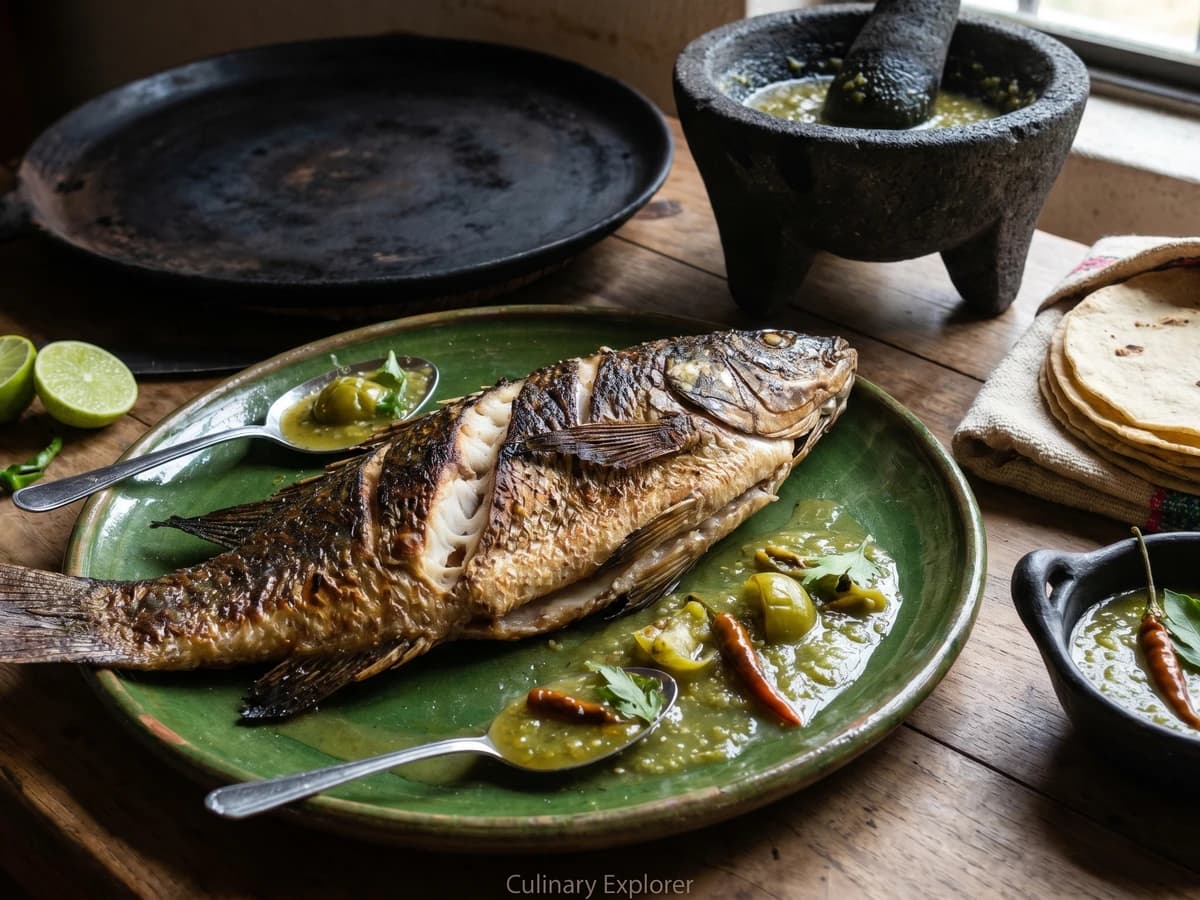
Michoacán's Lake Pátzcuaro acúmara, a whole kurucha from the lago tatemada on a comal de leña and served with chile perón atápakua, corn tortillas, and P'urhépecha discipline.
A cooking platform built around craft, culture, and the stories behind what we eat.
Created by
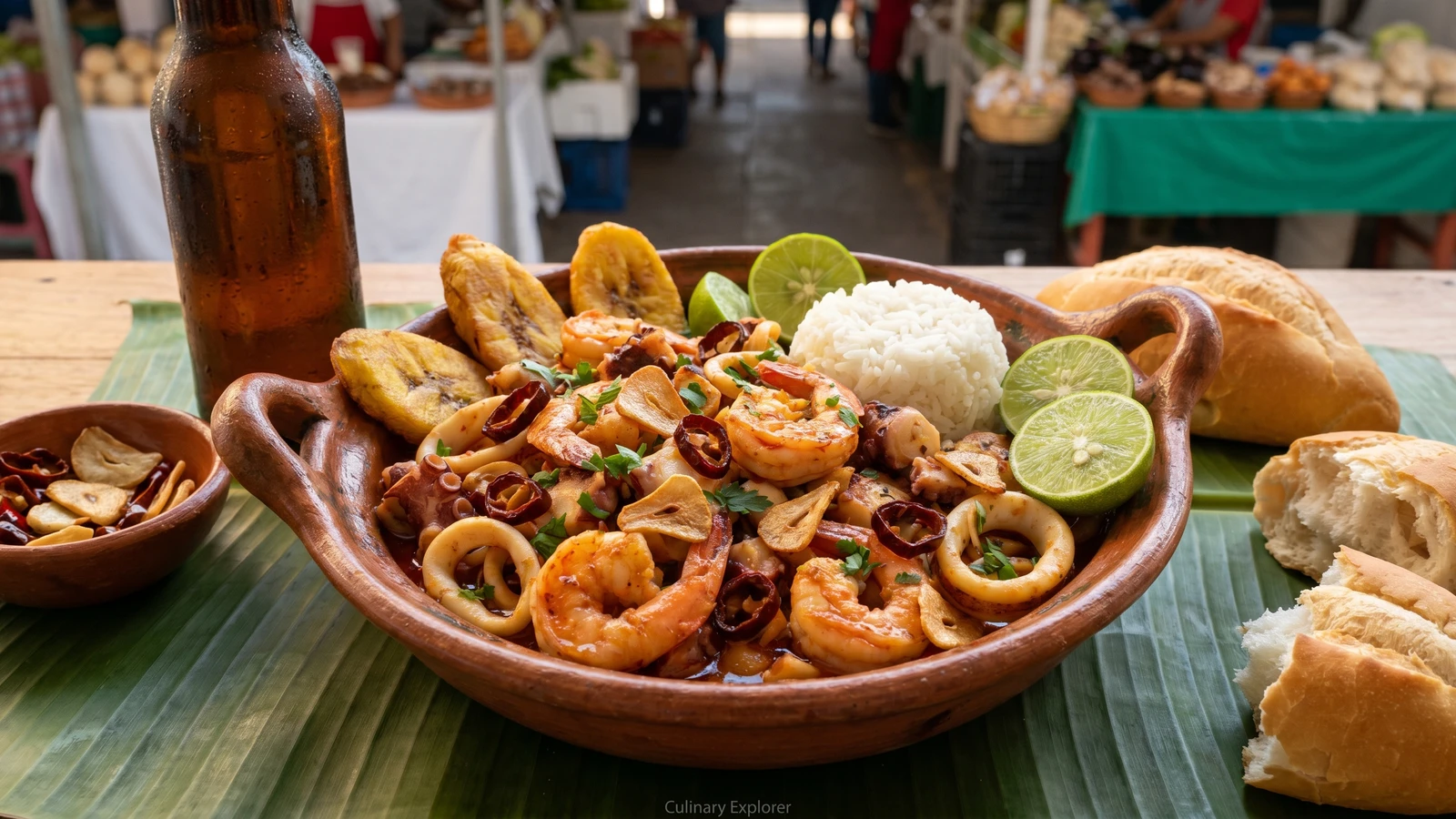
Shrimp, octopus, and squid seared hard in pork lard with a fistful of sliced garlic and guajillo cut into rings. This is the seafood of the jarocho cantinas, where the Afro-Veracruz coast cooks the Gulf the way it always has.
This is from Veracruz. Not the whole state, the Sotavento, the low south where the Papaloapan river spills into the Gulf and the towns of Tlacotalpan, Alvarado, and Boca del Rio cook seafood the way the rest of Mexico cooks beans. Every day. Without ceremony. Mariscos al ajillo is cantina food. You eat it standing at a counter with a cold beer and a plate of fried plantain, and the cook in front of you has made it ten thousand times and could make it asleep.
The jarocho coast is one of the three roots of this country, and the one Mexico spent four hundred years pretending it could not see. Africans came through the port of Veracruz in chains. What they built here, in the son jarocho, in the fandango, in the kitchen, is not a footnote. La tercera raiz no es nota al pie. Es plato principal. The frying in lard, the platano macho beside the plate, the yuca, the peanut and sesame and coconut that run through the wider jarocho pantry, that is the African hand on this food. You taste it before anyone teaches you the history.
Al ajillo means garlic. It also means chile guajillo, sliced into thin rings and fried until it crisps. That double meaning is the whole trick of the name. You melt pork lard, not oil, and cook a fistful of sliced garlic slow until it turns the color of straw. Then the guajillo goes in for thirty seconds, no more, because burned chile is bitter chile and there is no fixing it later. Then the heat climbs and the seafood goes in hard and fast. Octopus first, already simmered tender. Shrimp and squid last, because they need almost nothing. Squid left too long turns to rubber. Watch it like it owes you money.
I learned this behind the counter at a marisqueria in Boca del Rio, watching a woman named Otilia run three pans at once and never once look at a clock. The secret, she said, was the garlic and the nerve to pull the seafood while it still looked underdone. My mother was from Jalisco and cooked almost no seafood, but she would have understood Otilia in a second. La manteca es el sabor. The garlic is the perfume. The nerve you have to find on your own. Asi se hace y punto.
The port of Veracruz was the principal point of entry for enslaved Africans in colonial New Spain, and the Sotavento became a center of Afro-Mexican life; the free town founded by the maroon leader Gaspar Yanga after years of armed resistance and recognized by the Spanish crown in the early seventeenth century, now the town of Yanga, was among the first free Black settlements in the Americas. Mexico did not formally recognize Afro-Mexican peoples in its Constitution until a 2019 reform to Article 2, and the 2020 census was the first full national count to include them, finding more than two million people who identify as Afro-Mexican. The term al ajillo marks a Mexican reworking of Spanish garlic cookery, trading the Mediterranean dried chile for guajillo and olive oil for pork lard, a small record in a skillet of how three roots met on this coast.
Quantity
1 1/2 pounds
cleaned
Quantity
1 pound
peeled and deveined
Quantity
1 pound
bodies cut into 1/2-inch rings, tentacles left whole
Quantity
1/2
for the octopus pot
Quantity
4
for the octopus pot
Quantity
2
Quantity
1 tablespoon
for the octopus water
Quantity
1/2 cup
Quantity
2 heads
cloves peeled and thinly sliced
Quantity
8
stemmed, seeded, and cut crosswise into thin rings
Quantity
1 teaspoon, plus more to taste
Quantity
1/2 teaspoon
freshly ground
Quantity
2 tablespoons
Quantity
1 teaspoon
Quantity
1/2 cup
chopped
Quantity
2
halved
Quantity
2
skins deep yellow to black, peeled and sliced on the bias
Quantity
1/4 cup
for frying the plantains
Quantity
for serving
Quantity
for serving
Quantity
for serving
| Ingredient | Quantity |
|---|---|
| fresh octopuscleaned | 1 1/2 pounds |
| large shrimppeeled and deveined | 1 pound |
| cleaned squidbodies cut into 1/2-inch rings, tentacles left whole | 1 pound |
| white onionfor the octopus pot | 1/2 |
| garlic clovesfor the octopus pot | 4 |
| bay leaves | 2 |
| kosher saltfor the octopus water | 1 tablespoon |
| pork lard (manteca de cerdo) | 1/2 cup |
| garliccloves peeled and thinly sliced | 2 heads |
| dried chile guajillostemmed, seeded, and cut crosswise into thin rings | 8 |
| kosher salt | 1 teaspoon, plus more to taste |
| black pepperfreshly ground | 1/2 teaspoon |
| salsa inglesa (Worcestershire sauce) | 2 tablespoons |
| Maggi sauce (optional) | 1 teaspoon |
| flat-leaf parsleychopped | 1/2 cup |
| limeshalved | 2 |
| ripe platanos machos (plantains)skins deep yellow to black, peeled and sliced on the bias | 2 |
| pork lard or neutral oilfor frying the plantains | 1/4 cup |
| cooked white rice (optional) | for serving |
| bolillo or crusty bread (optional) | for serving |
| lime wedges (optional) | for serving |
Bring a large pot of water to a boil with the onion, the 4 garlic cloves, the bay leaves, and the tablespoon of salt. Take the octopus by the head and dip it into the boiling water three times, a few seconds each, before letting it sink all the way in. The old cooks call this scaring the octopus, and it sets the skin so it does not slip off in the pot. Drop the heat to a bare simmer and cook 45 minutes to an hour, until a knife slides into the thickest part of a tentacle with no resistance. Let it cool in its own liquid, then cut it into bite-size pieces. Octopus is forgiving in the simmer and unforgiving on the sear, so get it tender now.
The plantains have to be ripe, skins deep yellow going to black. Green plantain is for a different dish. Peel them and slice on a long bias about half an inch thick. Heat the lard in a skillet over medium until it shimmers, and fry the slices in a single layer until the edges go deep gold and the sugars caramelize, two to three minutes a side. Soft in the middle, bronzed at the rim. Drain on a rack and hold them warm. On the jarocho coast the plantain is part of the meal, not a decoration on the side of it.
Slice every clove of garlic thin. Two whole heads. This is mariscos al ajillo, and the garlic is not the seasoning, it is the dish. Wipe the guajillos with a damp cloth, pull the stems, shake out the seeds, and cut them crosswise into thin rings with kitchen scissors. Guajillo gives you a clean, bright chile flavor and a red color without much heat. On the Costa Chica side of this tradition, in Guerrero and Oaxaca, the cooks reach for chile costeno. Here on the Gulf, it is guajillo.
Melt the lard in a wide skillet or clay cazuela over medium-low heat. Add the sliced garlic and cook it slow, stirring, until it turns the pale gold of straw, about four minutes. Do not let it brown hard or it goes bitter. Add the guajillo rings and fry just until they darken a shade and smell toasty, no more than thirty seconds. Burned guajillo will turn the whole pan bitter and there is no saving it. La manteca carries the garlic and the chile into everything that touches it next.
Raise the heat to high and let the pan get hot. Add the octopus first and let it take some color, a minute or two. Then the shrimp. When the shrimp start to turn pink and curl into a loose C, add the squid. Squid cooks in under two minutes and turns to rubber the second you forget it, so this is the moment you do not walk away. Season with the salt, pepper, salsa inglesa, and Maggi, and toss everything hard so the ajillo coats every piece. A shrimp curled into a tight O is a shrimp you overcooked. Pull the pan the moment the squid turns opaque. No me vengas con atajos en este paso.
Off the heat, squeeze in the juice of one lime and throw in the parsley. Toss once and taste for salt. Pile the mariscos straight into the cazuela or onto an enamel platter, scatter the reserved crisp garlic and chile over the top, and lay the fried platano macho alongside with white rice and lime. Serve it the minute it leaves the pan, with cold beer and bread to drag through the garlic lard at the bottom of the dish. That last part, the pan juices on torn bolillo, is the bite everyone fights over. Recetas probadas y garantizadas.
1 serving (about 430g)
Culinary guides, cultural storytelling, and the editorial depth that makes cooking meaningful.
Discover Culinary ExplorerChef Lupita
Michoacán's Lake Pátzcuaro acúmara, a whole kurucha from the lago tatemada on a comal de leña and served with chile perón atápakua, corn tortillas, and P'urhépecha discipline.

Chef Lupita
Puebla's weekday adobo of pork shoulder braised in a thick guajillo and ancho sauce sharpened with vinegar, cumin, and clove. The deep red of a market spice stall, the dish a poblana cooks without thinking.

Chef Lupita
Loreto's pit-roasted clams, planted hinge-up in beach sand and tatemadas under a fast fire of dried romerillo brush, the resinous Baja desert shrub that gives this dish its smoke.

Chef Lupita
Oaxaca's eighth mole, the silky, almond-and-cinnamon almendrado, served over poached chicken. Mild, sweet, restrained, and a quiet rebuttal to anyone who thinks Mexican food has to be hot to be Mexican.