Chef Lupita
Acúmara Tatemada al Comal
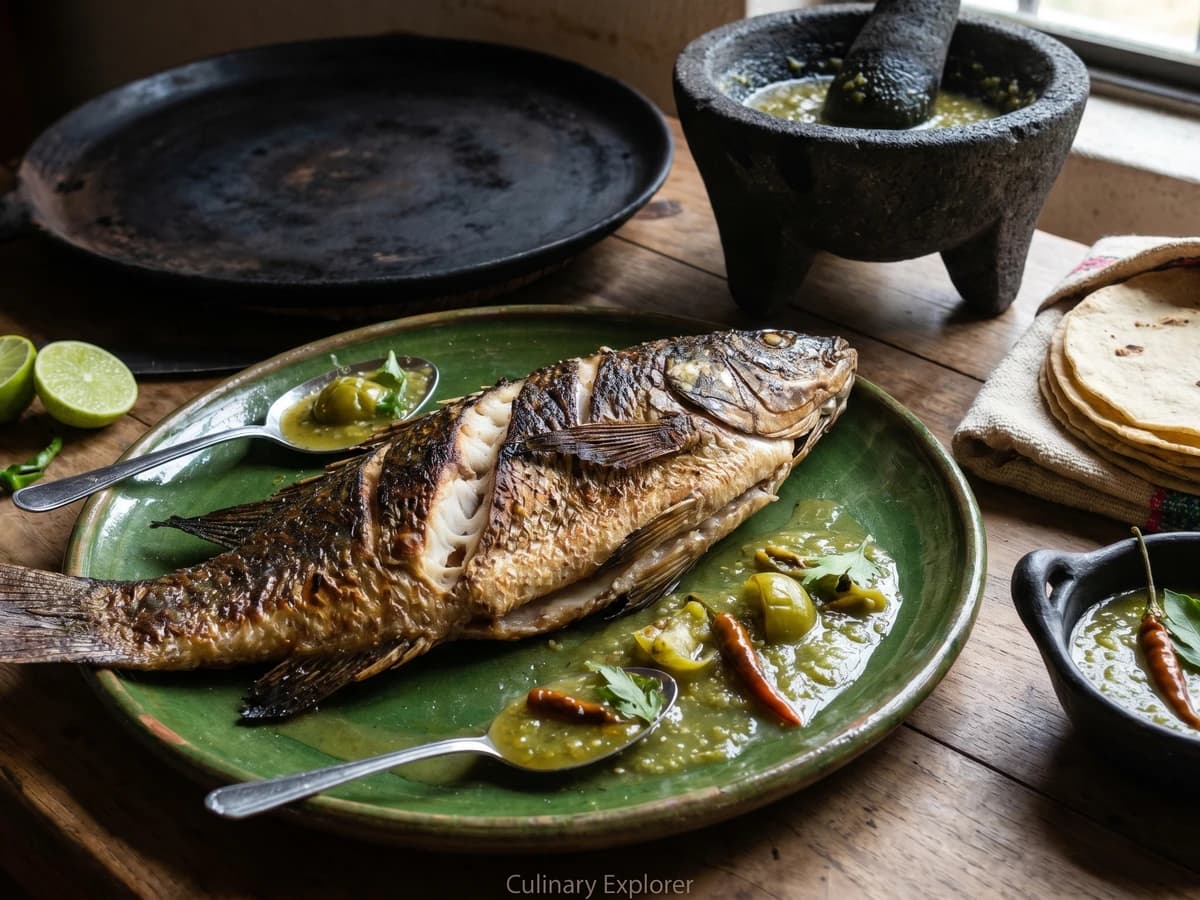
Michoacán's Lake Pátzcuaro acúmara, a whole kurucha from the lago tatemada on a comal de leña and served with chile perón atápakua, corn tortillas, and P'urhépecha discipline.
A cooking platform built around craft, culture, and the stories behind what we eat.

Created by
The everyday plate of the Costa Chica and jarocho Veracruz: black beans simmered with epazote and chile costeño in an olla de barro, served beside sweet fried plátano macho and white rice. The third root, on a plate.
This is the food of the Costa Chica. The stretch of Pacific coast that runs from Guerrero into Oaxaca, anchored by Cuajinicuilapa on the Guerrero side and by Pinotepa Nacional and the lagoons of Chacahua on the Oaxaca side. It lives again across the country on the Gulf, in jarocho Veracruz, in Tlacotalpan and Boca del Río. These are Afro-Mexican coasts. The food carries la tercera raíz, the African root of this country, standing next to the indigenous and the Spanish.
Black beans, epazote, chile costeño, cooked slow in an olla de barro with manteca. That much could be Mexican from any coast. The fried plátano macho beside it is the tell. Sweet plantain, sliced thick and fried in lard until the edges go dark and candied, that is the diaspora on the plate, the same instinct you taste in the Caribbean and in Brazil. Beans, rice, sweet fried plantain. Economical, meatless, complete. This is what a family in Cuajinicuilapa eats on a Tuesday.
The plátano has to be ripe. Black-spotted, soft to the thumb, almost too far gone. Green plantain is another dish entirely, that one is for tostones. Here you want the sugar. The chile costeño is the chile of this coast, thin, red, fruity, named for the place it comes from. If you have never cooked with it, this is the dish to learn it on. And in the traditional pot the manteca is not up for debate. La manteca es el sabor.
The women of the Costa Chica taught me this plate over a wood fire, the olla black from years of beans. They also taught me why it matters that you know whose plate it is. Mexico did not recognize its Afro-Mexican people in the Constitution until a reform in 2019, and counted them in full for the first time in the census of 2020. Five centuries, and only now on paper. So cook this knowing whose hands shaped it. La tercera raíz no es nota al pie. Es plato principal.
Afro-Mexican communities descend from enslaved Africans brought to New Spain from the 16th century onward, concentrated on the Pacific Costa Chica, where they worked the coastal cattle ranches, and on the Gulf around Veracruz, where Gaspar Yanga led one of the Americas' earliest successful slave rebellions and founded a free Black town in the early 1600s. The plantain itself reached Mexico through the Atlantic world that the slave trade built, and the habit of frying it sweet is a diaspora foodway shared across the Caribbean and Brazil. Despite this five-century presence, Afro-Mexicans were not recognized in Article 2 of the Mexican Constitution until a reform published in 2019, and the 2020 national census was the first to count them in full, tallying roughly two and a half million people.
Quantity
1 pound (about 2 cups)
Quantity
8 cups, plus more as needed
Quantity
1
halved (one half whole for the beans, the other half diced for the chile base)
Quantity
5 cloves
2 for the beans, 2 for the chile base, 1 for the rice
Quantity
3 tablespoons, divided
or aceite de coco for a vegan pot
Quantity
2 to 3
stemmed and most seeds removed
Quantity
4 to 5
Quantity
2 teaspoons, plus more to taste
Quantity
2 large
heavily black-spotted and soft
Quantity
3 tablespoons
or aceite de coco
Quantity
a pinch
Quantity
1 1/2 cups
Quantity
2 tablespoons
Quantity
1/4
Quantity
3 cups
Quantity
1 teaspoon
Quantity
for serving
Quantity
for serving
| Ingredient | Quantity |
|---|---|
| dried black beans | 1 pound (about 2 cups) |
| cold water | 8 cups, plus more as needed |
| white onionhalved (one half whole for the beans, the other half diced for the chile base) | 1 |
| garlic2 for the beans, 2 for the chile base, 1 for the rice | 5 cloves |
| manteca de cerdo (lard)or aceite de coco for a vegan pot | 3 tablespoons, divided |
| dried chile costeñostemmed and most seeds removed | 2 to 3 |
| fresh epazote sprigs | 4 to 5 |
| kosher salt | 2 teaspoons, plus more to taste |
| ripe plátano machoheavily black-spotted and soft | 2 large |
| manteca de cerdo (lard), for frying the plantainor aceite de coco | 3 tablespoons |
| salt, for the plantain | a pinch |
| long-grain white rice | 1 1/2 cups |
| neutral oil or lard, for the rice | 2 tablespoons |
| white onion, for the rice | 1/4 |
| hot water, for the rice | 3 cups |
| kosher salt, for the rice | 1 teaspoon |
| warm corn tortillas (optional) | for serving |
| lime wedges (optional) | for serving |
Pour the dried black beans onto a sheet pan and pick through them. There is always a small stone or a shriveled bean hiding in the bag, and one stone can crack a tooth. Rinse them under cold water and drain. Do not soak them. The coastal cooks cook them straight from dry, because the dark broth the beans throw off as they simmer is half the reason to make them.
Put the beans in an olla de barro or a heavy pot with 8 cups of cold water, one onion half left whole, 2 whole garlic cloves, and 1 tablespoon of the lard. Bring to a boil, then drop to a low simmer. Cover partly and cook for an hour and a half to two and a half hours, depending on how old your beans are. Keep an eye on the level and add hot water any time it drops below the beans. They are done when one crushes easily against the side of the pot and the broth has turned dark and a little thick. Do not salt them yet.
While the beans cook, wipe the chiles costeños clean, pull off the stems, and shake out most of the seeds if you want less heat. Toast them on a dry comal over medium heat, just a few seconds a side, pressing them flat with a spatula. They are thin and they burn in a blink, so do not walk away. The moment they smell toasty and darken a shade, pull them off. Cover with hot water, not boiling, and let them soften for 15 minutes.
Heat the remaining 2 tablespoons of lard in a skillet over medium. Add the diced onion half and cook until soft and golden, about 5 minutes, then add 2 garlic cloves for one minute more. Lift the softened chiles into a blender with the onion, garlic, and 1 cup of the bean broth. Blend until smooth. Pour it back into the skillet and fry for 5 minutes, stirring, until it darkens and smells deep. La manteca es el sabor, and this fried chile base is what turns a plain pot of beans into frijoles costeños.
Pour the chile base into the bean pot. Fish out the spent onion and garlic if you like, or leave them in. Add the epazote sprigs, stems and all. Simmer everything together for 20 minutes so the flavors marry. Now salt them, 2 teaspoons to start, then taste. Beans take more salt than you think. If you want them creamier, mash a cup of them against the side of the pot with a wooden spoon and stir it back in. Keep them brothy. This is not a refried bean.
Rinse the rice in a few changes of cold water until the water runs clear, then drain it well. Heat 2 tablespoons of oil or lard in a pot, add the rice, and toast it, stirring, until it smells nutty and turns chalky white, about 4 minutes. Add the 1/4 onion and the last garlic clove for the final minute. Pour in 3 cups of hot water, add 1 teaspoon salt, bring to a boil, then cover and drop to the lowest heat for 15 minutes. Pull it off the heat, keep the lid on, and let it rest 10 minutes before you fluff it with a fork.
Peel the ripe plátano macho and slice them on the diagonal about a half inch thick. Heat 3 tablespoons of lard in a wide skillet over medium until it shimmers. Lay the slices in a single layer, do not crowd them, and fry until the underside is deep gold and caramelized, 2 to 3 minutes, then flip and do the other side. They should be soft inside and dark and candied at the edges. Drain on a plate and hit them with a pinch of salt. The sugar catches fast once it starts, so the last minute is the one that counts.
Spoon the brothy beans into a bowl or a deep clay plate. Lay the fried plátano alongside, with a mound of white rice. Some cooks set the plantain right on top of the beans so it soaks up the broth at the edges. Eat it with the rice, a warm corn tortilla, and a squeeze of lime. Saber cocinar es saber vivir, and this plate has kept these coasts fed for centuries on almost nothing.
1 serving (about 520g)
Culinary guides, cultural storytelling, and the editorial depth that makes cooking meaningful.
Discover Culinary ExplorerChef Lupita
Michoacán's Lake Pátzcuaro acúmara, a whole kurucha from the lago tatemada on a comal de leña and served with chile perón atápakua, corn tortillas, and P'urhépecha discipline.

Chef Lupita
Puebla's weekday adobo of pork shoulder braised in a thick guajillo and ancho sauce sharpened with vinegar, cumin, and clove. The deep red of a market spice stall, the dish a poblana cooks without thinking.

Chef Lupita
Loreto's pit-roasted clams, planted hinge-up in beach sand and tatemadas under a fast fire of dried romerillo brush, the resinous Baja desert shrub that gives this dish its smoke.

Chef Lupita
Oaxaca's eighth mole, the silky, almond-and-cinnamon almendrado, served over poached chicken. Mild, sweet, restrained, and a quiet rebuttal to anyone who thinks Mexican food has to be hot to be Mexican.