Chef Lupita
Acúmara Tatemada al Comal
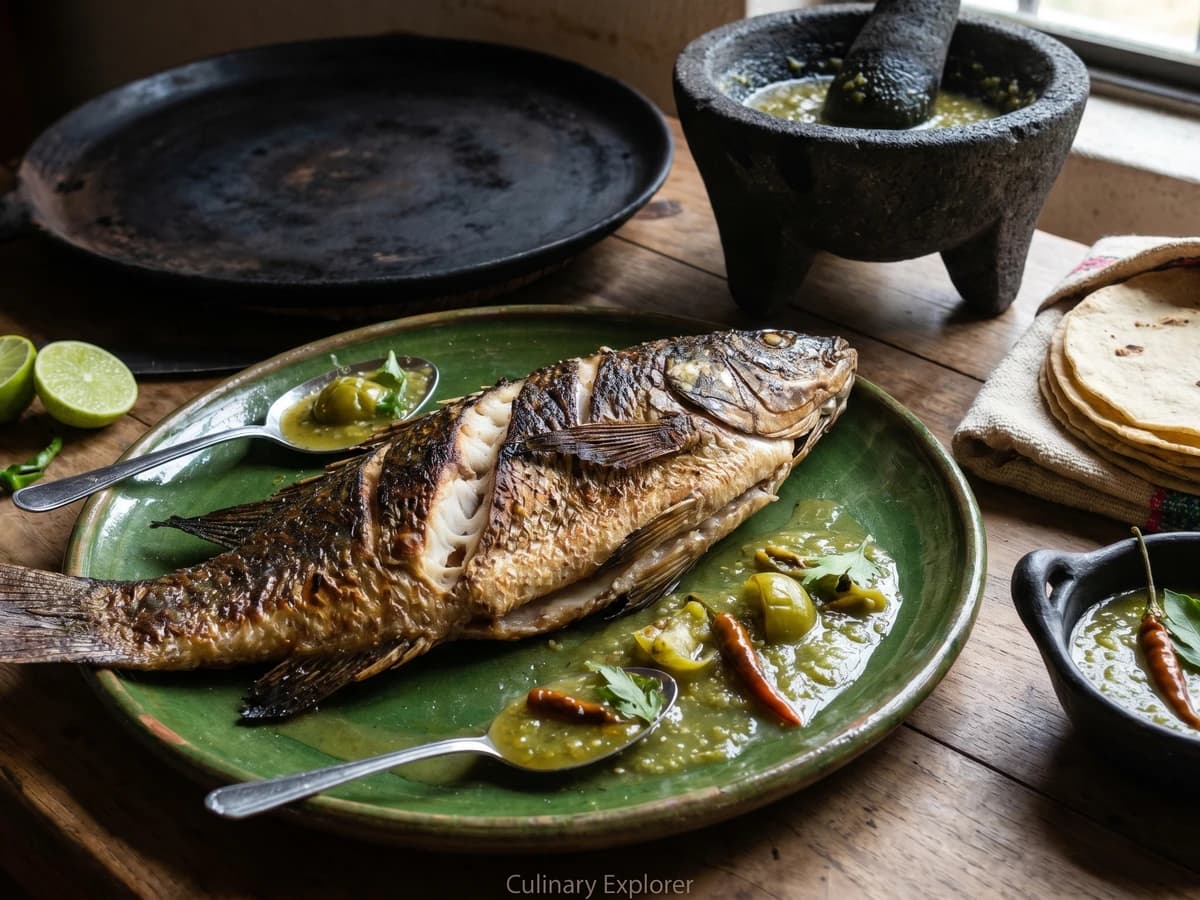
Michoacán's Lake Pátzcuaro acúmara, a whole kurucha from the lago tatemada on a comal de leña and served with chile perón atápakua, corn tortillas, and P'urhépecha discipline.
A cooking platform built around craft, culture, and the stories behind what we eat.
Created by
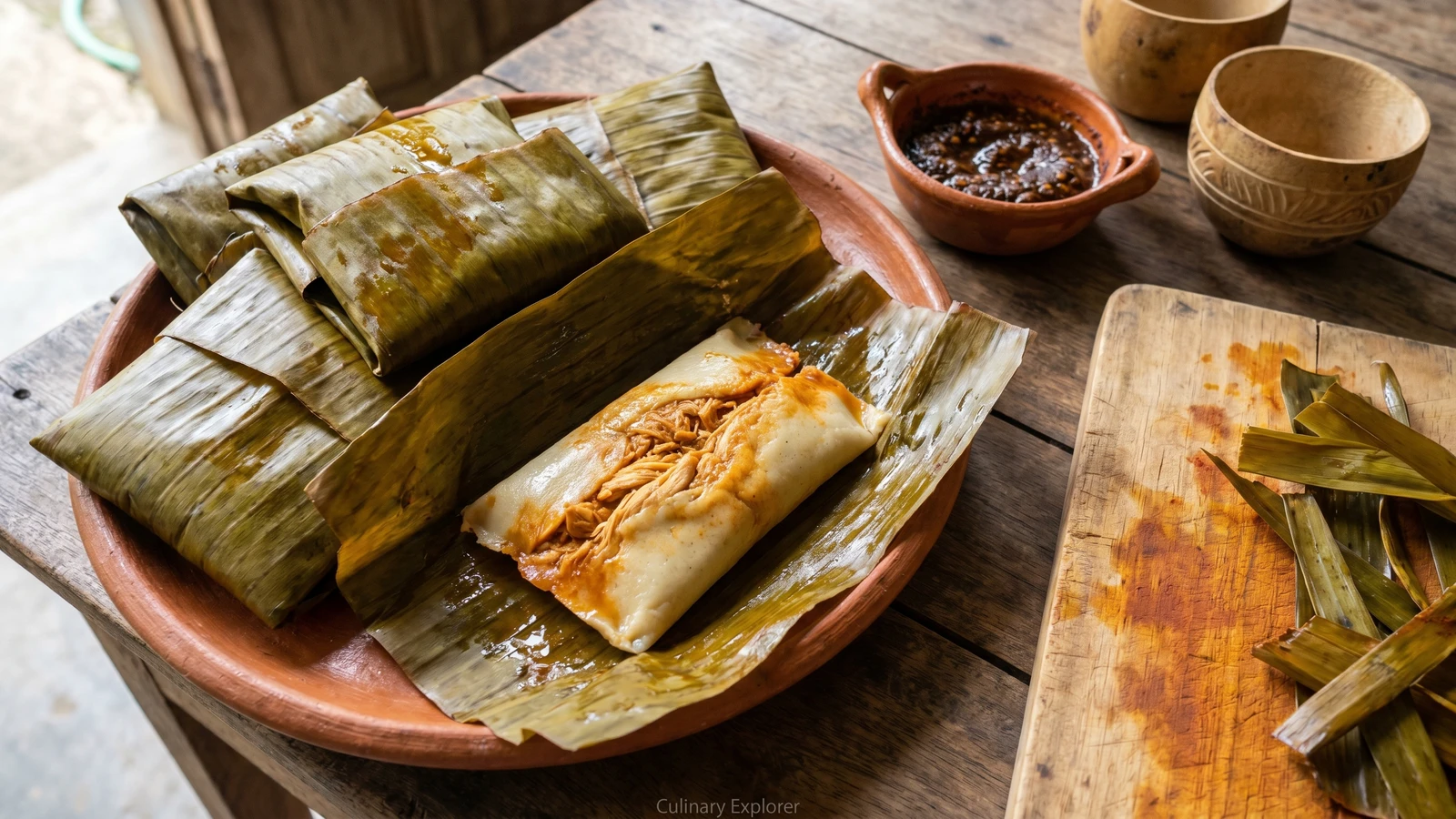
Tabasco's Chontalpa tamal of masa colada, strained until silk, filled with chicken in achiote and sour orange, then wrapped in banana leaf for the soft, pale texture corn husks cannot give.
Tabasco, in the humid Gulf lowlands of Chontalpa and the river country around Nacajuca, is where this tamal lives. Banana leaves, achiote, sour orange, chile dulce, chile amashito, and hoja de momo make sense there because the land is wet, green, and full of plantain patches and cacao shade. This is not a northern tamal. This is not a corn-husk tamal from the center. Cada estado, su propia cocina.
Masa colada means strained masa. You loosen fresh nixtamal masa with chicken broth, pass it through cloth or a fine sieve, then cook it with manteca de cerdo until it becomes glossy and pale, almost like a thick atole that knows how to stand up. The women who perfected this did not do it for elegance. They did it because straining removes the roughness and gives the tamal that clean, silky body you recognize the moment the banana leaf opens.
The filling is chicken in achiote, sour orange, tomato, chile dulce, and a little chile amashito if the cook wants that Tabasco point of heat. This tamal is not trying to punish your mouth. It is perfumed, earthy, and soft, with the leaf lending its green flavor around the edges. My mother was Jalisciense and did not make this at home, but in her notebook after a trip to Villahermosa she wrote, 'colada, no batida.' Strained, not beaten. She was right. Saber cocinar es saber vivir.
Tabasco's tamales de masa colada are closely associated with the Yokot'an, often called Chontal Maya, in the lowland municipalities of Nacajuca, Centla, and Jalpa de Méndez. The word tamal comes from Nahuatl tamalli, but this strained-masa technique belongs to a broader southeastern practice of thinning nixtamalized corn, passing it through cloth, and cooking it into a fine dough for celebration tamales. Banana leaves became the region's practical wrapper after bananas and plantains spread through New Spain in the 16th century, while achiote, native to tropical America, kept its older role as color, seasoning, and lowland identity.
Quantity
3 pounds
Quantity
8 cups
Quantity
1/2 medium
for the broth
Quantity
1/2 medium
for the sauce
Quantity
3
for the broth
Quantity
3
for the sauce
Quantity
1 tablespoon, plus more to taste
Quantity
3 large leaves or 2 packages frozen
thawed if frozen, wiped clean, cut into twelve 12-by-14-inch rectangles with scraps saved
Quantity
3 tablespoons
Quantity
1/2 cup
Quantity
2
charred on a comal
Quantity
2
stemmed, seeded, and charred
Quantity
2
crushed
Quantity
1 teaspoon
Quantity
1/2 teaspoon
Quantity
1/4 teaspoon
Quantity
2
Quantity
1
Quantity
2 tablespoons
Quantity
2 pounds
unprepared, not masa preparada for tamales
Quantity
5 to 6 cups
Quantity
1 cup
melted
Quantity
6
center ribs removed and torn into 12 pieces
Quantity
as needed
for tying
| Ingredient | Quantity |
|---|---|
| bone-in chicken thighs and drumsticks | 3 pounds |
| water | 8 cups |
| white onionfor the broth | 1/2 medium |
| white onionfor the sauce | 1/2 medium |
| garlic clovesfor the broth | 3 |
| garlic clovesfor the sauce | 3 |
| kosher salt | 1 tablespoon, plus more to taste |
| banana leavesthawed if frozen, wiped clean, cut into twelve 12-by-14-inch rectangles with scraps saved | 3 large leaves or 2 packages frozen |
| achiote paste (recado rojo) | 3 tablespoons |
| sour orange juice (naranja agria) | 1/2 cup |
| Roma tomatoescharred on a comal | 2 |
| fresh chile dulce tabasqueñostemmed, seeded, and charred | 2 |
| fresh chile amashito (optional)crushed | 2 |
| dried Mexican oregano or oregano tabasqueño | 1 teaspoon |
| black peppercorns | 1/2 teaspoon |
| cumin seeds | 1/4 teaspoon |
| whole allspice berries (pimienta gorda) | 2 |
| whole clove | 1 |
| pork lard (manteca de cerdo), for frying the sauce | 2 tablespoons |
| fresh nixtamal masa for tortillasunprepared, not masa preparada for tamales | 2 pounds |
| warm chicken broth from the cooked chicken | 5 to 6 cups |
| pork lard (manteca de cerdo), for the masamelted | 1 cup |
| hoja de momo leaves (acuyo or hoja santa)center ribs removed and torn into 12 pieces | 6 |
| banana leaf strips or kitchen twinefor tying | as needed |
Put the chicken, water, half the onion, 3 garlic cloves, and 1 tablespoon salt in a heavy pot. Bring to a gentle simmer, skim the gray foam from the surface, then cook 35 to 45 minutes until the chicken is tender and pulls from the bone. Remove the chicken, strain the broth, and reserve at least 6 cups. Shred the meat in generous pieces. The broth is not background here. It becomes the masa.
Wipe the banana leaves clean and cut them into twelve rectangles about 12 by 14 inches. Pass each piece over a gas flame or hot comal for a few seconds per side until the leaf turns glossy, deep green, and flexible. Raw banana leaf cracks. Softened leaf folds around the tamal like cloth. Save the scraps to line the steamer.
Heat a comal over medium. Char the tomatoes, remaining onion, remaining garlic, and chile dulce until they have blackened spots and smell sweet, not burned. Toast the black peppercorns, cumin seeds, allspice, and clove for 20 to 30 seconds, just until fragrant. Blend the charred vegetables, toasted spices, achiote paste, sour orange juice, oregano, chile amashito if using, and 1 cup reserved chicken broth until smooth. No red food coloring. Achiote has the color and the bitter-earth flavor. The bottle of dye has neither.
Melt 2 tablespoons lard in a cazuela or heavy skillet over medium heat. Pour in the achiote puree carefully. It will sputter. Cook 8 to 10 minutes, stirring often, until the sauce darkens to brick-orange and the lard begins to show in small glossy beads at the edges. Add the shredded chicken and fold until every piece is coated. Taste for salt. The filling should be a little stronger than you think because the pale masa will soften it.
Break the fresh nixtamal masa into a large bowl. Whisk in 5 cups warm chicken broth, working with your hand if needed, until the masa becomes a loose slurry. Pass it through a fine-mesh strainer or manta de cielo into a clean bowl, pressing and rubbing until only coarse corn skin remains. This is why it is called masa colada. Colada means strained. Skip this and you have a different tamal.
Melt 1 cup lard in a wide heavy pot over medium-low heat. Whisk in the strained masa slurry and 1 1/2 teaspoons salt. Cook, stirring constantly with a wooden spoon, for 25 to 30 minutes. It will look too loose at first. Keep working. The masa is ready when it turns glossy, thickens like soft custard, and a spoon dragged across the bottom leaves a clean trail for two seconds before the masa flows back. La manteca es el sabor. This tamal is silky because the masa is strained and cooked, not because someone threw baking powder at it.
Lay one softened banana leaf rectangle glossy side up. Spoon about 1/2 cup cooked masa into the center and spread it into a thick oval. Add 2 to 3 tablespoons achiote chicken and one torn piece of hoja de momo. Fold the long sides over the filling, then fold the short ends under to make a flat packet. Tie loosely with banana leaf strips or kitchen twine. Do not squeeze the tamal tight. The masa needs room to set.
Set up a tamalera or large steamer with water below the rack. Line the rack with banana leaf scraps. Arrange the tamales seam side down, cover them with more leaf scraps, and close the lid. Steam over steady medium heat for 75 to 90 minutes, adding boiling water if the pot runs low. The tamal is done when the leaf pulls away cleanly and the masa holds its shape like a tender custard. If it spreads like porridge, close the pot and give it another 15 minutes.
Turn off the heat and let the tamales rest in the closed steamer for 20 minutes. This is not waiting for nothing. The masa finishes setting as it rests. Serve each tamal in its banana leaf on a clay plate, opened at the table so the pale masa and orange achiote chicken show together. The texture should be smooth, soft, and spoon-tender. If you expected a crumbly corn-husk tamal, that is another region talking. Cada estado, su propia cocina.
1 serving (about 240g)
Culinary guides, cultural storytelling, and the editorial depth that makes cooking meaningful.
Discover Culinary ExplorerChef Lupita
Michoacán's Lake Pátzcuaro acúmara, a whole kurucha from the lago tatemada on a comal de leña and served with chile perón atápakua, corn tortillas, and P'urhépecha discipline.

Chef Lupita
Puebla's weekday adobo of pork shoulder braised in a thick guajillo and ancho sauce sharpened with vinegar, cumin, and clove. The deep red of a market spice stall, the dish a poblana cooks without thinking.

Chef Lupita
Loreto's pit-roasted clams, planted hinge-up in beach sand and tatemadas under a fast fire of dried romerillo brush, the resinous Baja desert shrub that gives this dish its smoke.

Chef Lupita
Oaxaca's eighth mole, the silky, almond-and-cinnamon almendrado, served over poached chicken. Mild, sweet, restrained, and a quiet rebuttal to anyone who thinks Mexican food has to be hot to be Mexican.