Chef Lupita
Acúmara Tatemada al Comal
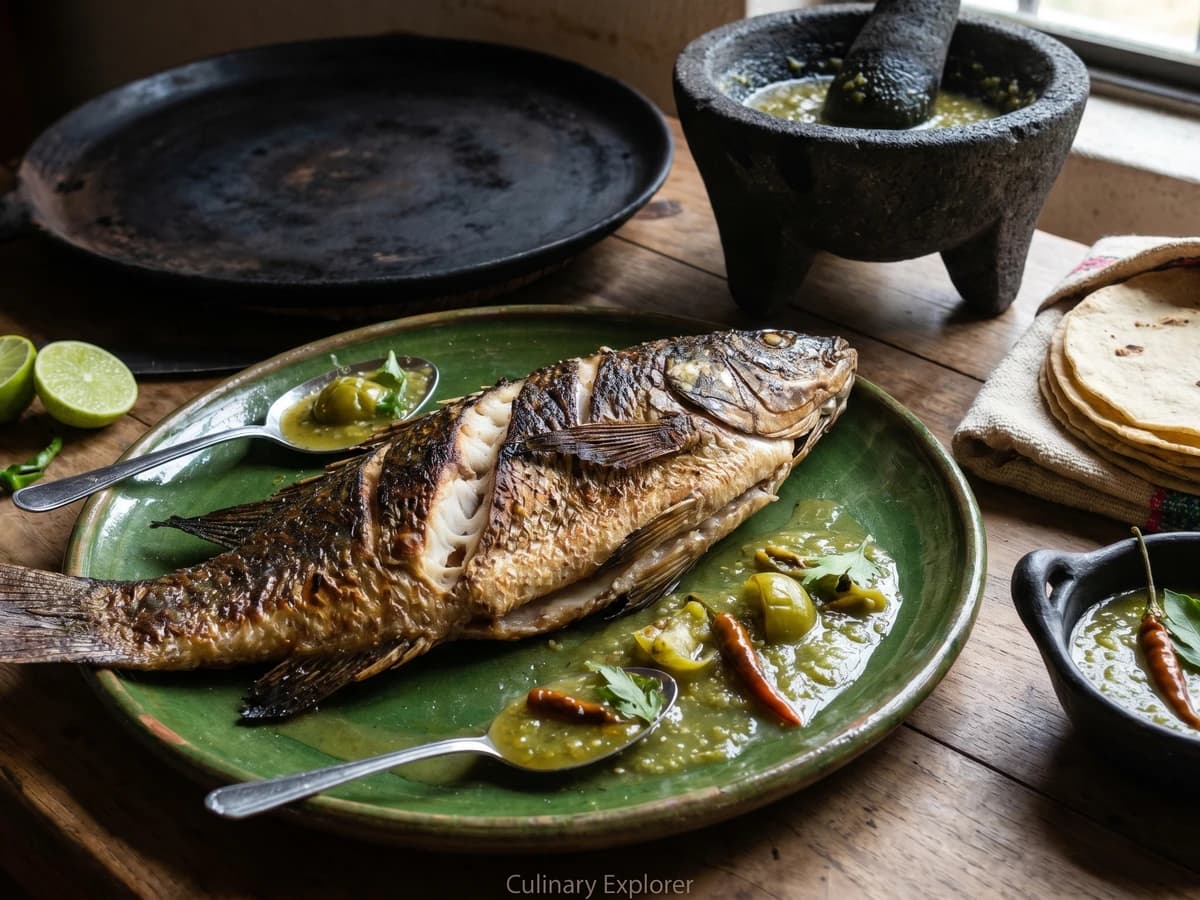
Michoacán's Lake Pátzcuaro acúmara, a whole kurucha from the lago tatemada on a comal de leña and served with chile perón atápakua, corn tortillas, and P'urhépecha discipline.
A cooking platform built around craft, culture, and the stories behind what we eat.

Created by
Chiapas highland tamal from San Cristobal and Comitan, shaped by hand into a ball, packed with pork stewed in tomato and chile simojovel, and sealed in banana leaf for a proper celebration pot.
Chiapas, the highlands between San Cristobal de Las Casas and Comitan, is where this tamal lives. Not Oaxaca, not Yucatan, not the north. Chiapas. The masa is shaped into a ball, filled with pork in tomato and chile simojovel, wrapped in banana leaf, and carried to the table like something made for a day when the house is expecting people.
The chile simojovel is the signal. It comes from the northern highlands around Simojovel de Allende, small, red, sharp, and more aromatic than people expect from a chile that does not make noise about itself. The sauce is tomato-based, yes, but the chile tells you where you are. If you replace it with guajillo and call it the same, a woman from Comitan will know. She may not argue with you. That is worse.
I learned this shape from Chiapaneca cooks who did not measure the masa, because their hands had already learned the weight. They cupped the dough, closed it over the pork, tied the banana leaf, and moved to the next one without ceremony. La cocina no es decoracion, es trabajo. A good tamal de bola is not delicate. It is generous, compact, and sure of itself.
Serve it in barro from Amatenango del Valle if you have it, opened in the leaf so the red sauce stains the masa and the room smells like banana leaf and pork broth. This is not food from a single Mexico. Cada estado, su propia cocina. Saber cocinar es saber vivir.
Tamales are among Mesoamerica's oldest prepared foods; Bernardino de Sahagun recorded many forms of tamalli in the Florentine Codex in the 16th century, long after the practice was already ancient. Chiapas tamales preserve Maya and Zoque wrapping traditions through banana leaf, while the pork filling reflects the arrival of Spanish pigs after the conquest. Tamal de bola is claimed especially around San Cristobal de Las Casas and Comitan, and chile simojovel ties the red sauce to the Chiapas highlands rather than to the generic red tamales sold elsewhere.
Quantity
2 pounds
cut into 1-inch pieces
Quantity
1 small
halved
Quantity
5
divided
Quantity
1
Quantity
2 teaspoons, plus more to taste
Quantity
8 cups
Quantity
10
stemmed
Quantity
8
Quantity
1/2 teaspoon
Quantity
2
Quantity
1/2 teaspoon
Quantity
1 sprig
Quantity
2 tablespoons
Quantity
2 1/2 pounds
Quantity
1 cup
room temperature
Quantity
2 teaspoons
Quantity
1 1/4 to 1 1/2 cups
as needed for the masa
Quantity
2 pounds
wiped clean and cut into 12-inch squares
Quantity
as needed
for tying
| Ingredient | Quantity |
|---|---|
| boneless pork shouldercut into 1-inch pieces | 2 pounds |
| white onionhalved | 1 small |
| garlic clovesdivided | 5 |
| bay leaf | 1 |
| kosher salt | 2 teaspoons, plus more to taste |
| water | 8 cups |
| dried chile simojovelstemmed | 10 |
| ripe Roma tomatoes | 8 |
| black peppercorns | 1/2 teaspoon |
| whole cloves | 2 |
| dried Mexican oregano | 1/2 teaspoon |
| fresh epazote | 1 sprig |
| manteca de cerdo for the sauce | 2 tablespoons |
| fresh nixtamal masa for tamales | 2 1/2 pounds |
| manteca de cerdoroom temperature | 1 cup |
| baking powder | 2 teaspoons |
| warm pork brothas needed for the masa | 1 1/4 to 1 1/2 cups |
| banana leaveswiped clean and cut into 12-inch squares | 2 pounds |
| banana leaf strips or kitchen twinefor tying | as needed |
Put the pork shoulder in a heavy pot with the onion, 2 garlic cloves, bay leaf, 2 teaspoons salt, and 8 cups water. Bring to a steady simmer, skim the gray foam during the first 15 minutes, then lower the heat and cook 55 to 65 minutes, until the pork is tender but not falling apart. Strain and reserve the broth. Keep the pork in bite-size pieces. This tamal wants meat you can find when you open the leaf.
Wipe the banana leaves with a damp cloth. Pass each square over a gas flame or hot comal for a few seconds per side until the leaf turns glossy and flexible. Do not skip this. Raw banana leaf cracks, and a cracked wrapper leaks sauce into the steamer. The leaf should fold without fighting you.
Heat a dry comal over medium. Toast the chile simojovel quickly, 8 to 12 seconds per side, just until fragrant and a shade darker. These chiles are small and they burn fast. Put them in a bowl and cover with hot water for 15 minutes. Hot, not boiling. Boiling water pulls bitterness from the skin.
On the same comal, roast the Roma tomatoes, turning often, until the skins blister and the flesh softens. Add the remaining 3 garlic cloves for the last few minutes so they spot with brown but do not scorch. The tomato is the body of the sauce. The chile simojovel is the Chiapas accent.
Drain the softened chiles. Blend them with the roasted tomatoes, roasted garlic, black peppercorns, cloves, Mexican oregano, and 1 cup of reserved pork broth until completely smooth. Strain if your blender leaves chile skin behind. A tamal filling should be thick and clean, not gritty.
Melt 2 tablespoons manteca de cerdo in a clay cazuela or heavy saucepan over medium heat. Pour in the blended tomato and chile sauce. It will sputter, so stand back and stir with authority. Cook 12 to 15 minutes, until the sauce darkens to brick red and small red freckles of fat appear at the edges. Add the cooked pork and the epazote sprig. Simmer 10 minutes more, until the sauce clings to the meat. Remove the epazote and taste for salt.
Beat 1 cup manteca de cerdo in a large bowl until lighter and soft, 3 to 4 minutes by hand or 2 minutes with a mixer. Add the fresh masa, baking powder, and 1 teaspoon salt. Work in 1 1/4 cups warm pork broth little by little until the masa is soft, spreadable, and still able to hold its shape. If it cracks when you press it, add more broth by the tablespoon. If it slumps like batter, you went too far. La manteca es el sabor, and the broth is the memory of the pork.
Lay one softened banana leaf square on the counter, shiny side up. Take about 1/2 cup masa and press it into a thick disk in your palm or directly on the leaf. Cup the center, add 2 tablespoons pork filling with plenty of sauce, then close the masa around it and shape it into a ball. This is why it is called tamal de bola. Not a flat packet. Not a square brick. A ball, made with your hands.
Fold the banana leaf around the masa ball: bottom up, top down, sides tucked under, then tie gently with banana leaf strips or kitchen twine. Leave a little room for expansion, but not so much that the tamal rolls around loose. Repeat with the remaining masa and filling. The wrapping should feel firm in the hand, like the señoras in San Cristobal make it when they are working fast and not explaining themselves.
Line a large steamer with extra banana leaf scraps. Add water below the rack and bring it to a simmer. Arrange the tamales in the steamer, seam side down, stacking them without crushing. Cover with more banana leaves, then the lid. Cook 1 hour 30 minutes to 1 hour 45 minutes, checking the water level and adding boiling water when needed. The tamales are done when the masa feels firm and pulls away from the banana leaf cleanly.
Turn off the heat and let the tamales rest in the covered steamer for 20 minutes. This matters. The masa finishes setting as it rests. Serve them opened in the leaf on clay plates, with the tomato and chile simojovel sauce glossy against the masa. No sour cream, no yellow cheese, no decoration. Chiapas already gave you the dish. Recetas probadas y garantizadas.
1 serving (about 235g)
Culinary guides, cultural storytelling, and the editorial depth that makes cooking meaningful.
Discover Culinary ExplorerChef Lupita
Michoacán's Lake Pátzcuaro acúmara, a whole kurucha from the lago tatemada on a comal de leña and served with chile perón atápakua, corn tortillas, and P'urhépecha discipline.

Chef Lupita
Puebla's weekday adobo of pork shoulder braised in a thick guajillo and ancho sauce sharpened with vinegar, cumin, and clove. The deep red of a market spice stall, the dish a poblana cooks without thinking.

Chef Lupita
Loreto's pit-roasted clams, planted hinge-up in beach sand and tatemadas under a fast fire of dried romerillo brush, the resinous Baja desert shrub that gives this dish its smoke.

Chef Lupita
Oaxaca's eighth mole, the silky, almond-and-cinnamon almendrado, served over poached chicken. Mild, sweet, restrained, and a quiet rebuttal to anyone who thinks Mexican food has to be hot to be Mexican.