
Chef Takumi
Amerikan Doggu (アメリカンドッグ, corn dog)
A sausage on a stick, sweet batter, clean hot oil, and no cornmeal. Amerikan doggu is festival food made plain, with the batter thick enough to cling.
A cooking platform built around craft, culture, and the stories behind what we eat.
Created by
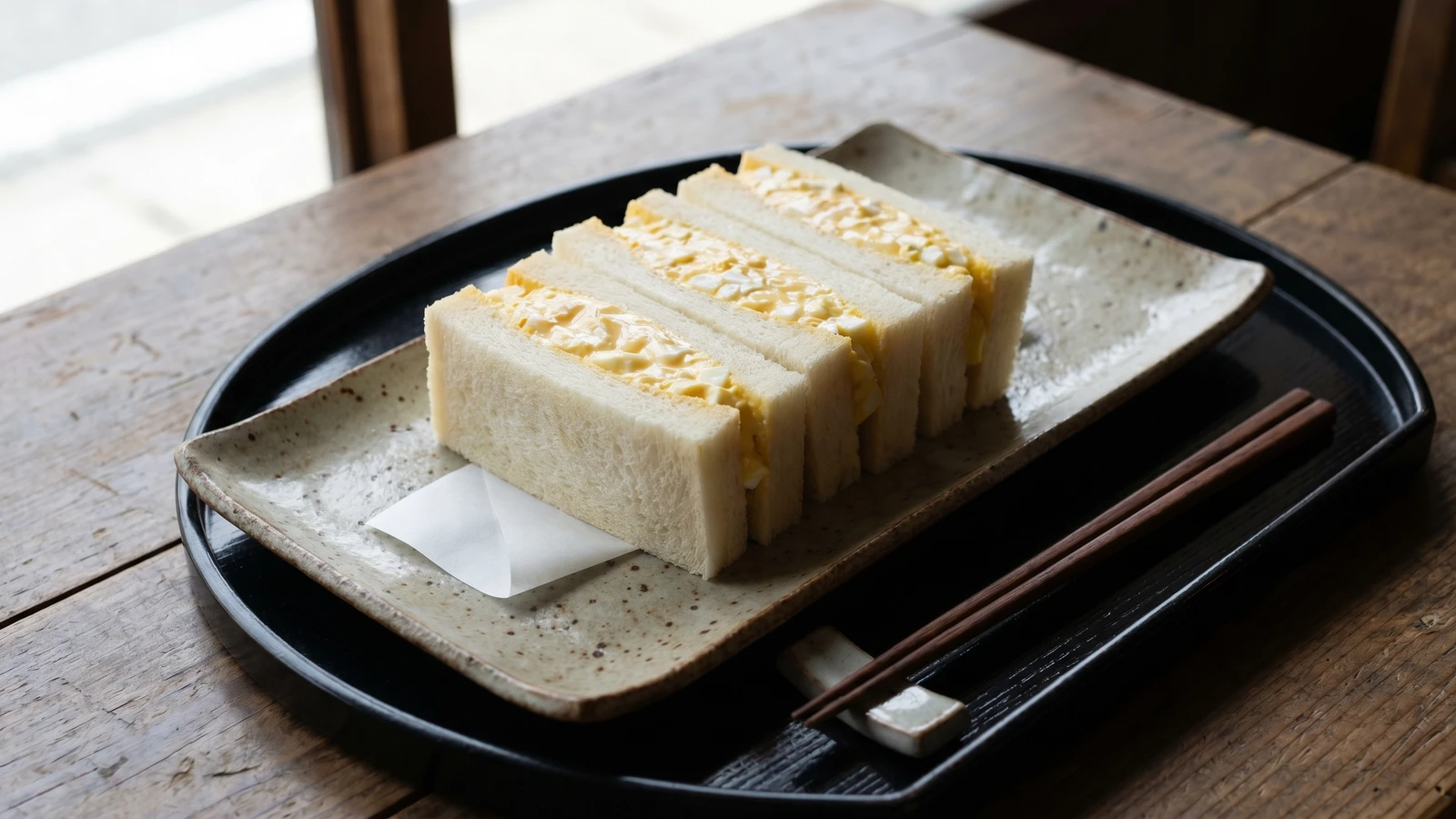
A tamago sando asks for no cleverness: eggs cooked just enough to stay moist, Japanese mayo used with restraint, soft shokupan, and one clean cut that leaves the filling proud.
Tamago sando is almost too soft to be taken seriously. White shokupan, crusts gone, pale egg filling pushed thick between the slices: it looks like a children's thing until you notice how exact it is. The bread must be tender without collapsing, the egg rich without greasiness, and the cut clean enough to show the filling plainly.
People make this mysterious because the konbini version is so perfect, wrapped like a small document and waiting under fluorescent light. Don't be bullied by that neatness. The first secret is texture: cook the eggs only until the yolks are set and moist, mash the yolks smooth with Japanese mayonnaise, then fold in chopped whites so the filling has little pieces to meet your teeth.
Use shokupan if you can, sliced thick. Its fine crumb holds the filling without turning chewy, and a thin scrape of butter or karashi butter protects the bread just enough. Rest the sandwich a few minutes before trimming and cutting. That pause lets the filling settle into the bread, so the knife shows you the work instead of dragging it away.
On a Japanese table this is not kaiseki theater; it is the quiet, modern side of the cuisine: kissaten lunch, train food, picnic food, the thing eaten in two clean bites if one is being dignified and three if not. Honmono here means restraint. Good eggs, proper mayonnaise, soft bread, nothing hidden.
Sandwiches entered Japan as part of yōshoku, Western-style cooking adapted in the Meiji period, and the shortened word sando became ordinary in the twentieth century. Egg sandwiches were served in kissaten, department-store food halls, and bakery counters before convenience stores made the soft, crustless tamago sando a national everyday food. Japan's first 7-Eleven opened in Toyosu, Tokyo, in 1974, and the modern konbini case helped standardize the neatly wrapped, chilled version now recognized abroad.
Quantity
6
straight from the refrigerator
Quantity
a bowlful
for chilling the eggs
Quantity
3 tablespoons
Kewpie preferred
Quantity
1 to 2 teaspoons
Quantity
1/2 teaspoon
Quantity
1/4 teaspoon, plus more to taste
Quantity
1 pinch
Quantity
4 thick slices
about 1.5 to 2cm thick, crusts left on until trimming
Quantity
2 teaspoons
softened
Quantity
1/2 teaspoon
| Ingredient | Quantity |
|---|---|
| large eggsstraight from the refrigerator | 6 |
| icefor chilling the eggs | a bowlful |
| Japanese mayonnaiseKewpie preferred | 3 tablespoons |
| whole milk (optional) | 1 to 2 teaspoons |
| sugar | 1/2 teaspoon |
| fine sea salt | 1/4 teaspoon, plus more to taste |
| white pepper | 1 pinch |
| shokupan (Japanese milk bread)about 1.5 to 2cm thick, crusts left on until trimming | 4 thick slices |
| unsalted buttersoftened | 2 teaspoons |
| karashi (Japanese mustard) (optional) | 1/2 teaspoon |
Bring a pot of water to a steady boil, deep enough to cover the eggs by an inch. Lower in the eggs gently and cook for 8 minutes 30 seconds. This gives you yolks that are set but still moist, not chalky and not running loose through the filling. If your eggs are extra large, give them 9 minutes.
Move the eggs straight into a bowl of ice water and leave them for 8 minutes. The cold stops the cooking before the yolks dry out and firms the whites so they chop cleanly. Crack each shell all over and peel under a thin stream of water if the shell clings.
Halve the eggs. Scoop the yolks into a bowl and chop the whites into small, uneven pieces, roughly pea-sized. This is the detail that decides the sandwich: smooth yolk for creaminess, chopped white for bite. Mash everything into paste and you've made softness without character.
Mash the yolks with the Japanese mayonnaise, sugar, salt, white pepper, and 1 teaspoon of milk until creamy. Fold in the chopped whites with a light hand. Add the second teaspoon of milk only if the filling feels stiff. It should hold in a soft mound, glossy but not wet, because wet filling punishes soft bread.
Mix the softened butter with the karashi if using, then spread a very thin layer on one side of each slice of shokupan. Leave the crusts on for now. They keep the bread square while you fill and press it, and trimming after the sandwich rests gives a cleaner edge.
Divide the egg filling between two slices of bread, spreading it to the corners and mounding it slightly higher in the center. Top with the remaining slices. Wrap each sandwich snugly in plastic wrap or a clean cloth and rest for 5 to 10 minutes under a light tray. The pause lets the filling settle into the bread so the knife can show a clean face.
Unwrap the sandwiches. With a long serrated knife, trim away the crusts in four straight cuts, wiping the blade between sides. Cut each sandwich diagonally into halves, or into three neat bars for a picnic box. Use a gentle sawing motion and don't press down, or the filling will try to escape, which is understandable but untidy.
1 serving (about 280g)
Culinary guides, cultural storytelling, and the editorial depth that makes cooking meaningful.
Discover Culinary ExplorerChef Takumi
A sausage on a stick, sweet batter, clean hot oil, and no cornmeal. Amerikan doggu is festival food made plain, with the batter thick enough to cling.

Chef Takumi
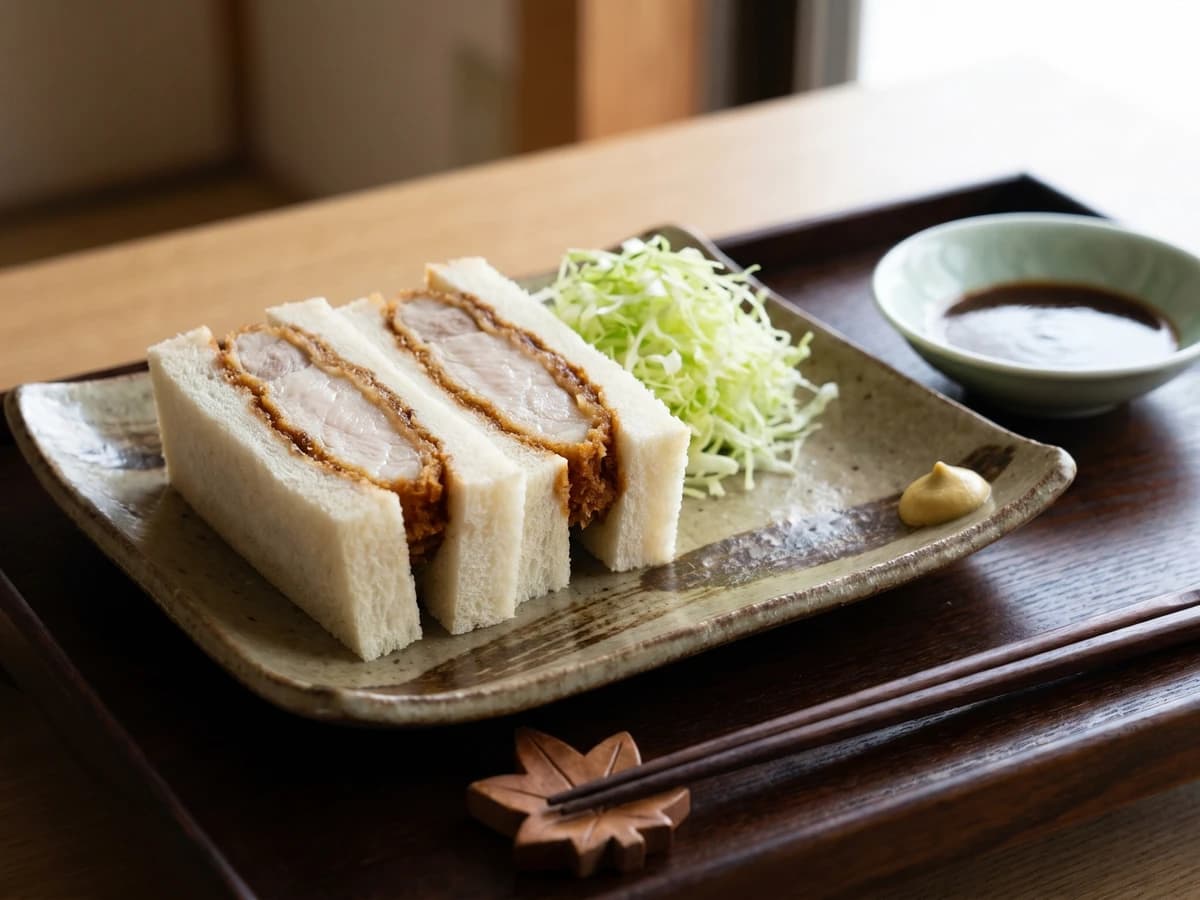
Atsuyaki tamago sando looks like a trick of the kissaten counter, but it is only soft bread, clear dashi, patient eggs, and one brave warm cut.
Chef Takumi
A good chicken katsu sando is decided before assembly: pound the cutlet thin, fry it crisp, then sandwich it while the crumb still has its bite.

Chef Takumi
A Sapporo bakery roll with a plain secret: good chikuwa, tuna mayo that isn't wet, and soft bread wrapped loosely enough to rise around it.