
Chef Zohra
Khlea w Bayd (خليع بالبيض)
Eggs slipped into the saffron-gold fat of khlii, the old Fassi preserved meat, until the whites set and the yolks stay soft for bread.
A cooking platform built around craft, culture, and the stories behind what we eat.

Created by
A Fassi morning tagine where spiced kefta settles into thick tomato sauce and eggs go in last, yolks still loose, ready for torn khobz and a table that can make room.
The tomato has to thicken before the eggs arrive. That is the small rule that decides this tagine: cook the sauce until it darkens, sweetens, and the olive oil shines at the edge, then nestle in the kefta and only at the end crack the eggs over the top. If the sauce is still watery, the eggs will wait too long and the yolks will turn hard before the pan is ready.
In Fez, it marks the morning, but it belongs just as easily to a tired Tuesday night. Kefta, cumin, sweet paprika, garlic, parsley, coriander, tomato, eggs: nothing here asks for theatre. It asks for a steady flame and a good hand. La balance est dans les yeux, the scale is in the eyes; the sauce tells you when it is ready.
I bring the tagine to the table while the yolks are still loose, tear the khobz, and let everyone reach from the same pan. Une table, c'est une porte qu'on laisse ouverte, a table is a door you leave open. This one opens fast, which is sometimes exactly the mercy a house needs.
Tagine de kefta aux œufs is widely cooked in urban Moroccan homes and cafés, with a strong Fassi association as a late-morning dish served straight from the pan with khobz. The minced-meat kefta belongs to older Maghrebi and Andalusi meat cookery, but the red tomato sauce places this form after tomatoes reached Morocco through Iberian and Mediterranean trade following the 16th-century Columbian exchange. Its first written dating is not fixed, and that uncertainty is honest: the dish lives more clearly in breakfast counters and family kitchens than in court manuscripts.
Quantity
500g
15-20% fat
Quantity
1 small
grated and squeezed dry
Quantity
2 tbsp, plus more for finishing
finely chopped
Quantity
2 tbsp, plus more for finishing
finely chopped
Quantity
1 tsp
preferably freshly ground
Quantity
1 tsp
Quantity
1/4 tsp
Quantity
1 tsp
divided
Quantity
1/2 tsp
Quantity
800g
grated and skins discarded, or crushed
Quantity
3 tbsp, plus a little for finishing
Quantity
3
grated
Quantity
1 tsp
Quantity
1/2 tsp
Quantity
1/4 tsp or a small spoon
Quantity
4
Quantity
for serving
| Ingredient | Quantity |
|---|---|
| ground beef or lamb15-20% fat | 500g |
| oniongrated and squeezed dry | 1 small |
| fresh parsleyfinely chopped | 2 tbsp, plus more for finishing |
| fresh corianderfinely chopped | 2 tbsp, plus more for finishing |
| ground cuminpreferably freshly ground | 1 tsp |
| sweet paprika | 1 tsp |
| ground cinnamon | 1/4 tsp |
| fine sea saltdivided | 1 tsp |
| freshly ground black pepper | 1/2 tsp |
| ripe tomatoes or canned whole tomatoesgrated and skins discarded, or crushed | 800g |
| olive oil | 3 tbsp, plus a little for finishing |
| garlic clovesgrated | 3 |
| sweet paprika, for the sauce | 1 tsp |
| ground cumin, for the sauce | 1/2 tsp |
| cayenne or harissa (optional) | 1/4 tsp or a small spoon |
| large eggs | 4 |
| round khobz | for serving |
Put the meat in a bowl with the squeezed onion, parsley, coriander, cumin, paprika, cinnamon, 1/2 tsp salt, and black pepper. Mix with your fingertips until the herbs and spices are evenly through it, then stop; overworked kefta turns tight in the mouth. Roll walnut-size balls and set them on a plate while the sauce begins.
Set a 30 cm tagine base or wide lidded skillet over medium-low heat with the olive oil. Add the tomatoes, garlic, paprika, cumin, cayenne or harissa if using, and the remaining salt. Simmer uncovered, stirring now and then, until the sauce darkens and thickens, 15-20 minutes. Drag a spoon through it; the path should hold for a breath before closing. That is why the eggs wait: a watery sauce steals their timing.
Nestle the kefta balls into the sauce in one layer. Cover and simmer gently for 8 minutes, then turn them with a spoon or shake the tagine base so they roll without breaking. Cook 5-7 minutes more, until firm and cooked through; if you check with a thermometer, the center should reach 71°C. Add a spoon of water only if the sauce starts catching at the edges.
Make four shallow spaces in the sauce and crack in the eggs, one by one. Salt the whites lightly, cover, and cook over low heat for 4-6 minutes, just until the whites set and the yolks still tremble when you move the pan. Pull it from the heat a little before it looks finished, because the clay or heavy pan keeps cooking.
Scatter with parsley and coriander, add a thin thread of olive oil if the sauce looks tight, and serve from the tagine itself. Khobz is the spoon here. Break the yolks at the table so they run into the tomato and meat juices, and let everyone take their corner.
1 serving (about 410g)
Culinary guides, cultural storytelling, and the editorial depth that makes cooking meaningful.
Discover Culinary ExplorerChef Zohra
Eggs slipped into the saffron-gold fat of khlii, the old Fassi preserved meat, until the whites set and the yolks stay soft for bread.

Chef Zohra
Merguez browned until its red fat perfumes the pan, tomatoes cooked down around it, eggs set gently on top. A quick eastern Moroccan breakfast made for bread and one more chair.

Chef Zohra
The morning tagine of tomato, sweet pepper, cumin, and eggs added late, so the sauce thickens first and the yolks stay soft enough for warm khobz.
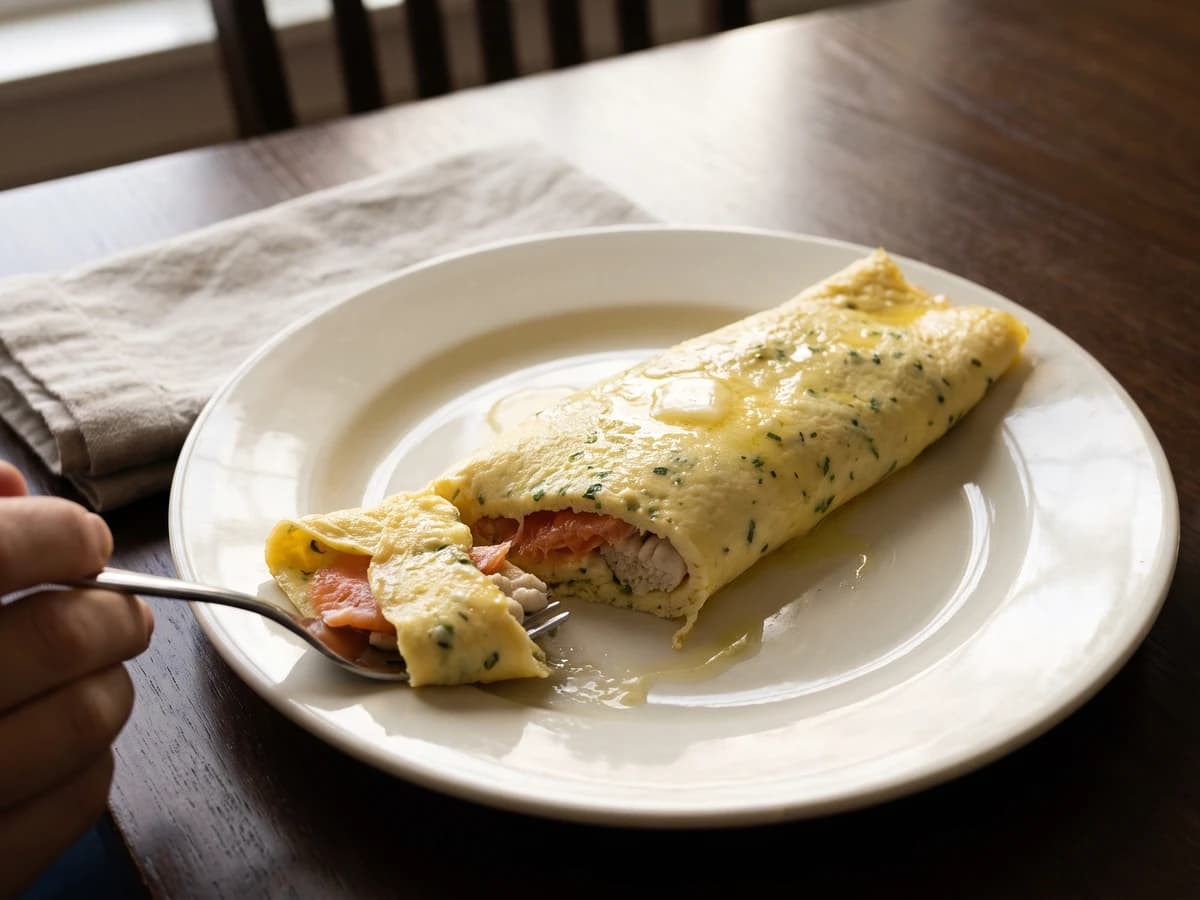
Chef Juliette
A creamy omelette aux fines herbes closes around smoked-salmon-wrapped herring milts, gently poached in butter. Have the filling ready, then roll the eggs while they still shine.