
Chef Zohra
Khlea w Bayd (خليع بالبيض)
Eggs slipped into the saffron-gold fat of khlii, the old Fassi preserved meat, until the whites set and the yolks stay soft for bread.
A cooking platform built around craft, culture, and the stories behind what we eat.

Created by
Merguez browned until its red fat perfumes the pan, tomatoes cooked down around it, eggs set gently on top. A quick eastern Moroccan breakfast made for bread and one more chair.
The sausage goes into the pan first. Let the merguez brown and give up its red, spiced fat before you add the tomatoes, because that fat is what seasons the whole dish. If you rush this, you get sausage sitting in sauce. Do it properly and the sauce tastes as if it was born around the merguez.
This is breakfast from the eastern towns, the kind of plate you find near the Sunday stalls, eaten hot with khobz and fingers moving faster than forks. It isn't delicate food. It is generous food. The tomatoes cook down until glossy, the garlic softens, the cumin wakes up, and then the eggs go in whole so the whites set while the yolks stay ready for bread.
Use good merguez from a butcher who knows his spice. The scale is in the eyes, yes, but sourcing comes first: no gesture rescues a tired sausage. Put the pan in the middle and tear extra bread. Une table, c'est une porte qu'on laisse ouverte, a table is a door you leave open.
Merguez belongs to the wider Maghrebi sausage tradition, made with lamb or beef and colored by paprika, chile, cumin, garlic, and coriander; the word is usually traced to Maghrebi Arabic mirqaz, though a clean origin date is more claimed than proven. In eastern Morocco, especially around Oujda and the Algerian frontier, merguez moved easily between market stalls, grills, and home pans, where eggs and tomatoes turned it into a fast shared breakfast. This dish shows one of des cuisines marocaines, not a single national cuisine flattened into one plate.
Quantity
350g
cut into 5cm pieces
Quantity
2 tbsp
Quantity
1 small
finely chopped
Quantity
3
minced
Quantity
4
grated, or use 400g canned crushed tomatoes
Quantity
1 tbsp
Quantity
1 tsp
Quantity
1 tsp
Quantity
1/2 tsp
only if the merguez is mild
Quantity
to taste
Quantity
to taste
Quantity
4 large
Quantity
2 tbsp
chopped
Quantity
2 tbsp
chopped
Quantity
for serving
| Ingredient | Quantity |
|---|---|
| merguez sausagescut into 5cm pieces | 350g |
| olive oil (optional) | 2 tbsp |
| onionfinely chopped | 1 small |
| garlic clovesminced | 3 |
| ripe tomatoesgrated, or use 400g canned crushed tomatoes | 4 |
| tomato paste | 1 tbsp |
| ground cumin | 1 tsp |
| sweet paprika | 1 tsp |
| hot paprika or cayenne (optional)only if the merguez is mild | 1/2 tsp |
| sea salt | to taste |
| black pepper | to taste |
| eggs | 4 large |
| fresh corianderchopped | 2 tbsp |
| flat-leaf parsleychopped | 2 tbsp |
| round khobz | for serving |
Set a wide skillet or shallow tagine base over medium heat. Add the merguez pieces and brown them on all sides until they release their red spiced fat and smell of cumin, garlic, and chile. Add a spoon of olive oil only if the pan looks dry. Lift the sausage to a plate, leaving the fat behind.
Add the onion to the same pan with a pinch of salt and cook until soft and golden at the edges, 5 to 6 minutes. Stir in the garlic for the last minute. Keep the heat gentle enough that the garlic perfumes the fat without turning bitter.
Stir in the grated tomatoes, tomato paste, cumin, sweet paprika, and hot paprika if you need it. Let the sauce simmer until it thickens and shines, 8 to 10 minutes. Drag a spoon through the pan: the path should hold for a breath before the sauce closes.
Nestle the browned merguez back into the tomato sauce with any juices from the plate. Simmer 3 to 4 minutes so the sausage finishes cooking and the sauce takes its full flavor. Taste before salting; merguez can already carry plenty.
Make four small hollows in the sauce and crack in the eggs. Cover the pan and cook gently until the whites are set and the yolks are still soft, 4 to 6 minutes. Do not stir now. The eggs should sit in the sauce, not disappear into it.
Scatter the coriander and parsley over the top. Carry the pan to the table with warm khobz, and let everyone scoop from the edge toward the center so each person gets sauce, egg, and merguez in one piece of bread.
1 serving (about 310g)
Culinary guides, cultural storytelling, and the editorial depth that makes cooking meaningful.
Discover Culinary ExplorerChef Zohra
Eggs slipped into the saffron-gold fat of khlii, the old Fassi preserved meat, until the whites set and the yolks stay soft for bread.

Chef Zohra
The morning tagine of tomato, sweet pepper, cumin, and eggs added late, so the sauce thickens first and the yolks stay soft enough for warm khobz.

Chef Zohra
A Fassi morning tagine where spiced kefta settles into thick tomato sauce and eggs go in last, yolks still loose, ready for torn khobz and a table that can make room.
Chef Juliette
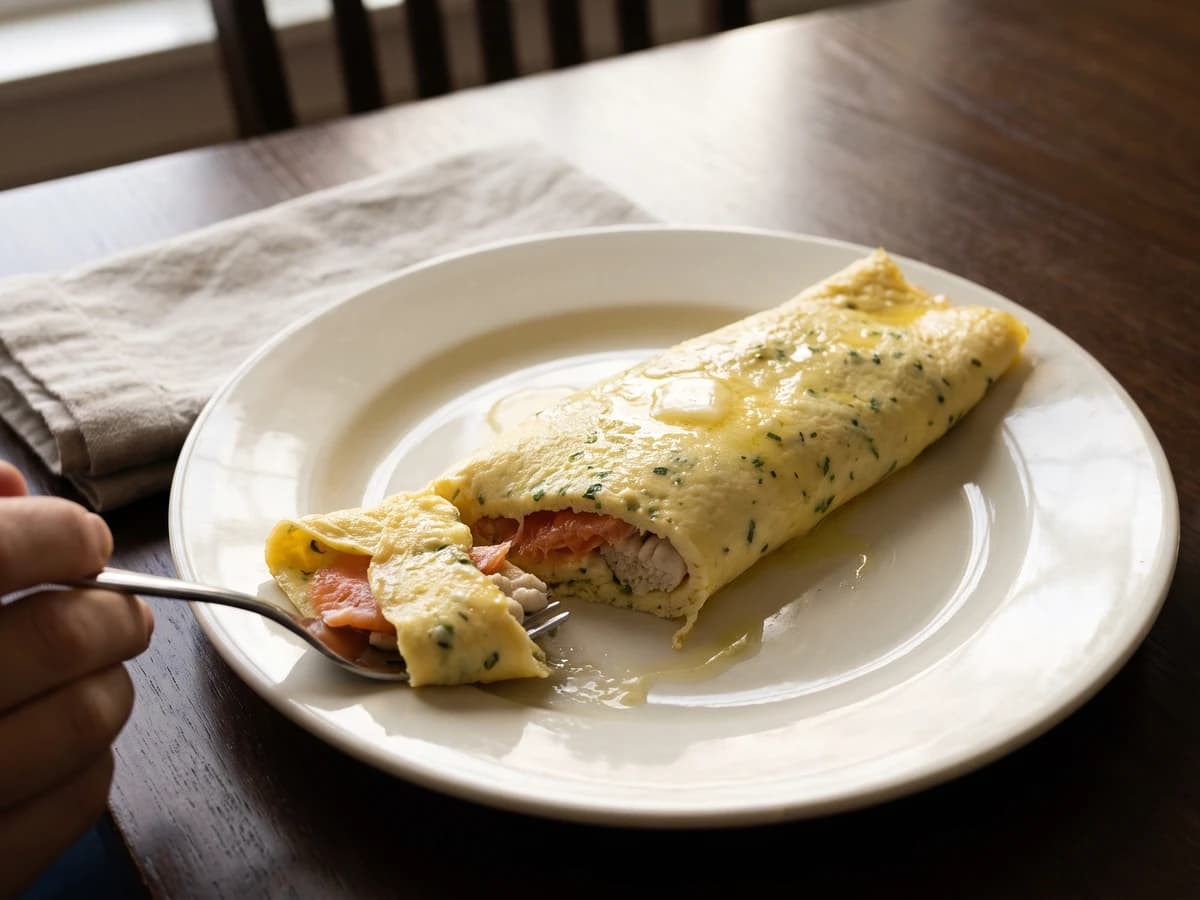
A creamy omelette aux fines herbes closes around smoked-salmon-wrapped herring milts, gently poached in butter. Have the filling ready, then roll the eggs while they still shine.