Culinary Explorer

A cooking platform built around craft, culture, and the stories behind what we eat.
Discover Culinary Explorer
Khlea w Bayd (خليع بالبيض)

Khlea w Bayd (خليع بالبيض)

Created by

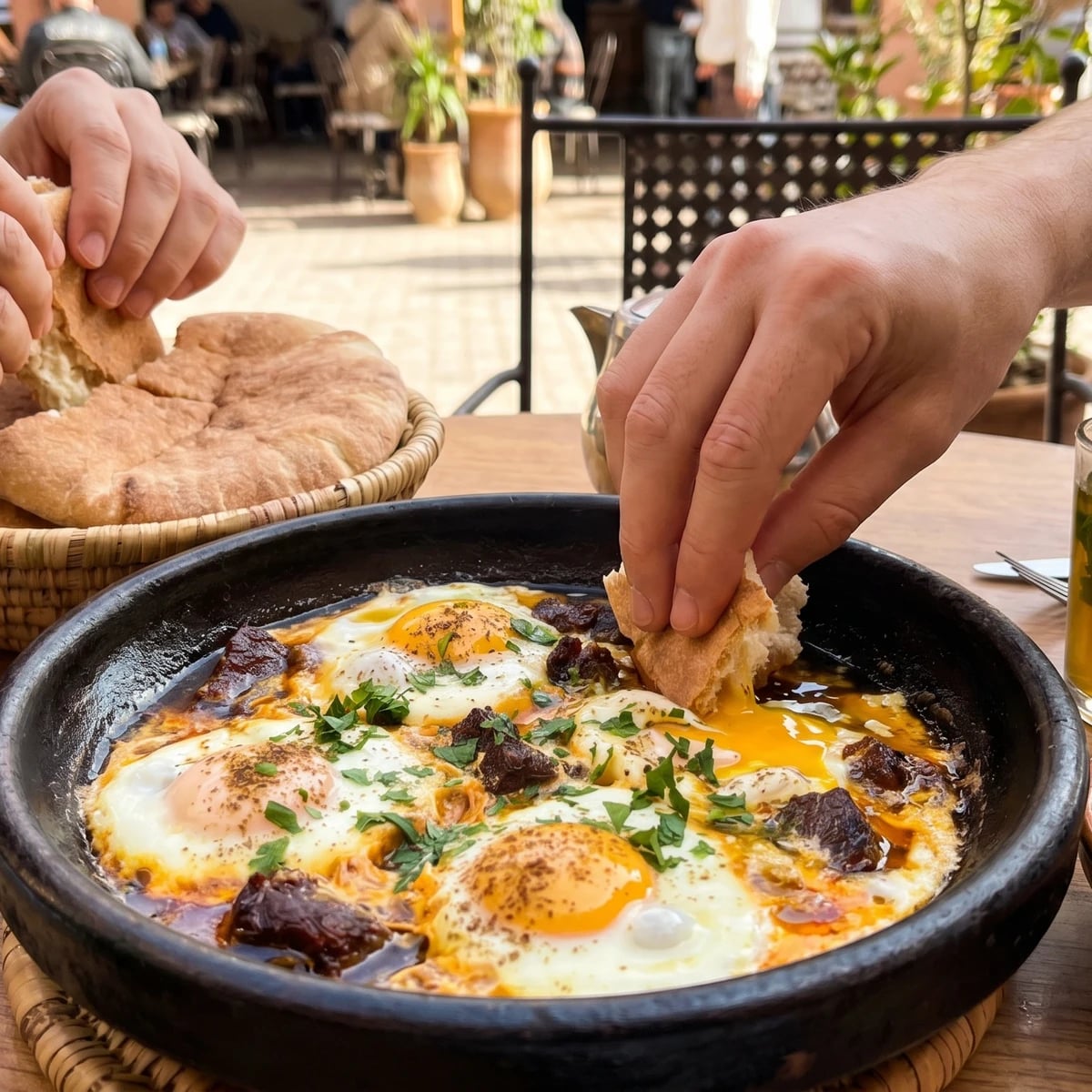
Eggs slipped into the saffron-gold fat of khlii, the old Fassi preserved meat, until the whites set and the yolks stay soft for bread.

Breakfast & Brunch
Moroccan
Comfort Food
Quick Meal
Make Ahead
5 min
Active Time
8 min cook13 min total
Yield2 servings

The fat goes in first. Not much, just enough khlii fat to loosen in the pan and turn glossy, carrying with it the taste of cured meat, coriander seed, cumin, garlic, and time. Then the little pieces of preserved meat wake up in that fat, and only after that do the eggs arrive.

This is the breakfast of a house that keeps something ready for hunger. Khlii was made ahead in quantity, often after Eid al-Adha, meat salted, spiced, dried, cooked, and sealed under fat so it could feed the family long after the feast had passed. For khlea w bayd, the one rule is gentle heat. Heat the fat first, then lower the flame before the eggs go in, so the whites poach soft in the seasoned fat instead of frying hard at the edges.

You eat it straight from the pan with khobz, tearing bread and chasing the yolk before it sets. Put the pan in the middle. Someone will say they only want a bite. Make one more egg anyway. Une table, c'est une porte qu'on laisse ouverte, a table is a door you leave open.

Khlii is strongly associated with Fez and other northern Moroccan city households, where meat preservation mattered before refrigeration and where Eid al-Adha supplied the season's great quantity of meat. The technique belongs to a wider Moroccan preserving grammar: strips of beef or lamb are salted, spiced with coriander and cumin, dried, then cooked and stored under fat in clay jars. Exact dating is difficult, but the practice is documented in living Fassi memory and fits the urban preservation habits of Morocco from the early modern period onward.

The technique, the tradition, and the story behind every dish.

Discover Culinary Explorer

Ingredients

khlii, with some of its spiced preserving fat

Quantity

120g

eggs

Quantity

4 large

olive oil (optional)

Quantity

1 tbsp

only if your khlii is lean

ground cumin

Quantity

1/2 tsp, plus more for serving

black pepper

Quantity

1 small pinch

flat-leaf parsley or coriander (optional)

Quantity

1 tbsp

chopped

round khobz

Quantity

for serving

Equipment Needed

  • Small heavy skillet or shallow clay tagine, 20 to 24 cm
  • Lid that fits the pan

Instructions

  1. 1

    Warm the khlii

    Put the khlii and its fat into a small heavy skillet or shallow tagine over low heat. Let the fat melt slowly until it shines and loosens around the meat. If your khlii is dry, add the spoon of olive oil. Don't rush this: the fat is the sauce, and it must warm before the eggs touch it.

  2. 2

    Season the fat

    Sprinkle in the cumin and black pepper, then tilt the pan so the spices bloom in the warm fat. The smell should turn round and nutty, not sharp. Khlii is already salted, so taste the meat before you add any salt. Most of the time, you need none.

    If your khlii comes from a good Moroccan butcher, trust its seasoning first. La balance est dans les yeux, the scale is in the eyes, but salt is in the mouth.
  3. 3

    Add the eggs

    Lower the heat. Crack the eggs into the pan, spacing them over and between the pieces of meat. Spoon a little warm fat over the whites, leaving the yolks mostly uncovered. This is the gesture that decides the dish: the eggs should poach gently in the spiced fat, not fry hard.

  4. 4

    Set them softly

    Cover the pan for 2 to 4 minutes, just until the whites are set and the yolks still tremble when you move the pan. If you want firmer yolks, give them another minute, but don't abandon them. Eggs forgive many things, not neglect.

  5. 5

    Serve at once

    Scatter over the chopped parsley or coriander if using, and add a small pinch of cumin at the table. Serve the pan in the middle with warm khobz. Tear, scoop, share, and let the bread do the work of the fork.

Chef Tips

  • Buy khlii from a Moroccan butcher who moves through it quickly, or make it from someone whose hand you trust. Old fat turns tired and bitter, and no spice rescues that.
  • Keep the flame low once the eggs go in. You want tender whites and soft yolks, with the khlii fat glossing the surface.
  • Khlii is already a make-ahead food. Keep it sealed under its fat in the refrigerator, use a clean spoon every time, and warm only what you'll eat.

Advance Preparation

  • If making khlii yourself, prepare it days or weeks ahead and store it sealed under its fat. For breakfast, the dish itself takes only minutes.
  • Have the khobz warmed before the eggs go in, because once the yolks are right, the table should already be waiting.

Frequently Asked Questions

Nutrition Information

1 serving (about 215g)

Calories
570 calories
Total Fat
35 g
Saturated Fat
11 g
Trans Fat
1 g
Unsaturated Fat
21 g
Cholesterol
435 mg
Sodium
1050 mg
Total Carbohydrates
34 g
Dietary Fiber
2 g
Sugars
2 g
Protein
31 g

Note: Chef personas and recipes are created with AI assistance. Cook with care: follow safe food-handling practices, check doneness with a thermometer when needed, and adapt for allergies and your kitchen.

Where cooking meets culture.

Culinary guides, cultural storytelling, and the editorial depth that makes cooking meaningful.

Discover Culinary Explorer

More from The Moroccan Breakfast Table

Browse the full collection