
Chef Zohra
Khlea w Bayd (خليع بالبيض)
Eggs slipped into the saffron-gold fat of khlii, the old Fassi preserved meat, until the whites set and the yolks stay soft for bread.
A cooking platform built around craft, culture, and the stories behind what we eat.

Created by
The morning tagine of tomato, sweet pepper, cumin, and eggs added late, so the sauce thickens first and the yolks stay soft enough for warm khobz.
The eggs go in last. That is the whole lesson here. First you let the tomato and sweet pepper cook down until the sauce sits low and glossy in the tagine, because eggs are impatient. Add them too early and they'll harden while the vegetables are still watery. Add them late and they settle into the sauce like they were invited.
Egg tagines belong strongly to Amazigh home cooking across the Middle Atlas, Souss, and eastern Morocco, where eggs, tomatoes, peppers, cumin, and olive oil make a morning dish without meat. Tomatoes and peppers entered Moroccan kitchens after the Columbian exchange, becoming common from the 18th and 19th centuries through Mediterranean and Atlantic trade. The exact dating of this preparation is not fixed, but its clay-pot method and bread-at-the-center service are older than the vegetables now carrying it.
Quantity
4 large
Quantity
3
grated or finely chopped
Quantity
1
finely diced
Quantity
1 small
finely chopped
Quantity
2
minced
Quantity
3 tbsp
Quantity
1 tsp
Quantity
1 tsp
Quantity
1/4 tsp
Quantity
1/4 tsp
Quantity
1 small pinch
Quantity
to taste
Quantity
2 tbsp
chopped
Quantity
for serving
| Ingredient | Quantity |
|---|---|
| eggs | 4 large |
| ripe tomatoesgrated or finely chopped | 3 |
| red or green sweet pepperfinely diced | 1 |
| onionfinely chopped | 1 small |
| garlic clovesminced | 2 |
| extra-virgin olive oil | 3 tbsp |
| ground cumin | 1 tsp |
| sweet paprika | 1 tsp |
| turmeric | 1/4 tsp |
| ground black pepper | 1/4 tsp |
| cayenne or harissa (optional) | 1 small pinch |
| sea salt | to taste |
| fresh corianderchopped | 2 tbsp |
| round khobz | for serving |
Set a clay tagine or heavy skillet over low heat with the olive oil. Add the onion and sweet pepper with a pinch of salt and cook until the onion turns translucent and the pepper relaxes, about 8 minutes. Keep the heat gentle, because a tagine rewards patience before it rewards appetite.
Add the garlic, cumin, paprika, turmeric, black pepper, and cayenne or harissa if using. Stir for 30 seconds, just until the cumin smells warm and alive. The scale is in the eyes, la balance est dans les yeux, but don't bury the eggs under spice.
Stir in the grated tomatoes and cook uncovered over low heat for 12 to 15 minutes, stirring now and then, until the sauce thickens and the oil begins to shine at the edges. Drag a spoon through the middle. If the path fills at once, give it more time.
Make four small hollows in the sauce and crack one egg into each. Salt the eggs lightly, cover, and cook 5 to 7 minutes, until the whites are just set and the yolks are still soft. This is why the sauce had to reduce first: the eggs should finish before they turn hard.
Scatter the coriander over the top and bring the tagine to the table while the surface is glossy and the yolks still tremble when the dish is moved. Eat from the vessel with torn khobz, each person reaching in from their side. Une table, c'est une porte qu'on laisse ouverte.
1 serving (about 240g)
Culinary guides, cultural storytelling, and the editorial depth that makes cooking meaningful.
Discover Culinary ExplorerChef Zohra
Eggs slipped into the saffron-gold fat of khlii, the old Fassi preserved meat, until the whites set and the yolks stay soft for bread.

Chef Zohra
Merguez browned until its red fat perfumes the pan, tomatoes cooked down around it, eggs set gently on top. A quick eastern Moroccan breakfast made for bread and one more chair.

Chef Zohra
A Fassi morning tagine where spiced kefta settles into thick tomato sauce and eggs go in last, yolks still loose, ready for torn khobz and a table that can make room.
Chef Juliette
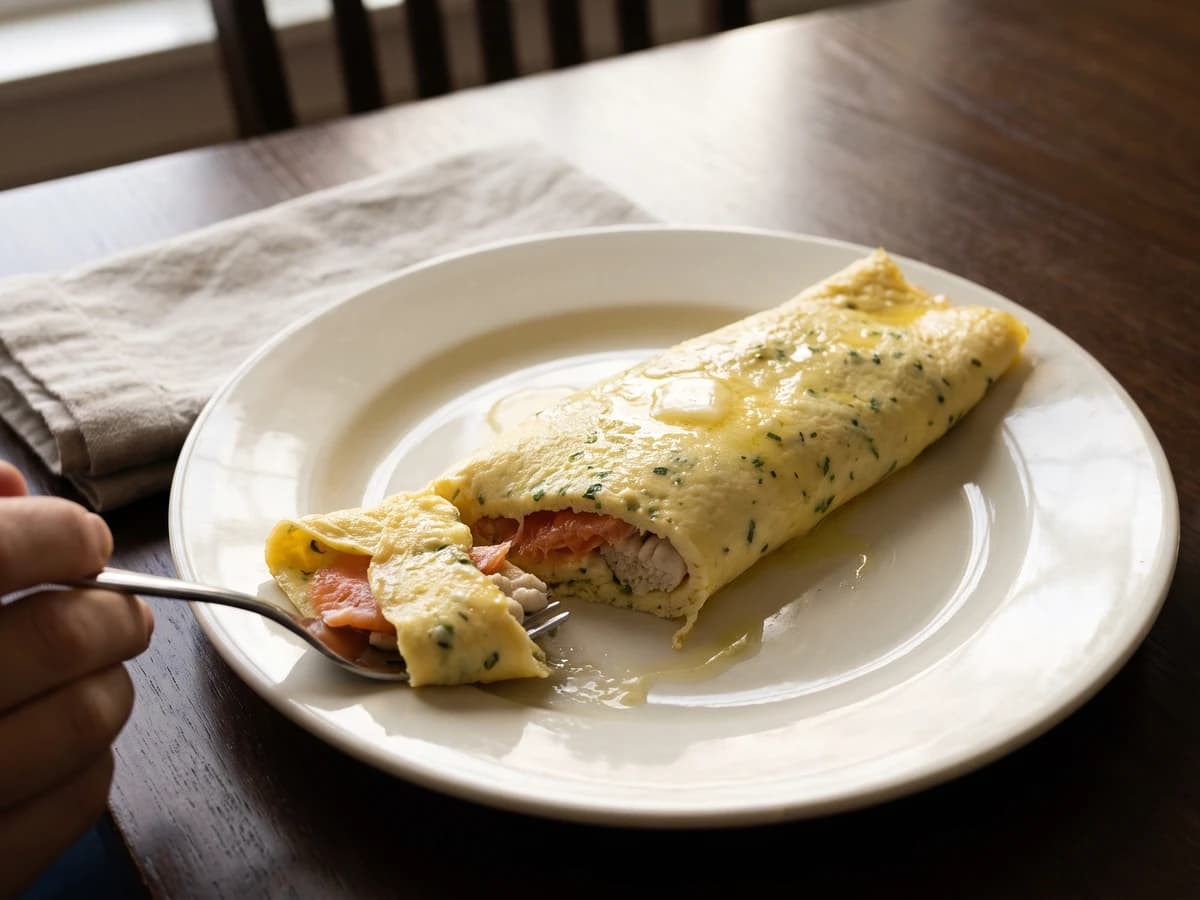
A creamy omelette aux fines herbes closes around smoked-salmon-wrapped herring milts, gently poached in butter. Have the filling ready, then roll the eggs while they still shine.