Culinary Explorer

A cooking platform built around craft, culture, and the stories behind what we eat.
Discover Culinary Explorer
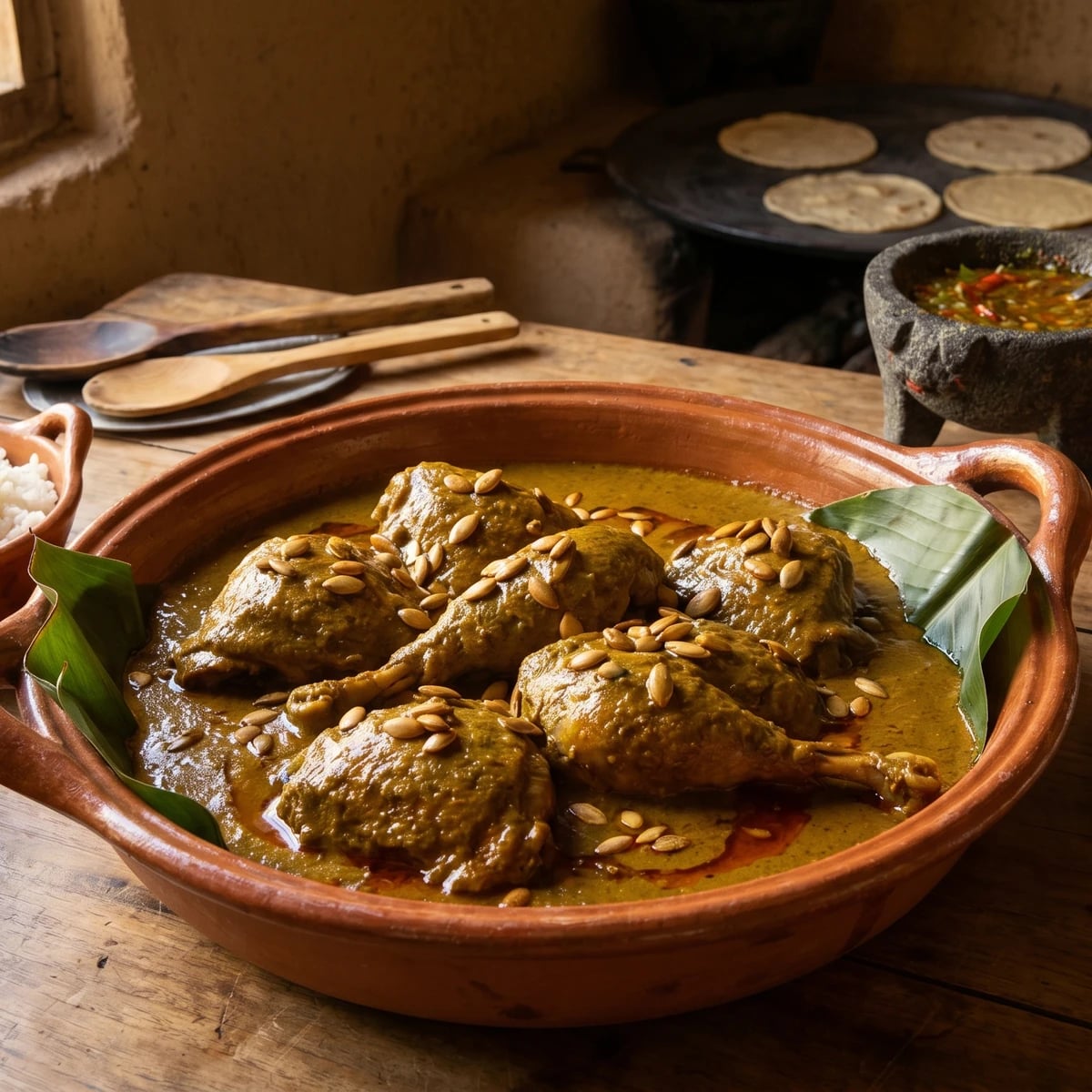
Tabasco Wild Duck in Pipián (Pijije en Pipián)

Tabasco Wild Duck in Pipián (Pijije en Pipián)

Created by

Tabasco's wetland duck, seared in lard and braised under a thick pepita pipián with chile amashito and hoja de momo, the kind of river-country dish tourists almost never see.

Main Dishes
Mexican
Special Occasion
Make Ahead
Dinner Party
4 hr 45 min
Active Time
2 hr 30 min cook7 hr 15 min total
Yield6 servings

Tabasco, the river country of the Grijalva and Usumacinta, is where this dish lives. Not in the dry north, not in the central highlands. In the marshes, lagoons, flooded pastures, and cacao country where the air smells of wet earth and the market baskets hold pepita de calabaza, chile amashito, plátano, achiote, and hoja de momo.

Pijije is the black-bellied whistling duck that moves through that water country. Its meat is dark, lean, and honest. A farmed duck gives you fat. A pijije asks you to give it fat, patience, and a sauce with body. That is why the duck is browned in manteca de cerdo first, then simmered gently before it goes into the pipián. La manteca es el sabor. No me vengas con atajos.

The pipián belongs to the women who learned to toast pumpkin seeds without burning them, to wake up chile ancho and guajillo on the comal, and to use chile amashito with respect. This is not a sauce made hot for showing off. It is thick, nutty, earthy, and deep, with hoja de momo giving that green anise breath you recognize if you have eaten in Tabasco homes around Nacajuca or Centla.

Use legal, in-season wild duck from a permitted source. If you cannot get pijije, use another small legal wild duck or a farmed duck and understand the compromise. The dish will still teach you something, but the river will be quieter on the plate. Cada estado, su propia cocina.

Pumpkin seeds were ground into sauces in Mesoamerica long before the 16th-century conquest, and pipián is one of the clearest surviving seed-sauce techniques in Mexican cooking. In Tabasco, Chontal Yokot'an and mestizo households adapted wetland game, fish, turtles, and birds to local aromatics including chile amashito and hoja santa, called hoja de momo across much of the southeast. Wild duck hunting is regulated today, so pijije should only be cooked when legally sourced and in season.

The technique, the tradition, and the story behind every dish.

Discover Culinary Explorer

Ingredients

legally hunted pijijes or small wild ducks

Quantity

2, about 3 to 4 pounds total

plucked, dressed, and cut into serving pieces

fresh naranja agria juice

Quantity

1/2 cup

kosher salt

Quantity

1 tablespoon, plus more to taste

garlic cloves

Quantity

6

3 crushed and 3 left whole

achiote paste

Quantity

1 teaspoon

freshly ground black pepper

Quantity

1 teaspoon

white onion

Quantity

1 medium

half sliced and half left in one piece

manteca de cerdo

Quantity

3 tablespoons

divided

bay leaves

Quantity

2

whole pimienta gorda berries

Quantity

6

raw hulled pumpkin seeds, pepitas

Quantity

2 cups, plus 2 tablespoons

the extra 2 tablespoons reserved for garnish

sesame seeds

Quantity

2 tablespoons

dried chile guajillo

Quantity

4

stemmed and seeded

dried chile ancho

Quantity

2

stemmed and seeded

fresh or dried chile amashito

Quantity

6

stemmed

Roma tomatoes

Quantity

3

roasted on a comal

corn tortilla

Quantity

1

toasted until dark in spots

hojas de momo, also called hoja santa

Quantity

2 large

reserved duck broth

Quantity

3 to 4 cups

hand-pressed corn tortillas (optional)

Quantity

for serving

warmed

white rice (optional)

Quantity

for serving

fried ripe plantains (optional)

Quantity

for serving

Equipment Needed

  • Wide 12-inch clay cazuela or heavy Dutch oven
  • Cast iron comal for toasting seeds, chiles, and vegetables
  • High-powered blender
  • Fine-mesh strainer
  • Tongs or kitchen spider

Instructions

  1. 1

    Clean the duck

    Check the pijije pieces carefully for pin feathers, shot, and bruised meat. Trim away damaged spots and pat the duck dry. Wild birds are not supermarket chickens. You respect the animal by cleaning it properly before it ever touches the cazuela.

  2. 2

    Marinate with naranja agria

    In a large bowl, mix the naranja agria juice, salt, crushed garlic, achiote paste, and black pepper. Rub this into the duck pieces, cover, and refrigerate at least 4 hours or overnight. The sour orange tames the river-country gaminess without erasing it. That flavor is the point.

  3. 3

    Brown in lard

    Lift the duck from the marinade and pat it dry. Save the marinade. Heat 2 tablespoons of manteca de cerdo in a wide clay cazuela or heavy Dutch oven over medium heat. Brown the duck in batches until the skin and edges turn deep mahogany, 4 to 5 minutes per side. Do not crowd the pot. Crowding makes the duck sweat instead of brown.

    If using farmed duck, render slowly and spoon off excess fat before continuing. Farmed duck is fattier than pijije and will change the balance of the sauce.
  4. 4

    Simmer the duck

    Return all the browned duck to the pot. Add the saved marinade, the half onion, whole garlic cloves, bay leaves, pimienta gorda, and enough water to cover by 1 inch. Bring to a simmer, then lower the heat until the liquid moves lazily. Cook partially covered until the duck is nearly tender, 75 to 90 minutes for wild duck, 45 to 60 minutes for farmed duck. Strain and reserve the broth. Discard the spent aromatics and keep the duck pieces aside.

  5. 5

    Toast the pepitas

    Heat a dry comal over medium-low. Toast the 2 cups of pepitas in batches, stirring constantly, until they puff, jump slightly, and smell nutty, 3 to 5 minutes per batch. They should turn pale gold, not brown. Toast the sesame seeds for about 1 minute. Burned pepita makes bitter pipián. There is no fixing it later.

  6. 6

    Toast the chiles

    On the same comal, toast the guajillo and ancho chiles separately, about 20 to 30 seconds per side, just until the skins soften and release their smell. Toast dried chile amashito for only a few seconds, or blister fresh chile amashito until spotted. Put the guajillo and ancho in a bowl and cover with hot water for 15 minutes. Hot water, not boiling. Boiling water makes the skins harsh.

  7. 7

    Roast the vegetables

    Roast the tomatoes, sliced onion, and whole garlic from the broth if still firm, or use fresh garlic if needed, on the comal until charred in spots and softened. Toast the corn tortilla until it has dark freckles and a dry snap. The tortilla is not filler. It gives the pipián body and helps the sauce hold to the duck.

  8. 8

    Blend the pipián

    Drain the soaked chiles. In a blender, combine the toasted pepitas, sesame seeds, guajillo, ancho, chile amashito, roasted tomatoes, roasted onion, garlic, toasted tortilla, 1 torn hoja de momo, and 2 cups of warm duck broth. Blend longer than you think, until the sauce is smooth and thick, closer to heavy cream than wet sand. If your blender is weak, strain the sauce through a fine-mesh sieve. A metate would do this slowly. A blender works, if you do the work.

  9. 9

    Fry the sauce

    Wipe out the cazuela. Melt the remaining 1 tablespoon manteca de cerdo over medium heat. Pour in the pipián carefully, stirring as it sputters. Cook 8 to 10 minutes, scraping the bottom, until the sauce darkens slightly, thickens, and small freckles of fat appear at the edge. This frying step wakes the seeds and chiles. Skip it and the sauce tastes raw.

  10. 10

    Braise in pipián

    Nestle the duck pieces into the fried pipián. Add enough reserved duck broth to make a thick but spoonable sauce, usually 1 to 2 more cups. Add the second hoja de momo whole. Simmer gently, uncovered, for 25 to 35 minutes, turning the duck once, until the meat is tender and the sauce clings to it. Do not boil hard. Pepita sauces can turn grainy when bullied. Taste for salt.

  11. 11

    Rest and serve

    Turn off the heat and let the duck rest in the sauce for 20 minutes. Remove the whole hoja de momo. Toast the reserved 2 tablespoons pepitas and scatter them over the cazuela. Serve family-style with warm corn tortillas, white rice, and fried ripe plantains. Flour tortillas belong to other regions. This is Tabasco.

Chef Tips

  • Pijije is black-bellied whistling duck, a wetland bird, not a farm product. Use only legal, in-season birds from a permitted source. If someone offers you wild duck with no clear source, walk away. Saber cocinar es saber vivir, and that includes knowing where your food comes from.
  • Buy pepitas from a market stall with turnover. Smell them before you pay. They should smell sweet and nutty, never oily or stale. Rancid pepita will ruin the whole cazuela.
  • Chile amashito is Tabasco's small wild chile. It is sharp and fragrant, not just hot. If you cannot find it, chile piquín is the closest compromise. Jalapeño is not the same chile wearing a different name.
  • Hoja de momo is the southeastern name for hoja santa. Look for it in Mexican markets with Oaxacan, Veracruz, or Tabasco vendors. If you cannot find it, use one small sprig of epazote, but know you are changing the perfume of the dish.
  • The pipián should be thick enough to coat the duck, not pour like soup. If it tightens too much, loosen it with warm duck broth a little at a time. If it is thin, simmer patiently. Do not add flour. Así se hace y punto.

Advance Preparation

  • The duck can marinate overnight. That is the better version, especially with true wild pijije.
  • The duck can be simmered one day ahead. Refrigerate the meat and broth separately, then skim the hardened fat from the broth before making the pipián.
  • The finished dish keeps well for 2 days. Reheat over low heat with a splash of duck broth, stirring often. Do not let the pipián boil hard or it may separate.

Frequently Asked Questions

Nutrition Information

1 serving (about 560g)

Calories
1025 calories
Total Fat
50 g
Saturated Fat
11 g
Trans Fat
0 g
Unsaturated Fat
35 g
Cholesterol
120 mg
Sodium
1450 mg
Total Carbohydrates
90 g
Dietary Fiber
12 g
Sugars
16 g
Protein
54 g

Note: Chef personas and recipes are created with AI assistance. Cook with care: follow safe food-handling practices, check doneness with a thermometer when needed, and adapt for allergies and your kitchen.

Where cooking meets culture.

Culinary guides, cultural storytelling, and the editorial depth that makes cooking meaningful.

Discover Culinary Explorer

More from Chiapas & Tabasco Main Dishes

Browse the full collection