
Chef Lupita
Aceite de Chiltepin Bajacaliforniano
Baja California's wild chiltepin steeped in olive oil with garlic, orejon, and lime peel, until the oil turns ruby-amber and carries the slow, sneaky burn of the desert coast.
A cooking platform built around craft, culture, and the stories behind what we eat.
Created by
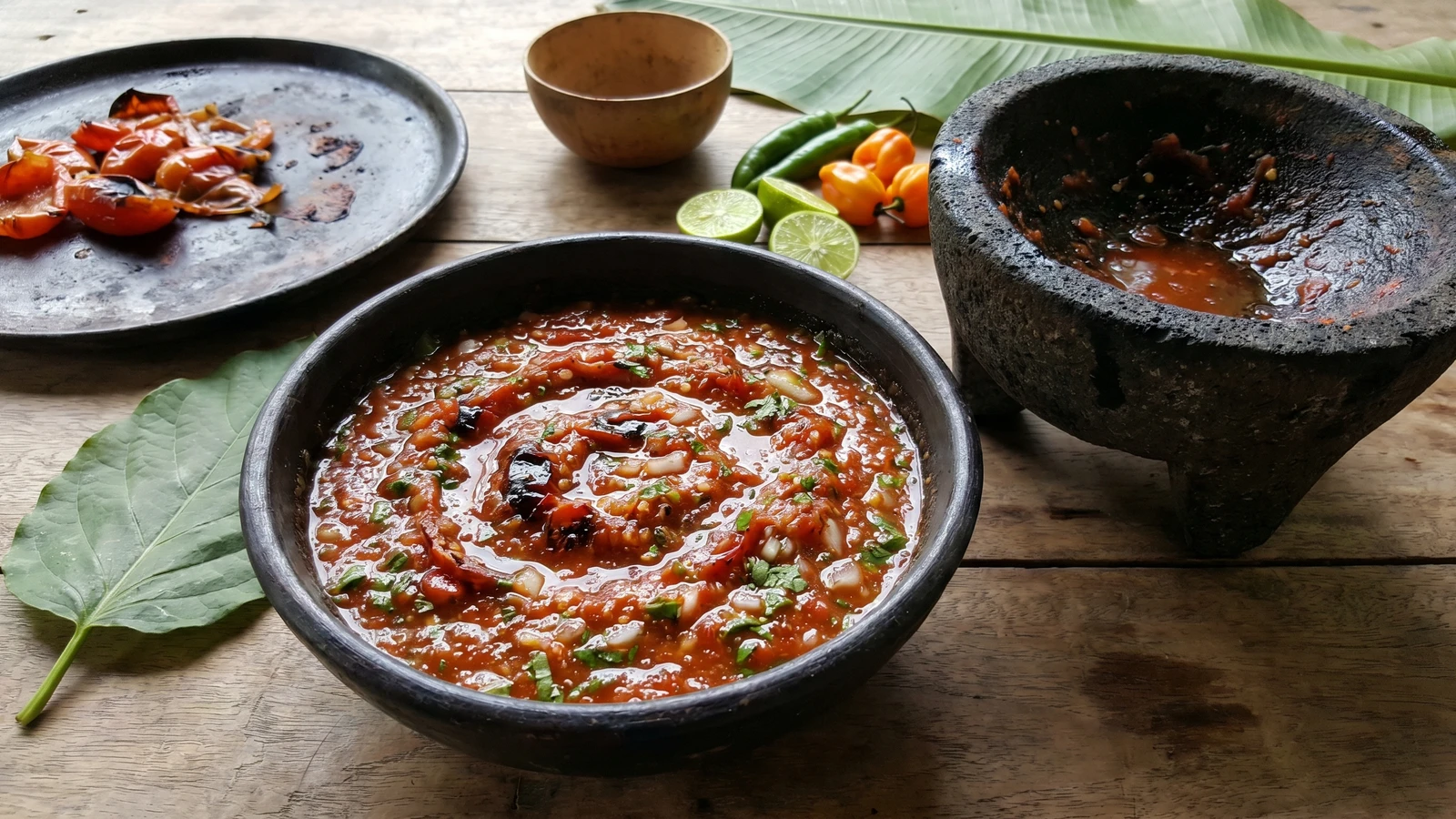
Tabasco's Chontal salsa, built from charred tomato, chile habanero, white onion, cilantro, and lime, ground rough in the molcajete until it tastes like smoke, acid, and lowland heat.
Tabasco, the Chontal lowlands along the Grijalva and Usumacinta, is where this chirmol lives. Not Yucatán, not Chiapas, not a generic red salsa with a little chile thrown in. This is the daily table salsa of a hot, wet state where tomato, cilantro, lime, and chile habanero cut through grilled fish, eggs, beans, pejelagarto, and anything that comes off the comal.
The tomato must be charred until the skin blackens and the flesh softens. That is the flavor. The habanero is roasted more carefully, just blistered, because burned habanero turns harsh and takes over the bowl. You grind it in a molcajete with salt first, then onion, then tomato. A blender makes it smooth and fast. This salsa should not be smooth and fast. No me vengas con atajos.
I learned a version like this from a señora outside Nacajuca who served it in a small black clay bowl beside roasted fish wrapped in banana leaf. She used cilantro because that was what the market had that morning, and she squeezed lime at the end because Tabasco food knows how to carry brightness through heat and humidity. Cada estado, su propia cocina. This one belongs to Tabasco.
The word chirmol is used across southeastern Mexico and Central America for charred tomato salsas, with roots in Maya cooking techniques that predate the Spanish conquest. In Tabasco, Chontal Maya cooks adapted the method to the lowland pantry: tomatoes blistered on the comal, chile habanero or local small chiles, sour lime, cilantro, and sometimes momo, the hoja santa used across Tabasco and Chiapas. Unlike Yucatecan recados, chirmol is not a spice paste or marinade; it is a fresh table salsa built from fire, acid, and the molcajete.
Quantity
1 1/2 pounds
Quantity
1 to 2
stemmed
Quantity
1/2 medium
divided
Quantity
1 small
unpeeled
Quantity
1 teaspoon, plus more to taste
Quantity
1/3 cup
finely chopped
Quantity
2 tablespoons, plus more to taste
Quantity
1 tablespoon
finely chopped
| Ingredient | Quantity |
|---|---|
| ripe Roma tomatoes or small saladette tomatoes | 1 1/2 pounds |
| fresh chile habanerostemmed | 1 to 2 |
| white oniondivided | 1/2 medium |
| garlic cloveunpeeled | 1 small |
| coarse sea salt | 1 teaspoon, plus more to taste |
| fresh cilantro leaves and tender stemsfinely chopped | 1/3 cup |
| fresh Mexican lime juice | 2 tablespoons, plus more to taste |
| momo (hoja santa) (optional)finely chopped | 1 tablespoon |
Set a dry comal or heavy skillet over medium-high heat. Let it get properly hot before anything touches it. A timid comal sweats the tomato instead of charring it, and then your salsa tastes boiled. La cocina no es decoración, es trabajo.
Place the tomatoes on the hot comal. Turn them every few minutes until the skins are blackened in patches, the flesh softens, and juices begin to leak onto the surface. This takes 8 to 10 minutes. The tomato should smell sweet and smoky, not raw. Do not peel them. Those blackened skins are part of chirmol.
Add the chile habanero and the unpeeled garlic clove to the comal. Roast the habanero for 30 to 60 seconds, turning once or twice, just until the skin blisters. Roast the garlic for 4 to 5 minutes, until the paper skin browns and the clove softens. Watch the habanero. Burn it and the salsa turns bitter and mean.
Peel the roasted garlic. In a molcajete, grind the salt, garlic, and roasted habanero into a rough paste. Add one-quarter of the white onion, chopped, and grind again until the onion releases its juice. This is the base. The salt helps tear the chile and onion open under the stone.
Add the charred tomatoes one at a time, crushing each against the side of the molcajete before adding the next. Leave the salsa rough, with pieces of tomato skin, seeds, and pulp visible. Chirmol tabasqueño is not a red puree. It should look like it came from a comal and a patient hand.
Finely dice the remaining white onion and fold it into the salsa with the cilantro, lime juice, and momo if using. Taste for salt and lime. The final flavor should be charred tomato first, then habanero heat, then fresh onion and cilantro. Serve at room temperature. Así se hace y punto.
1 serving (about 60g)
Culinary guides, cultural storytelling, and the editorial depth that makes cooking meaningful.
Discover Culinary ExplorerChef Lupita
Baja California's wild chiltepin steeped in olive oil with garlic, orejon, and lime peel, until the oil turns ruby-amber and carries the slow, sneaky burn of the desert coast.

Chef Lupita
Puebla's Lenten convent adobo, a brick-red vinegar chile paste of ancho, guajillo, garlic, oregano, and comino made to dress fish for the meatless calendar.
Chef Lupita
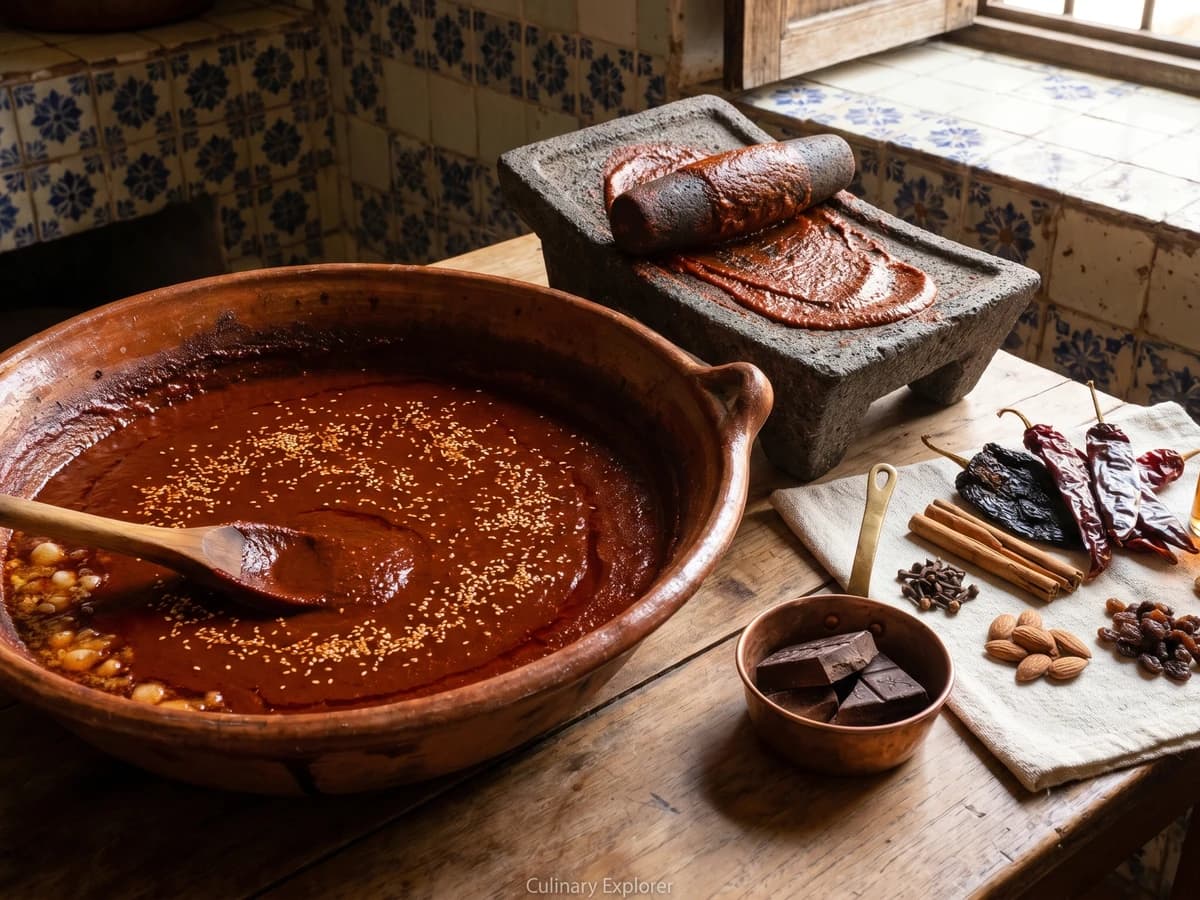
Zacatecas' wedding-table adobo, built from toasted guajillo and ancho, piloncillo, sour orange, chocolate, canela, clavo, almonds, sesame, and lard.

Chef Lupita
Puebla's convent kitchens built this adobo with ancho, guajillo, jerez, almonds, raisins, clove, and lard, a baroque marinade that stains pork loin and finishes as the sauce.