
Chef Lupita
Aceite de Chiltepin Bajacaliforniano
Baja California's wild chiltepin steeped in olive oil with garlic, orejon, and lime peel, until the oil turns ruby-amber and carries the slow, sneaky burn of the desert coast.
A cooking platform built around craft, culture, and the stories behind what we eat.
Created by
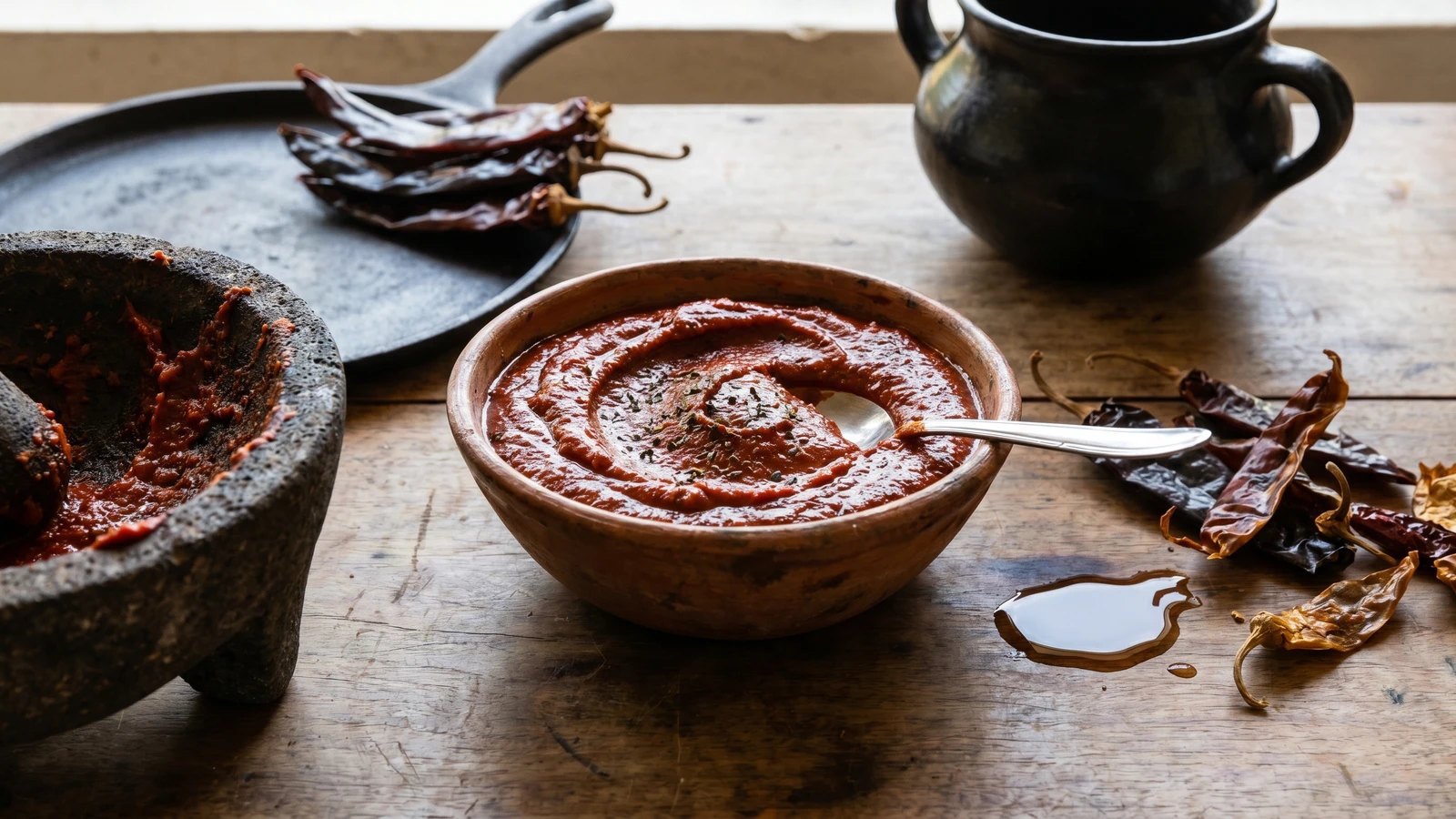
Chiapas' brick-red recado for cochito, built from toasted chile ancho, guajillo, achiote, vinegar, pimienta gorda, and thyme before it stains pork for the oven.
This recado belongs to Chiapas, especially the central valley kitchens around Chiapa de Corzo and Tuxtla Gutierrez, where cochito horneado comes to the table for fiestas, baptisms, weddings, and the kind of family meal that starts before sunrise. This is not Yucatecan recado rojo. Do not bring me that shortcut. The color may remind you of achiote from the peninsula, but the body here comes from chile ancho and chile guajillo, softened with vinegar and sharpened with pimienta gorda and thyme.
The women who taught me this in Chiapa de Corzo worked by smell first. The chiles had to toast until they smelled sweet and dark, never burned. The spices were warmed just enough to wake them. The vinegar carried the paste into the pork, and the pork's own fat did the rest in the oven. La cocina no es decoracion, es trabajo. A paste this plain-looking can define the whole animal if you treat each ingredient correctly.
You make this recado ahead because cochito needs time. Rub it into pork shoulder, ribs, or leg and let it rest overnight, wrapped well, so the chile and vinegar settle into the meat. The paste should be thick enough to cling to a spoon, brick-red, and a little rough if you grind it in a molcajete. A blender works, but don't skip the comal. The comal is where the flavor begins. Cada estado, su propia cocina.
Cochito horneado is one of Chiapas' best-known festive pork dishes, strongly associated with Chiapa de Corzo and the Fiesta Grande held each January in honor of San Sebastian, San Antonio Abad, and the Lord of Esquipulas. The dish reflects a colonial-era meeting of Spanish pork and vinegar-preserved adobos with Mesoamerican chile grinding and achiote coloring. Unlike Yucatecan recado rojo, which leans heavily on achiote and sour orange, the Chiapas version depends on ancho and guajillo chiles, thyme, and pimienta gorda for its brick-red depth.
Quantity
5
stemmed and seeded
Quantity
4
stemmed and seeded
Quantity
2 tablespoons seeds or 1 1/2 tablespoons paste
Quantity
6
peeled
Quantity
1/2 small
roughly chopped
Quantity
1/2 cup
Quantity
1/4 cup, plus more as needed
Quantity
1 1/2 teaspoons
Quantity
1 teaspoon
Quantity
8
Quantity
3
Quantity
1/2 teaspoon
Quantity
1 small piece or 1/2 teaspoon ground
Quantity
1 1/2 teaspoons
Quantity
2 tablespoons
melted, for rubbing the pork after the paste
| Ingredient | Quantity |
|---|---|
| dried chile anchostemmed and seeded | 5 |
| dried chile guajillostemmed and seeded | 4 |
| achiote seeds or pure achiote paste | 2 tablespoons seeds or 1 1/2 tablespoons paste |
| garlic clovespeeled | 6 |
| white onionroughly chopped | 1/2 small |
| cane vinegar or apple cider vinegar | 1/2 cup |
| hot chile soaking water | 1/4 cup, plus more as needed |
| dried Mexican oregano | 1 1/2 teaspoons |
| dried thyme | 1 teaspoon |
| whole allspice berries (pimienta gorda) | 8 |
| whole cloves | 3 |
| black peppercorns | 1/2 teaspoon |
| Mexican canela or ground cinnamon | 1 small piece or 1/2 teaspoon ground |
| kosher salt | 1 1/2 teaspoons |
| manteca de cerdomelted, for rubbing the pork after the paste | 2 tablespoons |
Wipe the chile ancho and chile guajillo with a barely damp cloth. Pull off the stems, shake out the seeds, and tear the chiles open so they lie flat. Do this over a bowl, not over the sink. Good chile seeds tell you whether the chile is fresh or tired. If the chile smells dusty and dead, the recado will taste dusty and dead.
Heat a dry comal over medium. Toast the ancho first, about 20 to 30 seconds per side, just until the skin softens, darkens slightly, and smells like dried fruit and tobacco. Toast the guajillo separately, about 15 to 20 seconds per side. Guajillo is thinner and burns faster. Burned chile turns bitter, and no amount of vinegar will rescue it.
Put the toasted chiles in a bowl and cover them with hot water. Hot, not boiling. Let them soak for 15 minutes, until the flesh bends easily and the water turns reddish brown. Save 1/4 cup of the soaking water. Taste it first. If it is bitter, use clean hot water instead. A careful cook checks before blending.
On the same comal, toast the pimienta gorda, cloves, black peppercorns, and canela for 30 to 45 seconds, moving them constantly. You want fragrance, not smoke. Add the dried oregano and thyme for the last 5 seconds, then pull everything off the heat. Herbs burn if you look away. My mother wrote that in her notebook, and she was right.
If using achiote seeds, grind them first in a molcajete or spice grinder until sandy and red. Achiote seeds are hard. Do not throw them whole into a weak blender and expect them to disappear. If using pure achiote paste, crumble it into the blender with the vinegar. This is color and earthiness, not the whole identity of the recado.
Drain the chiles and place them in a blender with the ground spices, achiote, garlic, onion, vinegar, salt, and 1/4 cup chile soaking water. Blend until thick and smooth, stopping to scrape down the sides. The paste should be brick-red and heavy, not watery. Add more soaking water one tablespoon at a time only if the blades refuse to move.
For a very smooth paste, push the recado through a fine-mesh strainer with a spoon. In many home kitchens in Chiapas, especially when the paste is ground well in a molcajete, it stays a little textured. Both are acceptable. What is not acceptable is a paste full of chile skins because you rushed the blender.
Use the recado immediately, or pack it into a clean jar and cover the surface with a thin slick of melted manteca de cerdo if you will use it within three days. For cochito, rub the paste deeply into 4 to 5 pounds of pork, then rub the melted manteca over the outside before it rests overnight. The lard helps the adobo cling and gives the roasted edges their shine. La manteca es el sabor.
1 serving (about 32g)
Culinary guides, cultural storytelling, and the editorial depth that makes cooking meaningful.
Discover Culinary ExplorerChef Lupita
Baja California's wild chiltepin steeped in olive oil with garlic, orejon, and lime peel, until the oil turns ruby-amber and carries the slow, sneaky burn of the desert coast.

Chef Lupita
Puebla's Lenten convent adobo, a brick-red vinegar chile paste of ancho, guajillo, garlic, oregano, and comino made to dress fish for the meatless calendar.
Chef Lupita
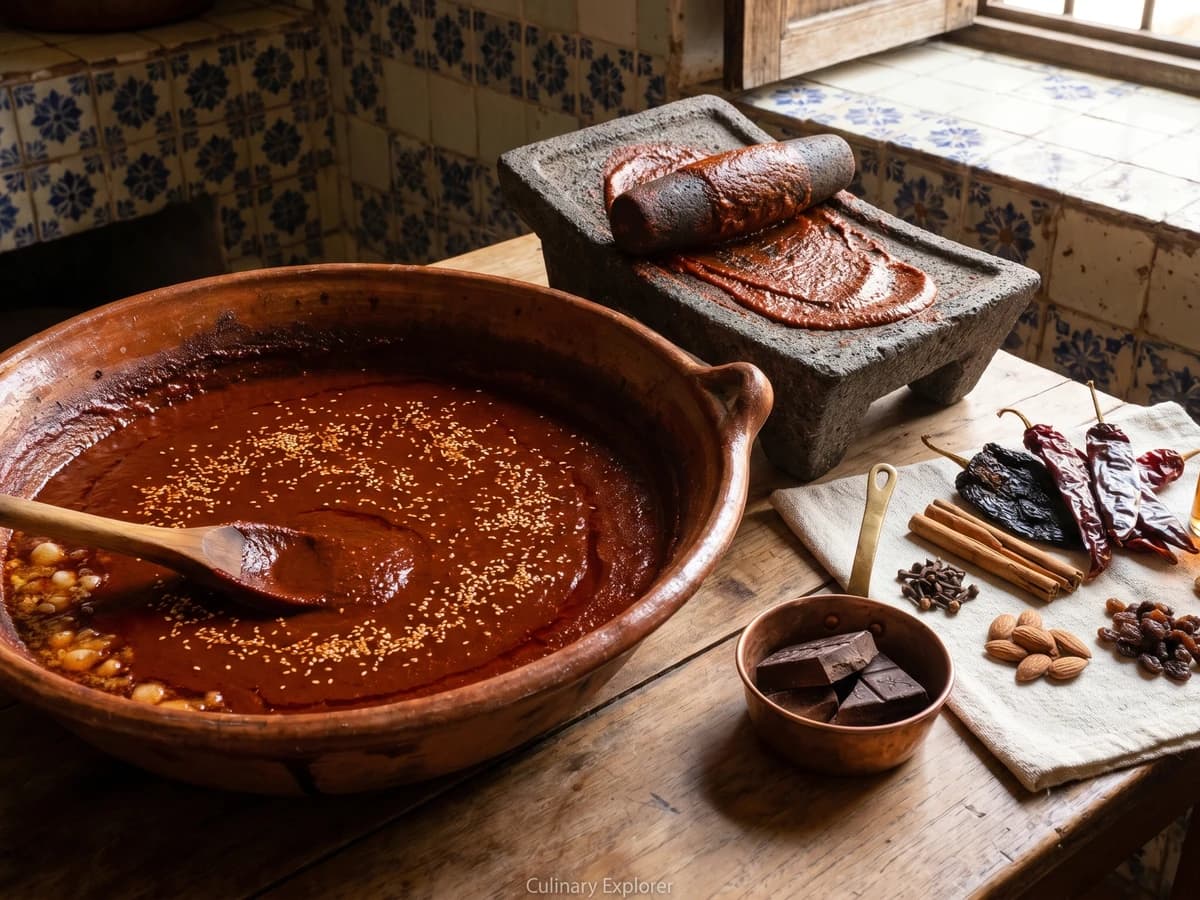
Zacatecas' wedding-table adobo, built from toasted guajillo and ancho, piloncillo, sour orange, chocolate, canela, clavo, almonds, sesame, and lard.

Chef Lupita
Puebla's convent kitchens built this adobo with ancho, guajillo, jerez, almonds, raisins, clove, and lard, a baroque marinade that stains pork loin and finishes as the sauce.