
Chef Lupita
Aceite de Chiltepin Bajacaliforniano
Baja California's wild chiltepin steeped in olive oil with garlic, orejon, and lime peel, until the oil turns ruby-amber and carries the slow, sneaky burn of the desert coast.
A cooking platform built around craft, culture, and the stories behind what we eat.

Created by
Chiapas highland chirmol, made with fire-blistered tomato, onion, garlic, and chile simojovel, the morning salsa for eggs, frijoles de la olla, and warm corn tortillas.
Chiapas, especially the highland kitchens around San Cristobal de las Casas and the market routes that lead toward Simojovel, knows this salsa as breakfast work. Tomato, onion, garlic, chile simojovel, salt. Nothing fancy. The comal does the talking.
The chile simojovel is the ingredient that tells you where you are. It is small, red, and serious, from Chiapas, not pasilla, not chile de arbol, not piquin. You toast it for seconds, then grind it with charred tomato in a molcajete until the salsa tastes smoky, sharp, and alive. If you burn it, you start again. No me vengas con atajos.
I learned this kind of chirmol from women who cooked breakfast before the market day swallowed them whole: beans already warm, tortillas wrapped in cloth, eggs fried in manteca de cerdo, salsa waiting in a rough clay bowl. The lesson is practical. Build flavor before you add anything. Char first, grind second, season last. Asi se hace y punto.
Chirmol belongs to the broader Mesoamerican family of charred tomato and chile salsas, with close relatives in Chiapas, Tabasco, Guatemala, and the Maya highlands. The name is commonly linked to Indigenous and colonial-era sauce vocabularies around roasted chile mixtures, and in Chiapas it remained a household salsa because it needed only the comal, the molcajete, and what the morning market provided. Chile simojovel, named for Simojovel in northern Chiapas, is one of the regional chiles that keeps this version from becoming a generic tomato salsa.
Quantity
6
Quantity
3
stemmed
Quantity
1/2 medium
cut into thick slices
Quantity
2
unpeeled
Quantity
1/2 teaspoon, plus more to taste
Quantity
2 tablespoons
finely chopped
Quantity
for serving
| Ingredient | Quantity |
|---|---|
| ripe Roma tomatoes or small field tomatoes | 6 |
| dried chile simojovelstemmed | 3 |
| white onioncut into thick slices | 1/2 medium |
| garlic clovesunpeeled | 2 |
| coarse sea salt | 1/2 teaspoon, plus more to taste |
| fresh cilantro (optional)finely chopped | 2 tablespoons |
| warm corn tortillas, eggs, and frijoles de la olla (optional) | for serving |
Set a dry comal or cast iron skillet over medium-high heat. Let it get properly hot before anything touches it. Chirmol is built on char, not on pale cooked tomato. The comal should darken the skins quickly and leave the flesh soft enough to crush.
Place the tomatoes, onion slices, and unpeeled garlic on the hot comal. Turn them as their skins blister and blacken in spots. The tomatoes should slump and leak a little juice, the onion should soften at the edges, and the garlic should feel tender inside its skin. This takes about 10 to 12 minutes.
Toast the chile simojovel on the comal for 10 to 15 seconds per side, just until it darkens slightly and smells sharp and fruity. It is small and burns fast. The chile simojovel is not pasilla. Do not replace it with pasilla and pretend nothing changed.
Peel the garlic. Put the salt, toasted chile simojovel, and garlic in a molcajete and grind to a rough paste. Add the onion and crush it into the chile. Add the tomatoes one by one, grinding until the salsa is loose, smoky, and textured. You want pieces of charred tomato skin and small flecks of chile. A blender makes this too smooth unless you pulse carefully.
Taste for salt. Let the salsa sit for 10 minutes so the charred tomato juices settle into the chile. Stir in the cilantro only if your market tomatoes are flat and need freshness. Good tomato and good chile simojovel do not need decoration.
Serve at room temperature with eggs cooked in manteca de cerdo, frijoles de la olla, and warm corn tortillas. This is a breakfast salsa, not a dip for chips under melted yellow cheese. Cada estado, su propia cocina.
1 serving (about 50g)
Culinary guides, cultural storytelling, and the editorial depth that makes cooking meaningful.
Discover Culinary ExplorerChef Lupita
Baja California's wild chiltepin steeped in olive oil with garlic, orejon, and lime peel, until the oil turns ruby-amber and carries the slow, sneaky burn of the desert coast.

Chef Lupita
Puebla's Lenten convent adobo, a brick-red vinegar chile paste of ancho, guajillo, garlic, oregano, and comino made to dress fish for the meatless calendar.
Chef Lupita
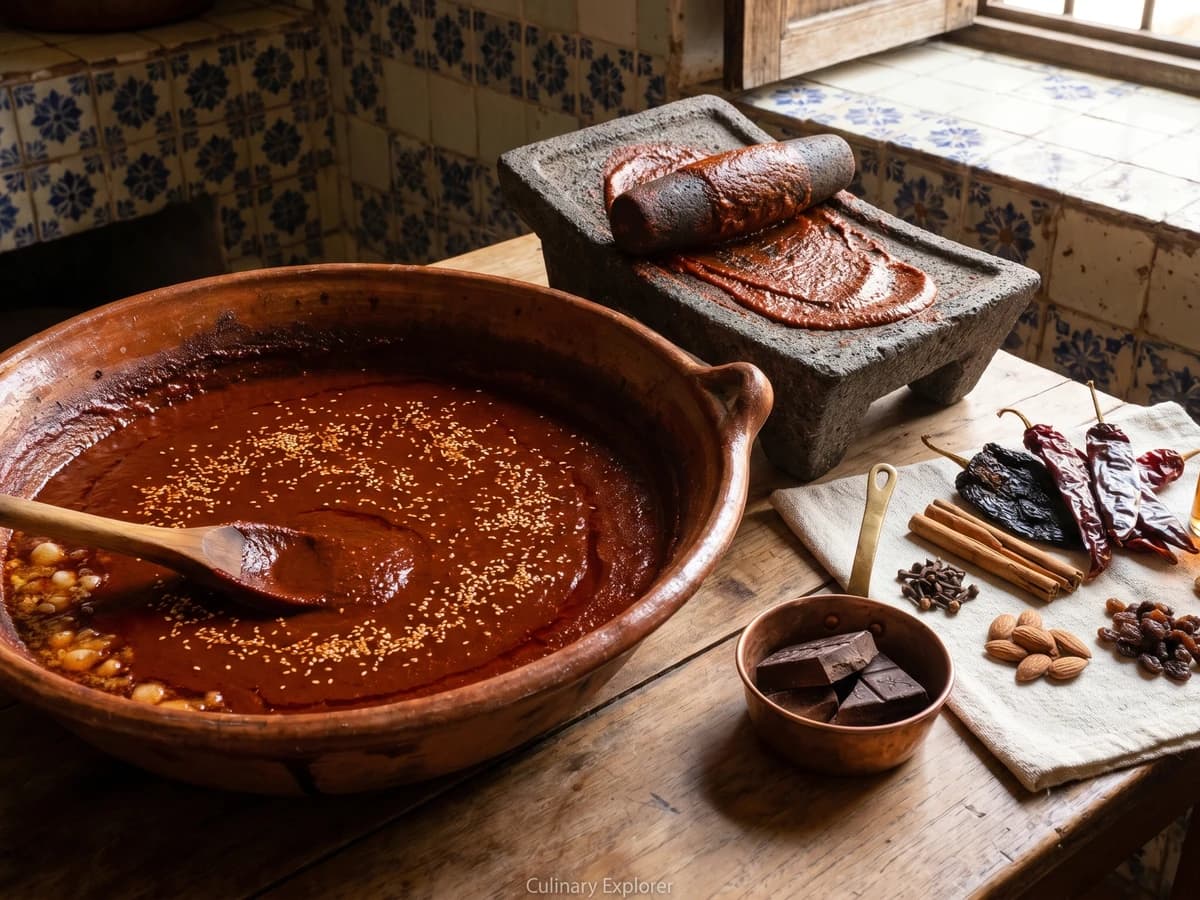
Zacatecas' wedding-table adobo, built from toasted guajillo and ancho, piloncillo, sour orange, chocolate, canela, clavo, almonds, sesame, and lard.

Chef Lupita
Puebla's convent kitchens built this adobo with ancho, guajillo, jerez, almonds, raisins, clove, and lard, a baroque marinade that stains pork loin and finishes as the sauce.