
Chef Lesia
Banosh (банош, Carpathian cornmeal porridge)
Cornmeal and sour cream go over the flame pale and separate, then suddenly turn glossy, yellow, and almost stubborn. Stir one way only, the shepherds say, and listen.
A cooking platform built around craft, culture, and the stories behind what we eat.
Created by
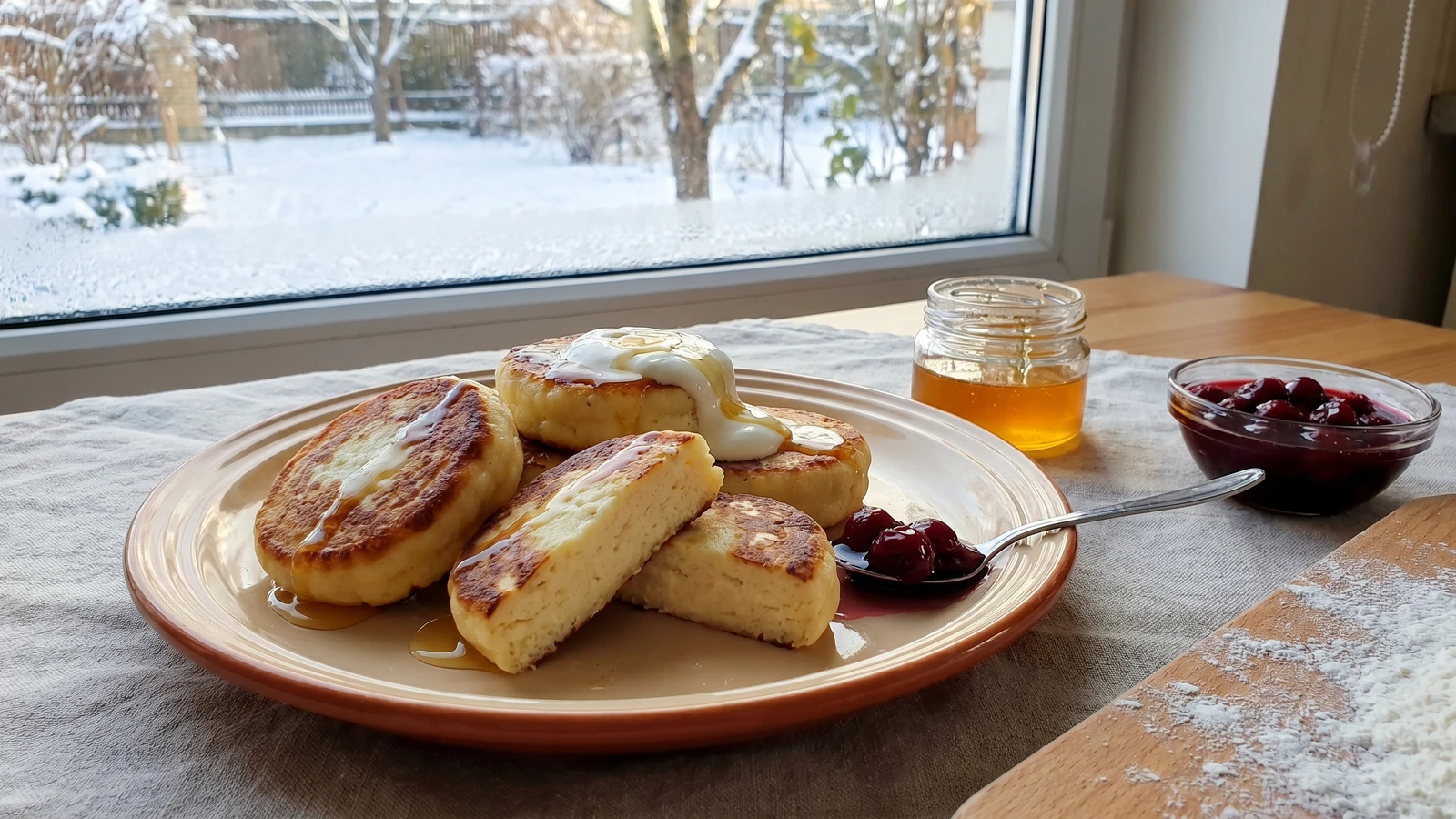
White curd cheese goes into the pan looking too plain to trust, then the edges turn golden and the middle stays soft, lactic, and almost cloudlike.
White curd cheese is a quiet ingredient until it hits butter. Then the edges go gold, the kitchen smells faintly of warm milk and toast, and the middle stays soft enough that you wonder how something this simple can feel so looked after. Syrnyky are breakfast, yes, but also supper when everyone is tired and nobody has the patience for a big pot.
The whole dish depends on dryness. Use tvoroh, Ukrainian curd cheese, or the driest farmer's cheese you can find; if it's wet, wrap it in cloth and let it drip in a sieve. Too much flour makes syrnyky sulk. They should taste of cheese first, with just enough flour to help them stand up in the pan.
Beat the egg separately and stir it in last. That is the small trick that decides them: the cheese takes the flour first, the egg binds at the end, and the mixture holds without turning into paste. Aunt Nadia wrote only "make them tender, not clever," which was no measurement at all and also exactly correct.
Serve them hot under cold smetana and honey, or cherry varennia if you have it. If one cracks, leave it alone and let the crust mend it. The pan knows things.
Syrnyky are built from syr or tvoroh, fresh cultured curd cheese, a staple across Ukrainian home kitchens long before packaged breakfast food arrived. They are especially tied to dairy-rich village cooking and everyday urban breakfasts, with regional toppings shifting by pantry: sour cherry preserve in summer houses, honey in market towns, smetana almost everywhere. Soviet cafeterias standardized them into pale, flour-heavy patties, but the home version stayed closer to the cheese: soft in the center, browned at the edge, made by feel.
Quantity
500g
Quantity
1 large
beaten separately
Quantity
2 tablespoons
Quantity
1/4 teaspoon
Quantity
1 teaspoon vanilla sugar or 1/2 teaspoon extract
Quantity
45g, plus more for shaping
Quantity
2 tablespoons
Quantity
30g
Quantity
1 tablespoon
Quantity
to serve
Quantity
to serve
Quantity
to serve
| Ingredient | Quantity |
|---|---|
| dry tvoroh, Ukrainian curd cheese, or dry farmer's cheese | 500g |
| eggbeaten separately | 1 large |
| sugar | 2 tablespoons |
| fine sea salt | 1/4 teaspoon |
| vanilla sugar or vanilla extract (optional) | 1 teaspoon vanilla sugar or 1/2 teaspoon extract |
| plain flour | 45g, plus more for shaping |
| semolina or fine cornmeal (optional) | 2 tablespoons |
| butter | 30g |
| neutral oil or refined sunflower oil | 1 tablespoon |
| smetana or sour cream (optional) | to serve |
| honey (optional) | to serve |
| sour cherry varennia or jam (optional) | to serve |
Press the tvoroh between your fingers. It should crumble softly, not smear like yogurt. If it feels wet, wrap it in a clean cloth, set it in a sieve over a bowl, and let it drain until the cloth is damp and the cheese feels lighter. This is the step that saves you from adding handfuls of flour later.
Put the cheese in a bowl with the sugar, salt, vanilla if using, flour, and semolina if you want a firmer middle. Mix with a fork until the flour disappears and the cheese looks like soft damp crumbs. It should clump when you squeeze it, then break apart without sticking badly to your fingers.
Beat the egg in a small cup, then stir it into the cheese mixture a little at a time. Stop when the mixture holds together in a soft mound; you may not need every drop if your cheese was moist. The egg goes in last so it binds the curd instead of loosening it into batter.
Dust a board with flour. Scoop the mixture into generous spoonfuls, roll each one lightly through the flour, and pat into thick little rounds with straight sides. Don't press them flat. Syrnyky need height, because the center should stay soft while the outside browns.
Warm the butter and oil together in a heavy pan over medium-low heat. When the butter smells nutty but has not darkened, lay in the syrnyky with space between them. The sound should be a steady polite sizzle. Fry until the lower edge shows a clear golden ring and the kitchen smells like toasted milk, then turn them carefully and brown the other side.
Move the syrnyky to a warm plate as they finish. Serve at once with cold smetana spooned over the top, honey running into the browned edges, and sour cherry varennia if the jar is open. Eat them while the crust still whispers under the fork.
1 serving (about 180g)
Culinary guides, cultural storytelling, and the editorial depth that makes cooking meaningful.
Discover Culinary ExplorerChef Lesia
Cornmeal and sour cream go over the flame pale and separate, then suddenly turn glossy, yellow, and almost stubborn. Stir one way only, the shepherds say, and listen.

Chef Lesia
A benderyk is a crepe taught to hold its corners: soft pancake, peppery meat, egg-dipped edges fried crisp, and the same triangular confidence my hands learned at the varenyky table.

Chef Lesia
Raw potato turns sly the moment you grate it: wet, starchy, already darkening. Deruny reward speed, hot oil, and the courage to leave the edges alone until they crisp.

Chef Lesia
Pumpkin goes into the pot pale and stubborn, then gives itself up slowly to milk and millet until the whole breakfast turns deep orange, sweet, and spoon-thick.