
Chef Takumi
Almond Tofu (杏仁豆腐, Annin Dōfu)
A cool square of almond-scented milk, set softly and served with mikan in thin syrup, is dinner-party food without theater. The only stern demand is restraint with the fragrance.
A cooking platform built around craft, culture, and the stories behind what we eat.
Created by
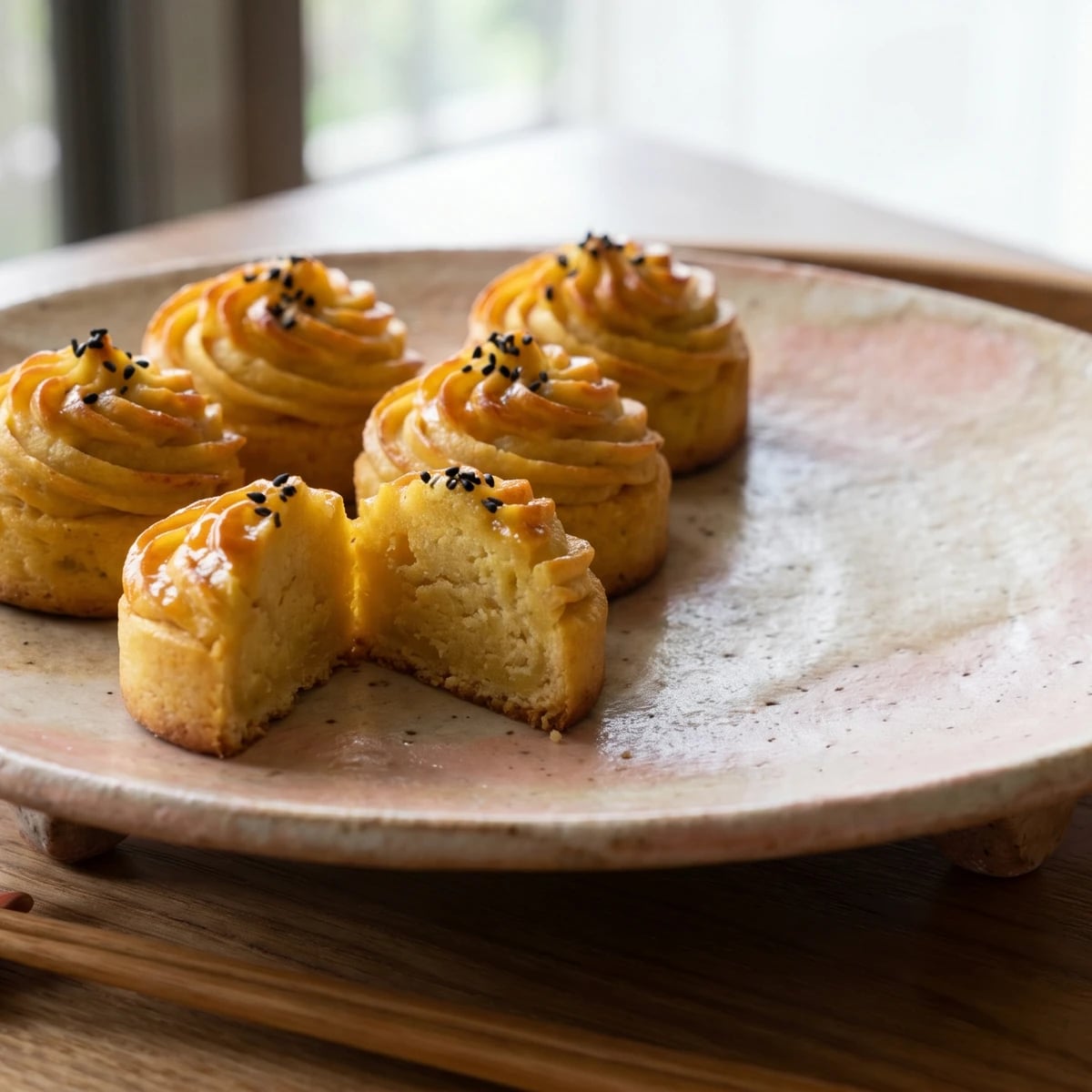
This is not the holiday casserole. Japanese Sweet Potato is a small yōgashi: roasted satsumaimo made smooth, shaped neatly, brushed with yolk, and baked until shiny.
Satsumaimo tells you when autumn has arrived. The skin goes wine-purple, the flesh turns golden, and the sweetness deepens enough that a careful cook only has to help it along. This Sweet Potato is yōgashi, Western-style Japanese confectionery, but the heart of it is very Japanese: choose the potato at its shun, then don't smother it.
The one detail that decides the dish is how you cook the satsumaimo. Roast it slowly, whole in its skin, and the flesh becomes sweet, dense, and fragrant. Boil it and you gain speed, yes, but you also wash away flavor and invite water into a sweet that should hold its shape. We are making a small cake, not mashed potatoes in a polite hat.
Once the potato is roasted, the work is plain. Mash it while warm, pass it through a sieve if you want the fine shop texture, then season with butter, sugar, egg yolk, cream, and a little mirin. The mirin is not decoration. It rounds the sweetness and gives the glaze a quiet shine. Pipe or spoon the mixture into small ovals, brush with yolk, and bake until the tops gleam. Honmono, but entirely within reach.
Japanese Sweet Potato is a Meiji-period yōgashi, a Western-style confection adapted to Japanese ingredients rather than imported whole. It is commonly traced to 1887, when confectioners began shaping satsumaimo into small baked sweets enriched with butter and egg yolk. The name stayed in katakana, スイートポテト, a sign of its Western pastry roots, though the flavor belongs plainly to Japan's roasted sweet potato season.
Quantity
600g
scrubbed, left whole
Quantity
40g
softened
Quantity
45g
Quantity
2
divided
Quantity
3 tablespoons
plus more as needed
Quantity
1 tablespoon
Quantity
1/4 teaspoon
Quantity
1 teaspoon
| Ingredient | Quantity |
|---|---|
| satsumaimo (Japanese sweet potatoes)scrubbed, left whole | 600g |
| unsalted buttersoftened | 40g |
| sugar | 45g |
| large egg yolksdivided | 2 |
| heavy creamplus more as needed | 3 tablespoons |
| mirin | 1 tablespoon |
| fine sea salt | 1/4 teaspoon |
| black sesame seeds (optional) | 1 teaspoon |
Heat the oven to 180°C, or 350°F. Prick the satsumaimo a few times, set them on a tray, and roast until a skewer slides through without resistance, 50 to 60 minutes. Slow roasting keeps the flesh dry and sweet. That dryness matters, because a wet mash slumps when you shape it.
Split the potatoes while still warm enough to handle and scoop out the flesh. Mash it well, then pass it through a sieve or food mill for a fine texture. Warm potato takes in butter and yolk smoothly; cold potato fights you, which is unbecoming behavior from a tuber.
Stir in the butter, sugar, one egg yolk, cream, mirin, and salt. The mixture should be smooth, thick, and pipeable, holding a soft peak when lifted with a spoon. Add cream a teaspoon at a time only if it feels stiff. Too much liquid steals the clean shape.
Line a tray with parchment. Spoon the mixture into a piping bag fitted with a large star tip, or shape it with two spoons into ten small ovals. Keep them restrained, about the size of a large walnut. Small sweets bake evenly and leave the potato's flavor clear.
Beat the remaining egg yolk with 1 teaspoon water or mirin, then brush the tops lightly. Scatter with black sesame if using. Bake at 200°C, or 400°F, for 10 to 12 minutes, until the ridges are glossy and lightly browned. The glaze is there for shine and color, not a hard crust.
Let the cakes rest on the tray for 10 minutes before moving them. They firm as they cool, and moving them too soon spoils the shape you just made. Serve warm or at room temperature, with green tea if you like the table to feel properly settled.
1 serving (about 60g)
Culinary guides, cultural storytelling, and the editorial depth that makes cooking meaningful.
Discover Culinary Explorer
Chef Takumi
A cool square of almond-scented milk, set softly and served with mikan in thin syrup, is dinner-party food without theater. The only stern demand is restraint with the fragrance.

Chef Takumi
A Japanese baked cheesecake is not trying to float away. It is dense, smooth, and quietly tart, with a clean slice doing the work of decoration.

Chef Takumi
A blackened top, a barely set center, and no crust to fuss over. Basuchī looks dramatic, but the whole dish rests on hot heat and patient chilling.

Chef Takumi
Castella asks for no butter, no decoration, and no bravery: only warm eggs beaten patiently, a careful bake, and one night of rest so the crumb turns moist and fine.