
Chef Margarida
Areias de Cascais
The sand cookies of Cascais, where three simple ingredients become something that melts on your tongue and sparkles like the beach at sunset. Butter, flour, sugar. That's all. That's enough.
A cooking platform built around craft, culture, and the stories behind what we eat.
Created by
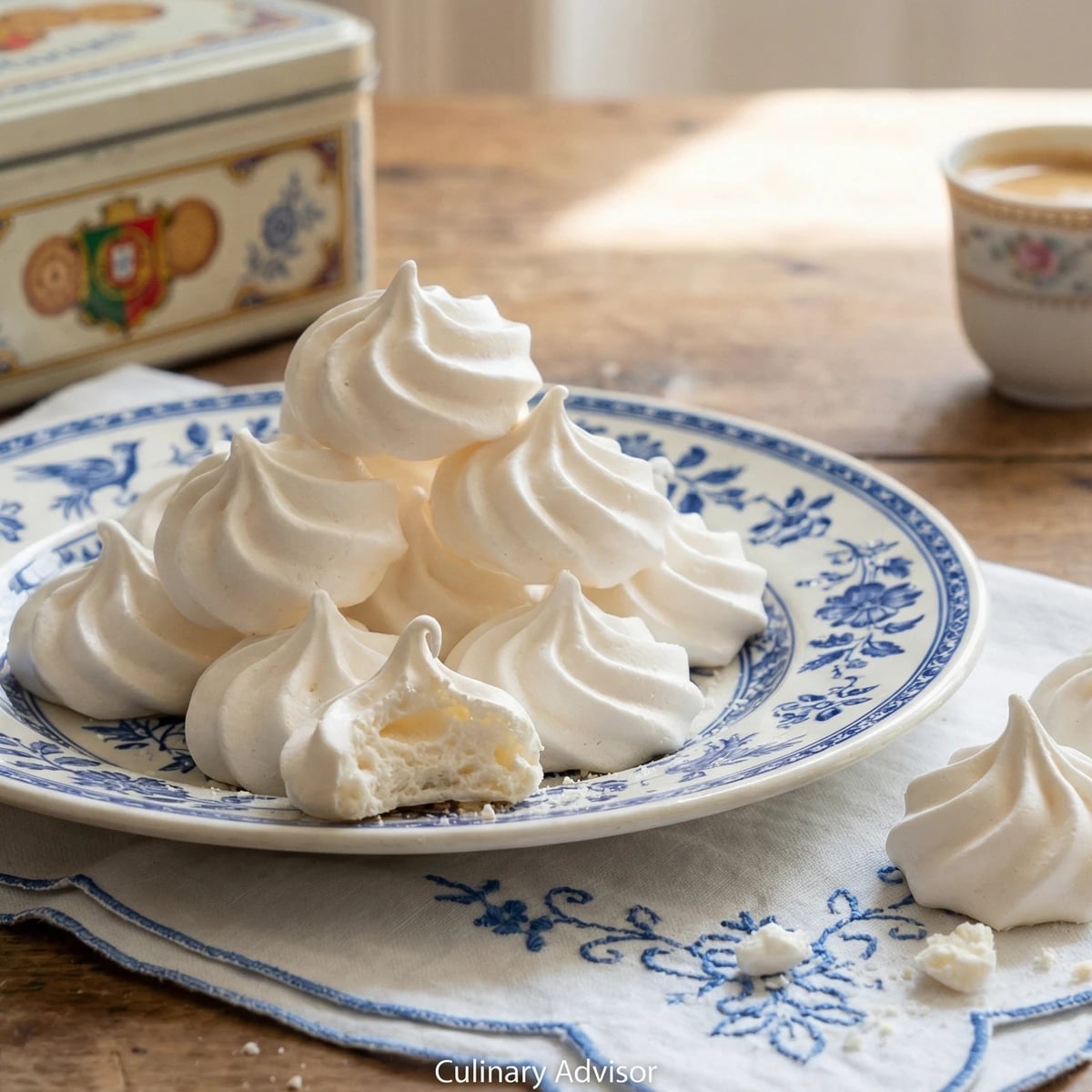
The meringue kisses that melt on your tongue like whispered secrets, born in convent kitchens where nothing was wasted and everything became beautiful. Two ingredients, endless patience, pure magic.
Suspiros. Sighs. The name tells you everything you need to know about these little clouds of sweetness.
Avó Leonor made these for every celebration. Baptisms, first communions, birthdays, Christmas. She'd pipe them onto brown paper, dozens at a time, and they'd dry overnight in the oven's residual heat. In the morning, they'd lift off the paper like they weighed nothing at all. Because they almost do.
Two ingredients. Egg whites and sugar. That's it. The same two ingredients that have been transformed into suspiros in Portuguese kitchens for centuries. The technique is ancient, passed from the convents where freiras made magic from the egg whites left over from gilding altars and making yolk-rich doces. Nothing was wasted. Everything became beautiful.
This is the recipe that teaches you patience. You can't rush a meringue. You beat the whites until they hold their shape, fold in the sugar with respect, and then you wait. Low heat, long time, the oven barely breathing. Rush it and they weep. Rush it and they collapse. But give them time, and they reward you with that perfect shatter, that moment when they dissolve on your tongue and you understand why they're called sighs.
Suspiros trace their origins to Portugal's convents, where nuns used leftover egg whites after the yolks went into custards and gilding. The name means "sighs" in Portuguese, describing the ethereal lightness that makes them dissolve on the tongue. They became essential to Portuguese celebrations, from village festas to family gatherings, a tradition that continues unchanged today.
Quantity
4 large
at room temperature
Quantity
200g
Quantity
1/4 teaspoon
or a few drops of lemon juice
Quantity
1/2 teaspoon
| Ingredient | Quantity |
|---|---|
| egg whitesat room temperature | 4 large |
| white sugar (açúcar) | 200g |
| cream of tartaror a few drops of lemon juice | 1/4 teaspoon |
| vanilla extract (optional) | 1/2 teaspoon |
Heat your oven to 100°C (210°F). Line two baking sheets with parchment paper. Make sure your mixing bowl and whisk are completely clean and dry. Any trace of fat or water and your whites won't whip properly. Avó Leonor used to wipe her bowl with a cut lemon and then dry it. I still do the same.
Add the egg whites and cream of tartar to your bowl. Begin beating on medium speed until the whites become foamy and opaque, about 2 minutes. Increase to high speed and continue until soft peaks form. When you lift the whisk, the peaks should curl over gently like a wave about to break.
With the mixer still running on high, add the sugar one tablespoon at a time. Wait about 20 seconds between each addition. This is where patience matters. Add it too fast and your meringue won't reach its full potential. Keep beating until the meringue is thick, glossy, and holds stiff peaks. When you rub a bit between your fingers, you shouldn't feel any graininess. This takes 8 to 10 minutes total. Add the vanilla in the last minute if using.
Fit a piping bag with a large star tip. Fill it with the meringue. Pipe small rosettes onto the prepared baking sheets, spacing them about 3cm apart. They won't spread much. Each suspiro should be about the size of a walnut. You can also use two spoons to drop small mounds if you don't have a piping bag. Avó Leonor never owned a piping bag in her life.
Place the baking sheets in the oven. Bake at 100°C for 1 hour and 30 minutes to 2 hours. The suspiros are done when they lift off the parchment cleanly and feel completely dry to the touch. They should remain white or just barely ivory. If they start to color, your oven is too hot. Turn off the oven, crack the door open, and let them cool completely inside. This prevents cracking.
Once completely cool, suspiros can be stored in an airtight container at room temperature for up to two weeks. Keep them away from humidity. In Portugal, every grandmother stores these in old tin biscuit boxes. They know what they're doing.
1 serving (about 6g)
Culinary guides, cultural storytelling, and the editorial depth that makes cooking meaningful.
Discover Culinary Explorer
Chef Margarida
The sand cookies of Cascais, where three simple ingredients become something that melts on your tongue and sparkles like the beach at sunset. Butter, flour, sugar. That's all. That's enough.

Chef Margarida
The Christmas turnovers of Alentejo, where humble chickpeas become something miraculous inside a crispy shell. Proof that Portuguese grandmothers could turn anything into celebration.

Chef Margarida
The butter cookies of the Azores, shaped into golden rings by island grandmothers who knew that the best things in life are simple: good butter, fresh eggs, and a cup of strong coffee.

Chef Margarida
The almond cookies of the Algarve, where Moorish orchards still bloom white against blue January skies. Three ingredients, centuries of tradition, the taste of southern Portugal in every tender bite.