
Chef Margarida
Areias de Cascais
The sand cookies of Cascais, where three simple ingredients become something that melts on your tongue and sparkles like the beach at sunset. Butter, flour, sugar. That's all. That's enough.
A cooking platform built around craft, culture, and the stories behind what we eat.
Created by
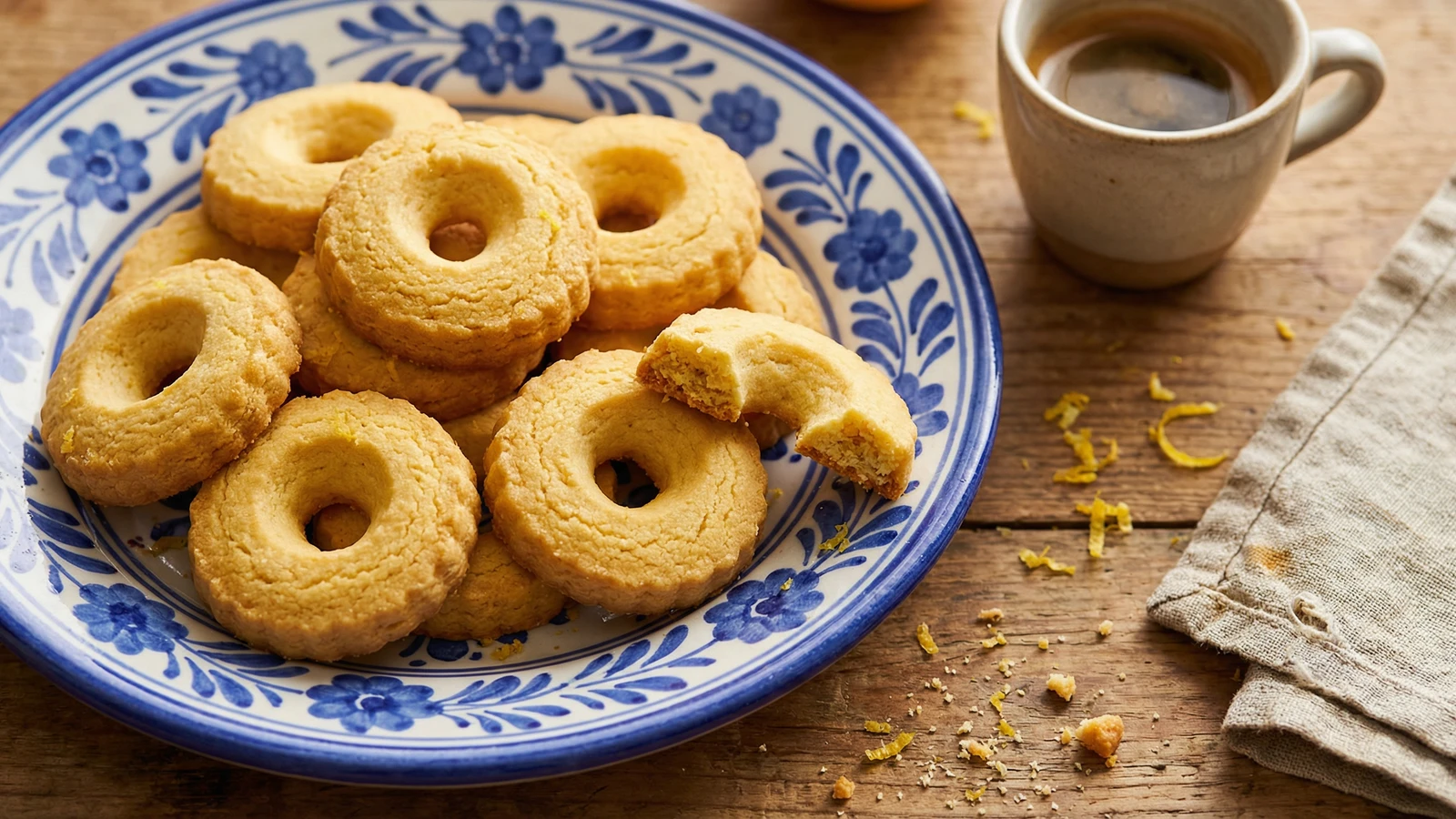
The butter cookies of the Azores, shaped into golden rings by island grandmothers who knew that the best things in life are simple: good butter, fresh eggs, and a cup of strong coffee.
These are the cookies that waited for me on the counter every time I visited my great-aunt in São Miguel. Biscoitos Açoreanos. Simple rings of butter and sugar, golden-edged and fragrant, piled on a blue-painted plate next to the coffee pot.
The Azores do butter like nowhere else in Portugal. Nine islands in the middle of the Atlantic, green as Ireland, where cows graze on volcanic pastures and the dairy is extraordinary. These cookies taste like that butter. They should. There's nowhere for it to hide.
Avó Leonor learned this recipe from her own aunt who had emigrated to the islands as a young woman. She brought it back to the mainland, and it became part of our family's repertoire. The technique is simple: mix, roll into ropes, shape into rings, bake until golden. No fancy equipment. No mysterious ingredients. Just good butter, eggs, sugar, flour, and a little lemon zest to brighten everything.
At Mesa da Avó, I serve these with strong coffee at the end of the meal. People always ask for the recipe. They can't believe something so delicious is so straightforward. That's the Azorean way. That's the Portuguese way. Ingredients matter more than technique. Simplicity isn't simple at all.
Biscoitos Açoreanos developed in the isolated kitchens of the Azores archipelago, where abundant dairy and limited ingredients inspired generations of butter-rich baking. The ring shape likely originated for practical reasons: cookies with holes baked more evenly in wood-fired ovens and could be strung on cord for storage. Azorean emigrants carried these recipes to New England and California, making biscoitos a touchstone of saudade for diaspora communities.
Quantity
225g
at room temperature
Quantity
200g
Quantity
3 large
Quantity
1 large
Quantity
1 teaspoon
Quantity
zest of 1
Quantity
1/4 teaspoon
Quantity
400g, plus more for shaping
| Ingredient | Quantity |
|---|---|
| unsalted butterat room temperature | 225g |
| granulated sugar | 200g |
| egg yolks | 3 large |
| whole egg | 1 large |
| pure vanilla extract | 1 teaspoon |
| lemon | zest of 1 |
| fine sea salt | 1/4 teaspoon |
| all-purpose flour | 400g, plus more for shaping |
In a large bowl, beat the softened butter and sugar together until light and fluffy, about 3 minutes with an electric mixer or 5 minutes by hand. The mixture should turn pale and increase in volume. This is where the tenderness comes from. Don't rush it.
Add the egg yolks one at a time, beating well after each addition. Then add the whole egg and beat until fully incorporated. Mix in the vanilla extract and lemon zest. The batter should be smooth and glossy, smelling of butter and citrus.
Add the salt to the flour and whisk briefly to combine. Add the flour mixture to the butter mixture in three additions, mixing on low speed or stirring by hand until just combined. The dough will be soft but workable. If it feels too sticky, refrigerate for 15 minutes. If it feels dry and crumbly, your butter was too cold. Let it warm slightly and try again.
Heat your oven to 180°C (350°F) and line two baking sheets with parchment. Lightly flour your work surface. Pinch off a walnut-sized piece of dough, about 20g. Roll it between your palms and then on the counter into a rope about 12cm long and 1cm thick. Bring the ends together to form a ring, pressing gently to seal. The ring should be about 5cm across. Place on the prepared sheet, spacing cookies 3cm apart. Repeat with remaining dough.
Bake one sheet at a time in the center of the oven for 12 to 15 minutes, until the edges turn golden and the tops are just set. The cookies will still feel slightly soft when you touch them. That's correct. They firm up as they cool. Remove from oven and let cool on the baking sheet for 5 minutes before transferring to a wire rack.
Let the cookies cool completely before storing or serving. They'll develop that characteristic texture: crisp on the outside, tender within. Serve with strong coffee for dipping, the way every Azorean grandmother intended. Biscoitos Açoreanos keep for up to two weeks in an airtight container, though they rarely last that long.
1 serving (about 25g)
Culinary guides, cultural storytelling, and the editorial depth that makes cooking meaningful.
Discover Culinary ExplorerChef Margarida
The sand cookies of Cascais, where three simple ingredients become something that melts on your tongue and sparkles like the beach at sunset. Butter, flour, sugar. That's all. That's enough.

Chef Margarida
The Christmas turnovers of Alentejo, where humble chickpeas become something miraculous inside a crispy shell. Proof that Portuguese grandmothers could turn anything into celebration.

Chef Margarida
The almond cookies of the Algarve, where Moorish orchards still bloom white against blue January skies. Three ingredients, centuries of tradition, the taste of southern Portugal in every tender bite.
Chef Margarida
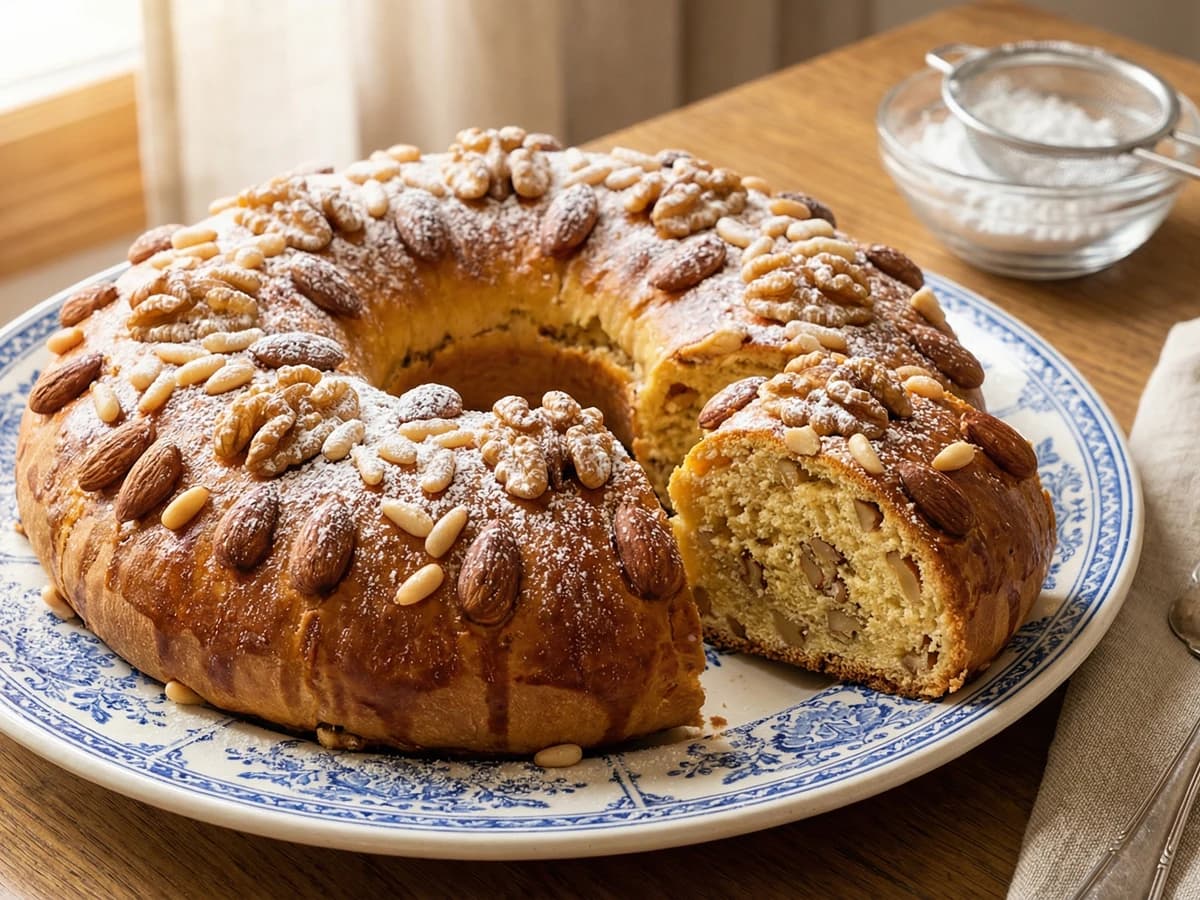
The queen to Bolo Rei's king, born for those who wanted their Christmas crown filled with toasted nuts instead of jewel-colored fruit. Same festive tradition, different treasure within.