
Chef Margarida
Areias de Cascais
The sand cookies of Cascais, where three simple ingredients become something that melts on your tongue and sparkles like the beach at sunset. Butter, flour, sugar. That's all. That's enough.
A cooking platform built around craft, culture, and the stories behind what we eat.
Created by
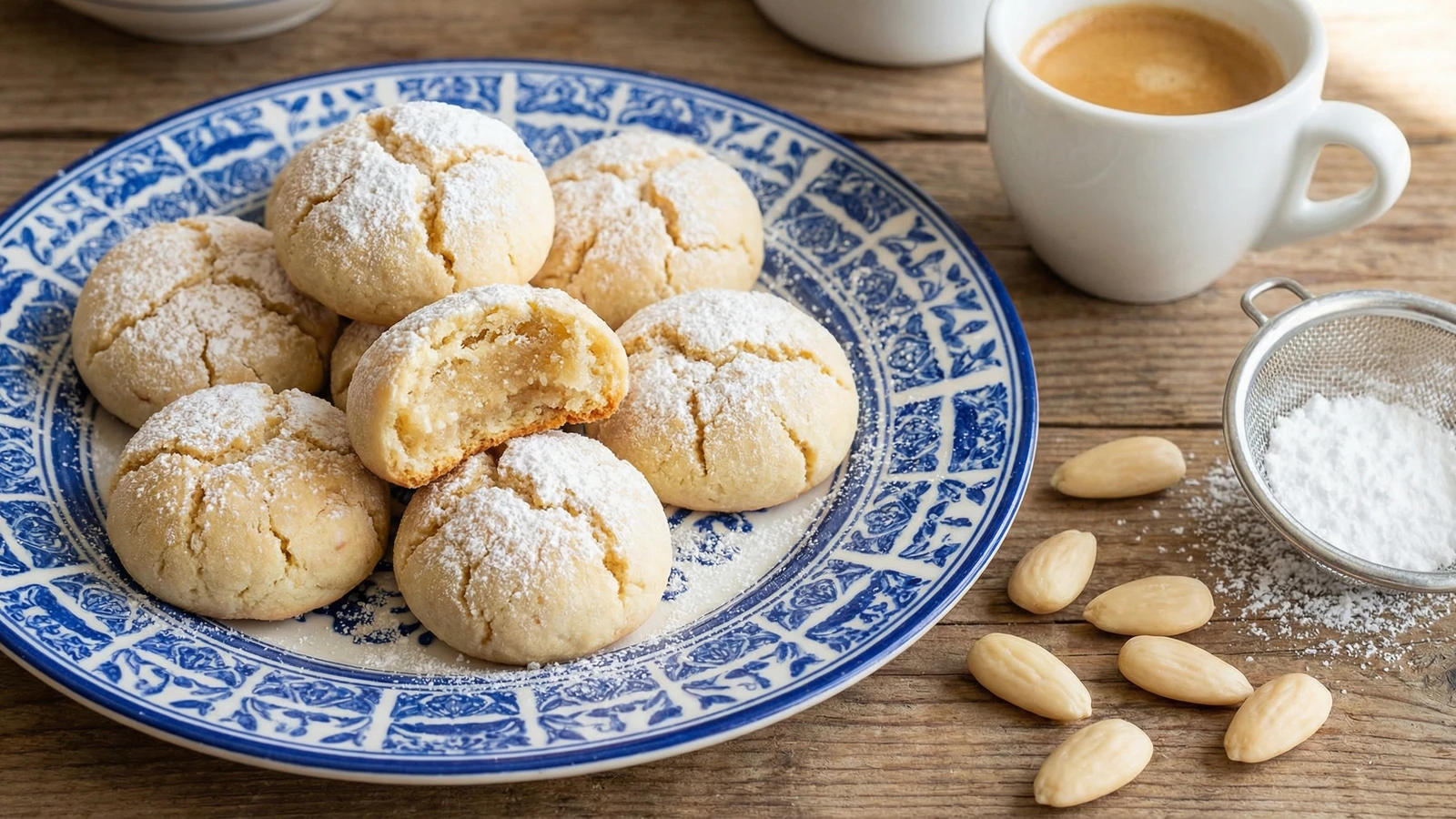
The almond cookies of the Algarve, where Moorish orchards still bloom white against blue January skies. Three ingredients, centuries of tradition, the taste of southern Portugal in every tender bite.
Every January, the Algarve turns white. Not snow. Almond blossoms. Thousands of trees blooming against the southern sky, a gift from the Moors who planted these orchards a thousand years ago. And from those trees came these cookies.
I learned to make bolinhos de amêndoa from Dona Celeste in Loulé, a grandmother I documented who's been making them for sixty years. Her hands moved without measuring, pinching dough, shaping each cookie with the speed of someone who's done this ten thousand times. "Três coisas," she told me. Three things. Almonds, sugar, eggs. That's it. That's all you need.
The Algarve's almond sweets are different from the rest of Portugal. Here, the Moorish influence lives on in every bite. The marzipan-like texture, the orange blossom water some families add, the way the cookies stay soft and tender rather than crisp. These aren't crunchy biscuits. They're somewhere between cookie and confection, melting on your tongue.
At Mesa da Avó, I serve these with coffee at the end of the meal. They're the kind of sweet that makes people close their eyes. The kind that tastes like somewhere, not just something. If your family came from the south, these might unlock a memory you didn't know you had.
Almond cultivation in the Algarve dates to the Moorish occupation of Portugal (8th to 13th centuries), when Arab farmers planted extensive orchards across the southern hills. The tradition of almond sweets, including bolinhos and the famous marzipan figures, descends directly from Moorish confectionery. After the Reconquista, Portuguese convents adopted and preserved these recipes, making them central to Algarvian identity.
Quantity
300g
finely ground (or use almond flour)
Quantity
200g
Quantity
3 large
Quantity
1 teaspoon
finely grated
Quantity
1/2 teaspoon
Quantity
1 tablespoon
Quantity
for dusting
| Ingredient | Quantity |
|---|---|
| blanched almondsfinely ground (or use almond flour) | 300g |
| granulated sugar | 200g |
| egg yolks | 3 large |
| lemon zestfinely grated | 1 teaspoon |
| ground cinnamon (canela) | 1/2 teaspoon |
| orange blossom water (optional) | 1 tablespoon |
| powdered sugar | for dusting |
If starting with whole blanched almonds, pulse them in a food processor until very fine, almost like flour. Stop before they turn to paste. You want powder, not almond butter. The texture of your cookies depends on this. If using store-bought almond flour, you can skip this step, but know that freshly ground almonds have more flavor and natural oils.
In a large bowl, combine the ground almonds, sugar, cinnamon, and lemon zest. Mix well with your hands. Add the egg yolks one at a time, working them into the almond mixture. Add the orange blossom water if using. Knead gently until you have a smooth, pliable dough that holds together when pressed. It should feel like soft marzipan. If it's too dry, add another yolk. If too wet, add more ground almonds.
Preheat your oven to 170°C (340°F). Line a baking sheet with parchment paper. Pinch off pieces of dough about the size of a walnut. Roll each into a ball, then flatten slightly into a thick disc, about 3cm across. The traditional shape is a simple round, but some families make crescents, diamonds, or press a pattern with a fork. Place them on the prepared sheet, leaving a little space between each.
Bake for 12 to 15 minutes, until the cookies are pale golden on top and slightly darker on the bottom. They should still feel soft when you touch them. Don't wait for them to feel firm. They're not supposed to be crisp. They'll set as they cool but stay tender inside.
Let the cookies cool on the baking sheet for 5 minutes, then transfer to a wire rack. Once completely cool, dust generously with powdered sugar through a fine sieve. The white sugar against the golden cookies is part of the tradition. Store in an airtight container, where they'll keep for a week and actually improve after a day or two.
1 serving (about 22g)
Culinary guides, cultural storytelling, and the editorial depth that makes cooking meaningful.
Discover Culinary ExplorerChef Margarida
The sand cookies of Cascais, where three simple ingredients become something that melts on your tongue and sparkles like the beach at sunset. Butter, flour, sugar. That's all. That's enough.

Chef Margarida
The Christmas turnovers of Alentejo, where humble chickpeas become something miraculous inside a crispy shell. Proof that Portuguese grandmothers could turn anything into celebration.

Chef Margarida
The butter cookies of the Azores, shaped into golden rings by island grandmothers who knew that the best things in life are simple: good butter, fresh eggs, and a cup of strong coffee.
Chef Margarida
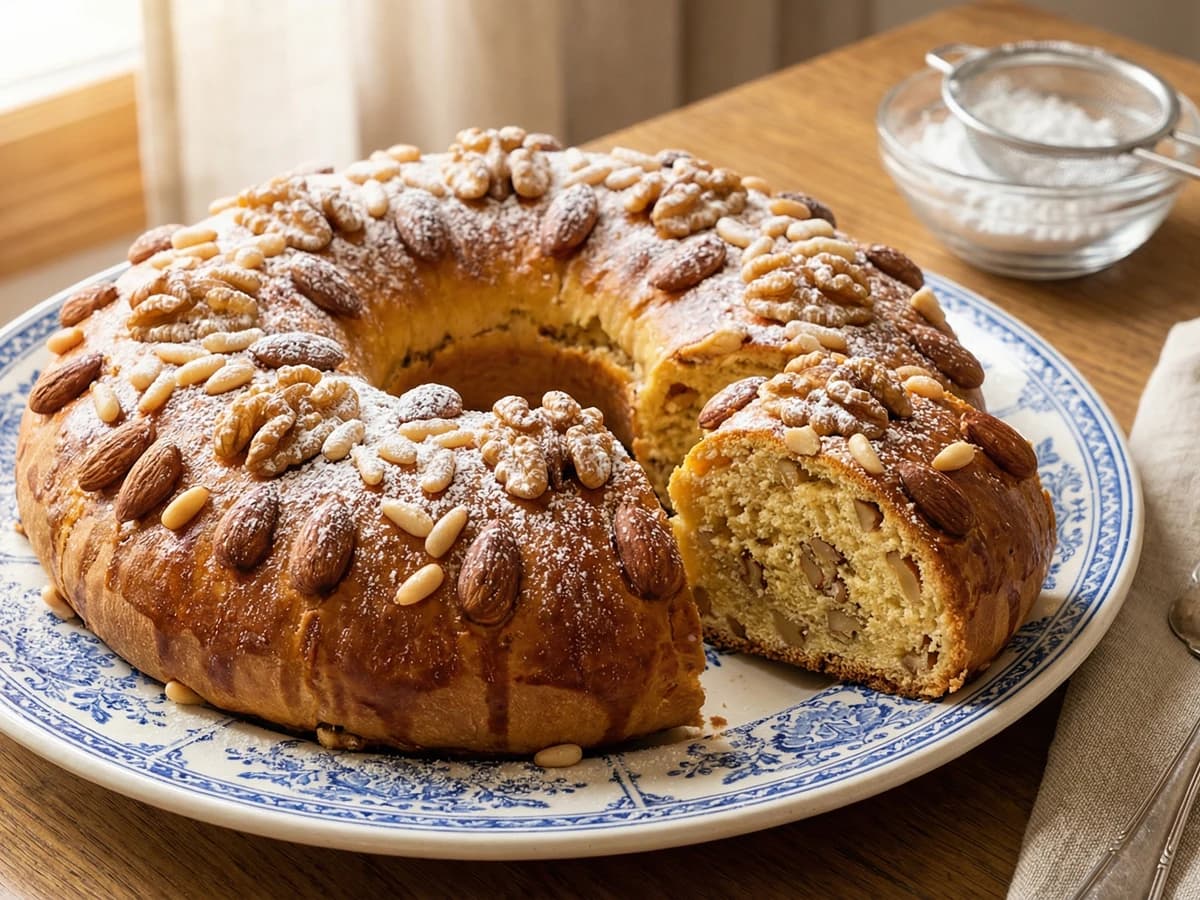
The queen to Bolo Rei's king, born for those who wanted their Christmas crown filled with toasted nuts instead of jewel-colored fruit. Same festive tradition, different treasure within.