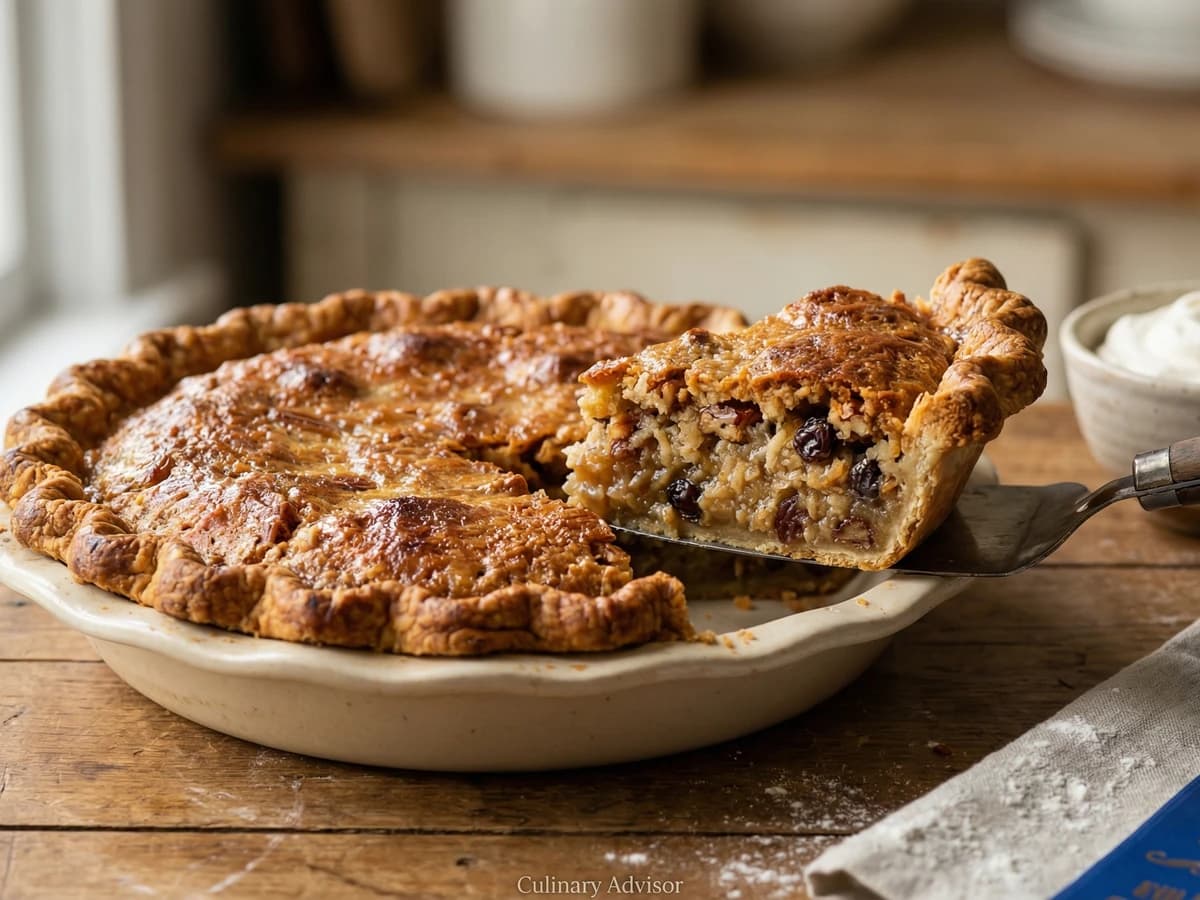
Peak-season peaches, barely sweetened and spiced with a whisper of nutmeg, beneath a buttery woven crust that shatters at the edge and melts where the juice caramelizes through.
Pastries & Cookies
American
Fourth of July
Potluck
Outdoor Dining
45 min
Active Time
1 hr cook•1 hr 45 min total
Yield8 servings
Start at the farm stand. Hold a peach in your hand. It should feel heavy and smell like summer itself, that honeyed perfume that reaches you before you even bite. If you cannot smell it, put it back. Wait another week. The pie will still be here when the fruit is ready.
I learned to make pie from women who did not measure much. A handful of flour, a piece of butter the size of an egg, water until it felt right. The technique came through their hands, not from books. What they understood was this: the filling is everything. A mediocre crust with transcendent fruit will still be a good pie. Spectacular pastry around flavorless peaches is a waste of butter.
This recipe asks you to weave a lattice, which looks more difficult than it is. The gaps between the strips serve a purpose beyond beauty. They let steam escape and allow the bubbling juice to caramelize on the surface, creating those sticky, jammy edges that people fight over. Every meal is a meaningful choice. When you choose peaches at their peak and take the time to weave a proper crust, you are saying that this moment matters. That the people eating this pie matter. That the farmer who grew these peaches matters.
Let things taste of what they are. A peach pie should taste like summer concentrated, the fruit's natural sweetness deepened by heat, brightened by lemon, made complex by just enough spice to remind you that someone cared.
The technique, the tradition, and the story behind every dish.
cold unsalted butter (for crust)cut into 1/2-inch cubes
1 cup (2 sticks/226g)
ice water
6-8 tablespoons
ripe freestone peaches
3 pounds (about 8-9 medium)
granulated sugar (for filling)
2/3 cup (135g)
cornstarch
3 tablespoons
fresh lemon juice
1 tablespoon
fine sea salt (for filling)
1/4 teaspoon
nutmegfreshly grated
1/4 teaspoon
pure almond extract
1/2 teaspoon
cold unsalted butter (for filling)cut into small pieces
2 tablespoons
large egg
1
heavy cream
1 tablespoon
turbinado sugar
1 tablespoon
Equipment Needed
•9-inch pie plate (glass or ceramic)
•Rolling pin
•Pastry brush
•Wire cooling rack
•Rimmed baking sheet (for catching drips)
Instructions
1
Make the dough
Whisk together the flour, sugar, and salt in a large bowl. Add the cold butter cubes and work them into the flour using your fingertips or a pastry cutter. You want irregular pieces ranging from pea-sized to flat shaggy bits. This unevenness creates flaky layers. Sprinkle six tablespoons of ice water over the mixture and stir with a fork until the dough just begins to clump. Add more water one tablespoon at a time if needed. The dough should hold together when squeezed but still look rough.
Cold butter is everything here. If your kitchen is warm, freeze the cubes for fifteen minutes before starting.
2
Rest the dough
Divide the dough into two portions, one slightly larger than the other. The larger piece will be your bottom crust. Flatten each into a disk about one inch thick, wrap tightly in plastic, and refrigerate for at least one hour. This rest hydrates the flour evenly and relaxes the gluten so the dough rolls without fighting you.
3
Prepare the peaches
Bring a large pot of water to a boil. Cut a shallow X in the bottom of each peach. Lower them into the boiling water for thirty seconds to one minute, then transfer immediately to a bowl of ice water. The skins will slip off easily. Slice the peaches into wedges about half an inch thick, discarding the pits. You should have about eight cups of fruit.
If your peaches are truly ripe, you can often peel them with just a paring knife. The blanching is insurance for firmer fruit.
4
Season the filling
Toss the peach slices with sugar, cornstarch, lemon juice, salt, nutmeg, and almond extract in a large bowl. Let this mixture sit for fifteen minutes while you roll the dough. The peaches will release some juice, which the cornstarch will thicken during baking. Taste a slice. If your peaches are intensely sweet, you may want slightly less sugar. If they are a touch tart, use the full amount. Let the fruit guide you.
5
Roll the bottom crust
On a lightly floured surface, roll the larger dough disk into a circle about thirteen inches across and an eighth of an inch thick. Roll from the center outward, rotating the dough a quarter turn after each pass to keep it round and prevent sticking. Transfer to a nine-inch pie plate by rolling the dough loosely around your rolling pin and unrolling it over the dish. Gently press into the corners without stretching. Trim the overhang to one inch and refrigerate while you prepare the lattice.
6
Cut the lattice strips
Roll the smaller dough disk into a rectangle about twelve by ten inches. Using a sharp knife or pastry wheel, cut strips about three quarters of an inch wide. You should get twelve to fourteen strips. Transfer them to a parchment-lined baking sheet and refrigerate for ten minutes. Cold strips are easier to weave.
7
Fill the pie
Remove the lined pie plate from the refrigerator. Pour the peach filling into the crust, mounding it slightly in the center. The fruit will settle as it bakes. Dot the top with the small pieces of cold butter. These will melt into the filling and add richness.
8
Weave the lattice
Lay half of the strips across the filling, spacing them about an inch apart. Fold back every other strip halfway. Place one perpendicular strip across the center. Unfold the folded strips over it. Now fold back the strips that were flat and lay another perpendicular strip. Continue this pattern, alternating which strips you fold, until you have woven the entire top. Trim the strips to match the overhang of the bottom crust. Fold the bottom edge up over the strip ends and crimp with your fingers or a fork to seal.
A tight weave is beautiful, but leave small gaps. The juice needs somewhere to bubble through and caramelize.
9
Apply the egg wash
Whisk the egg with the cream until smooth. Brush this wash over the entire lattice and crimped edge using a pastry brush. The wash creates golden color and a slight sheen. Sprinkle the turbinado sugar over everything. It will sparkle and crunch when the pie is done.
10
Bake the pie
Position a rack in the lower third of your oven and preheat to 425°F. Place a rimmed baking sheet on the rack below to catch drips. Set the pie on the lower rack and bake for twenty minutes. Reduce the temperature to 375°F and continue baking for forty to fifty minutes more. The pie is done when the crust is deeply golden, the filling bubbles thickly through the lattice openings, and you can see the juices have thickened. If the edges brown too quickly, tent them loosely with foil.
Do not trust timers alone. Look for thick, slow bubbles. Thin, fast bubbles mean the filling has not set.
11
Cool completely
Transfer the pie to a wire rack and let it cool for at least four hours, preferably six. This is the hardest part. The filling needs time to set. Cut too soon and you will have peach soup in a crust, delicious but heartbreaking. The waiting is worth it. Serve at room temperature or barely warm with a scoop of vanilla ice cream if you like.
Chef Tips
•Freestone peaches are essential for pie. The flesh separates cleanly from the pit. Clingstone varieties will frustrate you and leave ragged slices.
•The best peaches for pie come from a farmer who picks them ripe, not from a grocery store where they were harvested hard for shipping. Ask at your market what was picked this morning.
•If you find yourself making this pie in spring or fall when peaches are a memory, use frozen peaches. They were processed at peak ripeness and are more honest than the pale imposters shipped from another hemisphere.
•Weave the lattice directly over the filling. Trying to weave it on parchment and transfer never works as well as the videos suggest.
•A pie bird or a few dried beans under the center of the top crust can help vent steam, but an open lattice does this naturally.
Advance Preparation
•Pie dough can be made up to three days ahead and refrigerated, or frozen for three months. Thaw overnight in the refrigerator before rolling.
•The assembled unbaked pie can be frozen for up to two months. Bake directly from frozen, adding fifteen to twenty minutes to the total baking time.
•Baked pie keeps at room temperature, loosely covered, for two days. After that, refrigerate and warm slices gently in a low oven before serving.
Frequently Asked Questions
Nutrition Information
1 serving (about 230g)
Calories
535 calories
Total Fat
28 g
Saturated Fat
17 g
Trans Fat
1 g
Unsaturated Fat
9 g
Cholesterol
95 mg
Sodium
360 mg
Total Carbohydrates
68 g
Dietary Fiber
3 g
Sugars
32 g
Protein
6 g
Where cooking meets culture.
Culinary guides, cultural storytelling, and the editorial depth that makes cooking meaningful.