
Chef Remy
Brown Butter Pecan Shortbread
Sandy, crumbly shortbread rounds perfumed with deeply nutty brown butter and studded with toasted Louisiana pecans, finished with a whisper of flaky salt that makes every bite sing.
A cooking platform built around craft, culture, and the stories behind what we eat.
Created by
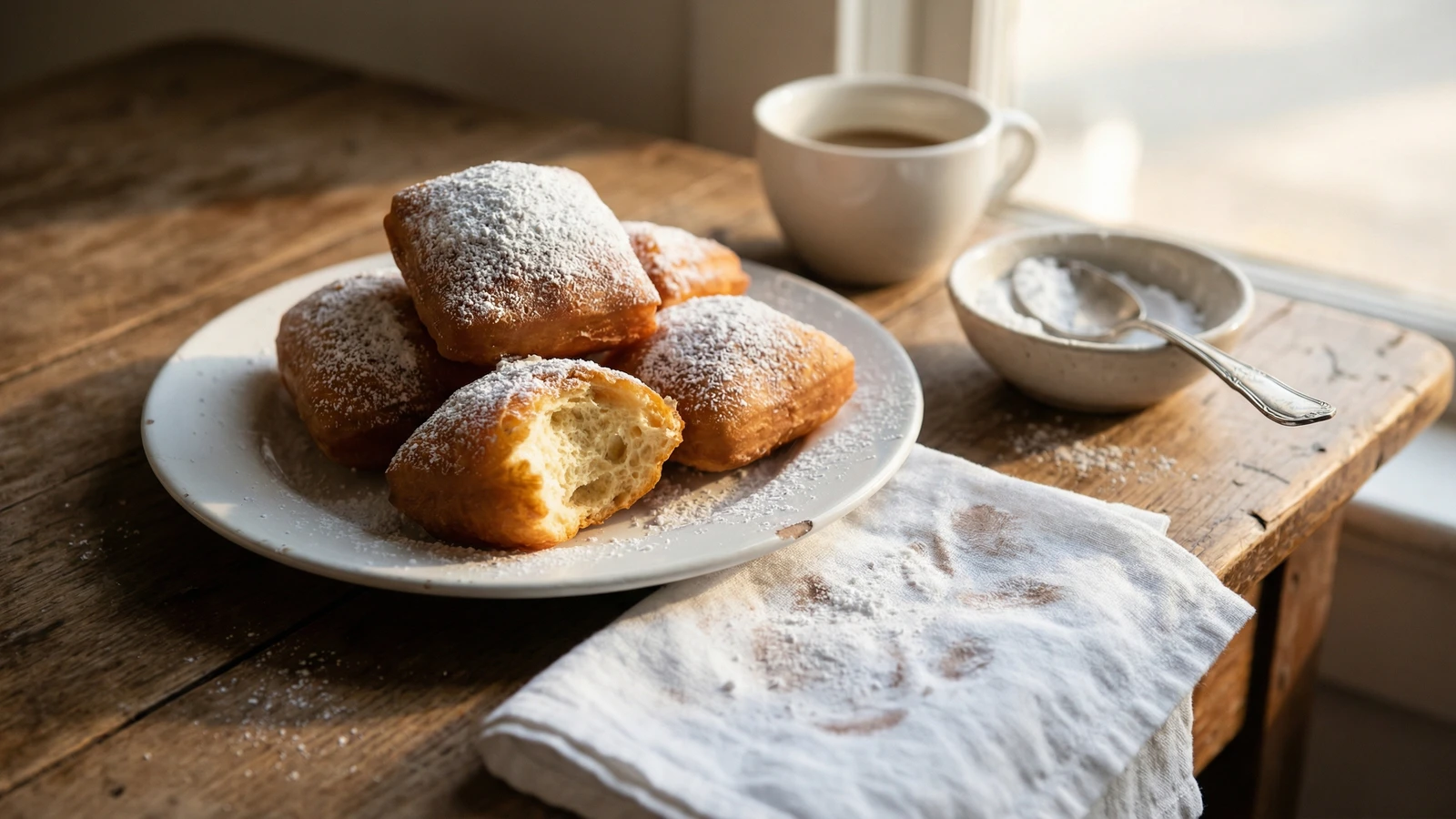
Pillowy squares of yeasted dough, fried until golden and hollow inside, then buried beneath a mountain of powdered sugar. Simple enough for a Sunday morning, celebratory enough for any occasion worth marking.
Start with the butter. Good butter from a dairy you trust, melted and cooled just enough to not shock the yeast. Add an egg from hens that live honest lives, fresh milk still cold from the refrigerator warmed to the temperature of a bath. These ingredients are simple, but their quality determines everything.
Beignets are an act of transformation. Flour, milk, yeast, and sugar become something light as air, something that puffs and hollows in hot oil until the inside is all soft, webbed crumb and the outside is golden and barely crisp. The technique is not complicated. The dough rises. You cut squares. You fry them. You bury them in powdered sugar until they disappear.
I learned to make these in New Orleans before I understood what they meant to that city. Every morning, people line up at Café du Monde not just for coffee and pastry but for ritual. The beignets arrive three to a plate, under a snowdrift of sugar that coats your fingers and your shirt and somehow your forehead. You eat them fast, while they are still warm, while the sugar still clings. Every meal is a meaningful choice, and choosing beignets is choosing joy.
Quantity
3/4 cup
warmed to 110°F
Quantity
1 packet (2 1/4 teaspoons)
Quantity
1/4 cup
Quantity
1
at room temperature
Quantity
3 tablespoons
melted and cooled
Quantity
1/2 teaspoon
Quantity
1/2 teaspoon
Quantity
3 cups (375g), plus more for rolling
Quantity
about 2 quarts
for frying
Quantity
2 cups
for dusting
| Ingredient | Quantity |
|---|---|
| whole milkwarmed to 110°F | 3/4 cup |
| active dry yeast | 1 packet (2 1/4 teaspoons) |
| granulated sugar | 1/4 cup |
| large eggat room temperature | 1 |
| unsalted buttermelted and cooled | 3 tablespoons |
| fine sea salt | 1/2 teaspoon |
| pure vanilla extract | 1/2 teaspoon |
| all-purpose flour | 3 cups (375g), plus more for rolling |
| vegetable oil or peanut oilfor frying | about 2 quarts |
| powdered sugarfor dusting | 2 cups |
Pour the warm milk into a large mixing bowl. It should feel like a warm bath on your wrist, not hot. Sprinkle the yeast and a pinch of the sugar over the surface. Let it sit undisturbed for five to ten minutes. You are waiting for foam, for life. If nothing happens, your yeast is tired and you need to start again with a fresh packet.
Add the remaining sugar, the egg, melted butter, salt, and vanilla to the foamy yeast mixture. Whisk until smooth. Add the flour one cup at a time, stirring with a wooden spoon until a shaggy, sticky dough forms. It will look rough. That is fine.
Turn the dough onto a lightly floured surface. Knead for three to four minutes, adding flour only when the dough sticks to your hands so badly you cannot work it. The finished dough should be soft and slightly tacky, smooth as a baby's cheek. Do not overwork it or add too much flour. Tender beignets come from soft dough.
Place the dough in a lightly oiled bowl, turning once to coat. Cover with a clean kitchen towel or plastic wrap and set in a warm, draft-free spot. Let it rise until doubled in size, about one and a half to two hours. The dough should feel puffy and alive when you press a finger into it.
Punch down the risen dough gently. Turn it onto a floured surface and roll to about one-quarter inch thickness. The dough will want to spring back. Let it rest a minute, then continue. Cut into roughly three-inch squares using a sharp knife or pizza cutter. Imperfect shapes are honest shapes. Do not re-roll the scraps more than once or the beignets will toughen.
Pour oil into a large, heavy pot or Dutch oven to a depth of three inches. Heat over medium-high until the oil reaches 360°F to 370°F. Use a thermometer. Guessing leads to greasy beignets or, worse, burned ones. Set a wire rack over a baking sheet nearby.
Carefully lower three or four squares into the hot oil. Do not crowd the pot. They will sink, then rise and puff dramatically within seconds. Fry until deep golden on the bottom, about one to two minutes, then flip with a slotted spoon or spider. Fry the second side until equally golden. The total frying time is two to three minutes per batch. Transfer to the wire rack.
While the beignets are still warm, pile them onto a plate and dust with an absurd amount of powdered sugar. Do not be shy. The sugar should drift over the edges like snow. At Café du Monde, they use so much sugar you cannot see the pastry beneath. This is correct. Serve immediately. Beignets wait for no one.
1 serving (about 40g)
Culinary guides, cultural storytelling, and the editorial depth that makes cooking meaningful.
Discover Culinary ExplorerChef Remy
Sandy, crumbly shortbread rounds perfumed with deeply nutty brown butter and studded with toasted Louisiana pecans, finished with a whisper of flaky salt that makes every bite sing.

Chef Remy
Tender, fluffy buttermilk biscuits with golden tops and soft centers, split warm from the oven and flooded with dark, earthy Louisiana cane syrup, the way four generations of bayou families have started their mornings.

Chef Remy
Soft, golden yeast rolls cradling spicy Cajun boudin in every bite, where Czech-Texan baking tradition meets Louisiana sausage-making, proving that good cooks have always borrowed from their neighbors.

Chef Remy
Flaky buttermilk pastry wrapped around tender spiced apples kissed with cane syrup and a whisper of cayenne, fried until golden and tumbled in cinnamon sugar while still warm from the oil.