
Chef Takumi
Anpan (あんぱん)
Anpan is not a pastry trick. It is soft bread, sweet azuki, and a careful seal, so the bean paste stays centered while the bun rises round and tender.
A cooking platform built around craft, culture, and the stories behind what we eat.
Created by
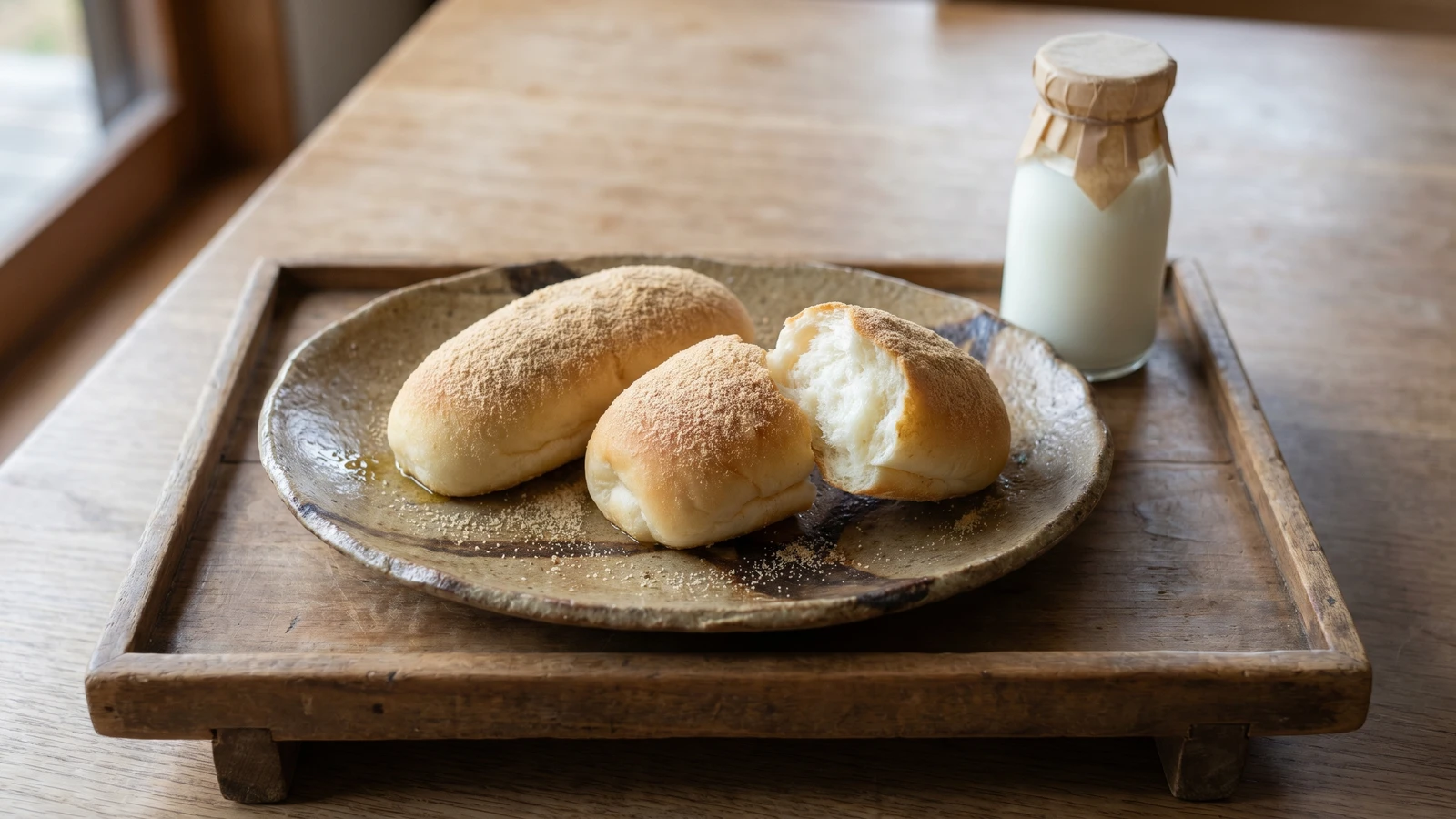
A soft koppepan, a small pot of clean oil, and sugar waiting in a tray. Fry only long enough to wake the crust, then coat it while warmth still catches every grain.
Age-pan is bread with its school uniform still on. That is its virtue. A plain koppepan, soft and a little lean, goes into clean oil, then into sugar while the crust is still warm. No custard, no glaze, no fashionable seriousness. Honmono here is not precious. It is the right roll, handled at the right moment.
People make fried bread sound like a doughnut project. It isn't. You're not making dough here; you're treating a baked roll for less than a minute. The oil must be hot enough to set a dry, crisp edge before it soaks in, and the sugar must be ready before the bread comes out. That is the first secret: fry briefly, drain for a breath, coat while the surface is still warm enough to hold.
Kinako gives the gentler flavor: roasted soybean flour, nutty and plain, softened by sugar and a pinch of salt. Cocoa sugar belongs to many school-lunch menus too, darker and a little bitter, which is why it needs enough sugar to stay friendly. Age-pan sits outside the formal meal, of course, but it still obeys the old lesson. Leave it simple. Nothing hidden.
Age-pan belongs to kyūshoku, the Japanese school-lunch system rebuilt after World War II, when wheat bread and powdered milk entered classrooms through relief supplies and later domestic programs. Food histories commonly trace the fried version to 1952 in Tokyo's Ōta ward, where a cook fried and sugared koppepan so rolls that had hardened by lunchtime would still be easy for children to eat. The name is plain: age means fried, and pan is the old Japanese word for bread, borrowed from Portuguese pão in the sixteenth century.
Quantity
6 (about 60g each)
preferably day-old
Quantity
about 3 to 4 cups
enough to fill a small pot 2 inches deep
Quantity
1/2 cup
Quantity
1/4 cup
for kinako sugar
Quantity
2 tablespoons
for cocoa sugar
Quantity
1/4 teaspoon for kinako sugar, or a small pinch for cocoa sugar
| Ingredient | Quantity |
|---|---|
| small koppepan rollspreferably day-old | 6 (about 60g each) |
| neutral frying oilenough to fill a small pot 2 inches deep | about 3 to 4 cups |
| granulated sugar | 1/2 cup |
| kinako (roasted soybean flour) (optional)for kinako sugar | 1/4 cup |
| unsweetened cocoa powder (optional)for cocoa sugar | 2 tablespoons |
| fine sea salt | 1/4 teaspoon for kinako sugar, or a small pinch for cocoa sugar |
Choose one coating before the oil is hot. For kinako sugar, stir the sugar, kinako, and 1/4 teaspoon salt in a shallow tray. For cocoa sugar, stir the sugar, cocoa, and a small pinch of salt, sifting the cocoa if it is lumpy. The tray must be ready first because warm fried bread waits for no one, a dramatic temperament for such a plain fellow.
Use whole, unsplit koppepan. Brush off loose crumbs and leave very fresh rolls uncovered for 20 to 30 minutes if they feel damp on the surface. A slightly dry roll fries cleaner because the crust sets quickly; a wet, soft roll drinks oil and turns heavy.
Pour the oil into a deep heavy pot and heat it to 170°C, about 340°F. If you do not have a thermometer, drop in a tiny crumb of bread; it should sink for a moment, rise with small lively bubbles, and color slowly. Oil that is too cool soaks into the bread, while oil that is too hot darkens the crust before the inside warms.
Lower in one or two rolls with saibashi, long cooking chopsticks, or tongs. Fry 25 to 35 seconds on the first side, turn, and fry another 20 to 30 seconds, just until the crust is evenly golden and slightly crisp. This is already baked bread, so the aim is not cooking the center. You are giving the outside enough oil and heat to catch the sugar.
Lift the bread to a rack and let it drain for 10 to 15 seconds, only long enough for the surface oil to stop dripping. Roll it in the coating while it is still warm. Too soon, and the sugar clumps in oil; too late, and the coating falls away. The right moment is brief and perfectly ordinary.
Let the coated rolls rest for 3 to 5 minutes before eating so the surface settles and the crumb softens again. Serve warm or at room temperature the same day. Age-pan should be faintly oily, soft in the middle, crisp at the edge, and dusty enough to leave sugar on your fingers.
1 serving (about 85g)
Culinary guides, cultural storytelling, and the editorial depth that makes cooking meaningful.
Discover Culinary ExplorerChef Takumi
Anpan is not a pastry trick. It is soft bread, sweet azuki, and a careful seal, so the bean paste stays centered while the bun rises round and tender.
Chef Takumi
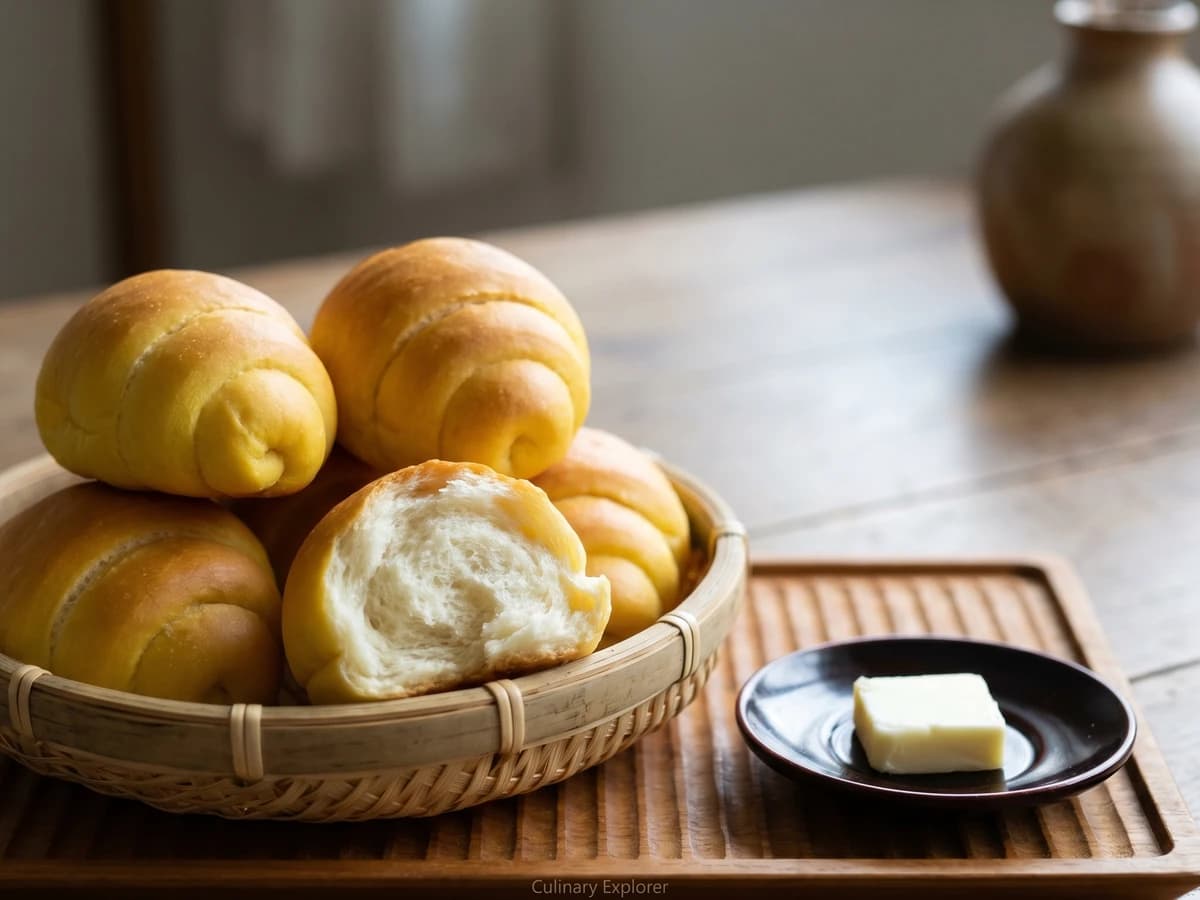
A panya staple made reachable: soft milk dough rolled wide-to-narrow into its little horn shape, proofed until light, then brushed with egg for that quiet gold crust.

Chef Takumi
Chigiri-pan is bread made small on purpose: soft enriched dough portioned into neat balls, crowded in a square tin, and baked until every tender roll tears away with its own golden edge.

Chef Takumi
Choco cornet looks clever, which is how bakery bread frightens sensible people. Wrap a soft rope around a cone, bake it golden, then pipe in chocolate cream only after the shell is cool.