
Chef Juliana
Barreado Paranaense
You think the sealed pot is the hard part. It isn't. The hard part is believing dinner can be this good with beef, onions, patience, and no packet pretending to help.
A cooking platform built around craft, culture, and the stories behind what we eat.
Created by
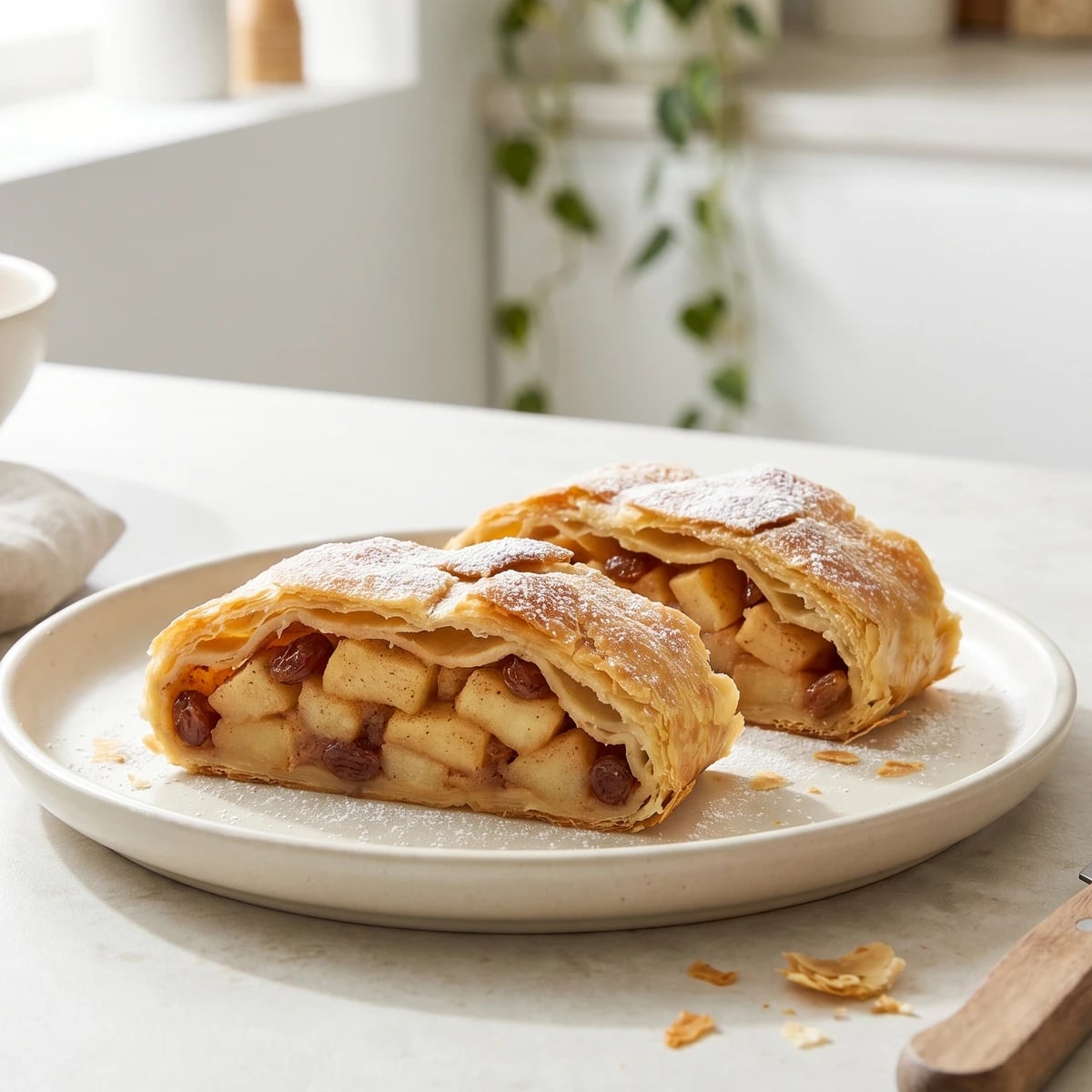
You think paper-thin dough is not for you. It is. Flour, water, oil, rest, and patience turn into a crisp apple strudel you can make in a real home kitchen.
You hear "stretch the dough until you can read through it" and your head says, isso não é pra mim. I know that voice. Mine said the same thing the first time I tried pastry as a grown woman, right before I tore it, patched it, and wrote the whole mess in my caderno so I wouldn't forget what actually worked.
This isn't the pê-efe itself, rice and beans and meat or egg and something green, the plate that quietly holds Brazil together. But a house that cooks real food also makes dessert sometimes. Celebration doesn't need a powdered box pretending to be pastry. It needs a dough you can understand, apples that smell like apples, and a method that repeats.
The secret is not talent. Cozinhar não é dom, é um aprendizado. The dough rests so the flour relaxes and stops fighting you. You stretch from the middle out, with the backs of your hands, because fingers poke holes. You scatter breadcrumbs so the apple juice has somewhere to go instead of making the bottom soggy. Step by step, a gente desgourmetiza the thing.
By the end, you'll have a crisp roll of tender apples, cinnamon, raisins, and proof that the scary part was mostly bad teaching. Anota aí: thin dough is learnable.
Apfelstrudel is most closely tied to Austrian and Central European baking, with documented strudel recipes appearing in Vienna by the late seventeenth century. In Brazil, apple strudel traveled with German, Austrian, and other Central European immigrant communities, especially in the South, where cities with strong immigrant baking traditions still serve it in cafés, homes, and holiday tables. It isn't an old national everyday dish like rice and beans, but it is part of the Brazilian table because Brazil is also made of the people who brought their cadernos, adapted to local apples, and kept baking.
Quantity
1 1/2 cups, plus more for dusting
Quantity
1/4 teaspoon
Quantity
1/2 cup
Quantity
2 tablespoons, plus more for brushing
Quantity
1 teaspoon
Quantity
4 medium
peeled, cored, and thinly sliced
Quantity
1/3 cup, plus 1 tablespoon for finishing
Quantity
1 teaspoon
Quantity
1 tablespoon
Quantity
1/2 cup
Quantity
1/2 cup
Quantity
3 tablespoons
melted
Quantity
as needed
| Ingredient | Quantity |
|---|---|
| all-purpose flour | 1 1/2 cups, plus more for dusting |
| salt | 1/4 teaspoon |
| warm water | 1/2 cup |
| neutral oil | 2 tablespoons, plus more for brushing |
| white vinegar or lemon juice | 1 teaspoon |
| firm applespeeled, cored, and thinly sliced | 4 medium |
| sugar | 1/3 cup, plus 1 tablespoon for finishing |
| ground cinnamon | 1 teaspoon |
| lemon juice | 1 tablespoon |
| raisins | 1/2 cup |
| fresh breadcrumbs | 1/2 cup |
| unsalted buttermelted | 3 tablespoons |
| powdered sugar (optional) | as needed |
Mix the flour and salt in a bowl. Add the warm water, oil, and vinegar, then stir until a shaggy dough forms. Knead on the counter for 8 to 10 minutes, until it turns smooth, elastic, and no longer tears the second you pull it. This kneading builds the stretch you need later, so don't quit while it still feels rough.
Shape the dough into a ball, rub it with a little oil, cover it with an upside-down bowl, and let it rest for 30 minutes. The dough should feel soft and calm when you press it. Resting relaxes the flour, which is the difference between dough that stretches and dough that snaps back like it has opinions.
Toss the sliced apples with sugar, cinnamon, lemon juice, and raisins. The apples should look glossy and lightly coated, not swimming. Lemon keeps the apples bright and wakes up the sweetness, while cinnamon gives the filling warmth without turning it into perfume.
Warm 1 tablespoon of the melted butter in a small pan and add the breadcrumbs. Stir over medium heat until they turn golden and smell nutty, about 3 minutes. These crumbs are not decoration. They catch the apple juices inside the roll so the pastry bakes crisp instead of soggy.
Lay a clean kitchen towel on the counter and dust it lightly with flour. Roll the dough into a rectangle, then lift it and stretch gently from the middle out with the backs of your hands. Stop when it is thin enough to see the towel pattern through it, trimming any thick edges. Use the backs of your hands because fingertips poke holes, and holes are annoying, not fatal.
Brush the stretched dough with melted butter, scatter the toasted crumbs over the lower two-thirds, then spoon the apple filling over the crumbs, leaving a 5 cm border. Fold the short sides in, then use the towel to roll the strudel away from you, snug but not tight. Too tight and the filling has no room to settle; too loose and the slices fall apart.
Move the roll seam-side down onto a lined baking tray. Brush with the remaining melted butter and sprinkle with 1 tablespoon sugar. Bake at 190°C (375°F) for 35 to 40 minutes, until the pastry is golden, crisp at the edges, and the apples feel tender when you press the top gently with a spoon.
Let the strudel rest for 15 minutes before slicing. It should still feel crisp outside, but the filling needs a minute to settle or it will run out like it paid rent elsewhere. Dust with powdered sugar if you like, slice with a serrated knife, and serve warm or at room temperature.
1 serving (about 130g)
Culinary guides, cultural storytelling, and the editorial depth that makes cooking meaningful.
Discover Culinary Explorer
Chef Juliana
You think the sealed pot is the hard part. It isn't. The hard part is believing dinner can be this good with beef, onions, patience, and no packet pretending to help.

Chef Juliana
You think a Polish hunter's stew is not for your kitchen. Wrong. Brown meat properly, build a real refogado, simmer cabbage low, and tomorrow's lunch is already better.

Chef Juliana
You don't need a bakery arm or a family secret. Mix rye with wheat, let time do its quiet work, and bake a dark, close-crumb loaf that feeds the week.

Chef Juliana
You think tiny handmade pasta is not for you. Wrong. Make a good broth, fold one little capeletti at a time, and you have Serra Gaucha comfort in a bowl.