
Chef Juliana
Amalá de Xangô
You don't need mystery for this pot. You need okra, dendê, onion, dried shrimp, and the patience to stir until the quiabo gives up its own caldo.
A cooking platform built around craft, culture, and the stories behind what we eat.

Created by
You think a Polish hunter's stew is not for your kitchen. Wrong. Brown meat properly, build a real refogado, simmer cabbage low, and tomorrow's lunch is already better.
You see a name like bigos and your brain whispers, isso não é pra mim. Foreign name, long simmer, sauerkraut looking at you from the shelf like it has secrets. I know that voice. I had it too, before my caderno, before I learned that cooking isn't a gift, it's something you learn with a pot, a spoon, and the courage to ruin an onion or two.
This isn't my Polish grandmother's recipe, because I don't have one, and I won't fake inheritance like a person selling perfume. The cooks who carry that tradition know its arguments better than I do. What I can do is teach you a Brazilian home-kitchen version that respects the structure: cabbage, sour cabbage, pork, smoke, mushrooms, slow heat. Then I put it where I know food belongs, beside arroz soltinho, feijão from scratch, and something green. The pê-efe is generous like that. It knows how to receive a good stew.
The method is plain. Brown the meat in space, because crowded meat steams grey and sad. Build an honest refogado, because onion and garlic in good fat do more for dinner than any powder in a packet. Let the cabbage cook down until it stops being separate leaves and becomes sauce, body, comfort. No mystery. Just time doing its job.
Make the full pot. Bigos is comida de verdade for batch cooking: better the next day, steady in the fridge, forgiving in the freezer. Cook once, eat twice, maybe three times, and don't let anyone tell you that dinner has to come from a box because Tuesday is tired.
Bigos is a Polish and Lithuanian cabbage-and-meat stew with written references going back to the seventeenth century, when versions appeared in noble hunting culture and later settled into home cooking. Older bigos was often sharper and meat-heavy, while the modern version usually mixes sauerkraut, fresh cabbage, pork, sausage, mushrooms, and sometimes prunes. I won't pretend this is my inherited kitchen, but the method travels well: preserve what the dish is, then serve it honestly on the Brazilian everyday plate.
Quantity
2 tablespoons
Quantity
500g
cut into 2 cm cubes
Quantity
300g
sliced into half-moons
Quantity
1 large
finely chopped
Quantity
4 cloves
minced
Quantity
2 tablespoons
Quantity
2 cups
drained but not rinsed
Quantity
4 cups
thinly sliced
Quantity
1 cup
soaked in 1 cup warm water for 20 minutes, soaking liquid saved
Quantity
1 cup, plus more as needed
Quantity
2
Quantity
1 teaspoon
Quantity
1/2 teaspoon
Quantity
1/2 teaspoon
Quantity
4
chopped
Quantity
1 teaspoon, plus more to taste
Quantity
2 tablespoons
chopped
| Ingredient | Quantity |
|---|---|
| oil or pork fat | 2 tablespoons |
| pork shouldercut into 2 cm cubes | 500g |
| smoked sausagesliced into half-moons | 300g |
| onionfinely chopped | 1 large |
| garlicminced | 4 cloves |
| tomato paste | 2 tablespoons |
| sauerkrautdrained but not rinsed | 2 cups |
| fresh green cabbagethinly sliced | 4 cups |
| dried mushroomssoaked in 1 cup warm water for 20 minutes, soaking liquid saved | 1 cup |
| water or unsalted homemade stock | 1 cup, plus more as needed |
| bay leaves | 2 |
| sweet paprika | 1 teaspoon |
| black pepper | 1/2 teaspoon |
| caraway seeds (optional) | 1/2 teaspoon |
| dried prunes (optional)chopped | 4 |
| salt | 1 teaspoon, plus more to taste |
| parsley (optional)chopped | 2 tablespoons |
Put the dried mushrooms in a bowl with 1 cup warm water and leave them for 20 minutes. Lift them out, chop them, and save the dark soaking liquid. That liquid tastes like the forest floor in the best possible way, so don't throw it away. If there is grit at the bottom, leave that last spoonful behind.
Heat the oil or pork fat in a heavy pot over medium-high heat. Salt the pork lightly, then brown it in batches until the cubes have deep golden edges, 3 to 4 minutes per batch. Don't crowd the pan. Too much meat at once drops the heat, the pork releases water, and then you're boiling grey cubes instead of building flavor.
Add the sliced sausage to the same pot and cook until the cut sides darken and leave little browned bits on the bottom, about 3 minutes. Pull it out with the pork. Those browned bits are the base of the stew, not dirt, not a mistake, just dinner starting properly.
Lower the heat to medium. Add the onion to the fat left in the pot and cook until it goes soft and see-through, about 6 minutes. Add the garlic for one minute, just until you smell it. This is our refogado, even in a Polish stew, because a Brazilian home kitchen starts flavor with onion, garlic, and patience, not a packet pretending to help.
Stir in the tomato paste and cook until it darkens a little and sticks to the bottom, about 2 minutes. This takes away the raw tomato taste and gives the stew a rounder, deeper flavor. Scrape as you stir so the good brown bits join the sauce instead of burning.
Add the fresh cabbage by handfuls, stirring until it murchar, soften and shrink, before adding more. Then stir in the sauerkraut. The fresh cabbage brings sweetness and body; the sauerkraut brings sourness. Together they keep the stew from tasting heavy and flat.
Return the pork and sausage to the pot. Add the chopped mushrooms, strained mushroom liquid, 1 cup water or homemade stock, bay leaves, paprika, black pepper, caraway if using, and prunes if using. Bring it to a gentle bubble, then lower the heat, cover partly, and simmer for 1 hour to 1 hour 15 minutes, stirring now and then, until the pork is tender and the cabbage has melted into the sauce. If it starts to catch, add water 1/4 cup at a time. A stew should thicken by cooking, not by scorching.
Uncover and simmer another 10 to 15 minutes, until the stew is glossy, thick, and saucy but not soupy. Taste before adding more salt, because sauerkraut and sausage already bring plenty. Pull out the bay leaves. The point is a spoonful that holds together: cabbage, pork, sausage, sourness, smoke, all in one bite.
Serve with arroz soltinho, feijão if you have it, and something green like sautéed couve or a simple salad. That's how a gente brings this foreign pot back to the pê-efe: rice, beans, meat, greens, and a stew that solves dinner without pretending to be mysterious.
1 serving (about 310g)
Culinary guides, cultural storytelling, and the editorial depth that makes cooking meaningful.
Discover Culinary ExplorerChef Juliana
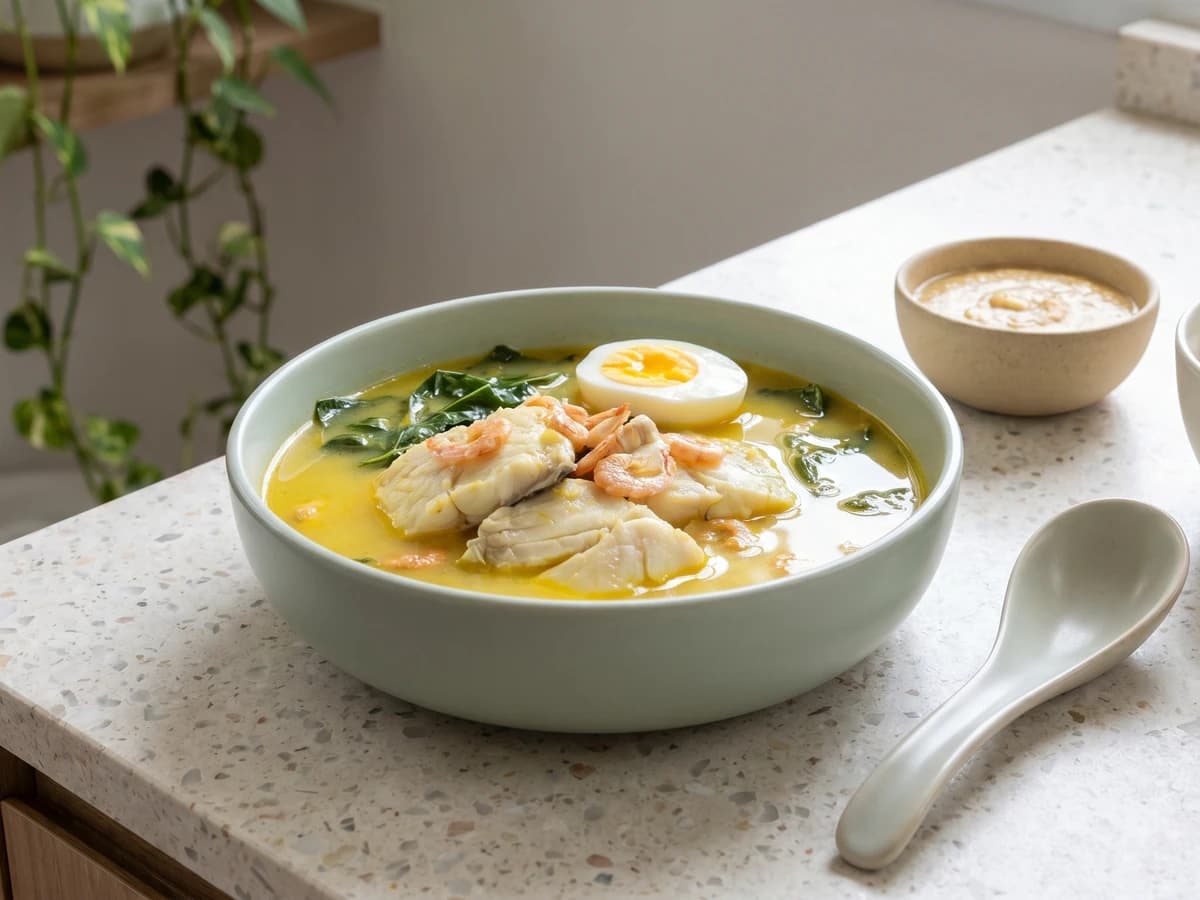
You don't need mystery for this pot. You need okra, dendê, onion, dried shrimp, and the patience to stir until the quiabo gives up its own caldo.
Chef Juliana
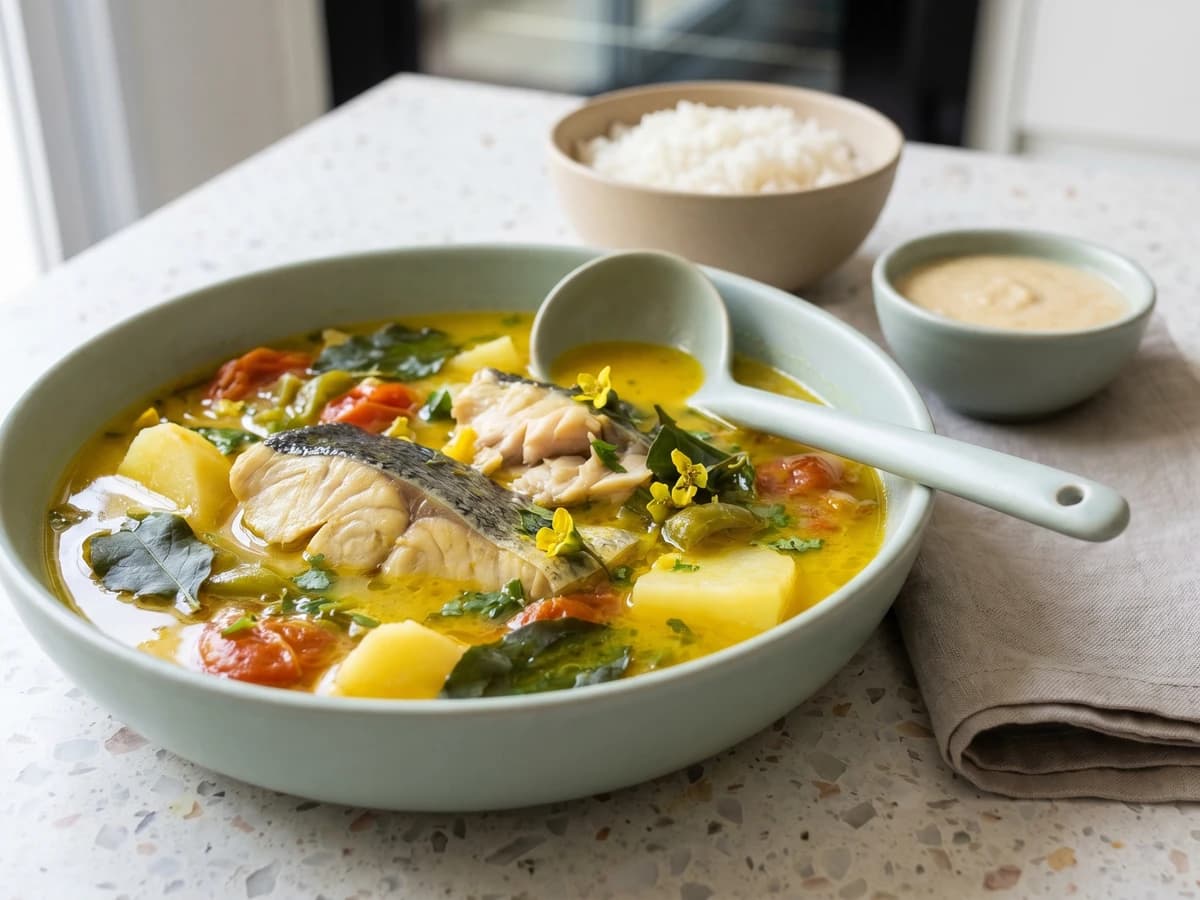
Whole fish in a pot looks like a test. It isn't. Build the refogado, layer the filhote, let tucupi do its work, and the Círio table starts making sense.
Chef Juliana
You don't need river wisdom in your bones to cook tambaqui well. You need real tucupi, a calm simmer, and the sense to let the fish stay whole until it gives.
Chef Juliana
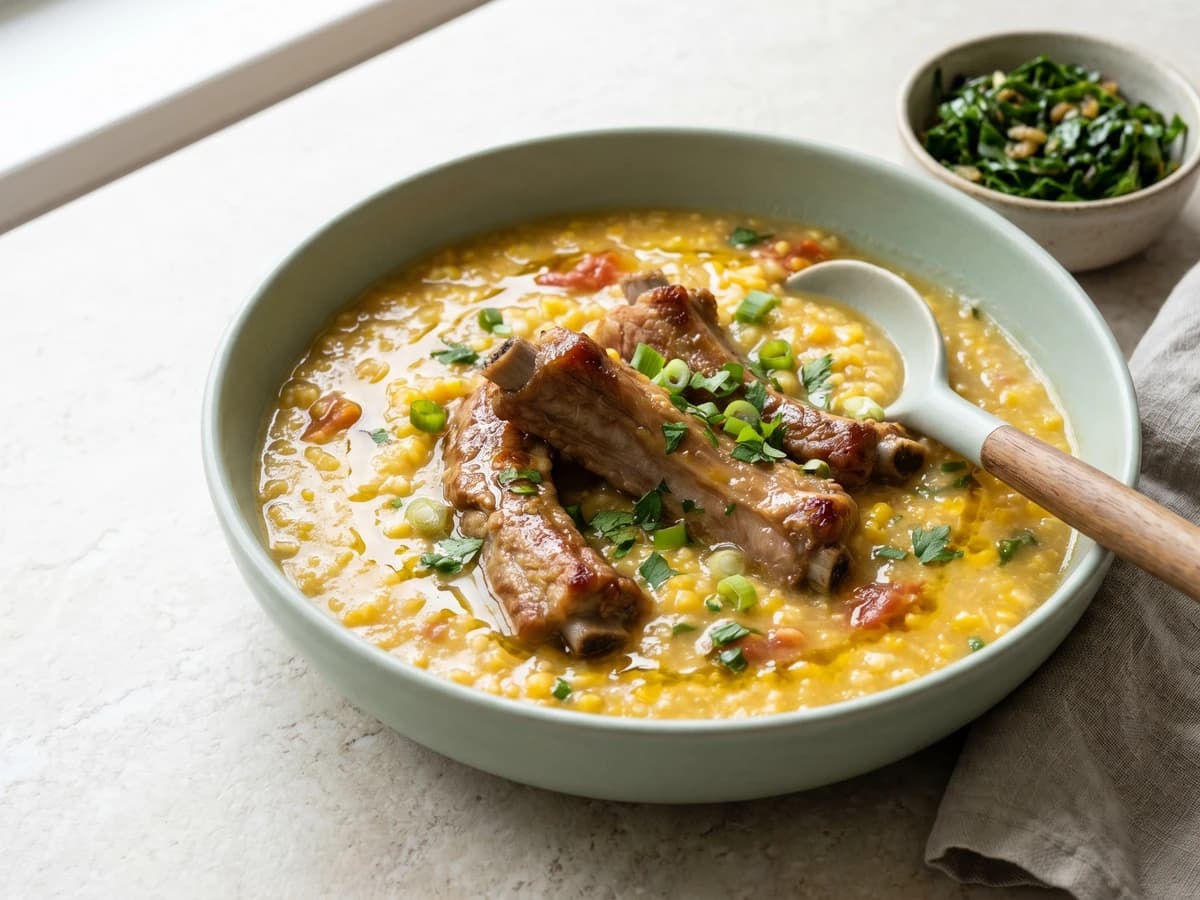
You don't need a secret hand for this pot. Brown the ribs, soften the corn, build the refogado, and let the caldo thicken itself like comida de verdade does.