Culinary Explorer
A cooking platform built around craft, culture, and the stories behind what we eat.
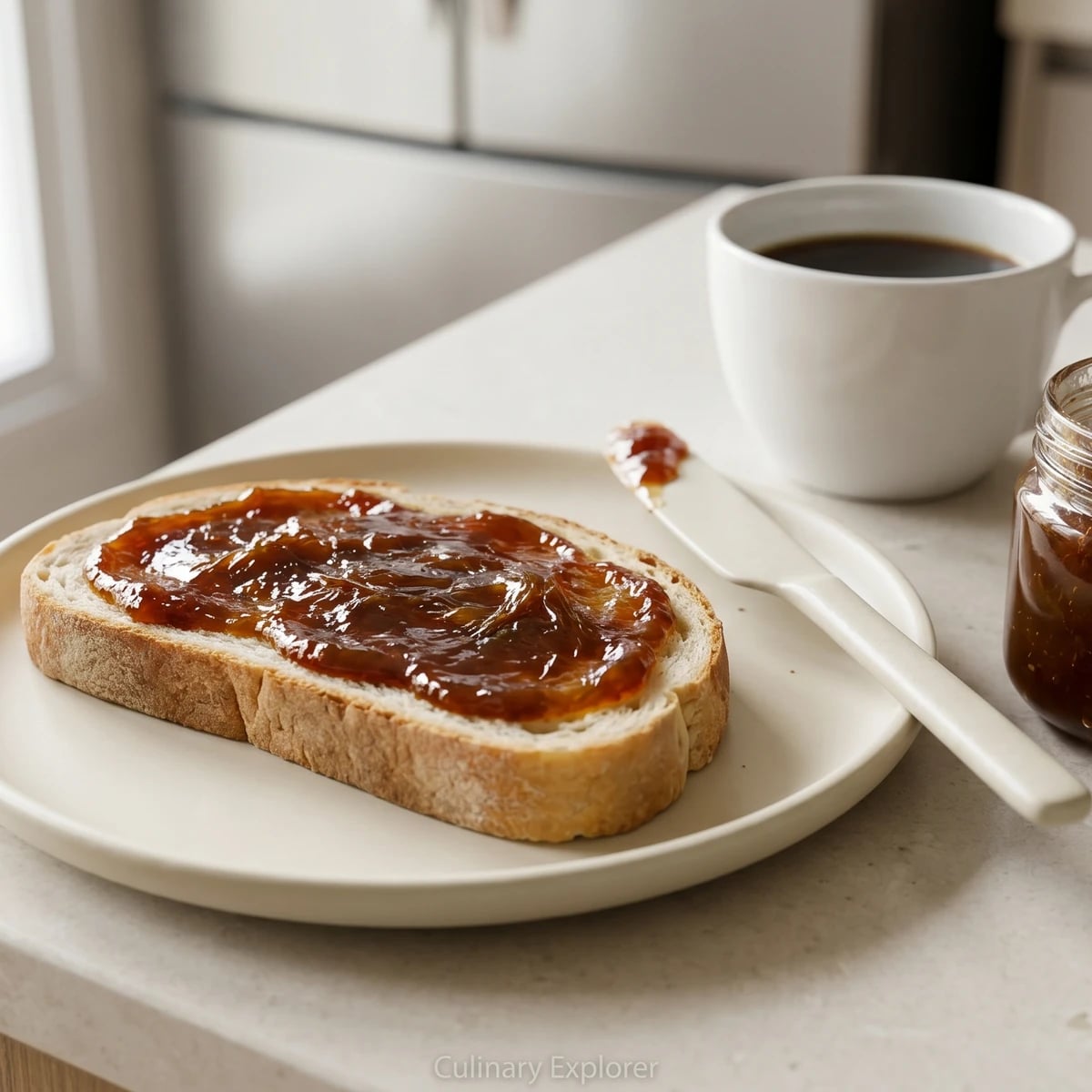
Chimia de Fruta
Created by Chef Juliana
You don't need a factory jar to put something good on bread. Fruit, sugar, lemon, and patience turn into chimia, the kind of comida de verdade that makes breakfast behave.
You think preserve is one of those things for people with orchards, giant pots, and a grandmother who never measured anything. Isso não é pra mim, you say, quietly, while buying a jar with more label than fruit. Anota aí: chimia is not a mystery. It's fruit cooked down until it gives up its water, darkens, thickens, and becomes something you can spread on bread without chasing it around the plate.
I learned late enough to be humble about this. The first time I cooked fruit too fast, the bottom caught, the top looked innocent, and the whole kitchen smelled like burnt sugar pretending nothing happened. So here's the method that works: use ripe fruit, a wide heavy pot, medium-low heat, and stir more often once it thickens. The lemon isn't there to make it fancy. It wakes up the fruit and helps the sweetness taste like fruit, not just sugar.
Chimia belongs to the coffee table, yes, but don't exile it there. A spoonful beside queijo, over plain yogurt, or on bread with butter helps resolver o lanche without opening a packet. And the same kitchen that makes chimia is the kitchen that makes the pê-efe, rice, beans, something from the pan, and something green. Different meal, same lesson: cozinhar não é dom, é um aprendizado.
By the end you'll have a dark, glossy preserve, somewhere between jam and fruit butter, sweet but not silly. One pot. One spoon. No powder doing a fruit's job.
Ingredients
ripe fruit
Quantity
4 cups
peeled and chopped or mashed
sugar
Quantity
1 1/2 cups
lemon juice
Quantity
2 tablespoons
| Ingredient | Quantity |
|---|---|
| ripe fruitpeeled and chopped or mashed | 4 cups |
| sugar | 1 1/2 cups |
| lemon juice | 2 tablespoons |
Where cooking meets culture.
Culinary guides, cultural storytelling, and the editorial depth that makes cooking meaningful.
Discover Culinary Explorer