
Chef Juliana
Beiju de Mandioca
You don't need yeast, wheat, or courage. Grate sweet cassava, press it dry, sieve the crumbs, and toast them into a flatbread that belongs beside beans, greens, and whatever solves dinner.
A cooking platform built around craft, culture, and the stories behind what we eat.
Created by
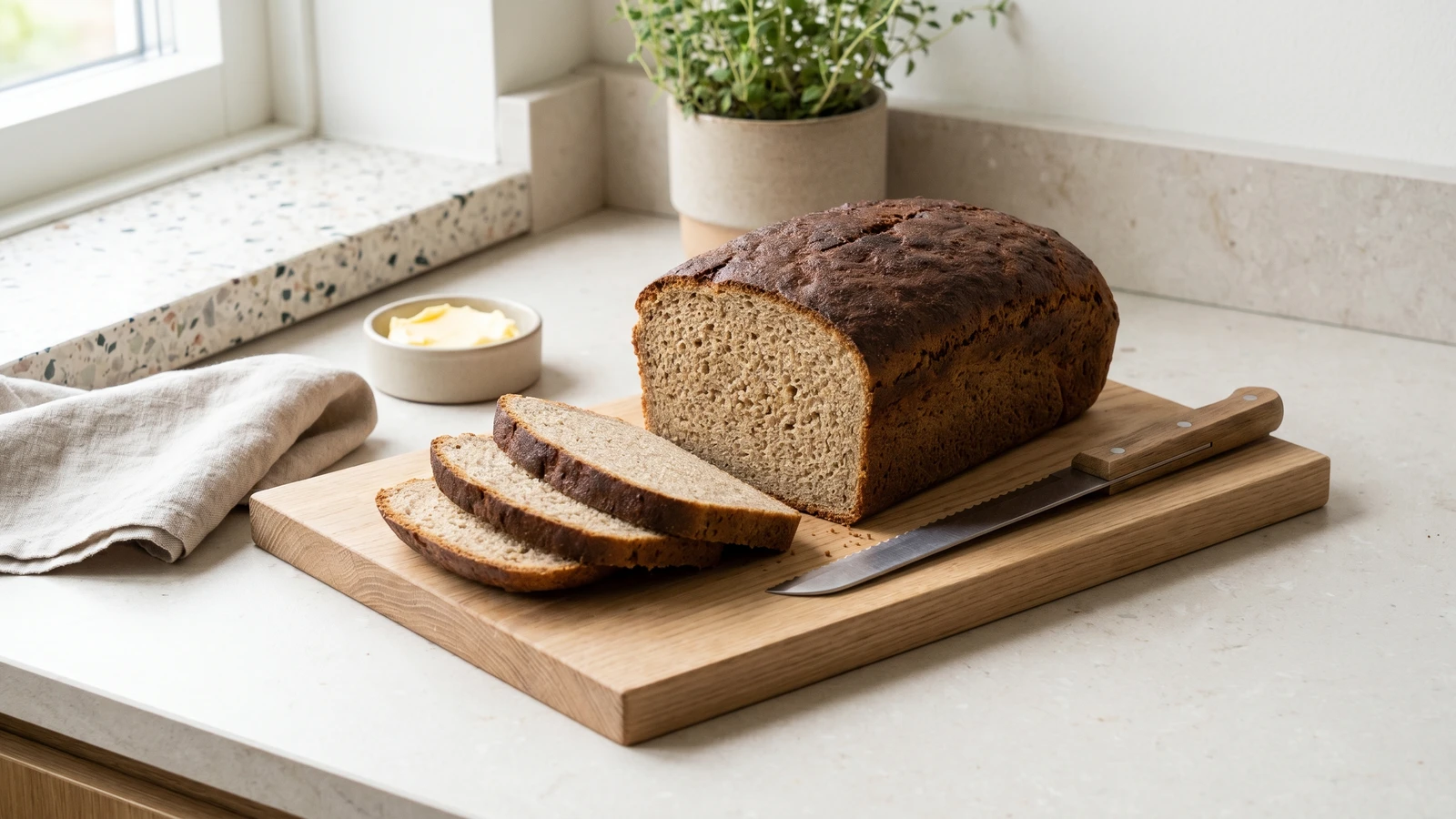
You don't need a bakery arm or a family secret. Mix rye with wheat, let time do its quiet work, and bake a dark, close-crumb loaf that feeds the week.
You might be looking at rye flour and already hearing that little voice: isso não é pra mim. Bread does that to people. It stands there like a school exam with a crust. Good. We're going to take the drama out of it, because cozinhar não é dom, é um aprendizado, and bread is no different.
I learned bread the same way I learned beans, late, badly at first, with notes in a cheap caderno and dough stuck to places dough had no business being. The lesson was simple: rye is not wheat. It doesn't rise tall and fluffy just because you asked nicely. So a gente mixes it with wheat flour, gives it enough water to stay moist, and lets it rise until it looks alive, not until some fantasy bakery picture says so.
This is comida de verdade for the everyday table. Slice it for a fried egg, eat it with soup, put it beside coffee, or let it hold a sandwich for the lunch you actually have time to make. It isn't the rice and beans half of the pê-efe, but it belongs to the same intelligence: food that stretches, satisfies, and keeps the house fed without a packet pretending to be dinner.
Anota aí: the dough will be tackier than white bread dough, the crumb will be close, and the crust should go properly dark. That's not failure. That's the point.
Polish immigration to Paraná grew from the 1870s, especially around Curitiba and nearby colonies, where rye and mixed-grain breads stayed part of household cooking. In Brazil, the word broa can mean different rustic breads depending on the region, from corn broa to denser wheat or rye loaves. In the Polish-Paranaense colony table, broa de centeio became an everyday loaf: less tall than bakery white bread, sturdier, darker, and built to last.
Quantity
1 1/2 cups
warm to the touch, not hot
Quantity
2 tablespoons
Quantity
2 1/4 teaspoons
Quantity
2 cups
Quantity
2 cups, plus more as needed
Quantity
1 1/2 teaspoons
Quantity
2 tablespoons
Quantity
1 tablespoon
for the pan
| Ingredient | Quantity |
|---|---|
| warm waterwarm to the touch, not hot | 1 1/2 cups |
| brown sugar or molasses | 2 tablespoons |
| active dry yeast | 2 1/4 teaspoons |
| rye flour | 2 cups |
| all-purpose flour | 2 cups, plus more as needed |
| fine salt | 1 1/2 teaspoons |
| oil or softened lard | 2 tablespoons |
| cornmeal or flourfor the pan | 1 tablespoon |
Pour the warm water into a large bowl and stir in the brown sugar or molasses. Sprinkle the yeast over the top and let it sit for 5 to 10 minutes, until the surface looks foamy and a little creamy. Warm means bathwater warm, not hot, because hot water kills the yeast and then you stand there blaming yourself. Don't.
Add the rye flour, all-purpose flour, salt, and oil or lard. Stir with a sturdy spoon until no dry flour is hiding at the bottom of the bowl. The dough should look shaggy and tacky, not smooth yet. Rye drinks water slowly, so give it a messy first mix before deciding it needs more flour.
Turn the dough onto a lightly floured counter and knead for 8 to 10 minutes. Push it away, fold it back, turn it, and repeat until it feels elastic but still slightly tacky. If it glues itself to your hands, dust in flour 1 tablespoon at a time. Too much flour makes the crumb dry and tight, and this bread is already meant to be close, not sandy.
Put the dough in a lightly oiled bowl, turn it once to coat, cover, and let it rise in a warm spot until puffy and almost doubled, about 1 to 1 1/2 hours. Press it gently with a finger. If the dent slowly fills back in, it's ready. If it snaps back fast, it needs more time. The clock suggests; the dough decides.
Sprinkle a loaf pan or baking tray with cornmeal or flour. Turn the dough out, press it gently into a rectangle, then roll it into a tight log and pinch the seam closed. Put it seam-side down. Tight shaping matters because it gives the loaf a spine, and without that it spreads sideways like it gave up.
Cover the shaped loaf and let it rise until noticeably puffed, 35 to 50 minutes. It won't become a tall white sandwich loaf, and that's not a problem. Look for a loaf that feels lighter and rounded, with the surface stretched but not tearing. Overproof it and it can collapse in the oven, which is a rude little lesson, but still edible.
Heat the oven to 200°C (400°F). Bake the loaf for 40 to 45 minutes, until the crust is deep brown and the bottom sounds hollow when tapped. If you have a thermometer, the center should be about 93°C (200°F). Rye needs a full bake, because pulling it early leaves the middle damp and gummy.
Move the loaf to a rack and let it cool at least 1 hour before slicing. I know. Cruel. But rye bread finishes setting as it cools, and cutting too soon drags the crumb into paste under the knife. Wait, then slice with a serrated knife into sturdy pieces.
1 serving (about 70g)
Culinary guides, cultural storytelling, and the editorial depth that makes cooking meaningful.
Discover Culinary ExplorerChef Juliana
You don't need yeast, wheat, or courage. Grate sweet cassava, press it dry, sieve the crumbs, and toast them into a flatbread that belongs beside beans, greens, and whatever solves dinner.

Chef Juliana
You don't need a bakery, a special hand, or courage. You need real goma de mandioca, fresh coconut, a hot pan, and the sense to let the beiju firm before turning.

Chef Juliana
You don't knead it, roll it, or fear it. Hydrate the goma, sieve it fine, and let the hot pan teach cassava to hold together.
Chef Juliana
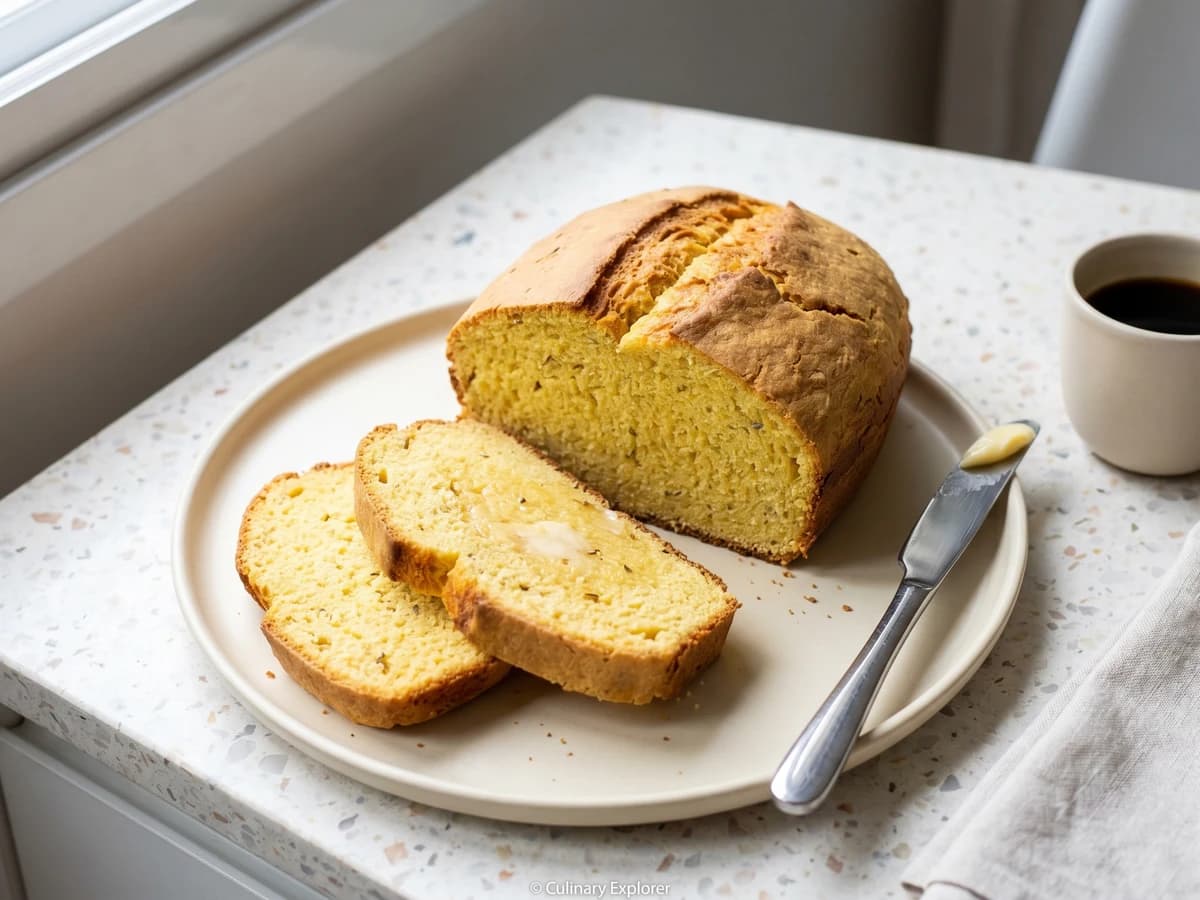
You don't need bakery hands for this. Fubá, a little wheat, eggs, milk, and erva-doce make the kind of broa that slices clean, freezes well, and smells like afternoon coffee.