
Chef Juliana
Açaí com Camarão do Pará
You think açaí belongs with banana and granola because that's the version that traveled. In Pará, thick unsweetened açaí sits beside shrimp, rice, and farinha. Anota aí: same fruit, different meal.
A cooking platform built around craft, culture, and the stories behind what we eat.
Created by
You think the sealed pot is the hard part. It isn't. The hard part is believing dinner can be this good with beef, onions, patience, and no packet pretending to help.
You see the clay pot, the sealed lid, the whole slow-braised drama, and I can hear it already: isso não é pra mim. Good. Let's say it out loud so a gente can take it apart. Barreado looks like a secret because the pot is sealed. It isn't a secret. It's beef cooked gently until it gives up being tough.
This is comida de verdade from the litoral do Paraná, built on the same honest logic as the pê-efe: rice on the plate, beans if you want the full everyday table, meat that actually tastes like itself, and something green to keep the plate alive. On a special day, the beef becomes the center. On a normal day, leftovers resolve lunch so well you'll feel slightly smug, which is allowed.
The method is plain. You season the beef, build an honest refogado, layer everything in the pot, seal the lid with a simple paste, and let low heat do the work. The seal matters because it keeps the moisture inside, so the meat braises in its own juices instead of drying out while you hover like a nervous relative. Cozinhar não é dom, é um aprendizado. Anota aí.
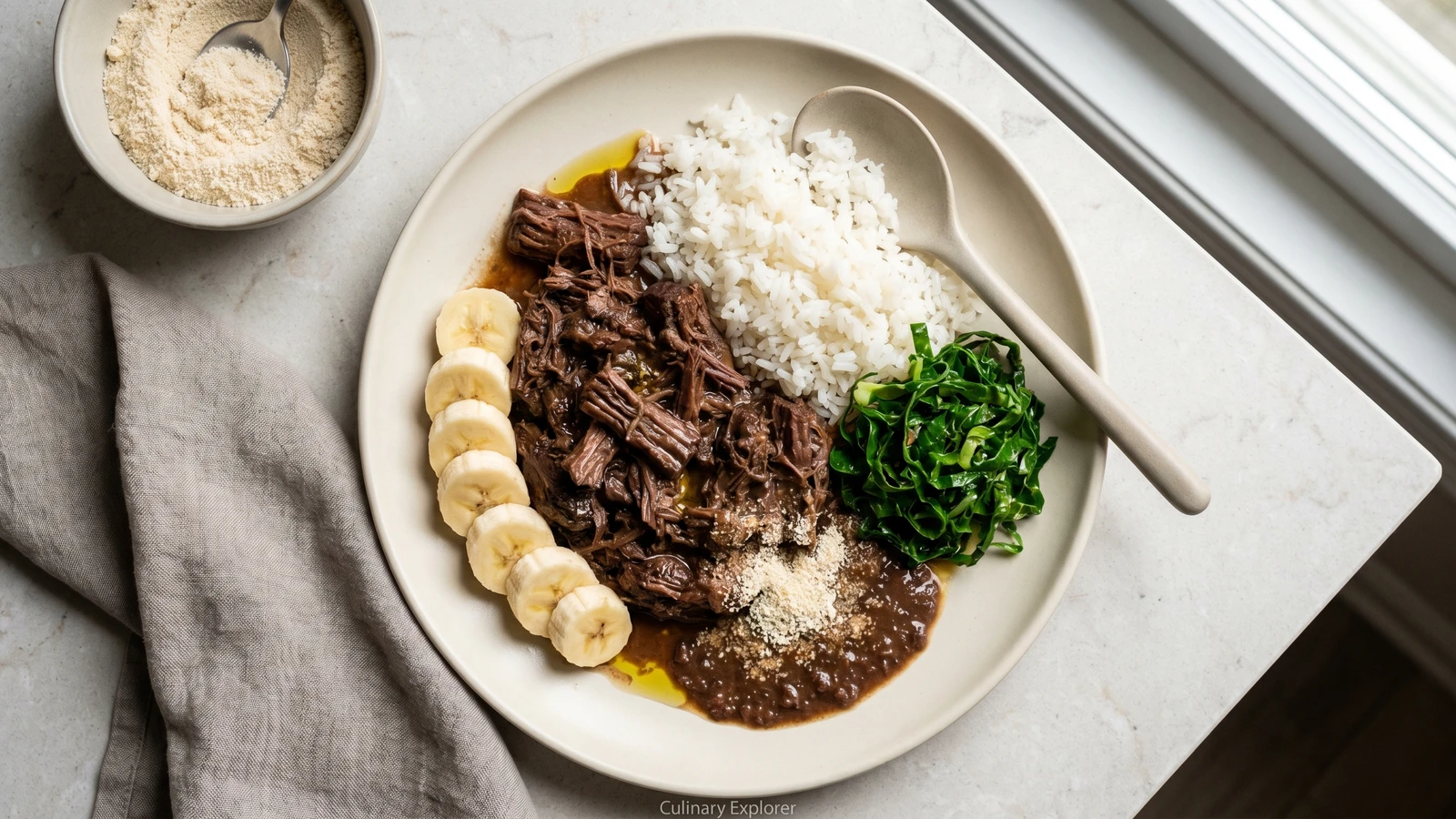
Traditionally this takes a long morning or more. At home, a heavy pot and steady low heat will get you there. Serve it with arroz soltinho, banana slices, and farinha de mandioca stirred into the broth on the plate until it turns into a soft pirão. Nothing fancy. Just a dish that remembers where it came from and still lets you cook it in your kitchen.
Barreado is tied to the coast of Paraná, especially Morretes, Antonina, and Paranaguá, where it became associated with Carnival meals because it could cook for many hours while people were away from the stove. The name comes from barrear, sealing the pot with a clay-like paste so the beef cooked slowly without losing moisture. Its roots are usually linked to Portuguese and Azorean cooking on the Paraná coast, adapted with local cassava flour and the coastal habit of serving the broth thickened into pirão.
Quantity
3 pounds
cut into 2-inch pieces
Quantity
2 teaspoons, plus more to taste
Quantity
1 teaspoon
Quantity
1 teaspoon
Quantity
3 tablespoons
Quantity
3 large
thinly sliced
Quantity
6 cloves
minced
Quantity
2 large
chopped
Quantity
2
Quantity
1 tablespoon
Quantity
1 cup
Quantity
1 cup, plus more for serving
Quantity
1/2 cup
Quantity
as needed
Quantity
2
sliced
Quantity
as needed
| Ingredient | Quantity |
|---|---|
| beef chuck, brisket, or shankcut into 2-inch pieces | 3 pounds |
| fine salt | 2 teaspoons, plus more to taste |
| ground cumin | 1 teaspoon |
| black pepper | 1 teaspoon |
| neutral oil or lard | 3 tablespoons |
| onionsthinly sliced | 3 large |
| garlicminced | 6 cloves |
| ripe tomatoeschopped | 2 large |
| bay leaves | 2 |
| white vinegar | 1 tablespoon |
| water or unsalted beef broth | 1 cup |
| cassava flour (farinha de mandioca) | 1 cup, plus more for serving |
| water for sealing paste | 1/2 cup |
| cooked white rice (optional) | as needed |
| ripe bananas (optional)sliced | 2 |
| sautéed couve or another green (optional) | as needed |
Put the beef in a bowl with the salt, cumin, and black pepper. Rub it well so every piece gets seasoned, then let it sit while you slice the onions and chop the tomatoes. That short rest gives the salt time to enter the meat instead of sitting on the outside like a late guest.
Warm the oil or lard in a heavy 4-liter clay pot or Dutch oven over medium heat. Add the onions and cook, stirring now and then, until they murchar, soften, and turn golden at the edges, about 12 minutes. Add the garlic for one minute, just until you smell it, because burnt garlic is bitter and bossy and it will take over the pot.
Add the tomatoes and bay leaves, then cook until the tomato collapses and looks jammy, about 6 minutes. Scrape the bottom as it cooks. Those browned bits are flavor, and the tomato's juice loosens them so they can season the whole braise instead of staying stuck to the pot.
Add the seasoned beef, vinegar, and 1 cup water or broth. Stir once, just enough to coat the meat in the refogado. The liquid should not cover the beef completely. Barreado is sealed so the meat releases its own juices slowly, and drowning it now gives you thin broth instead of deep, sticky flavor.
Mix 1 cup cassava flour with 1/2 cup water until it becomes a firm paste, adding a spoonful more water only if it crumbles. Put the lid on the pot and press the paste all around the seam where lid meets pot. This is the barreadura. It traps moisture inside, so the beef braises gently and doesn't dry out while the tough fibers soften.
Set the pot over the lowest stovetop heat, using a heat diffuser if you have one, and cook for 4 to 4 1/2 hours. Do not keep opening it. The paste seal is doing its job, and every peek lets out the moisture you worked to trap. If using the oven, cook at 300°F for the same time.
Crack the paste seal, lift the lid away from your face, and press a piece of beef with a spoon. It should collapse into shreds with almost no argument. If it still feels springy or tight, reseal loosely with foil and cook another 30 minutes. Time is a guide; tenderness is the truth.
Remove the bay leaves. Shred the beef directly in the pot with two forks and stir it into the dark broth until thick and glossy. Taste for salt. If the sauce is too loose, simmer uncovered for 10 minutes. If it's too tight, add hot water by the tablespoon. You're looking for beef that spoons onto rice and leaves a rich mark, not soup.
Serve the barreado over arroz soltinho with banana slices and couve on the side. On the plate, sprinkle in a little farinha de mandioca and stir it into the beef juices until it pega ponto, soft and spoonable like a quick pirão. Add gradually. Too much farinha at once turns dinner into paste, and nobody came this far for paste.
1 serving (about 510g)
Culinary guides, cultural storytelling, and the editorial depth that makes cooking meaningful.
Discover Culinary ExplorerChef Juliana
You think açaí belongs with banana and granola because that's the version that traveled. In Pará, thick unsweetened açaí sits beside shrimp, rice, and farinha. Anota aí: same fruit, different meal.

Chef Juliana
You think savory açaí is not for you. I understand. Then you taste the cold, dark bowl beside hot fried fish, rice, greens, and farinha, and dinner gets very quiet.

Chef Juliana
You think salted beef and rice sound like trouble. Anota aí: soak the charque, brown it properly, build the refogado, and this one pot resolves dinner.

Chef Juliana
You think a Maranhão green rice belongs to somebody else's clever hands. It doesn't. Wilt the vinagreira, build the refogado, fold it through arroz soltinho, and dinner gets bright, coastal, and yours.