Chef Joost
Aardappelgratin
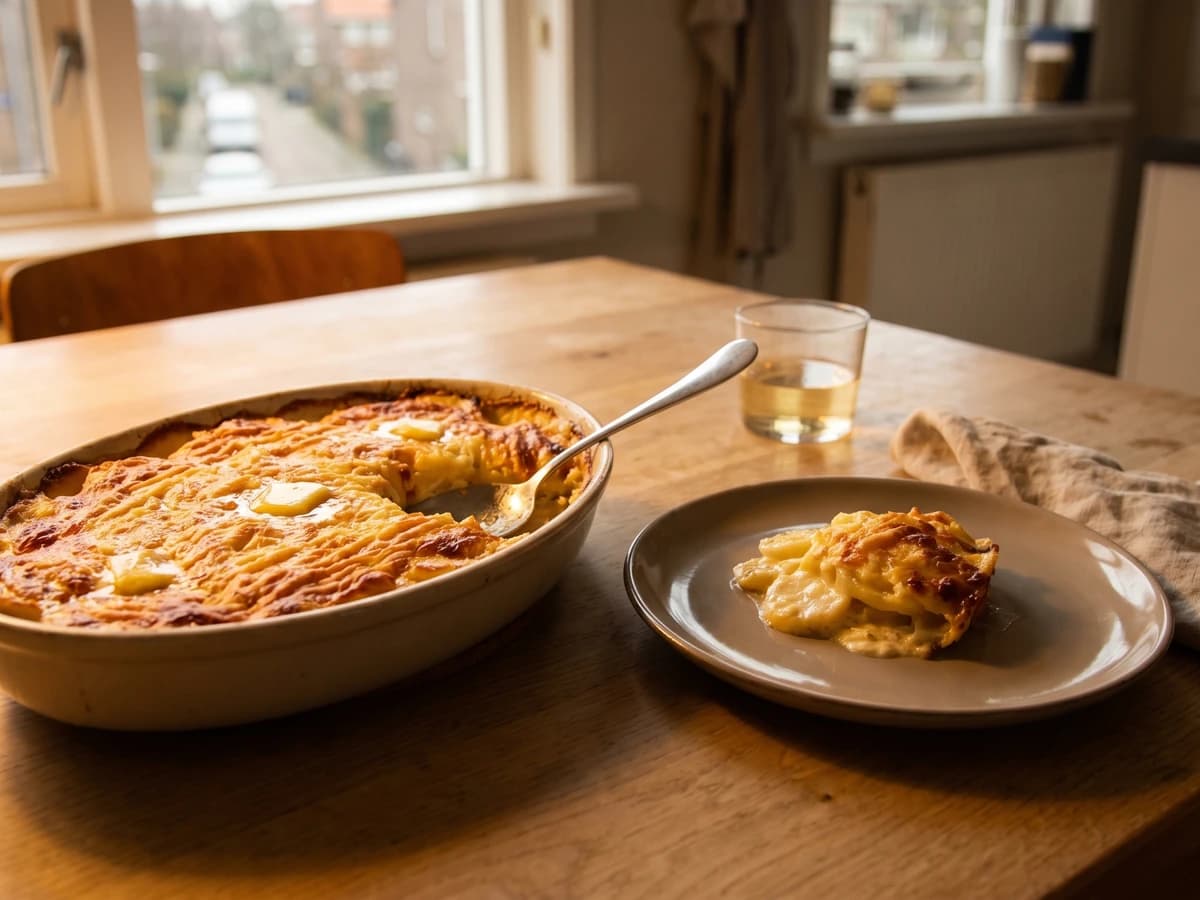
A French name, a Dutch potato, and a Sunday table: aardappelgratin is what happens when a frugal kitchen borrows richness and behaves as if it had always belonged.
A cooking platform built around craft, culture, and the stories behind what we eat.
Created by
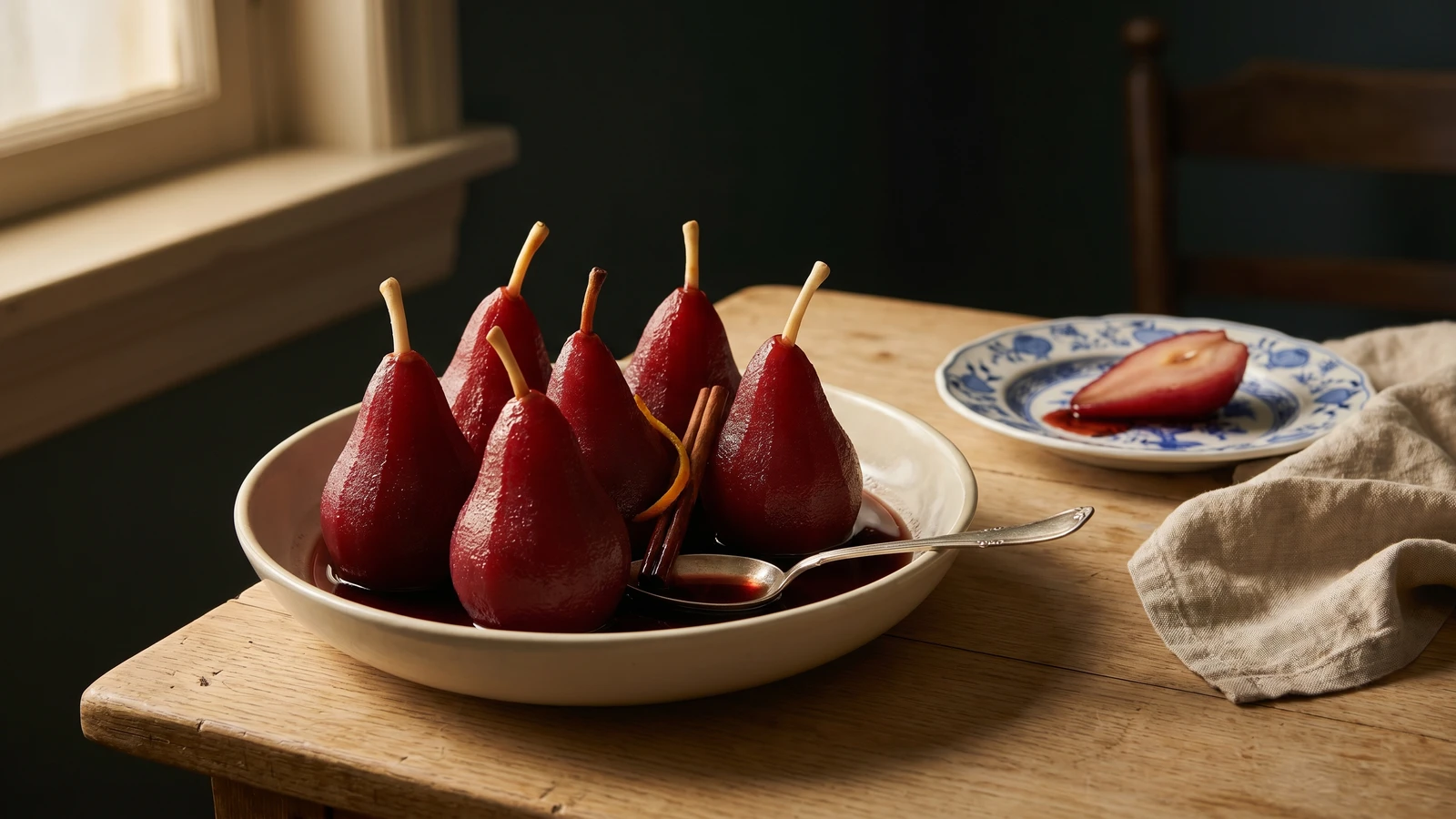
Stoofpeertjes are the little winter pears that refuse to be eaten raw, then reward patience by turning wine-red, spiced, and tender beside the Dutch Christmas roast.
In my grandmother's second notebook, the stoofpeertjes have a stain across the page the colour of old burgundy. Not ink. Pear juice, red wine, cinnamon, and the impatience of some child who wanted one before Christmas dinner reached the table. I know this because the child was me, for obvious reasons.
The name already tells you the method. Stoofpeertjes means little pears for stoving, pears meant for slow cooking rather than biting raw. The Dutch have special varieties for this, hard as small green stones in the hand, Gieser Wildeman above all. Try to eat one uncooked and you'll understand humility. Give it time in a pan with wine, sugar, cinnamon, and clove, and it bleeds crimson from the outside in, becoming tender without collapsing. This is exuberant cookery in a frugal country: a winter fruit, a few spices from old trade routes, and patience doing the expensive work.
But let me tell you a secret. Stoofpeertjes are not dessert in the Dutch mind, however sweet they look. They sit beside hare, beef, goose, or a Christmas rollade as the bright sweet-tart thing that keeps the plate awake. Hou het altijd simpel, always keep it simple: peel them neatly, leave the stalks if you can, simmer them low, and let them cool in their own wine. The colour deepens while you wait. So does the story.
Stewed pears appear throughout Dutch household cookbooks from the nineteenth century, when hard winter pears such as Gieser Wildeman and Saint Remy were grown for storage and cooking rather than fresh eating. Their Christmas association reflects the old winter larder: fruit that kept well, spices that had become ordinary in Dutch kitchens through seventeenth-century trade, and wine or berry juice used to give the pears their prized red colour. The dish remains especially tied to festive meat plates, where its sweet acidity balances rich roasts and game.
Quantity
1.2kg
peeled, stalks left on if possible
Quantity
500ml
Quantity
250ml
Quantity
125g
Quantity
1
Quantity
3
Quantity
1 strip
cut without white pith
Quantity
1 tablespoon
Quantity
a pinch
| Ingredient | Quantity |
|---|---|
| stoofpeertjes, preferably Gieser Wildeman or Saint Remypeeled, stalks left on if possible | 1.2kg |
| red wine | 500ml |
| water | 250ml |
| sugar | 125g |
| cinnamon stick | 1 |
| whole cloves | 3 |
| orange zestcut without white pith | 1 strip |
| lemon juice | 1 tablespoon |
| salt | a pinch |
Peel the pears from stem to base, leaving the stalks attached if they behave. Trim a thin slice from the bottom of each pear so it can stand upright in the pan. Keep them whole if they are small; halve only the stubborn large ones, and scoop out the core with a small spoon.
Choose a pan that holds the pears snugly in one layer. Add the red wine, water, sugar, cinnamon, cloves, orange zest, lemon juice, and salt, then stir over medium heat until the sugar dissolves. The liquid should come at least halfway up the pears; add a little more water or wine if your pan is wide.
Lower the pears into the liquid, bring it just to a gentle simmer, then cover with a lid set slightly ajar. Cook for 1 hour 30 minutes to 1 hour 45 minutes, turning the pears every 25 minutes so the colour reaches all sides. The right heat is quiet: a few lazy bubbles, never a boil. Boiling bruises the fruit and makes the syrup harsh.
Pierce the thickest pear with the tip of a small knife. It should slide in easily but the pear should still hold its shape. If the knife meets a chalky centre, give the pan another 15 minutes. Stoofpeertjes are finished when they have yielded, not when they have collapsed.
Turn off the heat and let the pears cool in their cooking liquid for at least 30 minutes, or overnight if you have the good sense to plan ahead. Lift them into a serving dish and spoon over enough syrup to gloss them. Serve at room temperature or gently warmed beside roast meat, game, or a Dutch holiday plate.
1 serving (about 260g)
Culinary guides, cultural storytelling, and the editorial depth that makes cooking meaningful.
Discover Culinary ExplorerChef Joost
A French name, a Dutch potato, and a Sunday table: aardappelgratin is what happens when a frugal kitchen borrows richness and behaves as if it had always belonged.
Chef Joost
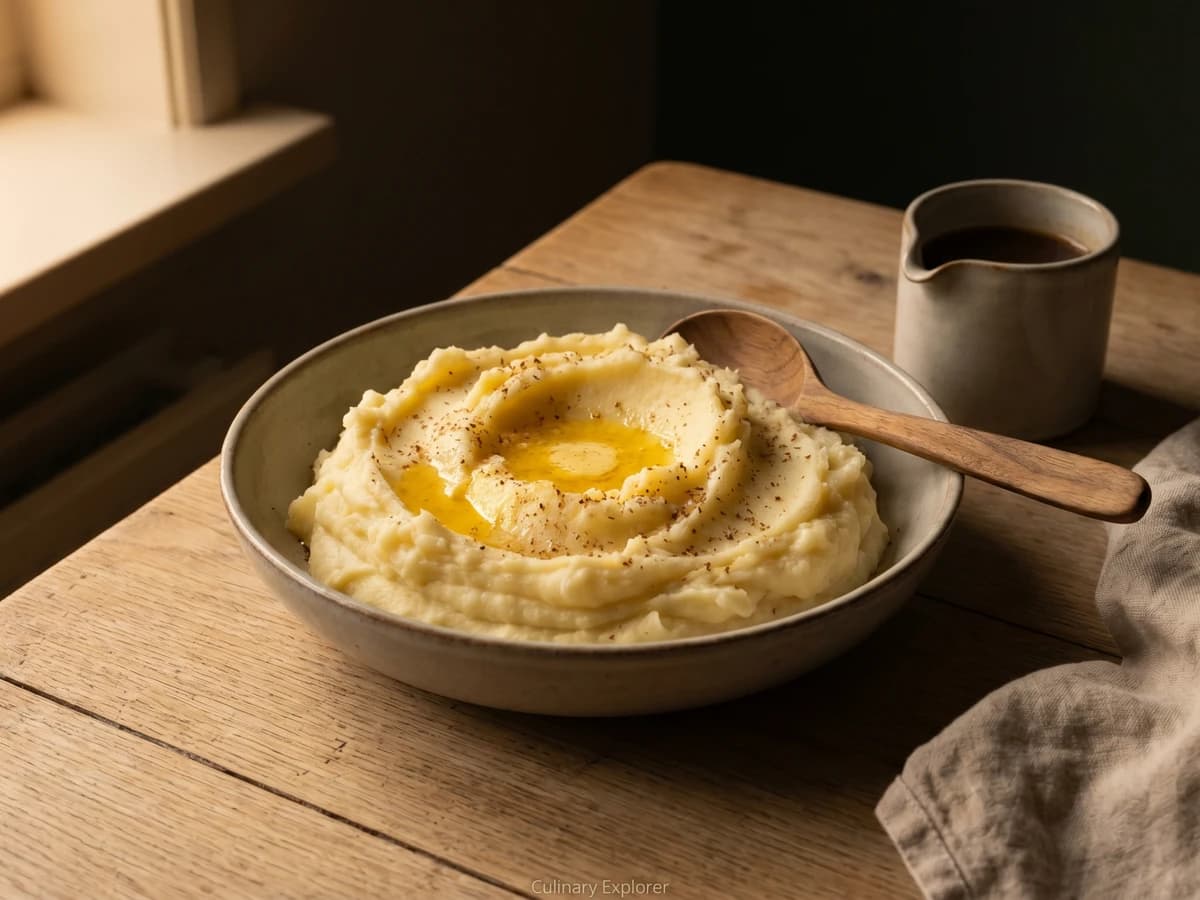
Aardappelpuree is the quiet heart of the Dutch AVG'tje: floury potatoes, warm milk, butter, nutmeg, and a small kuiltje, little well, built for the jus.

Chef Joost
Flower cabbage under old Gouda sauce: the quiet Dutch side dish that turns one boiled vegetable into the reason everyone reaches for the spoon twice.

Chef Joost
White beans peeking through green snijbonen give this old Dutch side its nursery-table joke: bare little children in the grass, sweet garden thrift with butter, nutmeg, and no apology.