Chef Elsa
Almjause (Alpine Hut Snack Board)
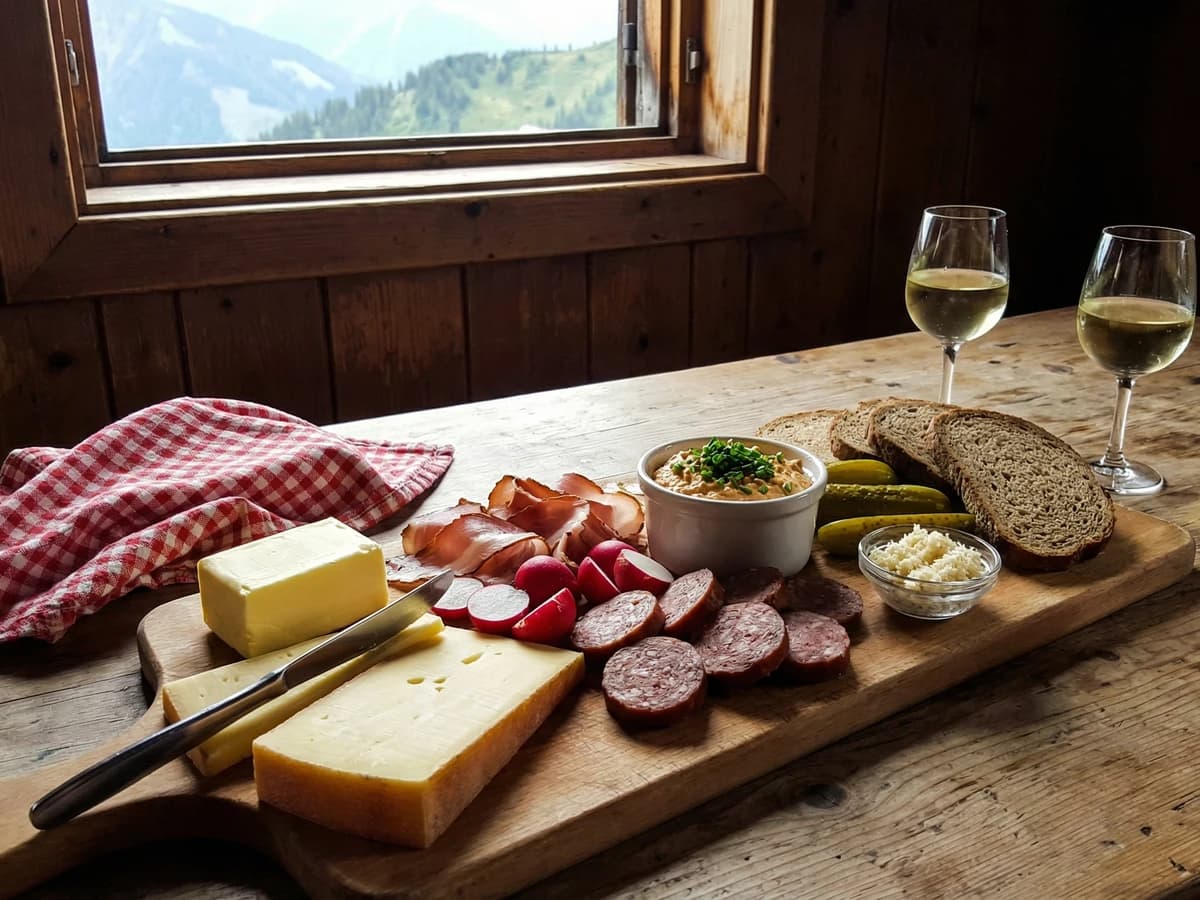
A wooden board loaded with mountain cheese, juniper-smoked Speck, air-dried Hauswürstel, handmade Liptauer, fresh Kren, and thick-cut Bauernbrot, the way Austrian Almhütten have fed hikers for generations.
A cooking platform built around craft, culture, and the stories behind what we eat.

Created by
Styria's cold board of hand-chopped Verhackertes, Käferbohnen salad glistening with dark-green Kernöl, smoked sausages, and aged Bergkäse, arranged on a wooden Brettl the way every Buschenschank has served it for generations.
The first time I tasted Steirisches Kürbiskernöl, I was twelve years old, sitting at a Buschenschank outside Leibnitz with Gretel and my grandmother Eva. The farmer's wife brought out a wooden board loaded with cold meats and speckled beans, and she poured this oil from a dark bottle over the salad right at the table. It was so deeply green it looked black. Gretel told me to taste it on bread first, just the oil and a pinch of salt. Nutty, rich, almost sweet, with a long finish that stayed on your tongue. I'd never tasted anything like it. I still think of that afternoon every single time I open a bottle.
A Brettljause is what Austrians eat when the weather is warm and the wine is local. The word means 'board snack,' and that's exactly what it is: a wooden board covered with the best things the region can offer, set in the middle of the table for everyone to pick at while the Achterl of wine keep coming. In Styria, that means Verhackertes (a rough, smoky spread of hand-chopped Speck), a salad of Käferbohnen (those beautiful purple-speckled runner beans that grow across southern Styria), smoked sausages sliced thick on the diagonal, aged mountain cheese, dark bread, and fresh Kren grated at the table. Everything dressed with Kernöl, the pumpkin seed oil that defines Styrian cooking the way olive oil defines Tuscany.
There's no real cooking here. That's the point. A Brettljause is an exercise in sourcing, not technique. Every ingredient has to be good enough to stand on its own, because nothing is hiding behind a sauce or a complicated preparation. The Speck needs to be properly smoked. The Käferbohnen need to be firm and creamy, not mushy. The Kernöl needs to be the real thing, pressed in southern Styria from hull-less pumpkin seeds, not the pale imitation you'll find in some supermarkets. Get the ingredients right and the board practically assembles itself. Gretel always said the hardest part of simple food is having nowhere to hide.
The Buschenschank tradition dates to a 1784 decree by Emperor Joseph II granting Austrian vintners the right to sell their own wine and serve simple cold food directly from their farms. In Styria, these seasonal taverns became the natural home of the Brettljause, where farmers laid out what they had: home-smoked pork, beans from the garden, cheese from the mountain dairies, and bread from the village baker. Steirisches Kürbiskernöl earned EU Protected Geographical Indication (g.g.A.) status in 1996, recognizing the unique hull-less pumpkin seed variety (Cucurbita pepo var. styriaca) that has been cultivated in the volcanic soils of southern Styria since the 18th century.
Quantity
250g
rind removed
Quantity
1 small
very finely diced
Quantity
1 small clove
minced
Quantity
1 tablespoon
Quantity
to taste
freshly ground
Quantity
1 jar (400g drained weight)
Quantity
1 small
finely sliced into rings
Quantity
2 tablespoons
Quantity
4 tablespoons, plus more for the table
Quantity
to taste
Quantity
small bunch
roughly chopped
Quantity
200g
Quantity
300g (2 to 3 links)
Quantity
50g
finely grated
Quantity
6 to 8
Quantity
1 loaf
thickly sliced
| Ingredient | Quantity |
|---|---|
| geräucherter Speck (smoked pork belly)rind removed | 250g |
| yellow onion (for Verhackertes)very finely diced | 1 small |
| garlic (optional)minced | 1 small clove |
| apple cider vinegar (for Verhackertes) | 1 tablespoon |
| black pepperfreshly ground | to taste |
| Käferbohnen (scarlet runner beans) | 1 jar (400g drained weight) |
| red onion (for salad)finely sliced into rings | 1 small |
| apple cider vinegar (for salad) | 2 tablespoons |
| Steirisches Kürbiskernöl (Styrian pumpkin seed oil) | 4 tablespoons, plus more for the table |
| salt | to taste |
| flat-leaf parsleyroughly chopped | small bunch |
| Bergkäse or aged Almkäse | 200g |
| Selchwürste (smoked sausages) | 300g (2 to 3 links) |
| fresh horseradish root (Kren)finely grated | 50g |
| cornichons or pickled gherkins | 6 to 8 |
| dark rye bread (Bauernbrot)thickly sliced | 1 loaf |
Cut the Speck into small cubes, about a centimeter across. Using a heavy chef's knife or a mezzaluna, chop the cubes on a wooden board with a steady, rhythmic motion. Keep gathering the pieces back to the center and chopping again. You're working the fat and lean together until they break down into a rough, spreadable paste. This takes ten to fifteen minutes by hand. You want texture here, not baby food. Some pieces should still be the size of lentils, others will have melted into rich fat. That contrast is the whole character of a proper Verhackertes. Mix the chopped Speck with the finely diced onion, the garlic if using, a tablespoon of vinegar, and several grinds of black pepper. The vinegar is important: it cuts through the richness and wakes everything up. Taste it. Adjust. Spoon it into an earthenware crock or small bowl, press it down gently, and let it sit at room temperature while you prepare everything else.
Drain and rinse the Käferbohnen gently under cool water. Place them in a mixing bowl. Add the sliced red onion rings, the vinegar, and a generous pinch of salt. Toss gently with your hands or a large spoon. Käferbohnen are tender and their beautiful speckled skins tear easily, so don't stir with any force. Let the salad sit for at least fifteen minutes. The beans need time to absorb the vinegar and salt before you add the oil. This matters. If you pour the Kernöl on first, it coats the beans and seals them off so the acid can't do its work. Season first, oil last. Just before serving, drizzle three tablespoons of Kürbiskernöl over the beans, toss once more, and scatter the chopped parsley on top. The oil should pool in dark green rivulets between the beans.
Slice the Bergkäse into pieces about half a centimeter thick. The cheese should be at room temperature, not cold from the fridge. Cold cheese tastes like nothing. Cut the Selchwürste on the diagonal into thick medallions, each about a finger's width. If your horseradish is fresh, grate it finely just before serving and keep a tissue nearby because your eyes will water. That sting is the volatile oils releasing, and it's exactly what you want. Fresh Kren has a clean, searing heat that prepared horseradish can only approximate. Slice the Bauernbrot thickly. If the bread is a day old, toast the slices in a dry pan or under the grill for a minute until the edges crisp and the kitchen smells like a bakery. Fresh bread needs nothing.
Choose your largest wooden board. This is not a minimalist cheese plate. A proper Brettljause should look abundant, generous, like there's more food than anyone could possibly finish. There isn't. It will all disappear. Place the crock of Verhackertes toward one end of the board. Mound the dressed Käferbohnen salad on the other. Arrange the sliced sausages and cheese in overlapping rows between them, letting the components crowd together comfortably. Tuck the cornichons into gaps. Set the grated Kren in its own small pile or a tiny dish. Fan the bread slices along the edge of the board, or stack them in a cloth-lined basket alongside.
Bring the bottle of Kürbiskernöl to the table. Give the Käferbohnen salad one final generous drizzle and let your guests dress their own bread and cheese as they please. The proper drink alongside a Brettljause is a glass of Styrian white: Welschriesling or Morillon (the local name for Chardonnay), poured in an Achterl, the small quarter-liter glass that every Buschenschank uses. Set the board in the center of the table where everyone can reach it, and don't rush. A Brettljause is not a course. It's a way of spending an evening. Mahlzeit!
1 serving (about 465g)
Culinary guides, cultural storytelling, and the editorial depth that makes cooking meaningful.
Discover Culinary ExplorerChef Elsa
A wooden board loaded with mountain cheese, juniper-smoked Speck, air-dried Hauswürstel, handmade Liptauer, fresh Kren, and thick-cut Bauernbrot, the way Austrian Almhütten have fed hikers for generations.

Chef Elsa
Dark, spiced, and wickedly good: Blunzn mashed with onion, mustard, and marjoram into the kind of spread that disappears first from every Heuriger Brettl, scooped up on torn hunks of dark bread.

Chef Elsa
A silky potato and sour cream spread with raw onion and paprika, piled onto dark rye bread the way they serve it at every Heuriger in Lower Austria. No cheese, despite the name. Just good potatoes and honest cooking.
Chef Elsa
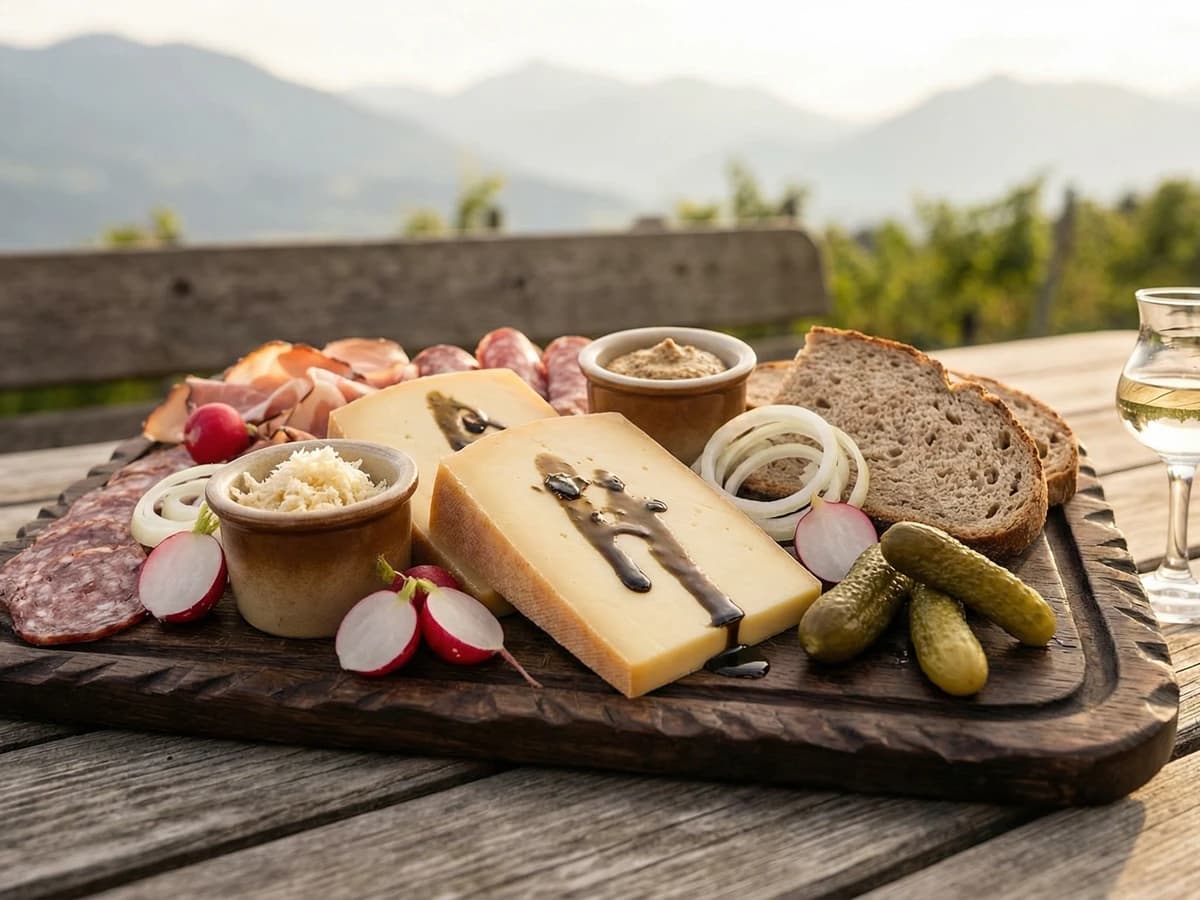
A proper Carinthian Brettljause built around PDO Gailtaler Almkäse, nutty raw-milk alpine cheese served with Speck, dark Bauernbrot, pickles, fresh horseradish, and everything you need for an afternoon on an Almhütte terrace.