
Chef Freja
Andelår med Rødkål
Slow-roasted duck legs with crisp, deeply golden skin, served with braised red cabbage and caramelized potatoes. The weeknight Danish duck that proves the best part of the bird is the one that takes its time.
A cooking platform built around craft, culture, and the stories behind what we eat.
Created by Chef Freja
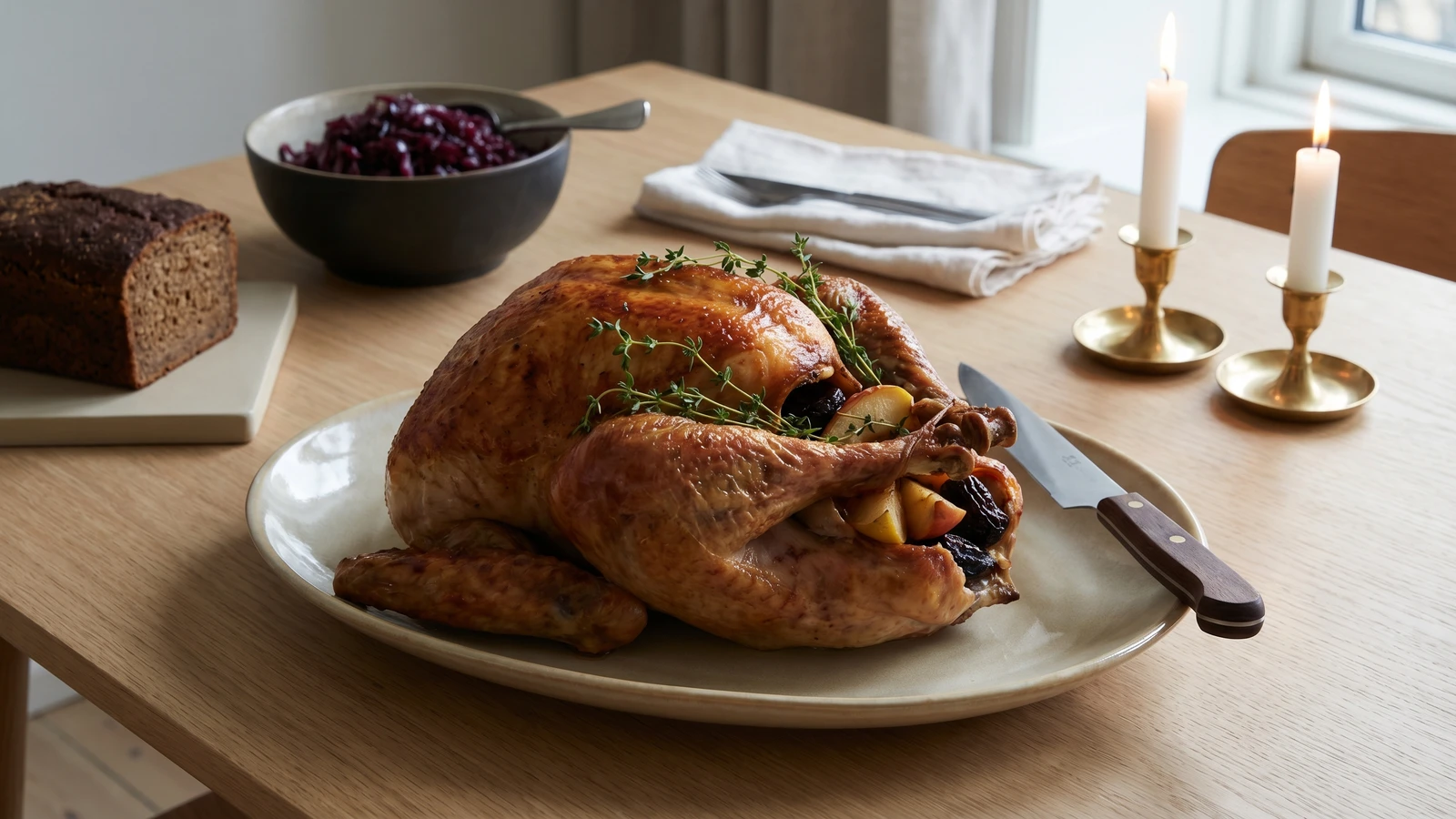
The Danish Christmas turkey for the table that grows, stuffed with tart apples and soft prunes, roasted low and slow until the skin turns deep gold and the meat stays tender enough to carve in clean, generous slices.
December in Denmark is dark by three in the afternoon. The streets glow with candles, the kitchens with purpose. On juleaften, Christmas Eve, most Danish families sit down to andesteg, roast duck with crackling skin and a pan full of fat that becomes the best brunede kartofler you'll eat all year. But when the table grows, when the grandparents come and the cousins and the neighbors who have nowhere else to be, a single duck won't feed everyone. This is when the turkey comes in.
Stegt kalkun med aebler og svesker is the generous version of the Danish Christmas bird. The stuffing is the same one your grandmother would put inside a duck: tart apples and soft prunes, nothing else, slow-cooked inside the cavity until they collapse into something sweet and savory that perfumes the meat from the inside out. The difference is scale. A turkey feeds the long table, the one you extend with the extra leaf that lives behind the wardrobe eleven months of the year.
The thing to understand about turkey is that it's lean. Leaner than duck, leaner than goose, leaner than anything else you'd roast whole for a celebration. That's why you roast it low and slow, why you butter it generously, why you start it breast-side down so the juices run toward the meat that needs them most. I'll walk you through every step. Pay attention to two things: faithful basting every thirty minutes, and a proper rest at the end. Those are the difference between a turkey that carves in clean, moist slices and one that disappoints. By the time you carry it to the table, golden and fragrant with thyme and fruit, you'll know what you've done and why. This is how we greet each other at the longest table of the year.
Turkey arrived in Europe from the Americas in the sixteenth century and reached Danish tables shortly after, though it remained a luxury bird well into the nineteenth century. In the traditional Danish jul the bird of choice has always been duck or goose, both of which produce the fat needed for brunede kartofler and the rich brun sovs that ties the Christmas plate together. Turkey gained ground in Denmark in the mid-twentieth century as holiday gatherings grew larger and families needed a bird that could feed ten or twelve. The apple and prune stuffing, aeble- og sveske-fyld, is far older than the turkey itself: it was developed for goose, where the fruit's tartness cuts through rich dark meat, and Danish cooks carried it across to turkey without a moment's hesitation.
Quantity
1, about 5-6 kg
giblets removed
Quantity
100g
softened
Quantity
2 teaspoons
Quantity
1 teaspoon
freshly ground
Quantity
4 sprigs
Quantity
4, about 500g total
peeled, cored, and quartered
Quantity
250g
Quantity
1
halved
Quantity
1
roughly chopped
Quantity
2
roughly chopped
Quantity
500ml, plus extra if needed
Quantity
2 tablespoons
Quantity
100ml
Quantity
1-2 tablespoons
| Ingredient | Quantity |
|---|---|
| whole free-range turkeygiblets removed | 1, about 5-6 kg |
| unsalted buttersoftened | 100g |
| coarse salt | 2 teaspoons |
| black pepperfreshly ground | 1 teaspoon |
| fresh thyme | 4 sprigs |
| tart apples (Bramley or Belle de Boskoop)peeled, cored, and quartered | 4, about 500g total |
| pitted prunes (svesker) | 250g |
| onionhalved | 1 |
| carrotroughly chopped | 1 |
| celery stalksroughly chopped | 2 |
| chicken or turkey stock | 500ml, plus extra if needed |
| plain flour | 2 tablespoons |
| cream | 100ml |
| ribsgele (redcurrant jelly) | 1-2 tablespoons |
Take the turkey out of the fridge two hours before you plan to roast it. A cold bird from the fridge goes into a hot oven with its center still chilled, and the outside overcooks before the inside catches up. Two hours at room temperature lets the meat relax and come to an even starting point. While it sits, pat the skin completely dry with kitchen paper, paying attention to the breast and the folds where the legs meet the body. Dry skin crisps. Wet skin steams. This matters more than almost anything else you'll do today.
Peel, core, and quarter the apples. Leave the prunes whole. That's the entire stuffing. No breadcrumbs, no sausage, no herbs mixed in. The Danish tradition trusts the fruit to do the work: the apples break down in the heat and release their juice into the cavity, basting the meat from within. The prunes soften and sweeten alongside them, and together they create a fragrant, gently tart filling that cuts through the richness of the roasted bird. This is aeble- og sveske-fyld, and it has been inside Danish Christmas birds for longer than anyone has been writing recipes.
Rub the softened butter all over the turkey, working it into the skin of the breast, the legs, and the wings. If you can ease your fingers gently beneath the breast skin without tearing it, push some butter directly under the skin too. Butter under the skin melts during roasting and bastes the breast meat from within, which is the single best thing you can do for lean poultry. Season generously with coarse salt and black pepper, inside the cavity and all over the skin. Tuck the thyme sprigs inside the cavity, then pack in the apple quarters and prunes. Don't force them. Leave room for the fruit to swell as it cooks. Tie the legs together with kitchen twine and tuck the wing tips under the body so they don't catch and burn.
Heat the oven to 160C. Scatter the halved onion, chopped carrot, and celery in the bottom of a large roasting tin. Set the turkey on top, breast-side down. Pour the stock into the tin around the bird, not over it. Starting breast-side down is unusual and it matters: the breast is the leanest part of the turkey and it dries out first. Placing it face down means the juices flow toward the breast during the first hour, giving it a head start of moisture it will keep for the rest of the roast. The vegetables lift the bird off the base of the tin and will add depth to the pan juices that become your brun sovs. Roast for one hour.
After one hour, carefully turn the turkey breast-side up. Use two clean tea towels or two large forks to grip it at each end. It will be hot and slippery with rendered fat, so take your time. From this point, baste the turkey every thirty minutes with the pan juices, spooning them generously over the breast and legs. Basting does two things: it keeps the surface moist so the skin doesn't dry and crack, and it builds the golden lacquer you're after, layer by layer, each basting adding color and depth. Continue roasting at 160C for approximately two more hours, basting four times in total. If the pan juices reduce too far, add a splash of stock to the tin.
For the final twenty minutes, raise the oven to 200C. This blast of higher heat crisps the skin without drying the meat, because the interior is already cooked through and the heat only needs to work on the surface. Watch it carefully. You want the skin deep gold and taut, not dark brown or blistered. If any part starts to color too quickly, particularly the tops of the drumsticks or the breast bone, lay a piece of foil loosely over that section. Don't wrap. Just shield.
The turkey is done when a meat thermometer pushed into the thickest part of the thigh, without touching bone, reads 72C and the juices run perfectly clear. If you don't have a thermometer, pierce the thigh at its deepest point with a skewer: clear juices mean it's done, pink means more time. Transfer the turkey to a large carving board and cover it loosely with foil. Let it rest for thirty minutes. Resting is not optional. During this time the muscle fibers relax and reabsorb the juices that were pushed to the surface by the heat. If you carve too soon, those juices run out onto the board and the meat is dry. Thirty minutes. Use every one of them to make the brun sovs.
Pour the pan juices through a fine sieve into a jug, pressing on the vegetables with a spoon to extract their flavor, then discard the solids. Let the fat rise to the surface for a minute, then skim most of it off, leaving a tablespoon or two for richness. Set the roasting tin over medium heat on the stovetop. Sprinkle the flour into the tin and stir it into the remaining fat and the dark, caramelized bits stuck to the base. Cook for one minute, stirring constantly, until the flour smells toasty and turns a shade darker. Pour in the strained pan juices, stirring vigorously to dissolve any lumps. Add the cream and the ribsgele, the redcurrant jelly. The ribsgele adds a gentle tartness that balances the richness of the gravy and lifts the whole sauce. Simmer for five minutes until the brun sovs coats the back of a spoon. Taste it. Season with salt and pepper. Strain again through a sieve if you want it perfectly smooth, or serve it as it is for a more honest texture.
Carve the turkey at the table if you can. Remove the legs first by cutting through the joint where the thigh meets the body. Separate the drumstick from the thigh. Slice the breast in long, even cuts against the grain, keeping the knife close to the breastbone. Spoon the apple and prune stuffing into a warm serving bowl. The fruit will have collapsed into a soft, fragrant compote, golden and dark, and it belongs on the plate next to every slice. Serve with the brun sovs in a warm jug, brunede kartofler, and rodkal alongside. This is the Danish Christmas table at its most generous, cooked with love, carried to the people you want to feed. Tak for mad.
1 serving (about 400g)
Culinary guides, cultural storytelling, and the editorial depth that makes cooking meaningful.
Discover Culinary ExplorerChef Freja
Slow-roasted duck legs with crisp, deeply golden skin, served with braised red cabbage and caramelized potatoes. The weeknight Danish duck that proves the best part of the bird is the one that takes its time.

Chef Freja
The whole roasted duck of juleaften, stuffed with tart apples and dark prunes, slow-roasted for four patient hours until the skin crackles like something earned and the meat underneath gives way without resistance.
Chef Freja
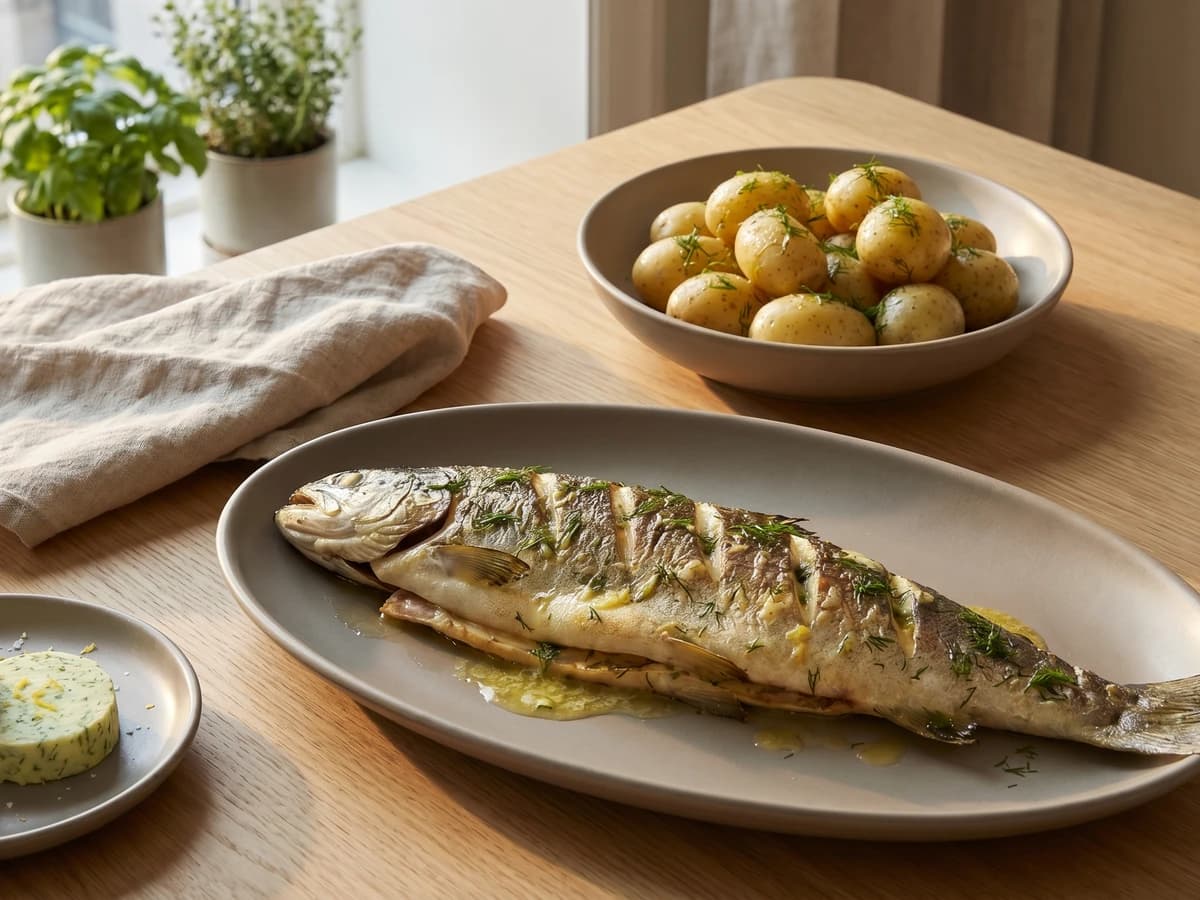
Whole sea trout baked with butter, lemon, and armfuls of dill, served beside the first nye kartofler of the season and a melting slab of dildsmor. The Danish summer table at its most generous.
Chef Freja
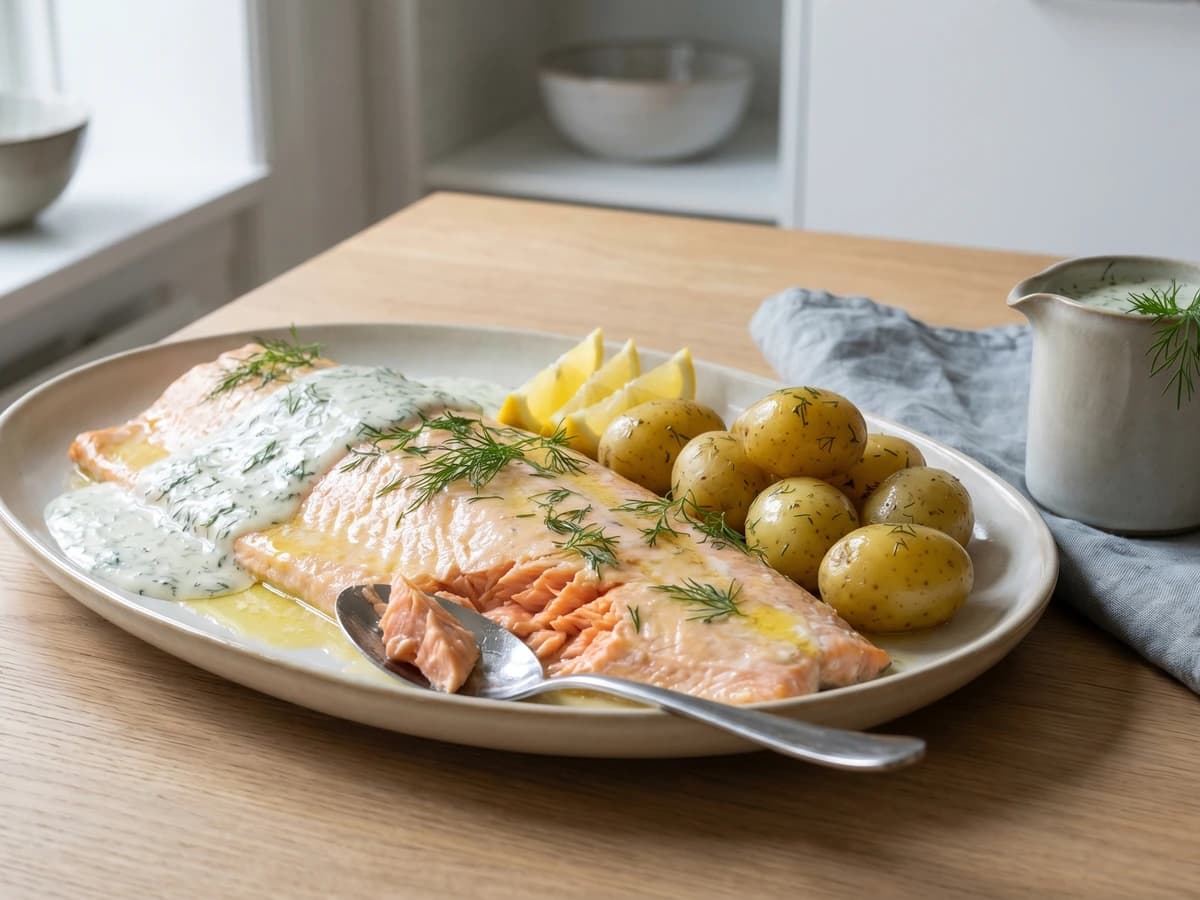
A side of salmon baked gently in butter and white wine, served warm with a bright dill cream sauce and the season's first nye kartofler. Late spring on a Danish table, cooked with love.